







100-machine dialysis center to offer free treatment in Manila
By Jel Santos
Published Aug 28, 2026 08:14 pm


At A Glance
- The 100-machine dialysis and rehabilitation center will be established at GABMMC in Tondo to provide free treatment to qualified Manila residents.
- PDCI will rehabilitate, equip, and help operate the facility under its partnership with the Manila City government.
- The center will primarily serve patients from Manila's First District and nearby communities and complement PhilHealth's coverage of 156 dialysis sessions.
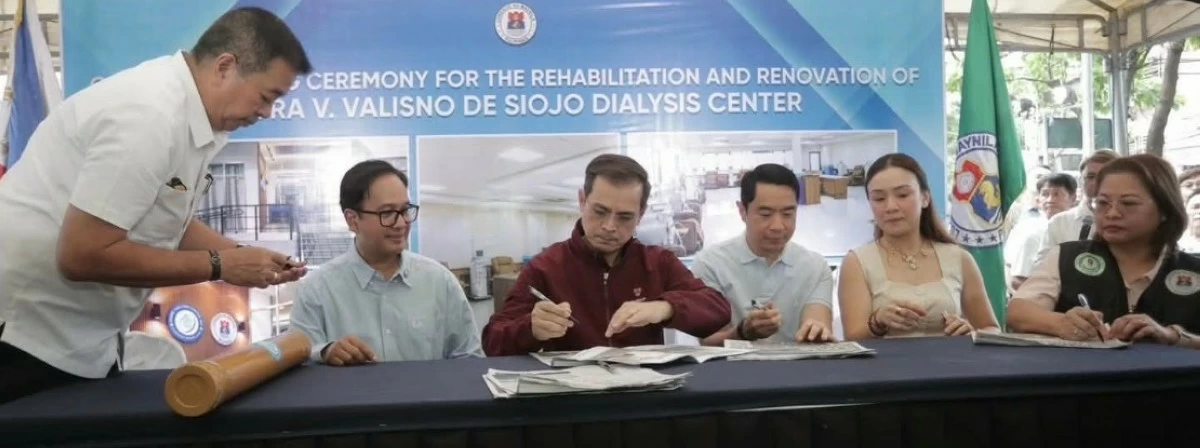
(CONTRIBUTED PHOTO)
A 100-machine dialysis and rehabilitation center that will offer free treatment to qualified Manila residents will be established at the Gat Andres Bonifacio Memorial Medical Center (GABMMC) in Tondo.
The Manila City government and Prime Dialysis Center Inc. (PDCI) broke ground for the Flora V. Valisno De Siojo Dialysis Center along Delpan Street on Monday, Aug. 24, for the project expected to become one of the country's largest free dialysis facilities.
Under an agreement signed on Aug. 13, PDCI will rehabilitate, renovate, and equip the facility and participate in its operation as the private-sector partner of the City Government of Manila.
The company wants to replicate the success stories in the 35 dialysis centers it operats nationwide, including facilities in underserved areas such as Gen. Tinio in Nueva Ecija, Mabinay in Negros Oriental and Alicia in Isabela, where some patients once had to travel for hours or more than 100 kilometers to receive dialysis
The center will primarily serve qualified patients from Manila’s First District and nearby communities.
Manila Mayor Francisco “Isko Moreno” Domagoso said the project forms part of the city government’s efforts to modernize and equip its public healthcare facilities.
“We are really trying to modernize, equip, and make it a more delightful facility. Hindi ’yung mema lang—may magawa lang o may masabi lang (Not just for show or simply to say that we did something). We always wanted the best for our people,” Domagoso said.
The project will complement PhilHealth’s coverage of 156 dialysis sessions, which allows qualified patients to undergo treatment three times a week.
“Dialysis access should be available to every Filipino patient,” said PDCI Chief Executive Officer Dr. Gjay Ordinal, a nephrologist who entered the dialysis industry in 2003.
He said the project reflects the company's more than two decades of efforts to address two major barriers to kidney care—the high cost of treatment and the distance patients often have to travel to reach dialysis centers.
"More than twenty years ago, I started in this industry as a young nephrologist with a huge frustration: too many of my patients could not survive," Ordinal said, noting that many patients previously struggled with the cost of treatment and the lack of accessible dialysis facilities.
"This facility will not just be a building. It will be a lifeline for hundreds of patients from District 1 and beyond who need dialysis simply to see another day, and a place of healing and rehabilitation for those working their way back to strength,” he added.