







Don't ban Facebook, other social networks; ban harmful content
Published Aug 27, 2026 12:02 am
|
Updated Aug 26, 2026 04:02 pm


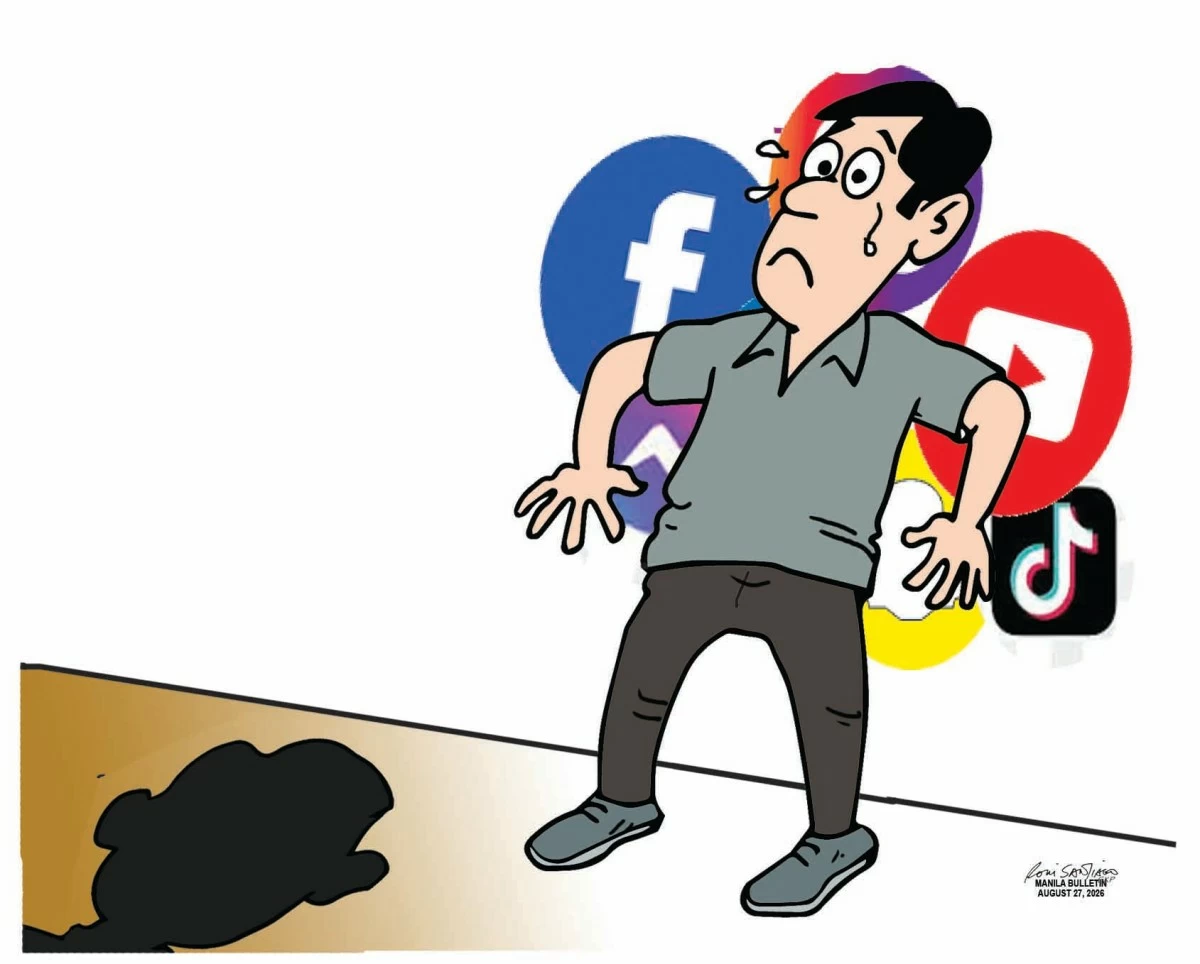
The government deserves credit for taking seriously the dangers that violent and harmful online content may pose to Filipino children. But if the goal is to protect the youth, the answer should not be to shoot the messenger when what needs to be confronted is the message.
Palace Press Officer and Communications Undersecretary Claire Castro said President Ferdinand Marcos Jr. is open to banning social media platforms, including Facebook, and gaming applications found to be harmful to young people and the country. The statement came amid renewed scrutiny of online content following deadly school violence and concerns over misinformation.
The concern is legitimate. The proposed remedy, however, deserves a thorough scrutiny.
There is a crucial distinction between a platform and the content, conduct and algorithms operating through it. Facebook, Roblox, and other digital services can be abused to spread violence, recruit vulnerable minors, disseminate disinformation or facilitate harmful communities. But millions of Filipinos also use these platforms for education, business, livelihood, news, emergency information, government announcements and ordinary human connection. PTV News, citing government figures, reported that Facebook has around 95 million Filipino users.
A blanket ban therefore risks punishing the overwhelming majority for the misconduct of a minority.
The better policy is targeted accountability.
If a particular game is demonstrably designed or operated in ways that expose minors to exceptionally violent or harmful content, the government should identify it, establish transparent standards and, when warranted, restrict or outlaw it. But that determination must rest on evidence, not merely on the fact that someone who committed violence happened to play the game. Authorities themselves previously emphasized that an investigation had not established a direct link between a violent game and a school shooting.
The government should establish clear classifications and safeguards for violent games and platforms: age verification, parental controls, default protections for minors, restrictions on targeted advertising, rapid reporting mechanisms and meaningful penalties for companies that repeatedly fail to act on credible threats.
The government should also sit down with social-media companies, game developers, educators, child-protection advocates, and cybersecurity experts. Platforms should know precisely what constitutes a prohibited threat, how quickly they must respond, what information authorities can lawfully request, and what safeguards protect users' privacy and constitutional rights.
There is already a promising model in online gaming regulation. The Philippine Amusement and Gaming Corporation (Pagcor) said it is developing an application that will help players identify licensed and regulated gaming platforms while curbing illegal online gaming.
The principle is worth expanding: regulate the risk, distinguish legitimate services from dangerous ones and make compliance measurable.
The private sector must do its part, too. Social networks should invest in stronger content moderation, child-safety tools, transparent enforcement and faster cooperation with law enforcement when genuine threats emerge. Game companies should design age-appropriate environments and make parental controls effective rather than merely available.
And Filipinos cannot outsource responsibility to the government.
Parents should know what their children watch, play, and discuss online. Schools should teach digital literacy, media literacy, and responsible online behavior. Young users should learn that forwarding violent material, glorifying cruelty or amplifying falsehoods can have real-world consequences. Every Filipino can pause before sharing, verify before believing, and report content that threatens others.
Protecting children from online violence is a legitimate public duty and should not be construed as censorship. But protecting them does not require shutting down the digital spaces where millions also learn, work, communicate, and participate in civic life.
The government's objective is right. Now it must choose the proportionate weapon.
Ban demonstrably harmful content and applications. Hold platforms accountable. Set clear rules. Demand cooperation. Protect children. Do not shut down social networks just to get rid of a harmful gaming app. It’s like burning the whole town to destroy one dangerous house.