






Manila Bulletin
 Business
Trade & Industry
DOE plans first coal-blending terminal to curb Indonesia dependency
Business
Trade & Industry
DOE plans first coal-blending terminal to curb Indonesia dependency
Business
Trade & Industry
DOE plans first coal-blending terminal to curb Indonesia dependency
DOE plans first coal-blending terminal to curb Indonesia dependency
Published Aug 27, 2026 02:42 pm


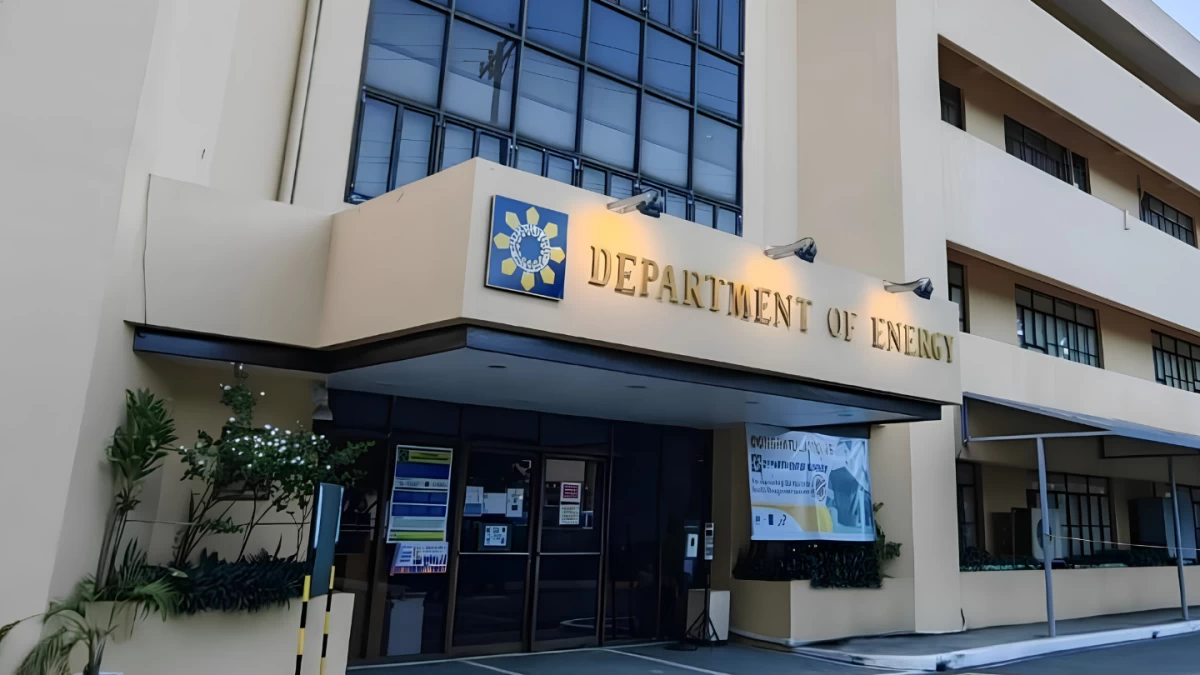
The Philippines is advancing plans to establish its first coal-blending facility, seeking to hedge against supply risks as top supplier Indonesia prepares to restrict exports, the Department of Energy (DOE) said.
Speaking on the sidelines of the Energy Smart Forum on Thursday, Aug. 27, Energy Secretary Sharon Garin stated that the government is seeking private sector investment to fund construction, with the DOE acting in an oversight capacity.
Garin said the proposal would allow local power generation companies to combine low-grade domestic coal with imported grades to meet the technical requirements of existing power plant turbines.
“We are reducing dependence on imported fuels by accelerating indigenous and renewable energy development,” Garin said, pointing out that 95 percent of the country’s current coal supply originates from Indonesia.
“What we need is a diversification of our risk. So we need to source it from different countries if there's an option, or the best option is to source it in-country,” she added.
Indonesia—the world’s largest thermal coal exporter—plans to implement a “one-stop export” framework designed to dictate resource pricing and manage supply globally rather than relying on foreign market exchanges.
The shifting export policies threaten energy security across regional import-dependent economies.
While higher-spec Indonesian coal directly matches the fuel profiles required by Philippine generators, low-spec local coal requires processing.
“Most of our coal, they say, is not good enough for our power plants. But there's a way to do that,” Garin said. “We can mix our coal with something that can be useful. For example, we blend 50 percent of this, 20 percent of that, until you meet the requirements of the turbines. That would allow us to maximize the use of Semirara or non-Semirara coal.”
The DOE is eyeing Mindanao as a potential pilot location due to its concentration of small-scale mining operations. However, official confirmation remains subject to feasibility studies. Garin admitted that construction timelines mean the facility is unlikely to be operational before Indonesia’s expected January 2027 export tightening.
To bridge potential supply gaps in the interim, Manila is assessing alternative international coal suppliers.
“There are some getting from Australia,” Garin said. “Before, we used to get from Russia also. Other than that, options are limited unless we source from places that are very far.”
She added that preliminary discussions are also underway with a South American supplier.