






Manila Bulletin
 Philippines
National
Can defense team rein in VP Sara's statements under impeachment trial rules?
Philippines
National
Can defense team rein in VP Sara's statements under impeachment trial rules?
Philippines
National
Can defense team rein in VP Sara's statements under impeachment trial rules?
Can defense team rein in VP Sara's statements under impeachment trial rules?
Defense spokesperson Michael Poa says the legal team will discuss the issue with their client, the Vice President, amid the impeachment court's strict enforcement of the sub judice rule
Published Aug 27, 2026 02:27 pm


At A Glance
- Defense spokesperson Michael Poa said the legal team will first discuss the impeachment court's ruling with Vice President Sara Duterte before deciding how to proceed.
- Poa said the defense has yet to determine how it will proceed following the court's strict enforcement of the sub judice rule
- He argued that the restrictions do not necessarily bar Duterte from speaking publicly, although comments touching on the merits of the impeachment case could raise concerns.
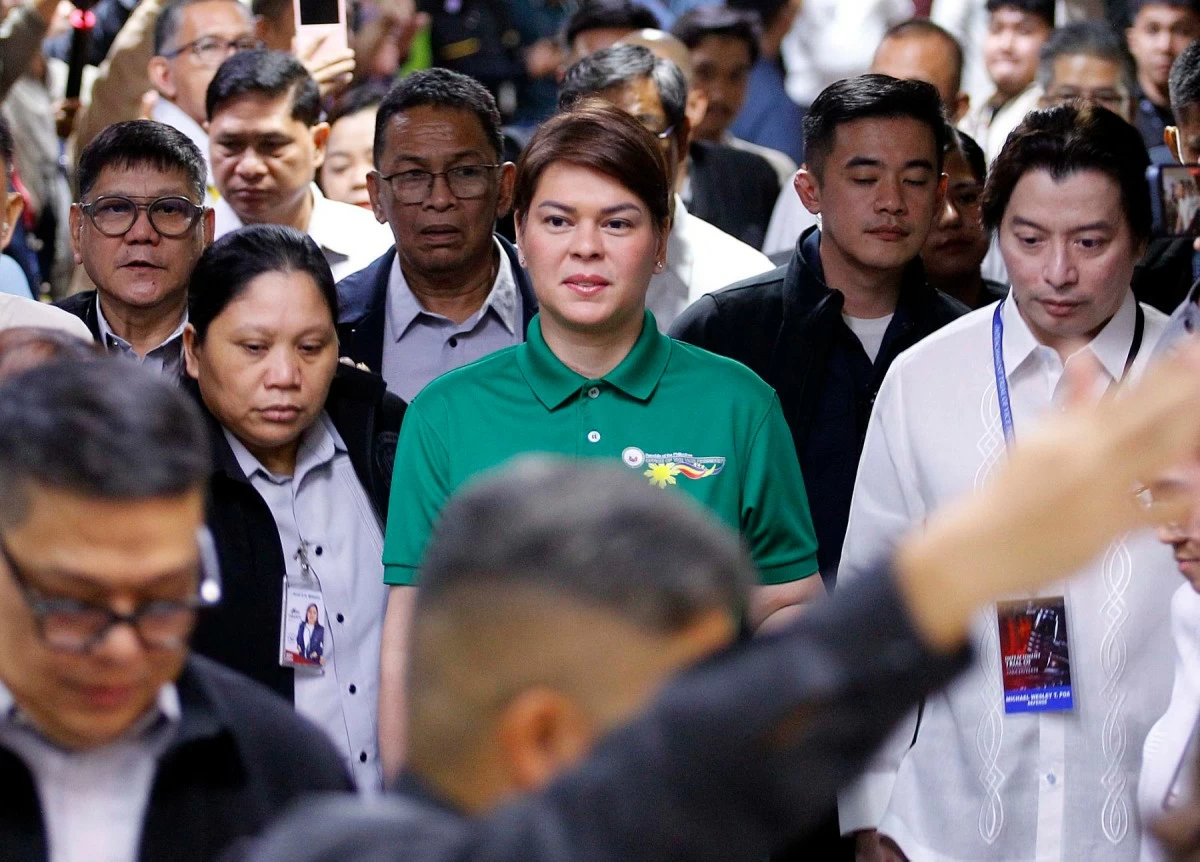
As Vice President Sara Duterte's lawyers grapple with the impeachment court's strict enforcement of the sub judice rule, defense spokesperson Michael Poa faces a delicate question: How far can the legal team go in advising its client against making public statements that could violate the court's restrictions?
The issue gained urgency after Presiding Officer Sen. Francis "Chiz" Escudero ruled that the impeachment court would strictly enforce the sub judice rule and reiterated his suggestion that both panels designate spokespersons who are not covered by the rules governing the impeachment proceedings.
Escudero also made clear that the rule applies to Duterte herself and asked her lawyers to remind her of the restrictions.
In a press briefing on August 26, Poa said the ruling has made it increasingly risky for members of the defense team to speak publicly, particularly when questions could lead them into matters involving the merits of the case.
"I'll have to discuss the matter, of course, with our client, the Vice President, kasi nga very clear naman yung naging ruling ng ating presiding officer and, of course, bilang mga abogado (because the ruling of our presiding officer was very clear and, as lawyers), we will just comply with the order of the impeachment court," Poa said.
Asked how the defense could rein in Duterte's statements that could violate the court's rules, Poa said the team did not yet have a strategy and would first have to discuss the matter with the Vice President.
During Escudero's reading of his ruling on sub judice, Duterte also issued a statement urging the prosecution and members of Congress to “prove the impeachable offense with evidence—not insults, speculation, or political theatrics.”
READ:
This prompted Escudero to call the attention of Duterte's lead counsel, Sheila Sison, and ask her to remind the Vice President about the court's ruling on sub judice, which restricts public statements on pending matters that could prejudice or improperly influence the impeachment proceedings.
Moving forward
Poa noted that the impeachment court had “already expressed its view on what it thought of the statement.” Asked whether the defense had a strategy for dealing with the matter, he said the team did not yet have one.
"We will just have to sit down and talk about it. And siguro explain lang sa kanya at kunin ko rin ang panig niya, ano ba yung dapat namin gawin moving forward (Perhaps we can explain it to her and also get her views on what we should do moving forward). But again, she's the VP, she's our client,” Poa said.
Poa said he would first convey to Duterte what the presiding officer had said and hear her response before determining how the defense should proceed.
"I will relay what the presiding officer mentioned and then tingnan na lang natin kung ano ang mapag-uusapan natin tungkol diyan (we will see what we can discuss about it). I don't want to pre-empt kung ano yung sasabihin niya sa akin,” Poa added.
He also declined to speculate on whether Duterte would agree to limit her public comments about the impeachment proceedings.
"Well, pag-usapan namin itong mga bagay na ito, kasi actually di first time naman talaga nagkaroon tayong (Well, we will discuss these matters because actually, this is not the first time that we have had a) full-blown impeachment trial concerning her,” Poa said.
"So pag-usapan muna namin (we will discuss it first). I don't want to speculate, so I will just have a talk with her. I will discuss everything with her and tingnan natin kung ano ang magiging reaction niya (and we will see what her reaction will be),” he added.
Not a total ‘gag order’
Poa said the defense wants to comply with the law and the rules of the impeachment court but stressed that, in his view, the sub judice rule is not necessarily a blanket prohibition on Duterte speaking publicly.
"Di ko masabi sa ngayon. But siyempre lahat naman tayo gusto mag-comply kung ano yung naayon sa batas and rules (I can't say at this point. But of course, we all want to comply with what is in accordance with the law and the rules),” Poa said. “So, it's just a matter of really defining what is really sub judice or not,” he added.
Poa clarified that the ruling is not a “total gag order” under which nothing about the impeachment proceedings could be discussed publicly.
"It's just really kung ano ba talaga yung saklaw lang ng sub judice, which is really the merits of the case --- meaning kung ano yung contained in the pleadings, kung ano yung relevance ng mga ebidensyang pinapresenta, kung ano yung credibility ng witnesses (It is really about what falls within the scope of sub judice, which concerns the merits of the case—meaning what is contained in the pleadings, the relevance of the evidence being presented, and the credibility of the witnesses),” Poa said.
“Iyan naman ang saklaw pag sinasabing merit (Those are what fall within the scope of the merits),” he added.
Duterte’s right to express her views
At the same time, Poa argued that Duterte, as the Vice President facing impeachment proceedings, may still have some latitude to express her views.
"Siguro naman ang isang Bise Presidente na sina-subject sa ganitong proceedings meron din karapatan to a certain degree may ilabas ang kanyang mga saloobin (Surely, a Vice President who is being subjected to these proceedings also has the right, to a certain degree, to express her thoughts and feelings),” Poa said.
“But as to whether that's sub judice or not, perhaps that's something we can discuss further,” he added.
The remarks underscore the delicate position of Duterte's defense team following Escudero's ruling. While her lawyers can advise her about the potential risks of public statements and explain the boundaries set by the impeachment court, Poa said the team would first have to discuss the matter with Duterte before determining how to proceed.