






 Business
The Economy
Beyond income: 1 in 8 Filipino households face multiple forms of poverty
Business
The Economy
Beyond income: 1 in 8 Filipino households face multiple forms of poverty
Beyond income: 1 in 8 Filipino households face multiple forms of poverty


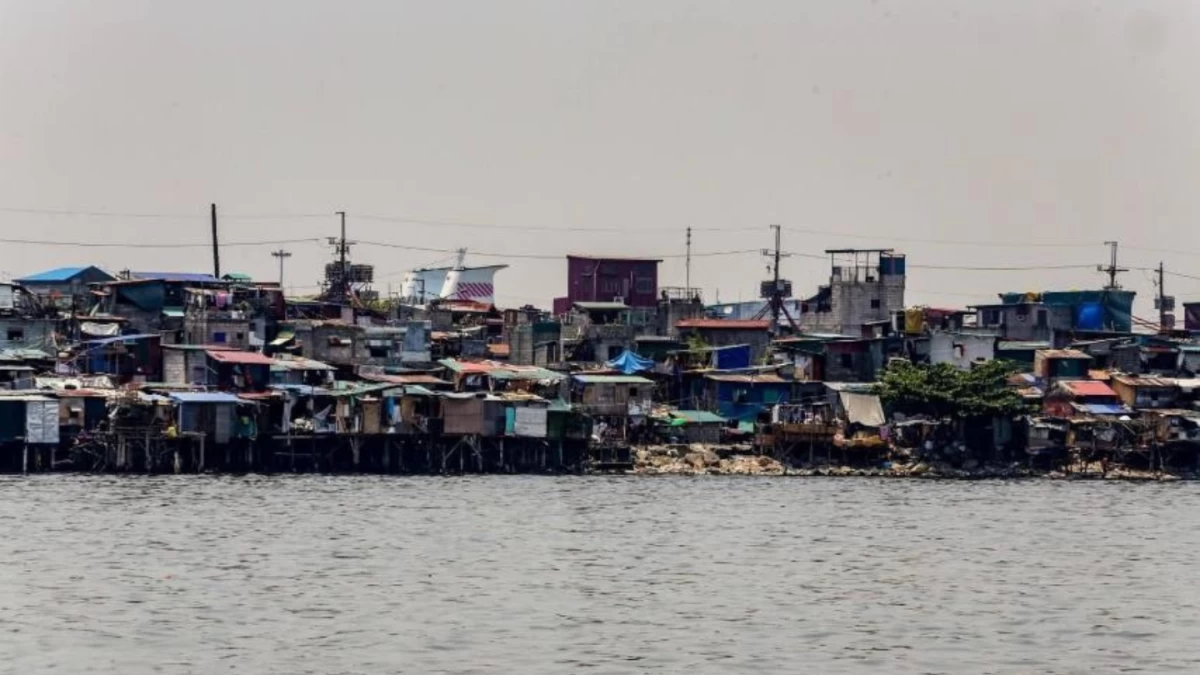
Nearly one in eight Filipino households experienced multiple forms of deprivation beyond low income in 2024, with inadequate education and poor housing conditions emerging as the biggest contributors to the country’s first official multidimensional poverty index (MPI).
The Philippine Statistics Authority (PSA) reported on Thursday, Aug. 27, that 12.4 percent of Filipino households were multidimensionally poor, with the national household MPI estimated at 0.042 based on preliminary results of the 2024 community-based monitoring system (CBMS).
At the individual level, 12.8 percent of the population belonged to households classified as multidimensionally poor, with an MPI of 0.045. These Filipinos experienced an average deprivation intensity of 34.7 percent of the weighted indicators used in the index.
Unlike the country’s official poverty incidence, which determines whether Filipinos are poor based on whether their income falls below the amount needed to meet basic food and nonfood requirements, MPI captures overlapping hardships that households experience in their daily lives.
MPI complements, rather than replaces, the PSA’s income-based poverty estimates derived from the family income and expenditure survey (FIES). The new measure covers 17 indicators across four dimensions: education; health and nutrition; housing, water, and sanitation; and employment.
A household is considered multidimensionally poor when its weighted deprivation score exceeds the poverty cutoff of 0.25, indicating deprivation in more than one dimension. The index combines both the proportion of households or individuals considered multidimensionally poor and the intensity of the deprivations they experience.
Education accounted for the largest share of multidimensional poverty at the individual level at 40.7 percent, followed by housing, water, and sanitation at 31.3 percent; health and nutrition at 18.5 percent; and employment at 9.5 percent.
Among Filipinos who were both deprived in a particular indicator and classified as multidimensionally poor, educational attainment and housing materials were the most prevalent hardships, each affecting 10.7 percent of the total population.
These were followed by lack of ownership of assets at 7.8 percent, food insecurity at 7.2 percent, lack of internet access at 6.8 percent, inadequate sanitation or toilet facilities at 6.1 percent, and inadequate water sources at 5.6 percent.
Under MPI’s methodology, a household is considered deprived in educational attainment when no member aged 19 years or older has completed secondary education.
Looking at deprivation regardless of whether Filipinos were ultimately classified as multidimensionally poor, housing materials posed the most widespread challenge, affecting 38.7 percent of the population.
This was followed by lack of internet access at 26.4 percent, inadequate sanitation or toilet facilities at 24.1 percent, lack of assets at 21.8 percent, and inadequate educational attainment at 20.2 percent.
Department of Economy, Planning, and Development (DEPDev) Secretary Arsenio M. Balisacan, the country’s chief economist, said the new measure gives the government a broader view of poverty than income statistics alone.
“The MPI shows that poverty is not just about what people earn. It is also about whether Filipinos have access to essential services that allow them to live productive and dignified lives,” Balisacan said in a statement.
“The value of the MPI is that it helps us see where needs are greatest and where government interventions can make the biggest difference,” the DEPDev chief added.
“By assessing the specific deprivations, we can improve the targeting of programs, strengthen coordination across sectors, and make public investments more effective,” he said.
Balisacan said the findings reinforce the government’s commitment to address poverty in all its dimensions through interventions such as adult literacy programs, affordable public housing initiatives and public-private partnership (PPP) projects, the expansion of Walang Gutom kitchens, and measures to strengthen food production and distribution systems.
The 2024 MPI figures are not directly comparable with the government’s latest official poverty incidence because they measure different concepts and refer to different periods.
Last week, the PSA reported that the share of Filipinos living below the official income poverty line fell to a record-low 9.7 percent in 2025 from 15.5 percent in 2023, allowing the government to achieve its single-digit poverty target ahead of its 2028 deadline.
The number of poor Filipinos declined to about 11.08 million from 17.54 million over the two-year period, while poverty incidence among families fell to 6.4 percent, equivalent to around 1.9 million families.
However, the improvement in official poverty statistics comes amid a broader debate over whether headline economic gains fully reflect conditions experienced by ordinary Filipinos.
Lawmakers and labor groups questioned the significance of the country’s recent elevation to upper-middle-income country (UMIC) status, arguing that aggregate income measures can obscure inequality and the financial difficulties still faced by many households.
MPI provides another lens on those living conditions by identifying specific deprivations that an income threshold alone may not capture, such as inadequate housing, lack of internet access, food insecurity, poor sanitation, and incomplete education.
The PSA noted, however, that the 2024 national MPI estimates were based on preliminary CBMS results. The cities of Las Piñas, Pasay, Iloilo, and General Santos were excluded from the national estimate because their data were still undergoing validation, while some other areas did not achieve complete enumeration. - Danielle T. Bayani