







SC's Baguio City building now an Important Cultural Property
Published Aug 26, 2026 10:55 am


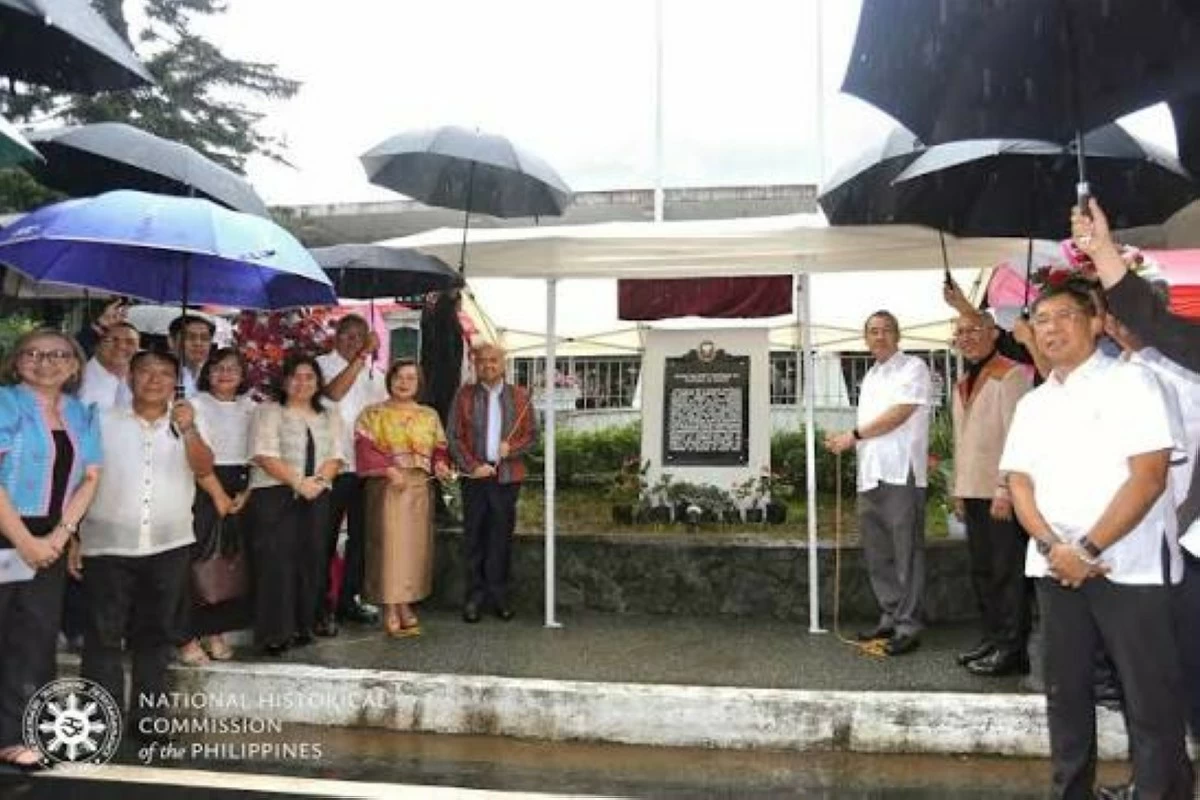
The Supreme Court’s (SC) building in Baguio City is now an Important Cultural Property with the unveiling of a historical marker and commemorative plaques early this week.
The National Historical Commission of the Philippines (NHCP) grants, with the help of historians and other experts, historical markers to sites, institutions, structures, people, or events that have significant historical or cultural value.
The SC’s compound in Baguio City is located at the Upper Session Road. As an Important Cultural Property, the SC’s Baguio City building is protected against exportation, modification, or demolition without official government approval.
Chief Justice Alexander G. Gesmundo led the unveiling ceremony. He was joined by SC Senior Associate Justice Marvic M.V.F. Leonen and Associate Justices Alfredo Benjamin S. Caguioa, Ramon Paul L. Hernando, Amy C. Lazaro-Javier, Rodil V. Zalameda, Samuel H. Gaerlan, Ricardo R. Rosario, Japar B. Dimaampao, Jose Midas P. Marquez, Maria Filomena D. Singh, and Raul B. Villanueva.
Also present were Baguio City Mayor Benjamin Magalong and NHCP Executive Director Carminda R. Arevalo.
Chief Justice Gesmundo and the associate justices also unveiled the SC 125th anniversary commemorative brass plaque, which recognizes the Baguio City building as the court’s principal summer seat since 1966. It lists the Chief Justices who have served there, and the current members of the SC as a full court.
Last June 5, the SC’s building on Padre Faura Street in Ermita, Manila was declared an Important Cultural Property by the NHCP. Also unveiled was a commemorative plaque that marked the celebration of the SC’s 125th anniversary last June 11.
The SC said the unveiling of the historical marker highlighted its long association with Baguio City. The SC began holding its summer sessions in Baguio City in 1910 and the practice has evolved into an annual tradition since 1948.
The SC’s Office of the Spokesperson said the construction of the court’s Baguio City building began in 1964 during the term of Chief Justice Cesar C. Bengzon and was completed in 1966 under Chief Justice Roberto R. Concepcion.
The building withstood the devastating July 16, 1990 earthquake that struck the city.
Another commemorative plaque marked the installation of solar panels on the SC Baguio building and the justices’ cottages as part of the court’s 125th anniversary projects.
Spearheaded by Justice Caguioa, the initiative advances the SC’s commitment to sustainability by providing clean, renewable energy to the court’s offices, residences, and common facilities.
Speaking on behalf of the SC, Senior Associate Justice Leonen underscored the significance of the SC’s long-standing tradition of holding its summer sessions in Baguio City.
“Many things have happened here. Among the branches of government, ours is the only one that still maintains this practice, and we have kept it through a war, through the loss and the rebuilding of our records and through every reordering of the Republic since…. Some decisions made here now form the foundation of the law we follow today,” Leonen said.
Leonen, who was born and raised in Baguio City, also said: “The marker also symbolizes the Court’s commitment to reaching communities beyond the country’s traditional centers of power. The Court will continue to serve places often considered ‘far and unreachable,’ because ‘social justice and meaningful freedoms will have no periphery defined by a center.’”
SC Spokesperson Atty. Camille Sue Mae L. Ting noted that the Baguio City building has witnessed generations of justices and some of the judiciary’s most significant work—from the finalization of the 1997 Rules of Civil Procedure to oral arguments in landmark constitutional cases.
“Every generation of Justices has left its imprint here. Today, we continue that story,” Ting said.
On behalf of the NHCP, Executive Director Arevalo highlighted the distinct place that the SC Baguio building has carved in the history of both the Philippine Judiciary and Baguio City.
“Sa loob ng mga pader nito, ginampanan at patuloy na ginagampanan ng Korte Suprema ang napakahalagang tungkulin nito—ang magbigay kahulugan sa batas at magpasya sa mga usapin na may malaking epekto sa buhay ng ating mga mamamayan at sa ating bansa” (Inside this compound, the SC had performed and continuously performs its most important functions – to uphold the rule of law and resolve cases that affect Filipinos and the whole country), Arevalo declared.
The documents on the certificate of historical significance and the marker were signed by SC Clerk of Court En Banc Atty. Marife M. Lomibao-Cuevas and NHCP Executive Director Arevalo. The signing was witnessed by Atty. Ting and NHCP Deputy Executive Director Rosario V. Sapitan.
The event was also attended by Court Administrator Ma. Theresa Dolores C. Gomez-Estoesta; Baguio City second-level court judges led by Executive Judge Michael V. Francisco; and Baguio City first-level court judges led by Executive Judge Jeanylene T. Isip-Fukai.
The ceremony was emceed by SC Chief Communications Officer Atty. Michael Jobert I. Navallo.