






Manila Bulletin
 Philippines
National
No trial by publicity: Escudero clamps down on sub judice remarks
Philippines
National
No trial by publicity: Escudero clamps down on sub judice remarks
Philippines
National
No trial by publicity: Escudero clamps down on sub judice remarks
No trial by publicity: Escudero clamps down on sub judice remarks
By Dhel Nazario
Published Aug 26, 2026 01:55 pm


Presiding Officer Francis “Chiz” Escudero on Wednesday, Aug. 26, ordered the strict enforcement of the impeachment court’s Rule 18, barring parties, their lawyers and witnesses, as well as senator-judges, from publicly commenting on the merits of the pending impeachment trial.
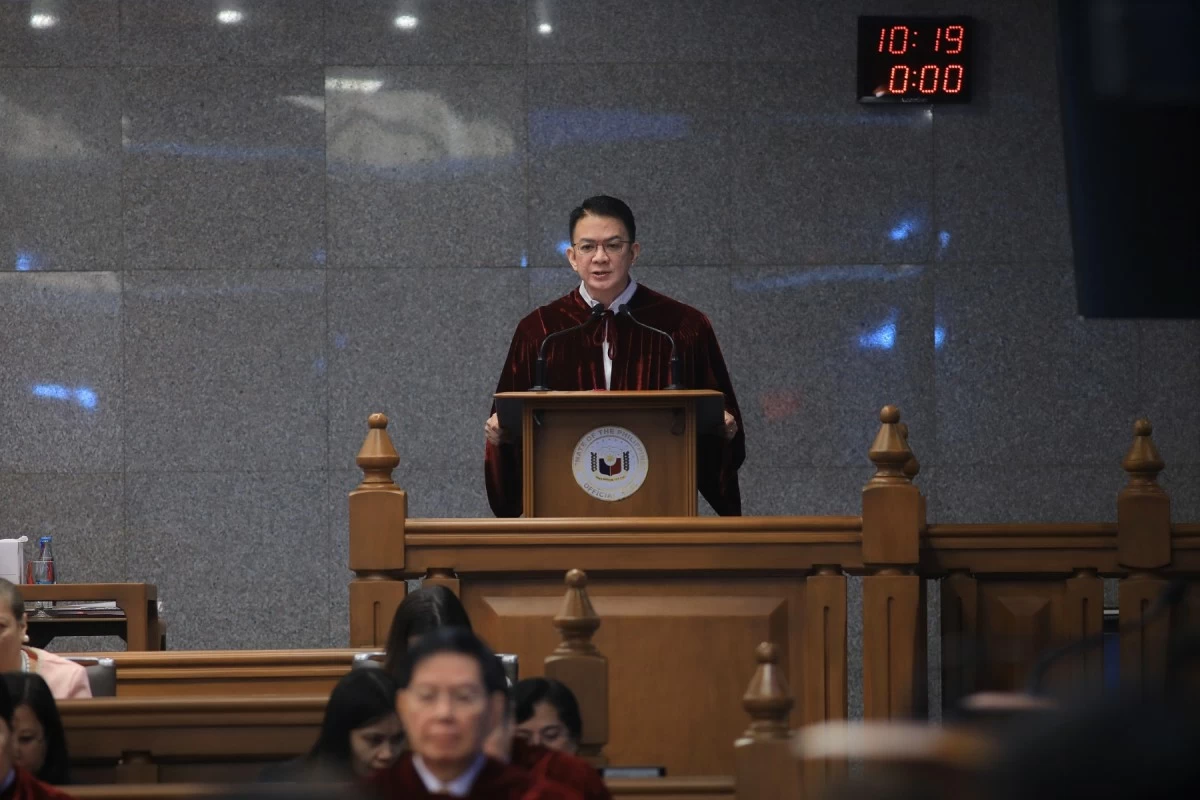
Presiding Officer Francis “Chiz” Escudero (Senate PRIB photo)
In a lengthy ruling, Escudero said the restriction was necessary to protect the impartiality, dignity and integrity of the impeachment court and prevent public statements from influencing the proceedings.
The ruling came after concerns over public statements by persons covered by Rule 18, including lawyers involved in the trial. Escudero said the issue arose from statements and conduct involving counsel on August 12 but raised broader concerns about the conduct of the impeachment proceedings.
Before imposing restraints on the parties and their lawyers, Escudero said the impeachment court must first ensure that its own members observe the same standards of impartiality and decorum.
He reminded senator-judges of their oath to “do impartial justice according to the Constitution and the laws of the Philippines,” as well as Rule 3 of the impeachment rules requiring political neutrality.
He also cited the 2025 Code of Judicial Conduct and Accountability, which bars judges from making comments that could affect the outcome of a pending case, impair the fairness of proceedings or diminish public confidence in the court’s impartiality.
Escudero clarified, however, that the restrictions do not prevent senator-judges from closely examining evidence and questioning witnesses during proceedings.
He cited Supreme Court jurisprudence allowing judges to ask searching and clarificatory questions to test a witness’ credibility and elicit the truth, even if the answers ultimately benefit one side.
“The inquiry must remain relevant, material, fair, and directed toward clarification of truth,” Escudero said, stressing that questioning should not turn into partisan advocacy or an announcement of a conclusion already reached.
Senator-judges warned against unparliamentary remarks
Escudero also reminded his fellow senator-judges that parliamentary rules and courtesies of the Senate continue to apply while they sit as members of the impeachment court.
He called on them to refrain from personal attacks, invitations of improper motive, unparliamentary remarks and other language inconsistent with the dignity of the proceedings.
While differences in judgment and vigorous debate are expected, Escudero said these should be handled with patience, flexibility and respect.
He warned that the chair would enforce the applicable impeachment and Senate rules when necessary.
For alleged violations by senator-judges, Escudero pointed to the Senate Committee on Ethics and Privileges as the appropriate institutional mechanism, saying disciplinary action should not become a matter for the impeachment court itself because it could divert attention from the trial.
Rule 18 now to be ‘strictly enforced’
Escudero said the impeachment court would give those covered by Rule 18 a clean slate for statements and conduct made before Wednesday’s ruling.
“From this point forward, however, Rule 18 shall be strictly enforced and be given full force and effect,” he said.
Rule 18 provides that the presiding officer, senator-judges, prosecutors, respondent, their respective counsel and witnesses must refrain from public comments and disclosures concerning the merits of a pending impeachment trial.
Escudero said the rule seeks to balance the public’s right to information with the need to prevent public prejudgment and preserve the integrity of the proceedings. Where the impeachment rules specifically address an issue, he said, those rules control over the Rules of Court, which apply only suppletorily.
‘Trial by publicity’ not tolerated
Escudero ordered all persons covered by Rule 18 to stop making, discussing, sharing or endorsing public comments about the merits of the trial.
He warned that “trial by publicity” threatens the independence of the court, diminishes the dignity of the tribunal and risks substituting public outrage for evidence.
The restriction applies to the prosecutors and their counsel, the respondent and her counsel, senator-judges and witnesses.
Escudero again suggested that both sides designate spokespersons who are not part of their legal teams. He said spokespersons may communicate publicly, but if they are counsel of record, they remain covered by Rule 18 and subject to its restrictions.
What counts as a prohibited comment?
The chair said the key test is whether a public statement “pertains to the merits” of the case.
Drawing from Supreme Court jurisprudence, he said this includes statements assessing disputed facts, the credibility of witnesses, the relevance or weight of evidence, the legal viability of impeachment charges or defenses, or advocating or forecasting a particular outcome.
By contrast, fair and true reporting of the proceedings remains allowed, provided it is neutral, objective, accurate and made in good faith without commentary.
Escudero said parties may not publicly prejudge the case, predict its outcome, question pending rulings, substitute media pressure for evidence or undermine confidence in the impeachment court.
Violators face 24-hour show-cause order
The impeachment court will handle alleged Rule 18 violations summarily, while observing due process, Escudero said.
A person accused of violating the rule will first receive a written show-cause order and will have exactly 24 hours to submit a verified written answer. The court will then rule based on the pleadings, subject to reconsideration or appeal by a member of the court.
Escudero said the court would follow a “two-strike rule.”
A first offense will result in a public reprimand and admonition placed permanently on the record. A second offense will carry a fine of up to P30,000 per violation.
The P30,000 fine will also apply to succeeding violations. The court may additionally restrict an offending lawyer or party from speaking, objecting, or examining witnesses on the Senate floor.
For lawyers, the court may transmit certified records of violations to the Office of the Bar Confidant, the Integrated Bar of the Philippines, or the Supreme Court for possible disciplinary action.
Escudero cites examples of prohibited statements
To clarify the limits, Escudero read several statements made publicly by counsel during the proceedings, without identifying them by name.
Among those cited were statements asserting that the Vice President had threatened someone, that bank records established wrongdoing, that confidential funds had been misused, and that the Vice President had violated public trust.
Escudero said such statements could be made by third-party observers, but become covered by Rule 18 when made by counsel of record or another person expressly covered by the rule.
He stressed that the examples were meant to clarify the standard for future conduct, rather than punish past statements, which would be covered by the court’s decision to give prior conduct a clean slate.
Escudero separately warned lawyers against using inflammatory language inside the impeachment court.
He said the terms “scam,” “mastermind” and “modus operandi,” as used during previous proceedings, were stricken from the record.
Counsel remain free to vigorously argue their factual and legal theories, he said, but must do so through evidence, reasoned arguments and court-appropriate language rather than expressions that prejudge disputed facts or needlessly inflame the proceedings.
Escudero emphasized that Rule 18 does not prevent legitimate advocacy inside the courtroom.
“If counsel believes that the ruling is erroneous, that a proceeding has become unfair, or that conduct affecting the trial requires correction, the proper course is to bring the matter before the court,” he said.
“Rule eighteen demands restraint beyond these walls. It does not command silence within them.”
Escudero closed the ruling by reminding both sides of their separate duties as lawyers.
He said prosecutors’ primary responsibility is not to secure a conviction but to ensure that justice is done. Defense counsel, meanwhile, must protect the respondent’s constitutional and procedural rights, rigorously test the prosecution’s evidence and hold prosecutors to their burden of proof while complying with the law and the court’s orders.
For senator-judges, Escudero said the ultimate obligation is to decide the case solely on the record, the Constitution and the impeachment rules.
The ruling, he said, establishes standards for future conduct but does not itself find any particular person guilty of contempt or liable for a professional violation.