

ADVERTISEMENT

Makati taps local textiles for staff uniforms

Published Aug 26, 2026 03:09 pm
Makati City Mayor Nancy Binay said Wednesday, Aug. 26, that the city government is incorporating locally sourced textiles into employees’ uniforms to highlight Filipino craftsmanship and bolster the local textile industry.
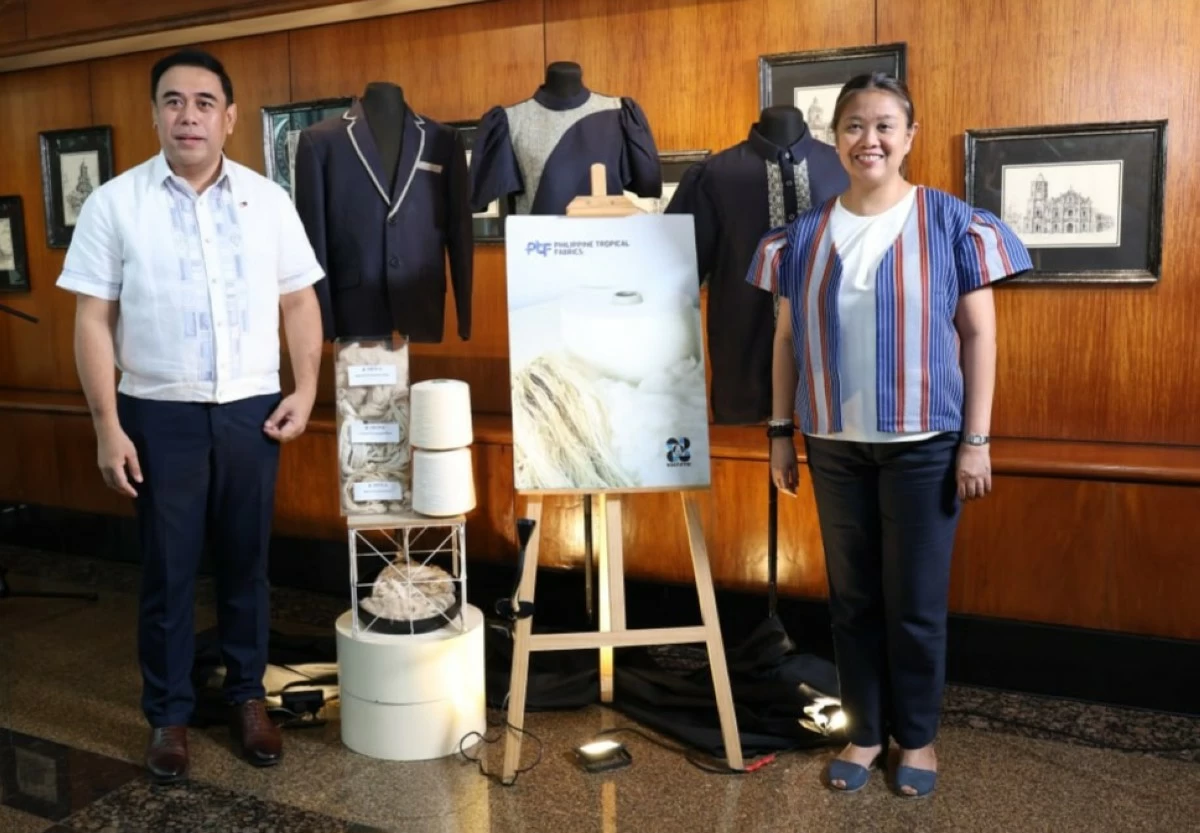
As the first local government partner of DOST-PTRI for the Performance Evaluation, Adoption, and Utilization of Philippine Tropical Fabric Uniforms, Makati champions Filipino craftsmanship by integrating locally sourced textiles into government uniforms and supporting the growth of the local textile industry. (Photos from Makati PIO)
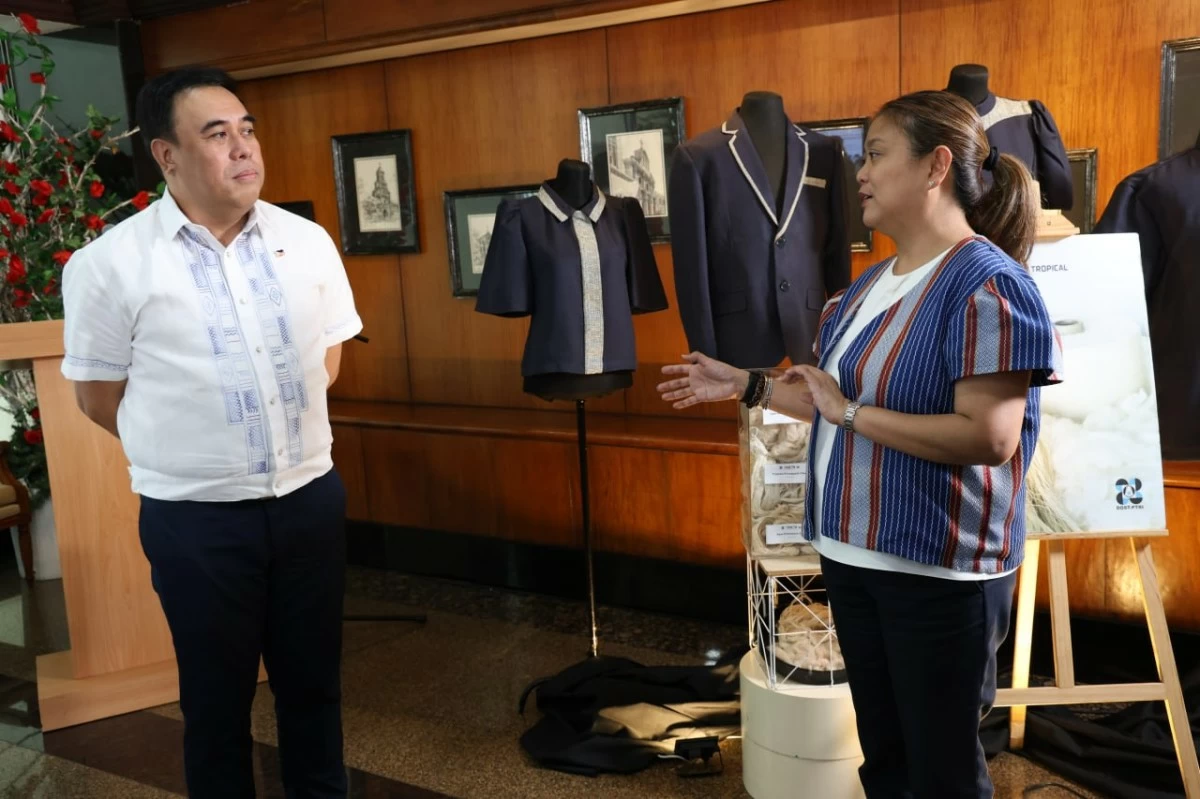
On Tuesday, Aug. 25, Binay signed an agreement with the Department of Science and Technology-Philippine Textile Research Institute (DOST-PTRI) for the performance evaluation, adoption, and use of Philippine tropical fabric for uniforms. Makati is the first local government to partner with the institute for the project.

As the first local government partner of DOST-PTRI for the Performance Evaluation, Adoption, and Utilization of Philippine Tropical Fabric Uniforms, Makati champions Filipino craftsmanship by integrating locally sourced textiles into government uniforms and supporting the growth of the local textile industry. (Photos from Makati PIO)
Binay said the project builds on an advocacy she started during her time in the Senate and is now being carried out through the Makati City government.
The local government said the move goes beyond changing the fabric used for uniforms, as it demonstrates how a government institution can use its purchasing power to support local industries and encourage the wider use of Filipino-made materials. It added that the city government will fund the uniforms.
“This initiative is close to my heart because it is not simply about providing uniforms for our employees,” Binay said.
“It is about honoring Filipino craftsmanship, supporting our local farmers and weavers, and creating greater opportunities for our local textile industry,” she added.
The Makati City government said its employees' uniforms contain 7.4 percent pineapple fiber, above the five percent minimum required under Republic Act No. 9242 for Philippine tropical fabrics using abaca, banana, or pineapple leaf fibers. The law also sets a 15 percent minimum for Philippine silk.
“A total of seven designs were developed for the City Government, featuring a poly-piña fiber base complemented by handwoven textile accents that seamlessly blend contemporary design with Filipino craftsmanship,” it said.
Meanwhile, DOST-PTRI Director Dr. Julius L. Leaño Jr. emphasized the broader impact of using Philippine tropical fabrics, saying the institute is giving greater attention to these locally made textiles.
“Hindi lang po ito compliance sa batas; nakatutulong din po ito sa ating mga magsasaka at mga naghahabi upang mas mapasigla ang industriya ng telang Pinoy (This is not just about complying with the law; it also helps our farmers and weavers and supports the growth of the local textile industry),” he said.
Through the partnership, Makati said compliance with the law can also help support local production, create livelihood opportunities, and preserve Filipino craftsmanship through government procurement.

Related Tags

Metro News Makati Mayor nancy binay DOST
ADVERTISEMENT
.most-popular .layout-ratio{ padding-bottom: 79.13%; } @media (min-width: 768px) and (max-width: 1024px) { .widget-title { font-size: 15px !important; } }

{{ articles_filter_1561_widget.title }}

.most-popular .layout-ratio{ padding-bottom: 79.13%; } @media (min-width: 768px) and (max-width: 1024px) { .widget-title { font-size: 15px !important; } }

{{ static_articles_1562_widget.title }}

.most-popular .layout-ratio{ padding-bottom: 79.13%; } @media (min-width: 768px) and (max-width: 1024px) { .widget-title { font-size: 15px !important; } }

{{ articles_filter_1563_widget.title }}

{{ articles_filter_1564_widget.title }}

.mb-article-details { position: relative; } .mb-article-details .article-body-preview, .mb-article-details .article-body-summary{ font-size: 17px; line-height: 30px; font-family: "Libre Caslon Text", serif; color: #000; } .mb-article-details .article-body-preview iframe , .mb-article-details .article-body-summary iframe{ width: 100%; margin: auto; } .read-more-background { background: linear-gradient(180deg, color(display-p3 1.000 1.000 1.000 / 0) 13.75%, color(display-p3 1.000 1.000 1.000 / 0.8) 30.79%, color(display-p3 1.000 1.000 1.000) 72.5%); position: absolute; height: 200px; width: 100%; bottom: 0; display: flex; justify-content: center; align-items: center; padding: 0; } .read-more-background a{ color: #000; } .read-more-btn { padding: 17px 45px; font-family: Inter; font-weight: 700; font-size: 18px; line-height: 16px; text-align: center; vertical-align: middle; border: 1px solid black; background-color: white; } .hidden { display: none; }
function initializeAllSwipers() { // Get all hidden inputs with cms_article_id document.querySelectorAll('[id^="cms_article_id_"]').forEach(function (input) { const cmsArticleId = input.value; const articleSelector = '#article-' + cmsArticleId + ' .body_images'; const swiperElement = document.querySelector(articleSelector); if (swiperElement && !swiperElement.classList.contains('swiper-initialized')) { new Swiper(articleSelector, { loop: true, pagination: false, navigation: { nextEl: '#article-' + cmsArticleId + ' .swiper-button-next', prevEl: '#article-' + cmsArticleId + ' .swiper-button-prev', }, }); } }); } setTimeout(initializeAllSwipers, 3000); const intersectionObserver = new IntersectionObserver( (entries) => { entries.forEach((entry) => { if (entry.isIntersecting) { const newUrl = entry.target.getAttribute("data-url"); if (newUrl) { history.pushState(null, null, newUrl); let article = entry.target; // Extract metadata const author = article.querySelector('.author-section').textContent.replace('By', '').trim(); const section = article.querySelector('.section-info ').textContent.replace(' ', ' '); const title = article.querySelector('.article-title h1').textContent; // Parse URL for Chartbeat path format const parsedUrl = new URL(newUrl, window.location.origin); const cleanUrl = parsedUrl.host + parsedUrl.pathname; // Update Chartbeat configuration if (typeof window._sf_async_config !== 'undefined') { window._sf_async_config.path = cleanUrl; window._sf_async_config.sections = section; window._sf_async_config.authors = author; } // Track virtual page view with Chartbeat if (typeof pSUPERFLY !== 'undefined' && typeof pSUPERFLY.virtualPage === 'function') { try { pSUPERFLY.virtualPage({ path: cleanUrl, title: title, sections: section, authors: author }); } catch (error) { console.error('ping error', error); } } // Optional: Update document title if (title && title !== document.title) { document.title = title; } } } }); }, { threshold: 0.1 } ); function showArticleBody(button) { const article = button.closest("article"); const summary = article.querySelector(".article-body-summary"); const body = article.querySelector(".article-body-preview"); const readMoreSection = article.querySelector(".read-more-background"); // Hide summary and read-more section summary.style.display = "none"; readMoreSection.style.display = "none"; // Show the full article body body.classList.remove("hidden"); } document.addEventListener("DOMContentLoaded", () => { let loadCount = 0; // Track how many times articles are loaded const offset = [1, 2, 3, 4, 5, 6, 7, 8, 9, 10]; // Offset values const currentUrl = window.location.pathname.substring(1); let isLoading = false; // Prevent multiple calls if (!currentUrl) { console.log("Current URL is invalid."); return; } const sentinel = document.getElementById("load-more-sentinel"); if (!sentinel) { console.log("Sentinel element not found."); return; } function isSentinelVisible() { const rect = sentinel.getBoundingClientRect(); return ( rect.top < window.innerHeight && rect.bottom >= 0 ); } function onScroll() { if (isLoading) return; if (isSentinelVisible()) { if (loadCount >= offset.length) { console.log("Maximum load attempts reached."); window.removeEventListener("scroll", onScroll); return; } isLoading = true; const currentOffset = offset[loadCount]; window.loadMoreItems().then(() => { let article = document.querySelector('#widget_1690 > div:nth-last-of-type(2) article'); intersectionObserver.observe(article) loadCount++; }).catch(error => { console.error("Error loading more items:", error); }).finally(() => { isLoading = false; }); } } window.addEventListener("scroll", onScroll); });

Sign up by email to receive news.