ADVERTISEMENT

Getting to the root of hair loss

At Svenson, the journey to better hair starts with a healthy scalp

Published Aug 26, 2026 11:16 am
Our hair is often described as the “crowning glory,” but what does it really mean? Beyond its aesthetic appeal, hair can be an important part of our identity and confidence. In many instances, it is a paid actor, boosting our overall look. For some, including this author, hair is part of what makes us who we are—a defining feature that can influence how we present ourselves to the world and, at times, how we feel about ourselves.
That’s why seeing a bunch of strands on the shower drain or pillowcase can be more horrifying than a bad hair day. Hair shedding is a normal part of the hair-growth cycle. It doesn’t discriminate; it affects people of all ages and genders. But excessive hair loss can be caused by genetics, nutritional deficiencies, certain medications, stress, and even the simple things we do when styling our hair.
Hair thinning and hair loss are concerns many people experience. We can spend hours on the internet trying to self-diagnose what we are going through, but nothing can replace a professional assessment to truly identify and address the cause.
During a consultation at Svenson, a specialized hair-loss treatment and scalp-care clinic, a closer look at my scalp revealed healthy hair strands alongside fine hairs, a dry and inflamed scalp, and product buildup. Androgenetic alopecia was also mentioned, a condition that can cause a receding hairline and hair loss on the top of the scalp.
Recommended treatments
Foundation is everything. In order to grow healthy hair, a healthy scalp is a must. The scalp must be clean, free of follicle blockages, and well-hydrated. To address the dryness, the clinic provided a medicated shampoo.
But for a more holistic approach to scalp rejuvenation, Svenson’s Scalp Corrective Treatment offers a reset for the scalp as part of the hair-growth journey. It focuses on deep cleansing the scalp to remove oil, dirt, and buildup that regular shampoo may not be able to remove.
During the treatment, a professional thoroughly washes the scalp, massages it using a Mariatti scalp massager, and conditions it. Once dry, a corrective solution with antiseptic and astringent properties, as well as antibacterial qualities, is applied to target excess oil, buildup, itchiness, and flaking.
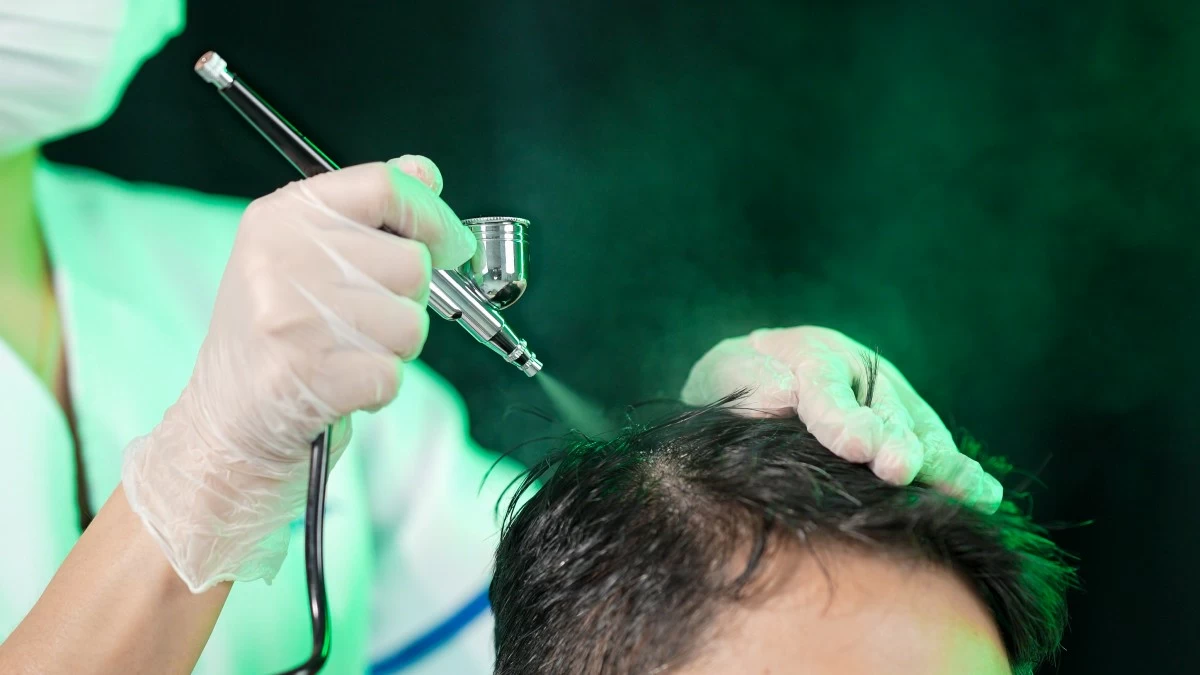
After the scalp cleansing and corrective treatment comes Svenson’s newest innovation: Gen45. Think of it as a cocktail of nutrients. It is formulated with organic and scalp-friendly ingredients designed to revitalize the hair and scalp.
The solution contains amino acids, which are intended to support thicker hair growth; ginseng and burdock, which are used to help detoxify the scalp; biotin and niacinamide, which support scalp health; saw palmetto, which is intended to address hair thinning; and antioxidants, which are intended to support healthy circulation.
Svenson’s red-light treatment finishes the session, using both red and blue LED light. It is intended to support cell regeneration and hair growth while also improving circulation to the scalp.
The whole session takes around 30 minutes and is performed at least three times a week. It has been several weeks since I started undergoing the Scalp Corrective Treatment and Gen45, and I must say that the results are promising.
The results are in the roots
A month after the initial consultation, we checked my scalp again using a digital scalp microscope. The scalp looked much healthier, with less inflammation, flaking, and dryness. What brought me the most joy was seeing new hair growing around the crown of my scalp. Hair fall is still present, but it is minimal. Then again, hair shedding is a natural part of the hair-growth cycle.
The Scalp Corrective Treatment and Gen45 may be suitable for those looking to improve scalp health and support healthier hair growth but who aren’t ready to consider a surgical procedure such as a hair transplant or medications such as minoxidil.
Results, however, take time, which is why consistency is key. Following the recommended treatment plan and keeping the hair and scalp clean are important parts of the process. Coupled with proper stress management, a balanced diet, and good sleep hygiene, these habits can help create a healthier environment for hair to grow.
It is important to remember that hair loss can have many different causes, and no single treatment works for everyone. Those experiencing sudden, excessive, or persistent hair loss should consult a dermatologist or qualified medical professional to determine the underlying cause and appropriate treatment.
For consultations, visit www.svenson.com.ph.

Related Tags

Health and Wellness fashion and beauty hair loss Svenson
ADVERTISEMENT
.most-popular .layout-ratio{ padding-bottom: 79.13%; } @media (min-width: 768px) and (max-width: 1024px) { .widget-title { font-size: 15px !important; } }

{{ articles_filter_1561_widget.title }}

.most-popular .layout-ratio{ padding-bottom: 79.13%; } @media (min-width: 768px) and (max-width: 1024px) { .widget-title { font-size: 15px !important; } }

{{ static_articles_1562_widget.title }}

.most-popular .layout-ratio{ padding-bottom: 79.13%; } @media (min-width: 768px) and (max-width: 1024px) { .widget-title { font-size: 15px !important; } }

{{ articles_filter_1563_widget.title }}

{{ articles_filter_1564_widget.title }}

.mb-article-details { position: relative; } .mb-article-details .article-body-preview, .mb-article-details .article-body-summary{ font-size: 17px; line-height: 30px; font-family: "Libre Caslon Text", serif; color: #000; } .mb-article-details .article-body-preview iframe , .mb-article-details .article-body-summary iframe{ width: 100%; margin: auto; } .read-more-background { background: linear-gradient(180deg, color(display-p3 1.000 1.000 1.000 / 0) 13.75%, color(display-p3 1.000 1.000 1.000 / 0.8) 30.79%, color(display-p3 1.000 1.000 1.000) 72.5%); position: absolute; height: 200px; width: 100%; bottom: 0; display: flex; justify-content: center; align-items: center; padding: 0; } .read-more-background a{ color: #000; } .read-more-btn { padding: 17px 45px; font-family: Inter; font-weight: 700; font-size: 18px; line-height: 16px; text-align: center; vertical-align: middle; border: 1px solid black; background-color: white; } .hidden { display: none; }
function initializeAllSwipers() { // Get all hidden inputs with cms_article_id document.querySelectorAll('[id^="cms_article_id_"]').forEach(function (input) { const cmsArticleId = input.value; const articleSelector = '#article-' + cmsArticleId + ' .body_images'; const swiperElement = document.querySelector(articleSelector); if (swiperElement && !swiperElement.classList.contains('swiper-initialized')) { new Swiper(articleSelector, { loop: true, pagination: false, navigation: { nextEl: '#article-' + cmsArticleId + ' .swiper-button-next', prevEl: '#article-' + cmsArticleId + ' .swiper-button-prev', }, }); } }); } setTimeout(initializeAllSwipers, 3000); const intersectionObserver = new IntersectionObserver( (entries) => { entries.forEach((entry) => { if (entry.isIntersecting) { const newUrl = entry.target.getAttribute("data-url"); if (newUrl) { history.pushState(null, null, newUrl); let article = entry.target; // Extract metadata const author = article.querySelector('.author-section').textContent.replace('By', '').trim(); const section = article.querySelector('.section-info ').textContent.replace(' ', ' '); const title = article.querySelector('.article-title h1').textContent; // Parse URL for Chartbeat path format const parsedUrl = new URL(newUrl, window.location.origin); const cleanUrl = parsedUrl.host + parsedUrl.pathname; // Update Chartbeat configuration if (typeof window._sf_async_config !== 'undefined') { window._sf_async_config.path = cleanUrl; window._sf_async_config.sections = section; window._sf_async_config.authors = author; } // Track virtual page view with Chartbeat if (typeof pSUPERFLY !== 'undefined' && typeof pSUPERFLY.virtualPage === 'function') { try { pSUPERFLY.virtualPage({ path: cleanUrl, title: title, sections: section, authors: author }); } catch (error) { console.error('ping error', error); } } // Optional: Update document title if (title && title !== document.title) { document.title = title; } } } }); }, { threshold: 0.1 } ); function showArticleBody(button) { const article = button.closest("article"); const summary = article.querySelector(".article-body-summary"); const body = article.querySelector(".article-body-preview"); const readMoreSection = article.querySelector(".read-more-background"); // Hide summary and read-more section summary.style.display = "none"; readMoreSection.style.display = "none"; // Show the full article body body.classList.remove("hidden"); } document.addEventListener("DOMContentLoaded", () => { let loadCount = 0; // Track how many times articles are loaded const offset = [1, 2, 3, 4, 5, 6, 7, 8, 9, 10]; // Offset values const currentUrl = window.location.pathname.substring(1); let isLoading = false; // Prevent multiple calls if (!currentUrl) { console.log("Current URL is invalid."); return; } const sentinel = document.getElementById("load-more-sentinel"); if (!sentinel) { console.log("Sentinel element not found."); return; } function isSentinelVisible() { const rect = sentinel.getBoundingClientRect(); return ( rect.top < window.innerHeight && rect.bottom >= 0 ); } function onScroll() { if (isLoading) return; if (isSentinelVisible()) { if (loadCount >= offset.length) { console.log("Maximum load attempts reached."); window.removeEventListener("scroll", onScroll); return; } isLoading = true; const currentOffset = offset[loadCount]; window.loadMoreItems().then(() => { let article = document.querySelector('#widget_1690 > div:nth-last-of-type(2) article'); intersectionObserver.observe(article) loadCount++; }).catch(error => { console.error("Error loading more items:", error); }).finally(() => { isLoading = false; }); } } window.addEventListener("scroll", onScroll); });

Sign up by email to receive news.