ADVERTISEMENT

Apple supercharges desktop lineup with AI-focused Mac mini and Mac Studio upgrades

Published Aug 26, 2026 08:45 am
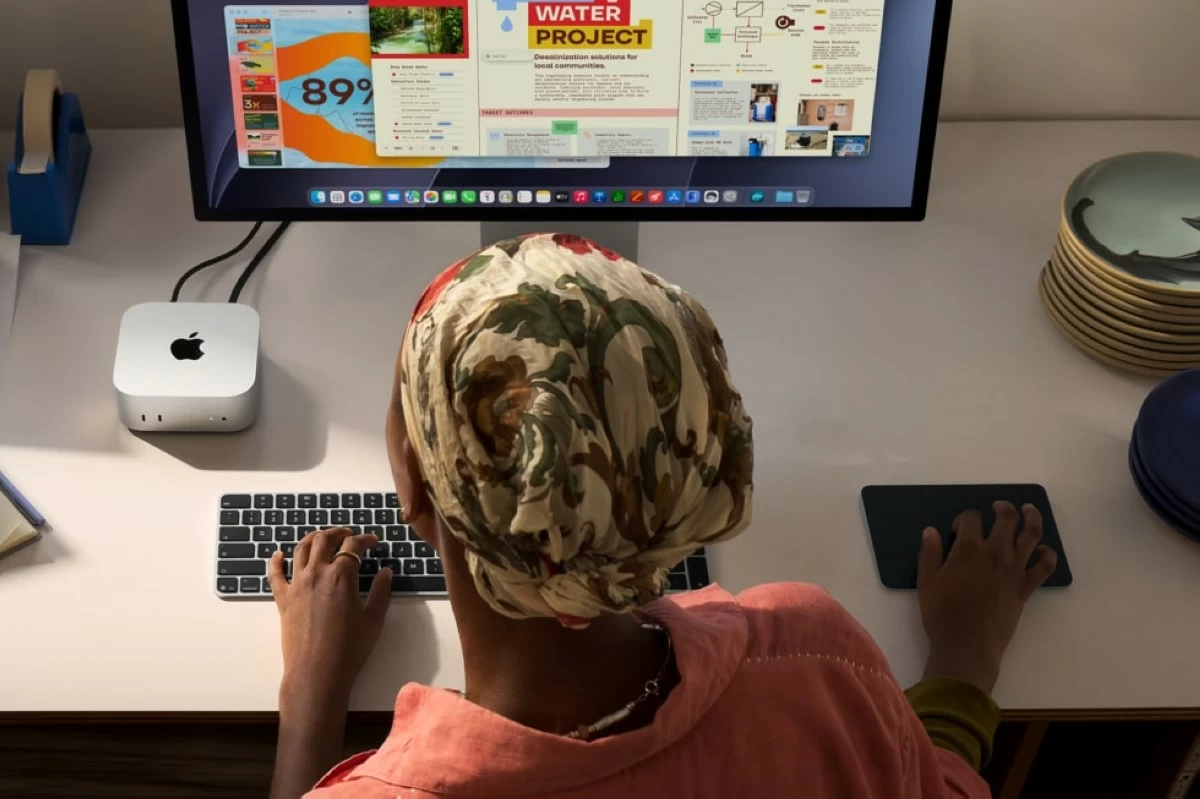
Ahead of the big hardware event, Apple has announced the overhauled desktop lineup, putting local artificial intelligence and performance efficiency at the forefront. Leading the announcement is the completely updated Mac mini, now featuring the next-generation M6 and M5 Pro chips, alongside a refreshed Mac Studio powered by the M5 Max and M5 Ultra.
Both compact machines leverage hardware-accelerated Neural Accelerators built directly into their GPU cores, aiming to make on-device LLM inference, local AI agents, and creative production faster without relying on cloud processing.
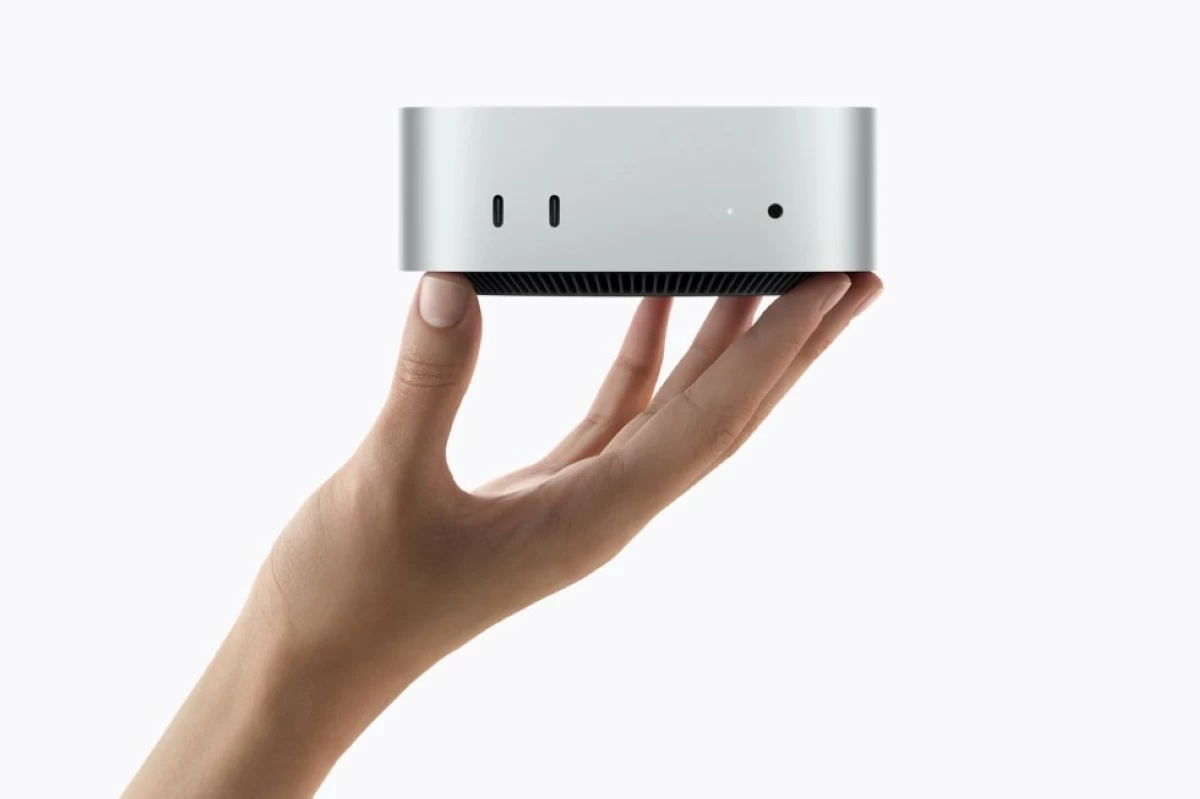
Mac mini: Ultracompact AI powerhouse
The new Mac mini serves as Apple's primary push into always-on, deskside agentic computing. With its tiny footprint, upgraded 2.5Gb Ethernet (10Gb optional), and faster storage architecture, it offers server-like utility for personal or business workflows.
M6 Configuration: Introduces a 12-core CPU with Apple's fastest single-threaded cores, a 12-core GPU with built-in Neural Accelerators, and a Dual 16-core Neural Engine. It supports up to 32GB of unified memory (170GB/s bandwidth) and delivers up to 4x faster AI performance and 2x faster graphics than the M4 generation.
M5 Pro Configuration: Built for heavy creative workloads like 3D design and video editing, offering up to an 18-core CPU, up to a 20-core GPU, and support for up to 64GB of unified memory (307GB/s bandwidth).
Connectivity: Front USB-C ports and audio jack; rear connectivity includes 2.5Gb Ethernet, HDMI, and three Thunderbolt ports (Thunderbolt 4 on M6, Thunderbolt 5 on M5 Pro).
Mac Studio: Extreme pro Workflows and clustering
For heavy-duty data science, complex 3D rendering, and multi-stream 8K video editing, the updated Mac Studio scales performance further with the M5 Max and M5 Ultra chips.
M5 Max: Packs an 18-core CPU, up to 40 GPU cores, and up to 128GB of memory.
M5 Ultra: Features a 36-core CPU, up to 80 GPU cores, and up to 512GB of unified memory with 1.2TB/s bandwidth—capable of running massive frontier-class open-weight models locally.
System Clustering: Using Thunderbolt 5 and RDMA (Remote Direct Memory Access), users can link up to four Mac Studio units together to form a vast shared memory pool, yielding up to 3x faster distributed AI inference.
Shared ecosystem features
Both systems run the upcoming macOS 27 Golden Gate, featuring a revamped Spotlight search engine and UI refinements across the system.
Wireless capabilities are standardized across both machines with Wi-Fi 7 and Bluetooth 6, alongside USB-C genlock support for precise display-to-camera frame synchronization with devices like the iPhone 17 Pro.

Related Tags

Apple M6 Mac mini Mac Studio M5 Pro
ADVERTISEMENT
.most-popular .layout-ratio{ padding-bottom: 79.13%; } @media (min-width: 768px) and (max-width: 1024px) { .widget-title { font-size: 15px !important; } }

{{ articles_filter_1561_widget.title }}

.most-popular .layout-ratio{ padding-bottom: 79.13%; } @media (min-width: 768px) and (max-width: 1024px) { .widget-title { font-size: 15px !important; } }

{{ static_articles_1562_widget.title }}

.most-popular .layout-ratio{ padding-bottom: 79.13%; } @media (min-width: 768px) and (max-width: 1024px) { .widget-title { font-size: 15px !important; } }

{{ articles_filter_1563_widget.title }}

{{ articles_filter_1564_widget.title }}

.mb-article-details { position: relative; } .mb-article-details .article-body-preview, .mb-article-details .article-body-summary{ font-size: 17px; line-height: 30px; font-family: "Libre Caslon Text", serif; color: #000; } .mb-article-details .article-body-preview iframe , .mb-article-details .article-body-summary iframe{ width: 100%; margin: auto; } .read-more-background { background: linear-gradient(180deg, color(display-p3 1.000 1.000 1.000 / 0) 13.75%, color(display-p3 1.000 1.000 1.000 / 0.8) 30.79%, color(display-p3 1.000 1.000 1.000) 72.5%); position: absolute; height: 200px; width: 100%; bottom: 0; display: flex; justify-content: center; align-items: center; padding: 0; } .read-more-background a{ color: #000; } .read-more-btn { padding: 17px 45px; font-family: Inter; font-weight: 700; font-size: 18px; line-height: 16px; text-align: center; vertical-align: middle; border: 1px solid black; background-color: white; } .hidden { display: none; }
function initializeAllSwipers() { // Get all hidden inputs with cms_article_id document.querySelectorAll('[id^="cms_article_id_"]').forEach(function (input) { const cmsArticleId = input.value; const articleSelector = '#article-' + cmsArticleId + ' .body_images'; const swiperElement = document.querySelector(articleSelector); if (swiperElement && !swiperElement.classList.contains('swiper-initialized')) { new Swiper(articleSelector, { loop: true, pagination: false, navigation: { nextEl: '#article-' + cmsArticleId + ' .swiper-button-next', prevEl: '#article-' + cmsArticleId + ' .swiper-button-prev', }, }); } }); } setTimeout(initializeAllSwipers, 3000); const intersectionObserver = new IntersectionObserver( (entries) => { entries.forEach((entry) => { if (entry.isIntersecting) { const newUrl = entry.target.getAttribute("data-url"); if (newUrl) { history.pushState(null, null, newUrl); let article = entry.target; // Extract metadata const author = article.querySelector('.author-section').textContent.replace('By', '').trim(); const section = article.querySelector('.section-info ').textContent.replace(' ', ' '); const title = article.querySelector('.article-title h1').textContent; // Parse URL for Chartbeat path format const parsedUrl = new URL(newUrl, window.location.origin); const cleanUrl = parsedUrl.host + parsedUrl.pathname; // Update Chartbeat configuration if (typeof window._sf_async_config !== 'undefined') { window._sf_async_config.path = cleanUrl; window._sf_async_config.sections = section; window._sf_async_config.authors = author; } // Track virtual page view with Chartbeat if (typeof pSUPERFLY !== 'undefined' && typeof pSUPERFLY.virtualPage === 'function') { try { pSUPERFLY.virtualPage({ path: cleanUrl, title: title, sections: section, authors: author }); } catch (error) { console.error('ping error', error); } } // Optional: Update document title if (title && title !== document.title) { document.title = title; } } } }); }, { threshold: 0.1 } ); function showArticleBody(button) { const article = button.closest("article"); const summary = article.querySelector(".article-body-summary"); const body = article.querySelector(".article-body-preview"); const readMoreSection = article.querySelector(".read-more-background"); // Hide summary and read-more section summary.style.display = "none"; readMoreSection.style.display = "none"; // Show the full article body body.classList.remove("hidden"); } document.addEventListener("DOMContentLoaded", () => { let loadCount = 0; // Track how many times articles are loaded const offset = [1, 2, 3, 4, 5, 6, 7, 8, 9, 10]; // Offset values const currentUrl = window.location.pathname.substring(1); let isLoading = false; // Prevent multiple calls if (!currentUrl) { console.log("Current URL is invalid."); return; } const sentinel = document.getElementById("load-more-sentinel"); if (!sentinel) { console.log("Sentinel element not found."); return; } function isSentinelVisible() { const rect = sentinel.getBoundingClientRect(); return ( rect.top < window.innerHeight && rect.bottom >= 0 ); } function onScroll() { if (isLoading) return; if (isSentinelVisible()) { if (loadCount >= offset.length) { console.log("Maximum load attempts reached."); window.removeEventListener("scroll", onScroll); return; } isLoading = true; const currentOffset = offset[loadCount]; window.loadMoreItems().then(() => { let article = document.querySelector('#widget_1690 > div:nth-last-of-type(2) article'); intersectionObserver.observe(article) loadCount++; }).catch(error => { console.error("Error loading more items:", error); }).finally(() => { isLoading = false; }); } } window.addEventListener("scroll", onScroll); });

Sign up by email to receive news.