






 Business
The Stock Market
SEC tests Binance-linked crypto platform but says approval not guaranteed
Business
The Stock Market
SEC tests Binance-linked crypto platform but says approval not guaranteed
SEC tests Binance-linked crypto platform but says approval not guaranteed


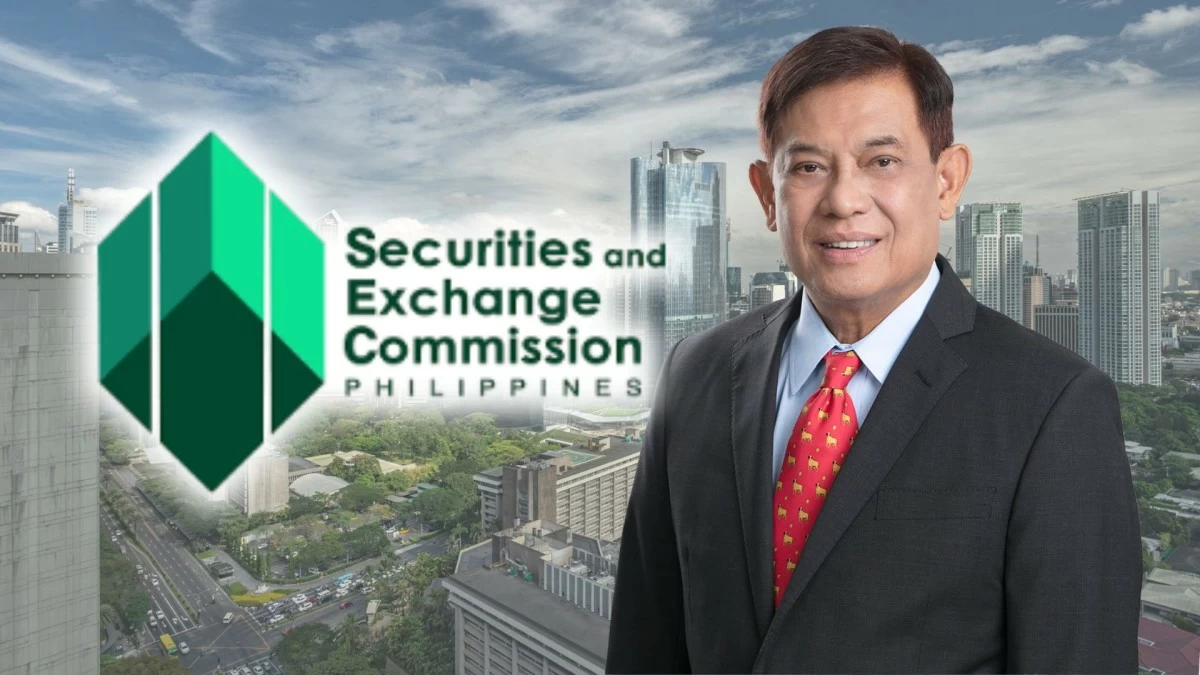
The Securities and Exchange Commission (SEC) is opening the door to cryptocurrency innovation by allowing the Binance platform to undergo testing in its regulatory sandbox through local partner BlockShoals Technologies Inc., while stressing that participation does not guarantee regulatory approval.
“We should not close our minds to innovation. In fact, my principle is, we do not approve innovation only because there is an issue. Neither do we reject it because it is unfamiliar, I think we’re in the midst of global innovation,” said SEC Chairman Francis E. Lim in a recent media briefing.
Lim noted that the SEC has to keep up with the market’s evolution and cannot be caught sleeping on the job so that the Philippines will not be left behind.
He also pointed out that just because Binance is now in the SEC’s Strategic Sandbox (StratBox) does not automatically mean it will be allowed to operate in the Philippines.
“It may or may not happen. But we have to test. We will look at the data, look at the appropriate regulation. In fact, it’s a complete set of due diligence.”
The Philippine Stock Exchange (PSE) has expressed concern that allowing cryptocurrency trading in the Philippines will create competition for the bourse in attracting investors and run counter to the SEC and the PSE’s goal of developing the local capital market.
“I even have this idea, why don’t we tokenize our shares of stocks? That’s an innovation. Tokenization,” Lim said, explaining that since the goal is to get more of the population invested in stocks and some stocks are already of high value, these can be tokenized to reduce them to bite sizes so more market participants can afford them.
Meanwhile, SEC Commissioner Rogelio V. Quevedo clarified that “being in the sandbox does not cure the penalties that will be imposed on a company that had committed violations against the Securities Regulation Code (SRC). Being in the sandbox is not an excuse or is not simply a highway to being approved already by the SEC. It is there so that the SEC can properly evaluate.”
“I can also say that, to conduct testing, I cannot agree that we will open the system because abuses might be committed while it is being tested. So, we will make sure that we will not open a system which can be used to abuse the public,” he added.
Quevedo stressed that the sandbox is not an excuse to get on the road to approval by the SEC. Just because a company is in the sandbox does not mean it is on the road to approval by the SEC. It will still have to go through a rigorous process to secure approval.
Lim also noted that “In fact, in our survey, even in markets like Singapore and others, it takes quite a while, around two years before [approval when] it’s in the sandbox.”
The participation of BlockShoals in the SEC’s StratBox allows the company to test trading activities and other advanced crypto-asset products within a controlled regulatory environment for a period of 90 days.
Under its approved testing plan, the company is required to integrate with a virtual asset service provider (VASP) licensed by the Bangko Sentral ng Pilipinas (BSP).
“The indicated 90-day period is intended solely for the establishment and integration of the technical infrastructure and systems between BlockShoals and its local VASP partner,” the SEC said.
In particular, the process will focus on the development of secure fiat rails that will enable the seamless on-ramping and off-ramping of Philippine pesos, allowing users to convert fiat currency into cryptocurrency and vice versa.
“Any system access or operational connectivity provided during this period is limited strictly to activities necessary for technical integration and sandbox testing. This should not be construed as the commencement of public onboarding, public trading operations, or broader market reopening,” the SEC stressed.
The commission also emphasized that any future public participation or onboarding activities will remain subject to applicable regulatory requirements and further SEC approval.