






 Philippines
Mindanao
Davao City Council seeks inclusion of Mandaya tribe in Kadayawan Festival
Philippines
Mindanao
Davao City Council seeks inclusion of Mandaya tribe in Kadayawan Festival
Davao City Council seeks inclusion of Mandaya tribe in Kadayawan Festival
By Ivy Tejano


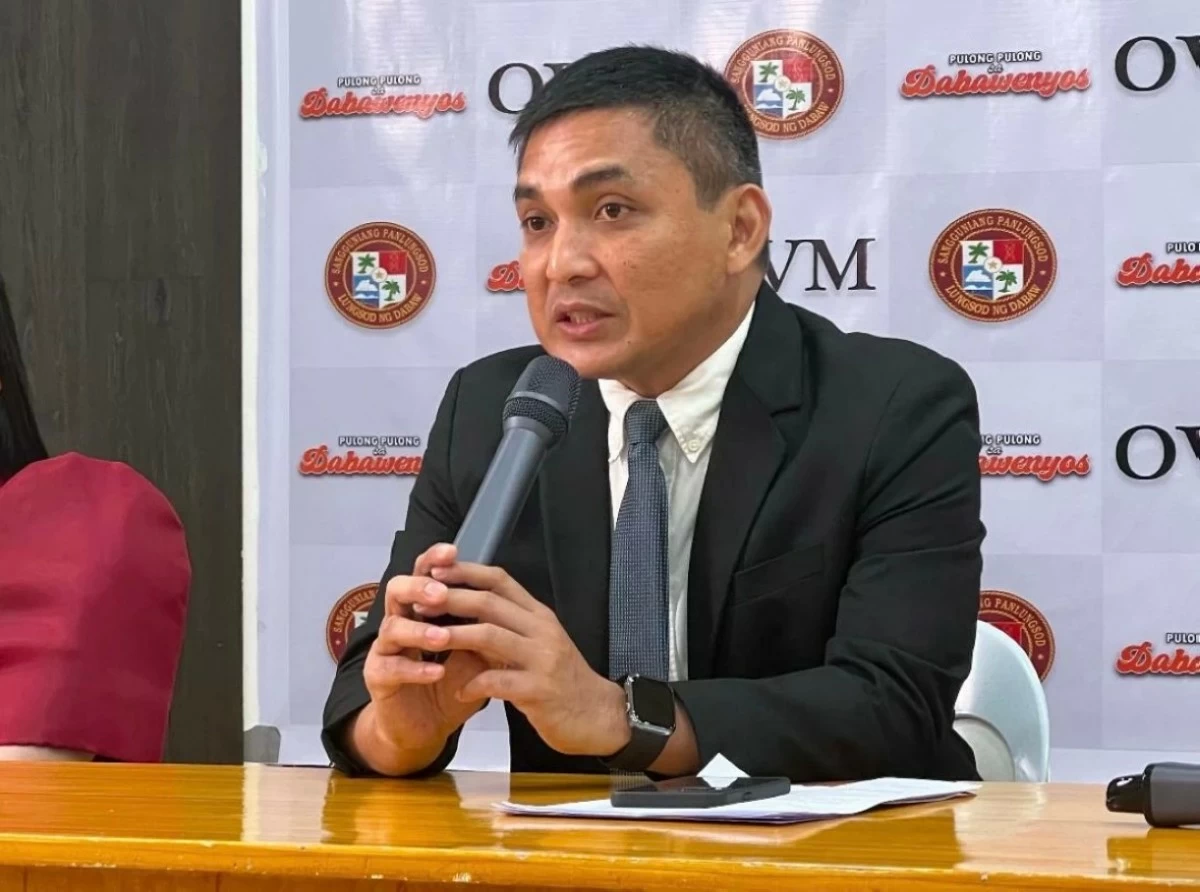
DAVAO CITY – The Davao City Council passed a resolution on Tuesday, August 25, calling on the local government executive offices to explore mechanisms that would include the Mandaya tribe in the annual Kadayawan Festival celebrations.
Councilor Diosdado Angelo Mahipus Jr.'s resolution encouraged the City Mayor's Office, Tourism Office, and Davao City Culture and Arts Office to expand cultural participation while preserving the official status of Davao's recognized indigenous groups.
In a privilege speech, Mahipus highlighted that while the festival officially honors five Indigenous Peoples and six Moro groups, thousands of Mandaya people have long resided in, worked in, and contributed to the growth of Davao City.
"Recognizing another culture does not diminish the cultures already recognized," said the chairperson of the Committee on Socialized Housing Project and Committee on Oversight in a privileged speech delivered before the 21st City Council.
Mahipus emphasized that allowing another Indigenous group to participate does not take away the 11 ethnolinguistic groups of Kadayawan. Instead, he said, it can expand the very principle that Kadayawan represents: "unity in diversity."
The festival currently recognizes five Indigenous Peoples groups—the Ata, Bagobo-Klata, Matigsalug, Obo-Manobo, and Bagobo-Tagabawa—and six Moro groups—the Kagan, Iranun, Maguindanaon, Maranao, Sama, and Tausug.
Acknowledging that the Mandaya's principal ancestral domains are historically associated with Davao Oriental, Mahipus pointed out that the Mandaya's presence in Davao City predates modern political borders.
The councilor noted that communities across Mindanao have long interacted through trade, travel, and settlement, adding that the Mandaya population nationwide exceeds half a million, according to national census figures.
He emphasized that generations of Mandaya have made Davao City their home, contributing actively to the city's local economy, civil society, and community life. The group is one of the country's largest indigenous populations.
While clarifying that he is not advocating an immediate overhaul of the historical recognition long accorded to the 11 officially recognized groups, Mahipus proposed alternative avenues for broader inclusion.
Among the proposals are an expanded Indigenous Peoples cultural showcase, a "guest ethnolinguistic communities" designation, and dedicated areas for cultural exhibitions and performances.
"If Kadayawan is truly a celebration of thanksgiving, culture, unity, and identity, then perhaps its continuing evolution should reflect the continuing evolution of Davao itself," Mahipus said, adding that more cultural groups could strengthen the festival.
Councilor Danilo Dayanghirang, chairperson of the Committees on Finance, Ways and Means, and Appropriations, and on Games and Amusement, who is also a member of the Mandaya tribe, welcomed the initiative.
Meanwhile, Councilor Arnulfo Cabling, chairperson of the Committee on Ethics and Good Governance, said the Indigenous Peoples’ Rights Act (IPRA) limits formal legislative representation to the city’s original ancestral groups.
“I would like to suggest that we also consider asking the mayor, if possible, that the Mandaya tribe be also represented in the Deputy Mayor’s Office, so that there will also be somebody to attend to their needs,” Cabling said.
Councilor Myrna Dalodo–Ortiz, chairperson of the Committees on Beautification and Tourism, and on Trade, Commerce, and Industry, said the Mandaya tribe is already part of Kadayawan’s history.
Ortiz cited the Balangay City High Performing Arts from Mati City in Davao Oriental, which recently won the Indak-Indak sa Kadayawan Open Category for the third straight year by showcasing Mandaya heritage.