ADVERTISEMENT

The art of upcycling: A personal and ecological advocacy

Abe Orobia reflects on existence and decay in 'Nature x Nurture'

Published Aug 24, 2026 09:17 am
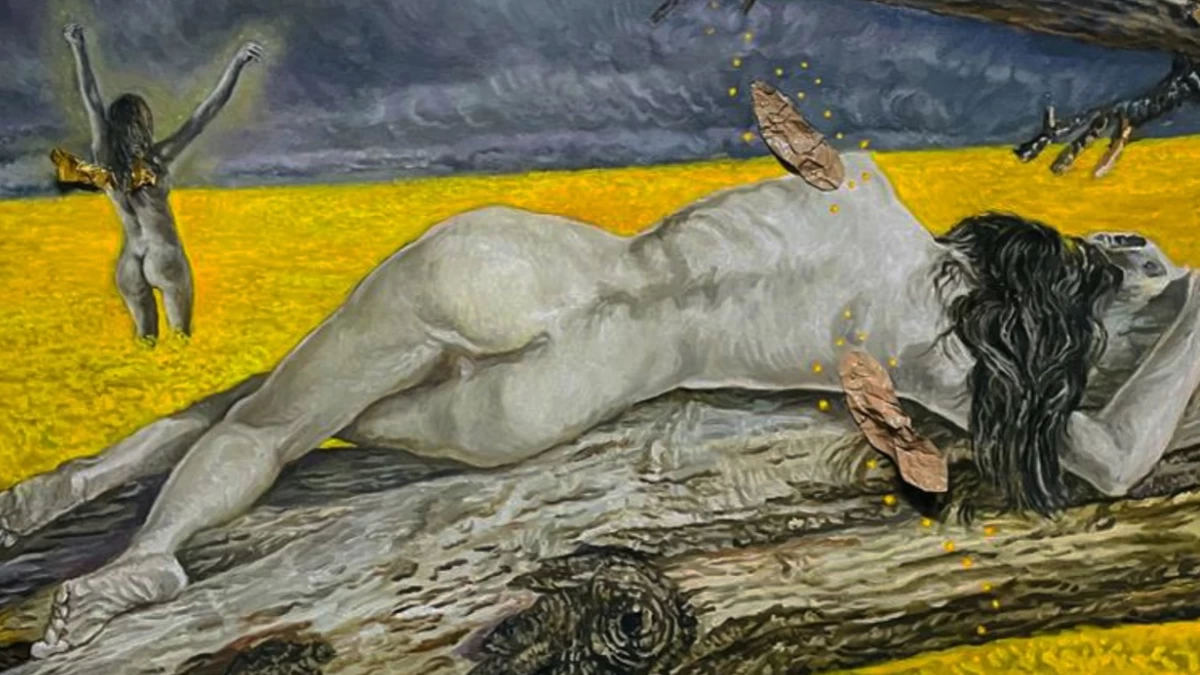
EVEN IN SLUMBER WE GAIN VICTORY, 40x30 arch, oil and aluminum sheets on canvas, 2026
In his studio, surrounded by stacks of books, pet cats, and ongoing works, painter and educator Abe Orobia contemplates the delicate balance between existence and decay. His solo exhibit, “Nature x Nurture,” serves as both an environmental plea and a deeply personal reflection on mortality, divine light, and human frailty.
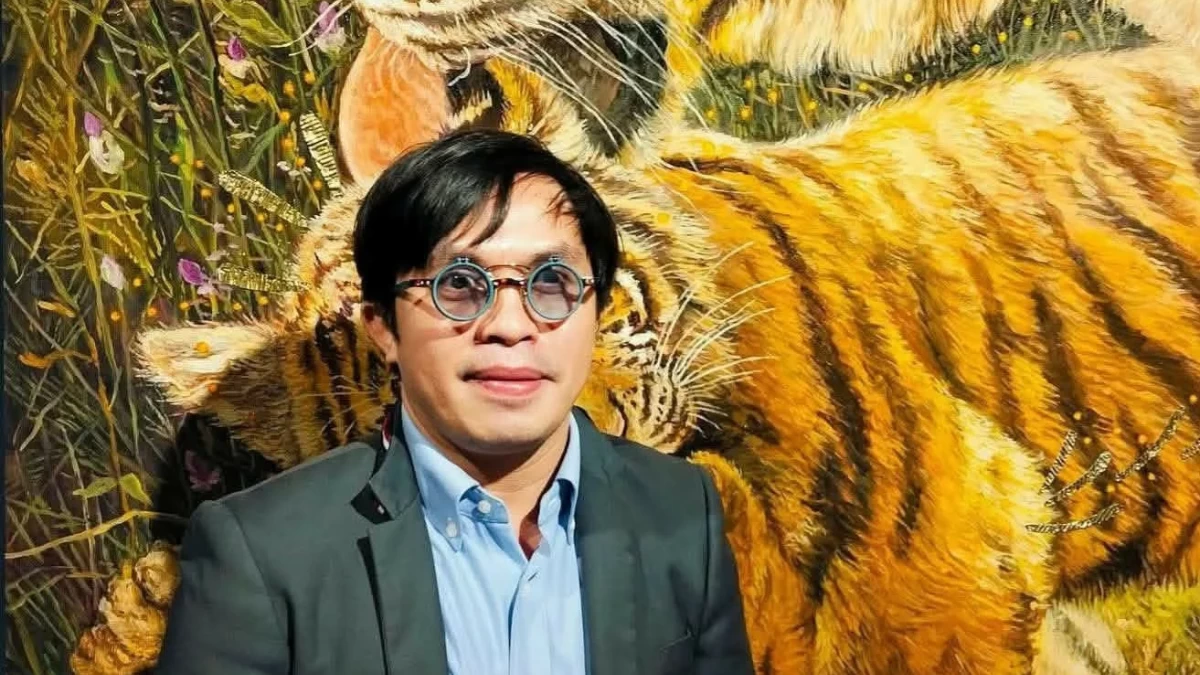
MEET THE ARTIST Abe Orobia
Abe’s signature medium weaves together vibrant oils with crumpled, upcycled aluminum paint tubes, a practice rooted in necessity and environmentalism.
“Around 2015, there was a situation where I was running out of paints. So I managed to cut in and had some of the emptied tubes in my storage to extend their use,” Abe shares. “I was surprised that the film coating inside the tube varies in color. Some are brass colored, some green-gold, copper-like, or purely aluminum. In a sense, my narrative is not simply to encourage conservation and preservation, but I practice what I am imbuing in my works.”
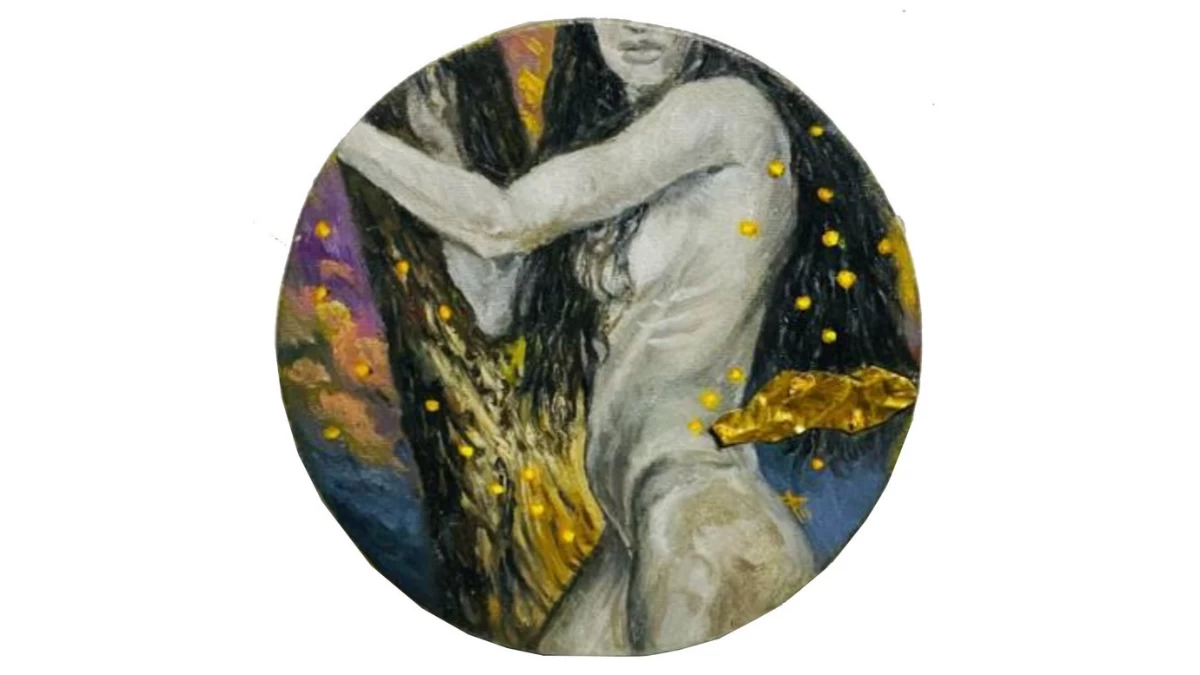
DANCE WITH THE SKIES, 7.5 diameter, oil and aluminum sheets on canvas, 2026
The upcycled aluminum, often folded into golden wings attached to greyscale human bodies, echoes the Japanese philosophy of “kintsugi,” repairing broken places with gold to signify healing through restoration rather than perfection.
Vulnerability set against nature
The centerpiece of the collection, “Heaven’s Embrace,” sets the thematic tone for the entire exhibit.
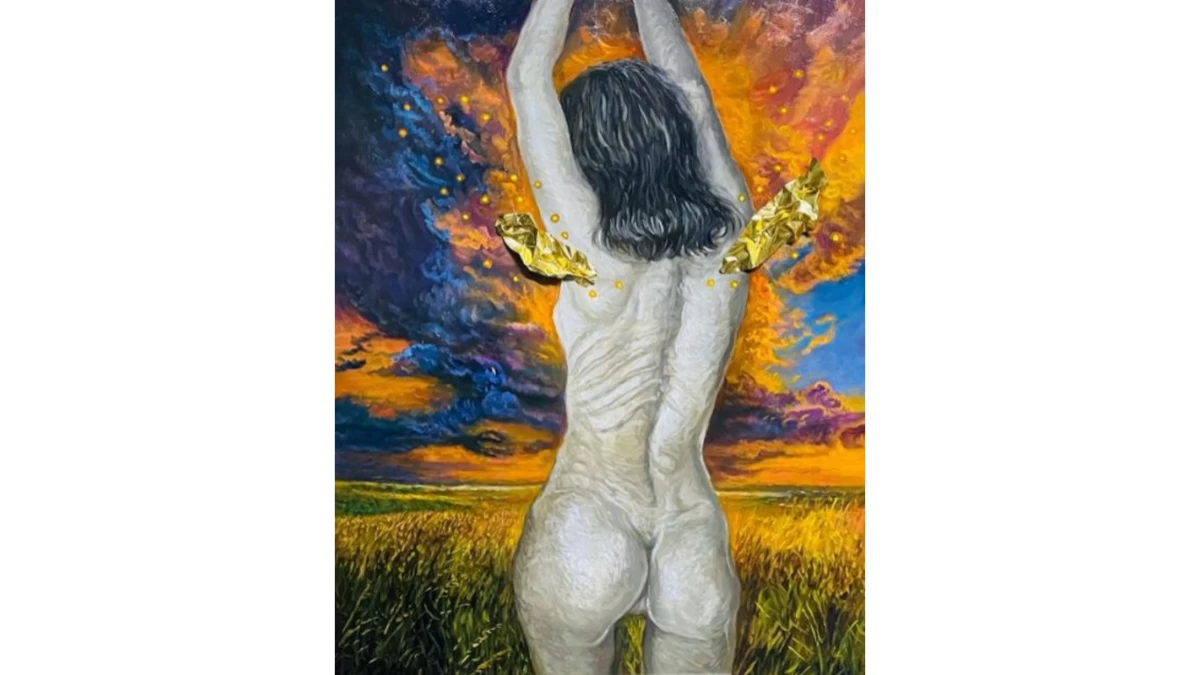
HEAVEN'S EMBRACE, 32x24 inches, oil and aluminum sheets on canvas, 2026
In “Heaven’s Embrace,” a grayscale figure stands back-facing in a sweeping, golden wheat field beneath a fiery, cloud-heavy sunset sky. Her arms are raised toward the heavens in total surrender. The metallic aluminum wings crumpled against her back catch the warm ambient light, while glowing yellow “orbs of life” speckle her skin and float into the sky. As Abe notes, “Sunset is a perfect metaphor for beautiful endings. All our endeavors are rewarded based on what we have planted.”
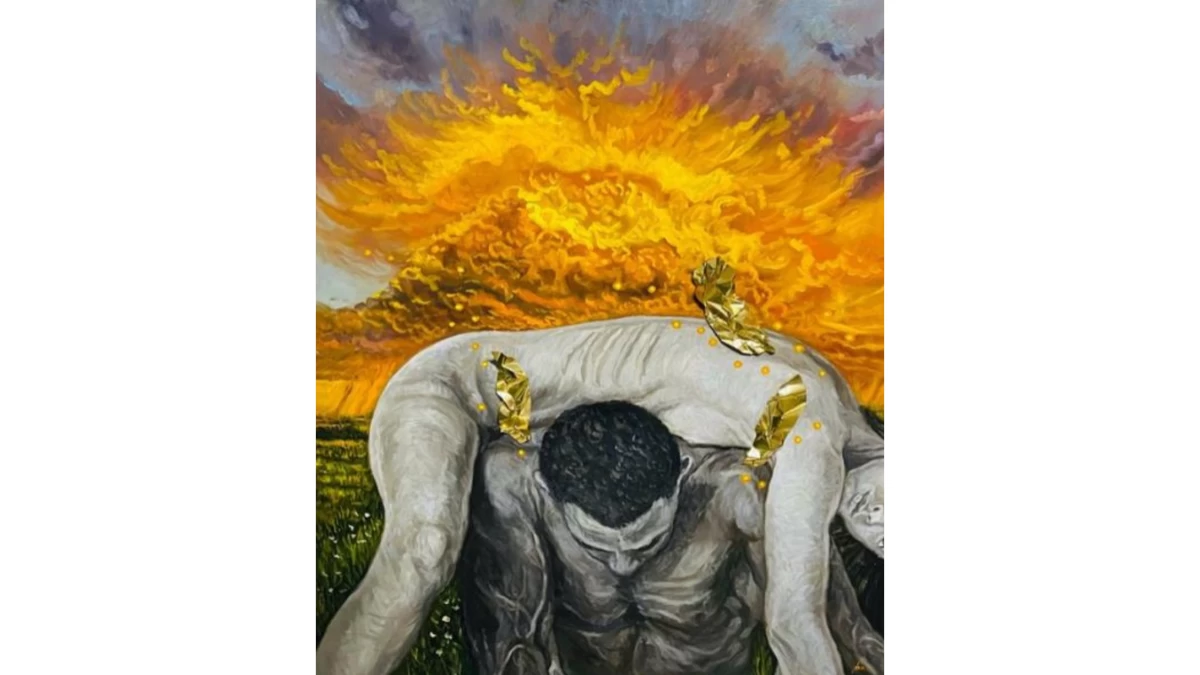
LET ME CARRY YOU WITH ALL MY MIGHT, 32x24 inches, oil and aluminum sheets on canvas, 2026
The tension between physical exhaustion and spiritual surrender continues in “Let Me Carry You With All My Might,” where a darkened, strained male figure stoops beneath the weight of a pale, grayscale body. The fiery, swirling sounds above echo the intensity of human physical struggle. The luminous yellow orbs scatter across the arched back, illustrating how the capacity for care and endurance persists even under unbearable burdens.
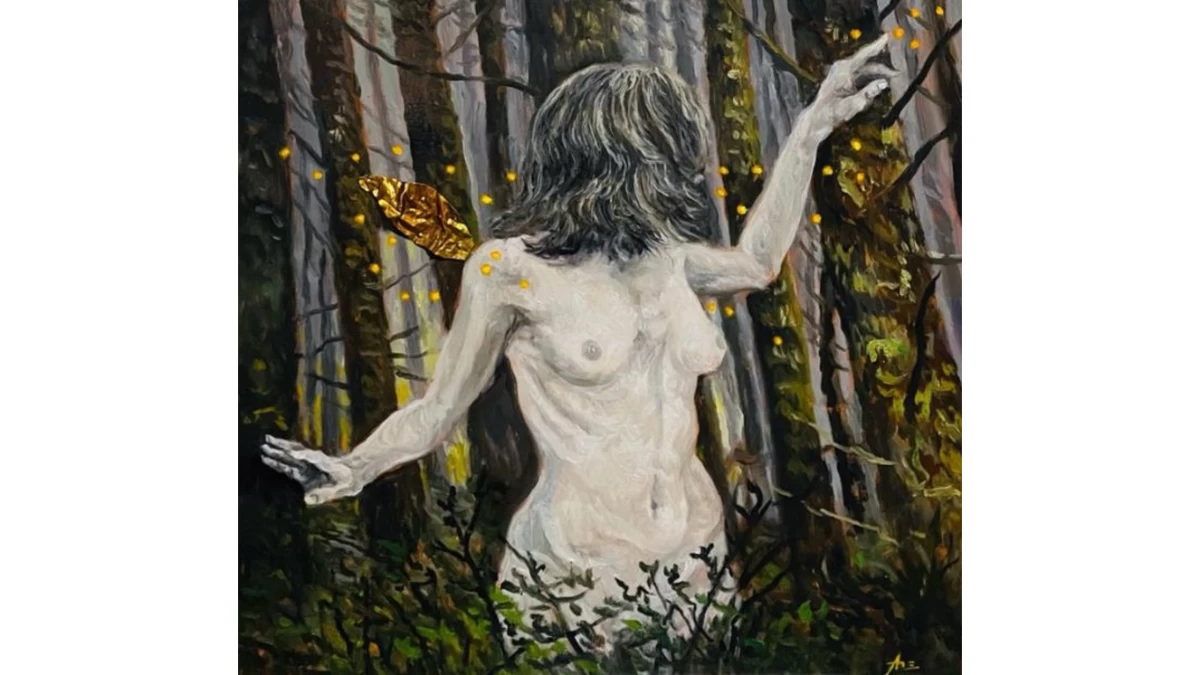
THE FOREST TELLS US MANY SECRETS, 16x16 inches, oil and aluminum sheets on canvas, 2026
In contrast, “The Forest Tells Us Many Secrets” retreats into a dense, vertical woods. A pale female figure reaches upward into the foliage, surrounded by floating orbs that mimic fireflies. The deep green and dark timber backgrounds accentuate the vulnerability of the unadorned body, emphasizing that nature does not conquer humanity, but quietly envelops it.
The arch-framed “Even in Slumber We Gain Victory” explores physical exhaustion and quiet endurance. A figure lies prone along a fallen, weathered tree trunk while another stands triumphantly in a bright yellow field in the distance. Here, visible skeletal undertones beneath the skin emphasize our finite nature, reminding us that rest and decay are part of nature’s unyielding cycle.
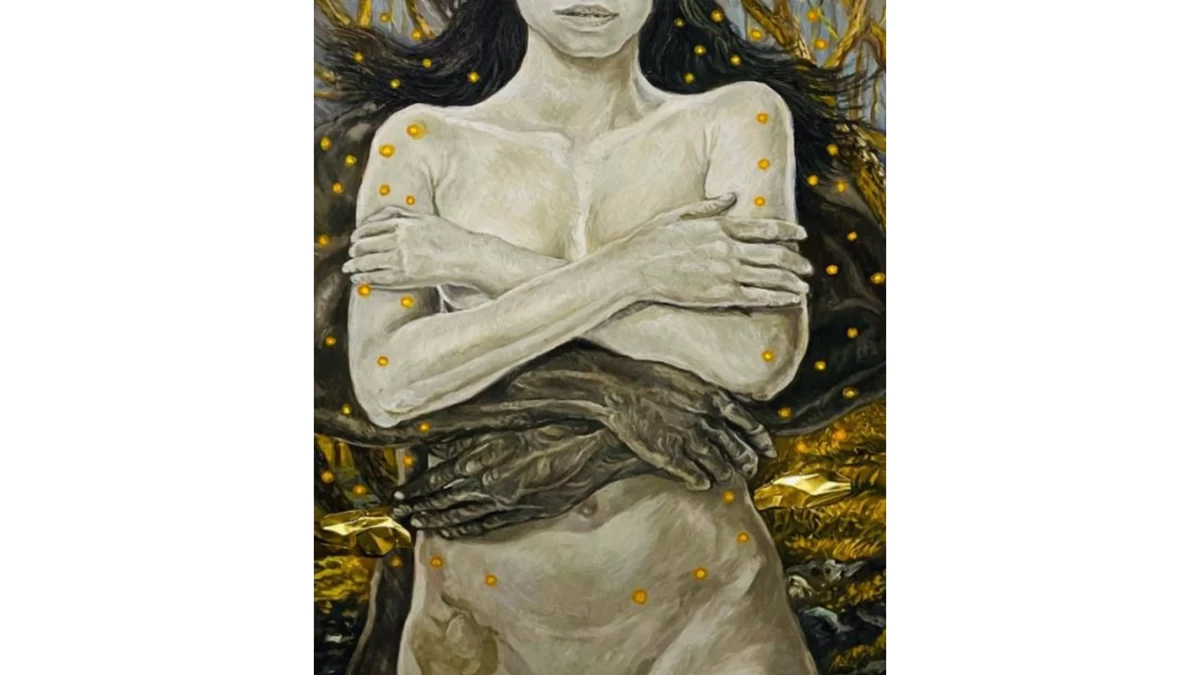
REBIRTH-THE FOREST REMEMBERS, 24x18 inches, oil and aluminum sheets on canvas, 2026
Smaller, intimate pieces like the circular canvas “Dance With the Skies” and the close-cropped composition “Rebirth - The Forest Remembers” bring the viewer face-to-face with human contact and environmental intimacy. In “Rebirth,” dark, weathered hands clasp around a pale torso, bringing texture and deep contrast to the canvas. The metallic wings protruding from the sides bind the figure directly to the golden foliage behind her, blending flesh and forest into a single, cohesive entity.
For Abe, addressing ecological crises begins with looking inward. The title “Nature x Nurture” is a dual mandate: to honor the planet that sustains us and to cultivate our own internal ethics.
“We must nurture and tame our one nature or faculties to be able to understand and take care of the environment,” Abe emphasizes. “If nature reveals the greatness of God’s creation, then our responses to that creation reveal the measure of our own humanity.”
Through broad brushstrokes, raw textures, and metallic additions, Abe invites viewers to abandon the illusion of mastery over nature, embrace human vulnerability, and cultivate the inner light that remains.
“Nature x Nurture” by Abe Orobia runs until Aug. 28 at Nami Art Gallery, 138 Whiteplains, Katipunan Ave., Quezon City.

Related Tags

Arts and Culture Abe Orobia Nami Art Gallery
ADVERTISEMENT
.most-popular .layout-ratio{ padding-bottom: 79.13%; } @media (min-width: 768px) and (max-width: 1024px) { .widget-title { font-size: 15px !important; } }

{{ articles_filter_1561_widget.title }}

.most-popular .layout-ratio{ padding-bottom: 79.13%; } @media (min-width: 768px) and (max-width: 1024px) { .widget-title { font-size: 15px !important; } }

{{ static_articles_1562_widget.title }}

.most-popular .layout-ratio{ padding-bottom: 79.13%; } @media (min-width: 768px) and (max-width: 1024px) { .widget-title { font-size: 15px !important; } }

{{ articles_filter_1563_widget.title }}

{{ articles_filter_1564_widget.title }}

.mb-article-details { position: relative; } .mb-article-details .article-body-preview, .mb-article-details .article-body-summary{ font-size: 17px; line-height: 30px; font-family: "Libre Caslon Text", serif; color: #000; } .mb-article-details .article-body-preview iframe , .mb-article-details .article-body-summary iframe{ width: 100%; margin: auto; } .read-more-background { background: linear-gradient(180deg, color(display-p3 1.000 1.000 1.000 / 0) 13.75%, color(display-p3 1.000 1.000 1.000 / 0.8) 30.79%, color(display-p3 1.000 1.000 1.000) 72.5%); position: absolute; height: 200px; width: 100%; bottom: 0; display: flex; justify-content: center; align-items: center; padding: 0; } .read-more-background a{ color: #000; } .read-more-btn { padding: 17px 45px; font-family: Inter; font-weight: 700; font-size: 18px; line-height: 16px; text-align: center; vertical-align: middle; border: 1px solid black; background-color: white; } .hidden { display: none; }
function initializeAllSwipers() { // Get all hidden inputs with cms_article_id document.querySelectorAll('[id^="cms_article_id_"]').forEach(function (input) { const cmsArticleId = input.value; const articleSelector = '#article-' + cmsArticleId + ' .body_images'; const swiperElement = document.querySelector(articleSelector); if (swiperElement && !swiperElement.classList.contains('swiper-initialized')) { new Swiper(articleSelector, { loop: true, pagination: false, navigation: { nextEl: '#article-' + cmsArticleId + ' .swiper-button-next', prevEl: '#article-' + cmsArticleId + ' .swiper-button-prev', }, }); } }); } setTimeout(initializeAllSwipers, 3000); const intersectionObserver = new IntersectionObserver( (entries) => { entries.forEach((entry) => { if (entry.isIntersecting) { const newUrl = entry.target.getAttribute("data-url"); if (newUrl) { history.pushState(null, null, newUrl); let article = entry.target; // Extract metadata const author = article.querySelector('.author-section').textContent.replace('By', '').trim(); const section = article.querySelector('.section-info ').textContent.replace(' ', ' '); const title = article.querySelector('.article-title h1').textContent; // Parse URL for Chartbeat path format const parsedUrl = new URL(newUrl, window.location.origin); const cleanUrl = parsedUrl.host + parsedUrl.pathname; // Update Chartbeat configuration if (typeof window._sf_async_config !== 'undefined') { window._sf_async_config.path = cleanUrl; window._sf_async_config.sections = section; window._sf_async_config.authors = author; } // Track virtual page view with Chartbeat if (typeof pSUPERFLY !== 'undefined' && typeof pSUPERFLY.virtualPage === 'function') { try { pSUPERFLY.virtualPage({ path: cleanUrl, title: title, sections: section, authors: author }); } catch (error) { console.error('ping error', error); } } // Optional: Update document title if (title && title !== document.title) { document.title = title; } } } }); }, { threshold: 0.1 } ); function showArticleBody(button) { const article = button.closest("article"); const summary = article.querySelector(".article-body-summary"); const body = article.querySelector(".article-body-preview"); const readMoreSection = article.querySelector(".read-more-background"); // Hide summary and read-more section summary.style.display = "none"; readMoreSection.style.display = "none"; // Show the full article body body.classList.remove("hidden"); } document.addEventListener("DOMContentLoaded", () => { let loadCount = 0; // Track how many times articles are loaded const offset = [1, 2, 3, 4, 5, 6, 7, 8, 9, 10]; // Offset values const currentUrl = window.location.pathname.substring(1); let isLoading = false; // Prevent multiple calls if (!currentUrl) { console.log("Current URL is invalid."); return; } const sentinel = document.getElementById("load-more-sentinel"); if (!sentinel) { console.log("Sentinel element not found."); return; } function isSentinelVisible() { const rect = sentinel.getBoundingClientRect(); return ( rect.top < window.innerHeight && rect.bottom >= 0 ); } function onScroll() { if (isLoading) return; if (isSentinelVisible()) { if (loadCount >= offset.length) { console.log("Maximum load attempts reached."); window.removeEventListener("scroll", onScroll); return; } isLoading = true; const currentOffset = offset[loadCount]; window.loadMoreItems().then(() => { let article = document.querySelector('#widget_1690 > div:nth-last-of-type(2) article'); intersectionObserver.observe(article) loadCount++; }).catch(error => { console.error("Error loading more items:", error); }).finally(() => { isLoading = false; }); } } window.addEventListener("scroll", onScroll); });

Sign up by email to receive news.