

ADVERTISEMENT

Pugad Lawin Shrine renovated for 130th anniversary

Published Aug 24, 2026 10:16 am
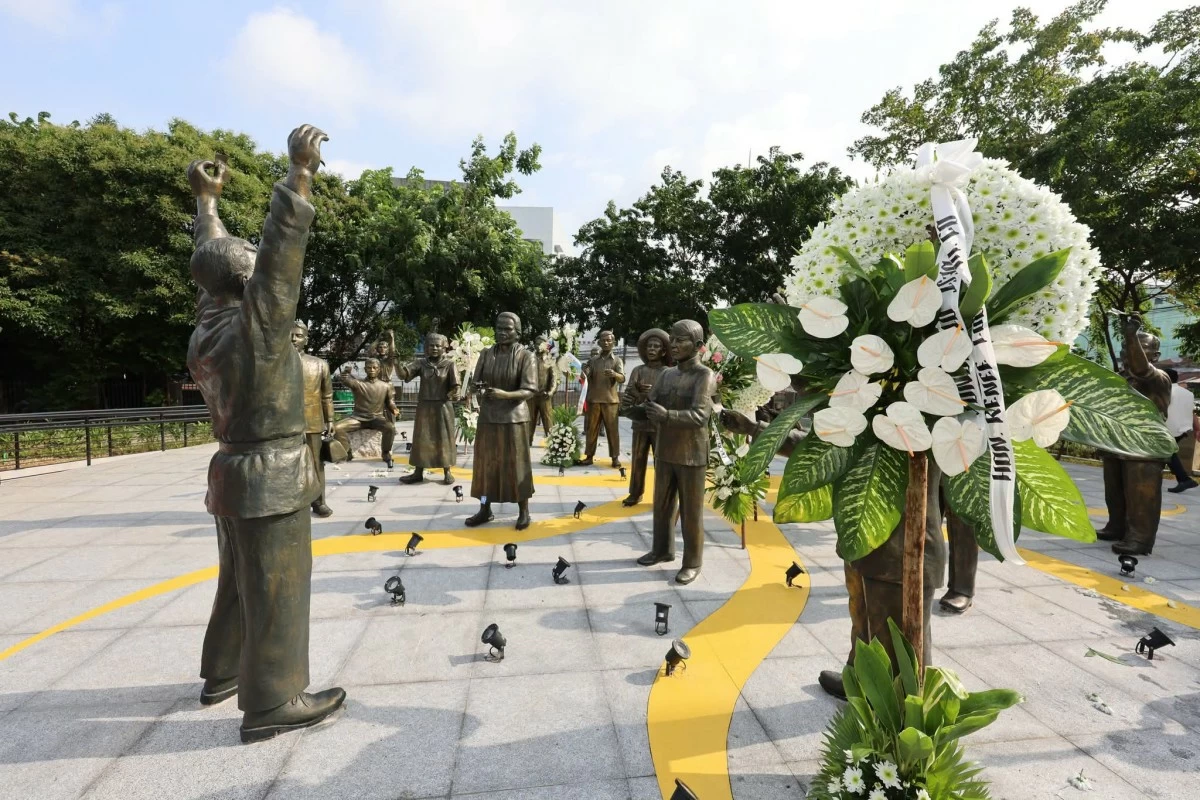
PUGAD LAWIN SHRINE. The historic shrine in Barangay Bahay Toro, Quezon City, features the restored Katipunero sculpture by National Artist Napoleon Abueva following its renovation. (Photo courtesy of the Quezon City government)
The historic Pugad Lawin Shrine in Quezon City was reopened Sunday, Aug. 23, following its renovation as the country commemorated the 130th anniversary of the “Cry of Pugad Lawin.”
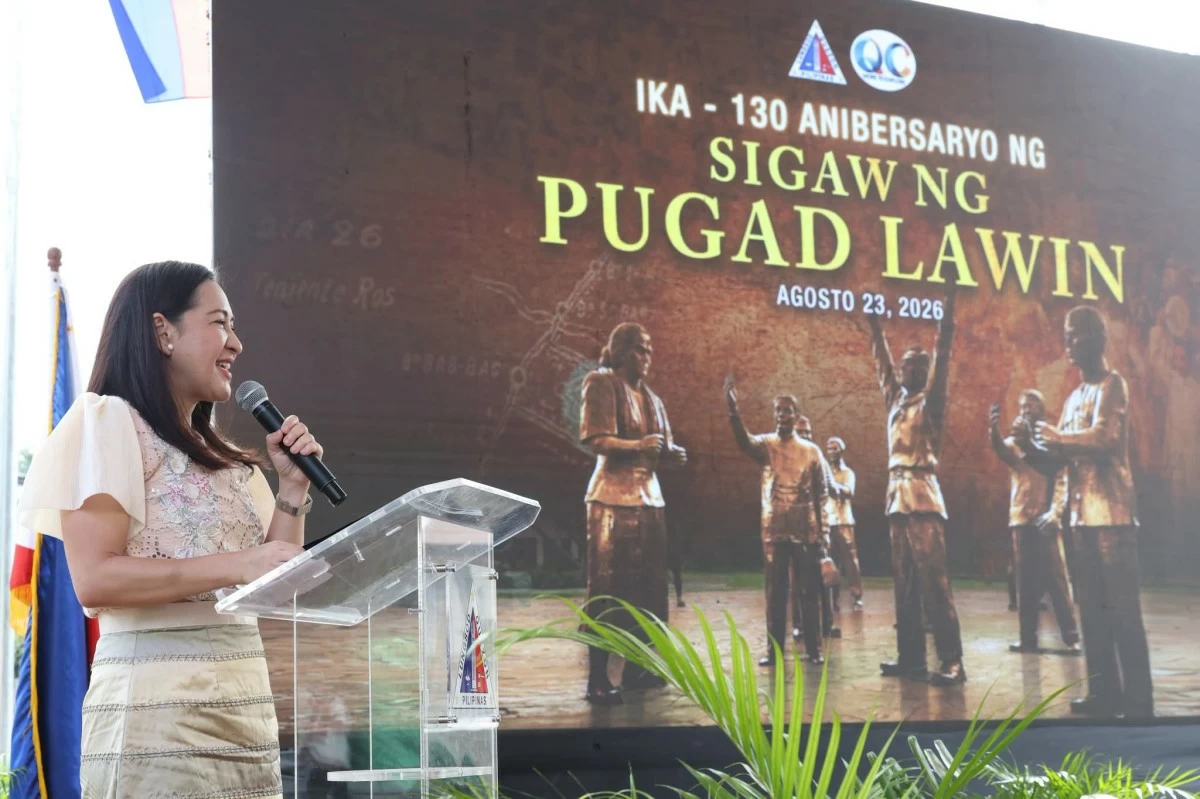
Quezon City Mayor Joy Belmonte speaks during the 130th anniversary commemoration of the Sigaw ng Pugad Lawin in Barangay Bahay Toro, Quezon City, Sunday, Aug. 23. (Photo courtesy of the Quezon City government)
Quezon City Mayor Joy Belmonte led the commemoration and flower-laying ceremony at the Dambana ng Pugad Lawin in Barangay Bahay Toro, Project 8, attended by officials and representatives from the Quezon City government, National Historical Commission of the Philippines (NHCP), Quezon City Schools Division, civic organizations, and other stakeholders.
The Sigaw ng Pugad Lawin is recognized as one of the events that sparked the Philippine Revolution against Spanish colonial rule in 1896, when members of the Katipunan led by Andres Bonifacio tore their cedulas, or residence tax certificates issued by Spanish authorities, to reject colonial rule and express their desire for freedom and independence.
The city government inaugurated the renovated shrine and Interpretation Gallery, designed by architect Gerard Lico.
The site features the restored sculpture of Katipuneros by National Artist Napoleon Abueva, an outdoor theater, and a historical gallery presenting the history of the Philippine Revolution against Spain.
The site also includes universal-access ramps, pathways, and exhibition spaces and was designed as a civic and educational space for visitors.
The Interpretation Center presents different historical accounts of the Sigaw ng Pugad Lawin, allowing visitors to examine and learn about the event rather than presenting a single definitive account.
During Sunday's ceremony, personnel of the Quezon City Police District (QCPD) rendered a 21-gun salute in honor of Filipino heroes, including Bonifacio.
Belmonte said the anniversary should remind Filipinos of the sacrifices and courage of the country's heroes, stressing that genuine freedom requires awareness, conviction, and the willingness to act for one's fellow Filipinos and the nation.
Descendants of Filipino heroes Emilio Jacinto and Melchora Aquino were among those who attended the commemoration.
The anniversary also brought attention to the continuing debate over the exact location and date of the historic event.
Historical accounts have identified several areas within the broader Greater Caloocan-Balintawak area, including Balintawak, Kangkong, Bahay Toro, Pasong Tamo, and Pugad Lawin, while accounts have placed the event on different dates between Aug. 23 and 26, 1896.
Filipino historian Xiao Chua said in a video message that most primary sources, or accounts of people who witnessed the events, placed the tearing of the cedulas in Kangkong, at the house of Apolonio Samson.
Chua said Dr. Pio Valenzuela, however, identified Pugad Lawin as the location, although his account has been debated because Pugad Lawin did not appear on maps at the time, unlike Kangkong and Bahay Toro.
According to Chua, Pugad Lawin in Valenzuela's account may have referred only to a landmark, possibly a tree with a hawk's nest.
“Wherever the tearing of the cedulas happened, what is important is what this place represents,” Chua said.
Despite the differing historical accounts, the Philippine government recognizes Pugad Lawin in Quezon City as the site of the historic event and Aug. 23 as its commemorative date.

Related Tags

METRONEWS Pugad Lawin Shrine Quezon City Sigaw ng Pugad Lawin 130th anniversary Philippine Revolution Andres Bonifacio NHCP Joy Belmonte Pugad Lawin historical site Philippine history
ADVERTISEMENT
.most-popular .layout-ratio{ padding-bottom: 79.13%; } @media (min-width: 768px) and (max-width: 1024px) { .widget-title { font-size: 15px !important; } }

{{ articles_filter_1561_widget.title }}

.most-popular .layout-ratio{ padding-bottom: 79.13%; } @media (min-width: 768px) and (max-width: 1024px) { .widget-title { font-size: 15px !important; } }

{{ static_articles_1562_widget.title }}

.most-popular .layout-ratio{ padding-bottom: 79.13%; } @media (min-width: 768px) and (max-width: 1024px) { .widget-title { font-size: 15px !important; } }

{{ articles_filter_1563_widget.title }}

{{ articles_filter_1564_widget.title }}

.mb-article-details { position: relative; } .mb-article-details .article-body-preview, .mb-article-details .article-body-summary{ font-size: 17px; line-height: 30px; font-family: "Libre Caslon Text", serif; color: #000; } .mb-article-details .article-body-preview iframe , .mb-article-details .article-body-summary iframe{ width: 100%; margin: auto; } .read-more-background { background: linear-gradient(180deg, color(display-p3 1.000 1.000 1.000 / 0) 13.75%, color(display-p3 1.000 1.000 1.000 / 0.8) 30.79%, color(display-p3 1.000 1.000 1.000) 72.5%); position: absolute; height: 200px; width: 100%; bottom: 0; display: flex; justify-content: center; align-items: center; padding: 0; } .read-more-background a{ color: #000; } .read-more-btn { padding: 17px 45px; font-family: Inter; font-weight: 700; font-size: 18px; line-height: 16px; text-align: center; vertical-align: middle; border: 1px solid black; background-color: white; } .hidden { display: none; }
function initializeAllSwipers() { // Get all hidden inputs with cms_article_id document.querySelectorAll('[id^="cms_article_id_"]').forEach(function (input) { const cmsArticleId = input.value; const articleSelector = '#article-' + cmsArticleId + ' .body_images'; const swiperElement = document.querySelector(articleSelector); if (swiperElement && !swiperElement.classList.contains('swiper-initialized')) { new Swiper(articleSelector, { loop: true, pagination: false, navigation: { nextEl: '#article-' + cmsArticleId + ' .swiper-button-next', prevEl: '#article-' + cmsArticleId + ' .swiper-button-prev', }, }); } }); } setTimeout(initializeAllSwipers, 3000); const intersectionObserver = new IntersectionObserver( (entries) => { entries.forEach((entry) => { if (entry.isIntersecting) { const newUrl = entry.target.getAttribute("data-url"); if (newUrl) { history.pushState(null, null, newUrl); let article = entry.target; // Extract metadata const author = article.querySelector('.author-section').textContent.replace('By', '').trim(); const section = article.querySelector('.section-info ').textContent.replace(' ', ' '); const title = article.querySelector('.article-title h1').textContent; // Parse URL for Chartbeat path format const parsedUrl = new URL(newUrl, window.location.origin); const cleanUrl = parsedUrl.host + parsedUrl.pathname; // Update Chartbeat configuration if (typeof window._sf_async_config !== 'undefined') { window._sf_async_config.path = cleanUrl; window._sf_async_config.sections = section; window._sf_async_config.authors = author; } // Track virtual page view with Chartbeat if (typeof pSUPERFLY !== 'undefined' && typeof pSUPERFLY.virtualPage === 'function') { try { pSUPERFLY.virtualPage({ path: cleanUrl, title: title, sections: section, authors: author }); } catch (error) { console.error('ping error', error); } } // Optional: Update document title if (title && title !== document.title) { document.title = title; } } } }); }, { threshold: 0.1 } ); function showArticleBody(button) { const article = button.closest("article"); const summary = article.querySelector(".article-body-summary"); const body = article.querySelector(".article-body-preview"); const readMoreSection = article.querySelector(".read-more-background"); // Hide summary and read-more section summary.style.display = "none"; readMoreSection.style.display = "none"; // Show the full article body body.classList.remove("hidden"); } document.addEventListener("DOMContentLoaded", () => { let loadCount = 0; // Track how many times articles are loaded const offset = [1, 2, 3, 4, 5, 6, 7, 8, 9, 10]; // Offset values const currentUrl = window.location.pathname.substring(1); let isLoading = false; // Prevent multiple calls if (!currentUrl) { console.log("Current URL is invalid."); return; } const sentinel = document.getElementById("load-more-sentinel"); if (!sentinel) { console.log("Sentinel element not found."); return; } function isSentinelVisible() { const rect = sentinel.getBoundingClientRect(); return ( rect.top < window.innerHeight && rect.bottom >= 0 ); } function onScroll() { if (isLoading) return; if (isSentinelVisible()) { if (loadCount >= offset.length) { console.log("Maximum load attempts reached."); window.removeEventListener("scroll", onScroll); return; } isLoading = true; const currentOffset = offset[loadCount]; window.loadMoreItems().then(() => { let article = document.querySelector('#widget_1690 > div:nth-last-of-type(2) article'); intersectionObserver.observe(article) loadCount++; }).catch(error => { console.error("Error loading more items:", error); }).finally(() => { isLoading = false; }); } } window.addEventListener("scroll", onScroll); });

Sign up by email to receive news.