ADVERTISEMENT

Maya puts National ID verification and responsible AI to work at scale

Published Aug 24, 2026 02:54 pm
As Philippine financial institutions accelerate integration with the National ID system, Maya is already showing how government digital infrastructure and responsible AI can work together at scale to make financial onboarding faster, simpler and more efficient.
The development comes as the Bangko Sentral ng Pilipinas (BSP) has proposed requiring supervised financial institutions to integrate with the National ID authentication services for customer due diligence and identity verification, further expanding the use of the National ID across the financial system.

“National digital infrastructure gives us a trusted foundation to build on,” said Alfred Lo, Chief Technology Officer at Maya. “By combining the National ID with homegrown AI and automation, we can remove friction for customers while keeping verification robust and scalable. It shows how shared digital infrastructure can make financial services easier to access and safer to scale.”
Maya has already integrated National ID eVerify, the Philippine Statistics Authority’s identity-verification service, into its onboarding process. Since early this year, eligible customers have been able to upgrade their accounts without photographing or uploading a physical ID, with their identity verified against the National ID system.
The approach was among the use cases presented at the recent BSP AI Summit, where Maya was one of three companies invited to showcase how AI is already being put to work in the Philippine financial sector.
“For us, the real test of AI is not how advanced the model sounds. It is whether it solves a real customer problem safely, reliably and at scale,” said Melecio Valerio, Head of Data Governance at Maya, who presented Maya’s experience at the BSP AI Summit, themed “From Pilot to Practice: AI Adoption in the Philippine Financial Sector.”
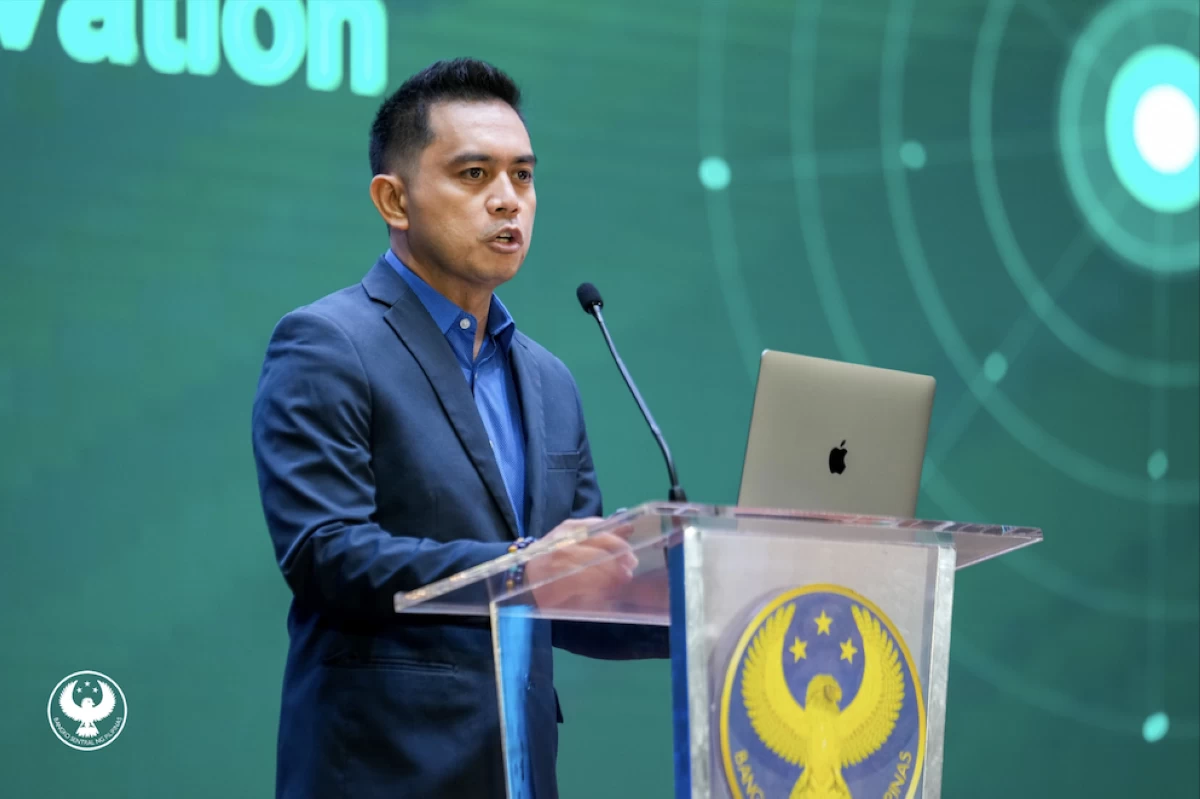
For customers, the difference is straightforward. Eligible users can enter their National ID number instead of uploading a physical ID and re-entering information already on record. Maya then verifies the information through National ID eVerify against government-held National ID records and completes identity verification through a video selfie.
If additional information is needed, Maya asks only for the missing details. Customers who cannot be verified through National ID eVerify can continue through the regular ID-upload process without having to start over.
The simpler journey does not mean fewer safeguards. Maya continues to apply applicable BSP and regulatory requirements for KYC, identity verification, screening and other required checks.
Behind the scenes, AI and automation handle much of the repetitive verification work. Maya uses agentic AI—AI designed to carry out defined steps in a workflow within set controls—in its National ID-first KYC and KYC “deduplication” processes. It helps validate information,
identify possible duplicate accounts, perform required checks and route exceptions for human review.
The gains are already measurable. For consumer onboarding, overall turnaround time has improved by 84%. For customers, that means less time waiting for verification. For Maya, it also means employees can spend less time on repetitive processing and more time on exceptions, investigations and cases requiring human judgment.
The combination of National ID infrastructure, AI and human oversight points to a wider opportunity: using shared digital foundations to redesign processes that have traditionally been slow and manual, while making financial services easier to access without compromising trust, accountability or regulatory safeguards.
National ID-first onboarding is one example of Maya’s broader AI-first strategy. Rather than treating AI as a separate innovation project, Maya uses machine learning, decision engines, behavioral scoring, anomaly detection and intelligent automation across onboarding, credit, fraud management, personalization, customer care and operations.

Related Tags

Maya fintech National ID
ADVERTISEMENT
.most-popular .layout-ratio{ padding-bottom: 79.13%; } @media (min-width: 768px) and (max-width: 1024px) { .widget-title { font-size: 15px !important; } }

{{ articles_filter_1561_widget.title }}

.most-popular .layout-ratio{ padding-bottom: 79.13%; } @media (min-width: 768px) and (max-width: 1024px) { .widget-title { font-size: 15px !important; } }

{{ static_articles_1562_widget.title }}

.most-popular .layout-ratio{ padding-bottom: 79.13%; } @media (min-width: 768px) and (max-width: 1024px) { .widget-title { font-size: 15px !important; } }

{{ articles_filter_1563_widget.title }}

{{ articles_filter_1564_widget.title }}

.mb-article-details { position: relative; } .mb-article-details .article-body-preview, .mb-article-details .article-body-summary{ font-size: 17px; line-height: 30px; font-family: "Libre Caslon Text", serif; color: #000; } .mb-article-details .article-body-preview iframe , .mb-article-details .article-body-summary iframe{ width: 100%; margin: auto; } .read-more-background { background: linear-gradient(180deg, color(display-p3 1.000 1.000 1.000 / 0) 13.75%, color(display-p3 1.000 1.000 1.000 / 0.8) 30.79%, color(display-p3 1.000 1.000 1.000) 72.5%); position: absolute; height: 200px; width: 100%; bottom: 0; display: flex; justify-content: center; align-items: center; padding: 0; } .read-more-background a{ color: #000; } .read-more-btn { padding: 17px 45px; font-family: Inter; font-weight: 700; font-size: 18px; line-height: 16px; text-align: center; vertical-align: middle; border: 1px solid black; background-color: white; } .hidden { display: none; }
function initializeAllSwipers() { // Get all hidden inputs with cms_article_id document.querySelectorAll('[id^="cms_article_id_"]').forEach(function (input) { const cmsArticleId = input.value; const articleSelector = '#article-' + cmsArticleId + ' .body_images'; const swiperElement = document.querySelector(articleSelector); if (swiperElement && !swiperElement.classList.contains('swiper-initialized')) { new Swiper(articleSelector, { loop: true, pagination: false, navigation: { nextEl: '#article-' + cmsArticleId + ' .swiper-button-next', prevEl: '#article-' + cmsArticleId + ' .swiper-button-prev', }, }); } }); } setTimeout(initializeAllSwipers, 3000); const intersectionObserver = new IntersectionObserver( (entries) => { entries.forEach((entry) => { if (entry.isIntersecting) { const newUrl = entry.target.getAttribute("data-url"); if (newUrl) { history.pushState(null, null, newUrl); let article = entry.target; // Extract metadata const author = article.querySelector('.author-section').textContent.replace('By', '').trim(); const section = article.querySelector('.section-info ').textContent.replace(' ', ' '); const title = article.querySelector('.article-title h1').textContent; // Parse URL for Chartbeat path format const parsedUrl = new URL(newUrl, window.location.origin); const cleanUrl = parsedUrl.host + parsedUrl.pathname; // Update Chartbeat configuration if (typeof window._sf_async_config !== 'undefined') { window._sf_async_config.path = cleanUrl; window._sf_async_config.sections = section; window._sf_async_config.authors = author; } // Track virtual page view with Chartbeat if (typeof pSUPERFLY !== 'undefined' && typeof pSUPERFLY.virtualPage === 'function') { try { pSUPERFLY.virtualPage({ path: cleanUrl, title: title, sections: section, authors: author }); } catch (error) { console.error('ping error', error); } } // Optional: Update document title if (title && title !== document.title) { document.title = title; } } } }); }, { threshold: 0.1 } ); function showArticleBody(button) { const article = button.closest("article"); const summary = article.querySelector(".article-body-summary"); const body = article.querySelector(".article-body-preview"); const readMoreSection = article.querySelector(".read-more-background"); // Hide summary and read-more section summary.style.display = "none"; readMoreSection.style.display = "none"; // Show the full article body body.classList.remove("hidden"); } document.addEventListener("DOMContentLoaded", () => { let loadCount = 0; // Track how many times articles are loaded const offset = [1, 2, 3, 4, 5, 6, 7, 8, 9, 10]; // Offset values const currentUrl = window.location.pathname.substring(1); let isLoading = false; // Prevent multiple calls if (!currentUrl) { console.log("Current URL is invalid."); return; } const sentinel = document.getElementById("load-more-sentinel"); if (!sentinel) { console.log("Sentinel element not found."); return; } function isSentinelVisible() { const rect = sentinel.getBoundingClientRect(); return ( rect.top < window.innerHeight && rect.bottom >= 0 ); } function onScroll() { if (isLoading) return; if (isSentinelVisible()) { if (loadCount >= offset.length) { console.log("Maximum load attempts reached."); window.removeEventListener("scroll", onScroll); return; } isLoading = true; const currentOffset = offset[loadCount]; window.loadMoreItems().then(() => { let article = document.querySelector('#widget_1690 > div:nth-last-of-type(2) article'); intersectionObserver.observe(article) loadCount++; }).catch(error => { console.error("Error loading more items:", error); }).finally(() => { isLoading = false; }); } } window.addEventListener("scroll", onScroll); });

Sign up by email to receive news.