






Manila Bulletin
 Business
Trade & Industry
BIR crackdown: Nearly 40% of Luzon gas stations flagged for tax evasion
Business
Trade & Industry
BIR crackdown: Nearly 40% of Luzon gas stations flagged for tax evasion
Business
Trade & Industry
BIR crackdown: Nearly 40% of Luzon gas stations flagged for tax evasion
BIR crackdown: Nearly 40% of Luzon gas stations flagged for tax evasion
By Jun Ramirez
Published Aug 24, 2026 08:40 am


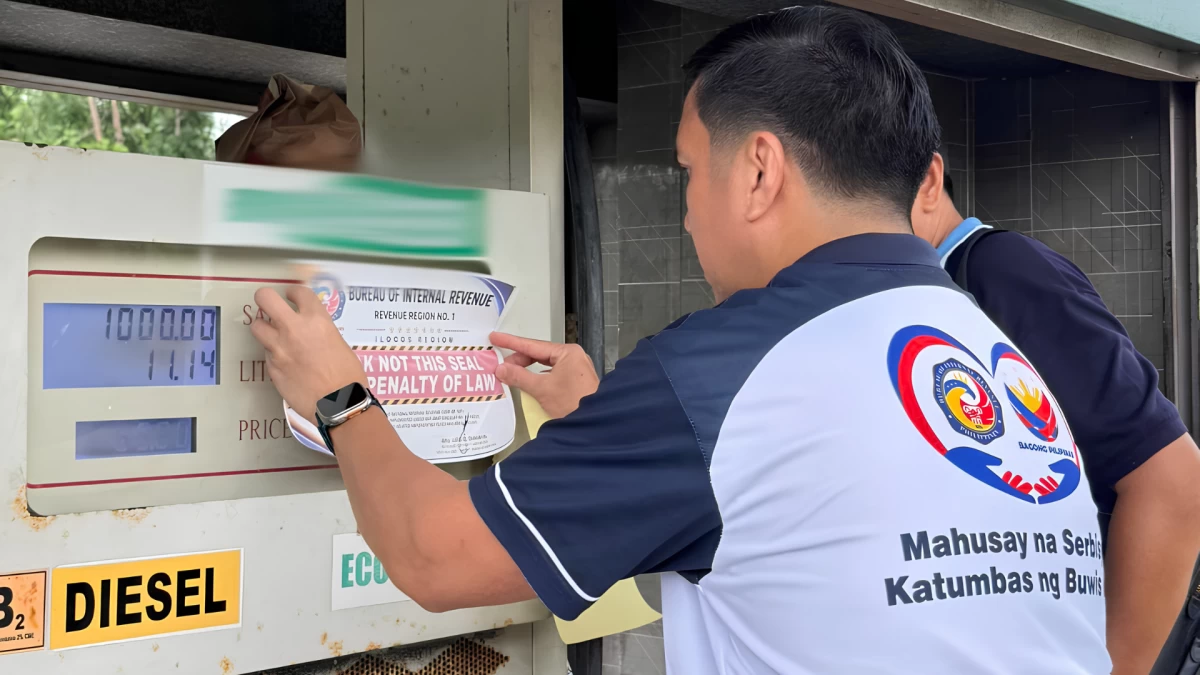
The Bureau of Internal Revenue (BIR) sealed dispensing pumps across nearly 40 percent of gasoline stations inspected during the opening days of the agency’s latest anti-tax evasion enforcement drive in Luzon.
In a statement, BIR Commissioner Charlito Martin R. Mendoza said that inspectors flagged 25 out of 65 stations tested in the first three days of the crackdown, which began Aug. 17.
Affected fuel stocks have been inventoried, and corresponding dispensing pumps were sealed or padlocked pending secondary laboratory results and subsequent administrative or legal action.
“We are making fuller use of Fuel Marking and our other enforcement tools to identify revenue leakages, act on them quickly, and protect compliant businesses from unfair competition in the petroleum sector,” Mendoza said.
Under the country’s fuel marking program, chemical markers are injected into tax-paid petroleum products—including gasoline, diesel, and kerosene—to verify that proper duties have been remitted before retail distribution.
The ongoing BIR-led operation is being executed in coordination with the Bureau of Customs, with regional directors personally leading field units alongside the government’s authorized fuel marking service provider, which conducts technical sampling on site.
If confirmatory testing verifies tax non-compliance, the revenue agency will calculate applicable unpaid duties, fines, and penalties for collection under existing tax codes. Retailers found in violation may regain access to their inventory by settling all outstanding tax liabilities, paying mandatory fees, and undergoing corrective re-marking of the affected petroleum products by the official service provider.
The BIR plans to run the Luzon enforcement drive over several weeks before expanding field operations nationwide, pairing fuel sampling with complementary measures such as physical inventory stock-taking, registration audits, and invoicing verifications.
“This is not a one-time operation,” Mendoza said. “We will continue using Fuel Marking and our other enforcement tools wherever the risk of tax leakage is high, and we will expand these operations to other parts of the country.”