







'Saudel' may intensify into a super typhoon before PAR entry
Published Aug 23, 2026 12:27 pm


At A Glance
- As of 10 a.m. Sunday, Saudel was located 2,085 kilometers east of extreme Northern Luzon, outside PAR.
- PAGASA said Saudel is forecast to reach super typhoon strength, with maximum sustained winds of at least 180 kph, by Monday before entering PAR.
PAGASA
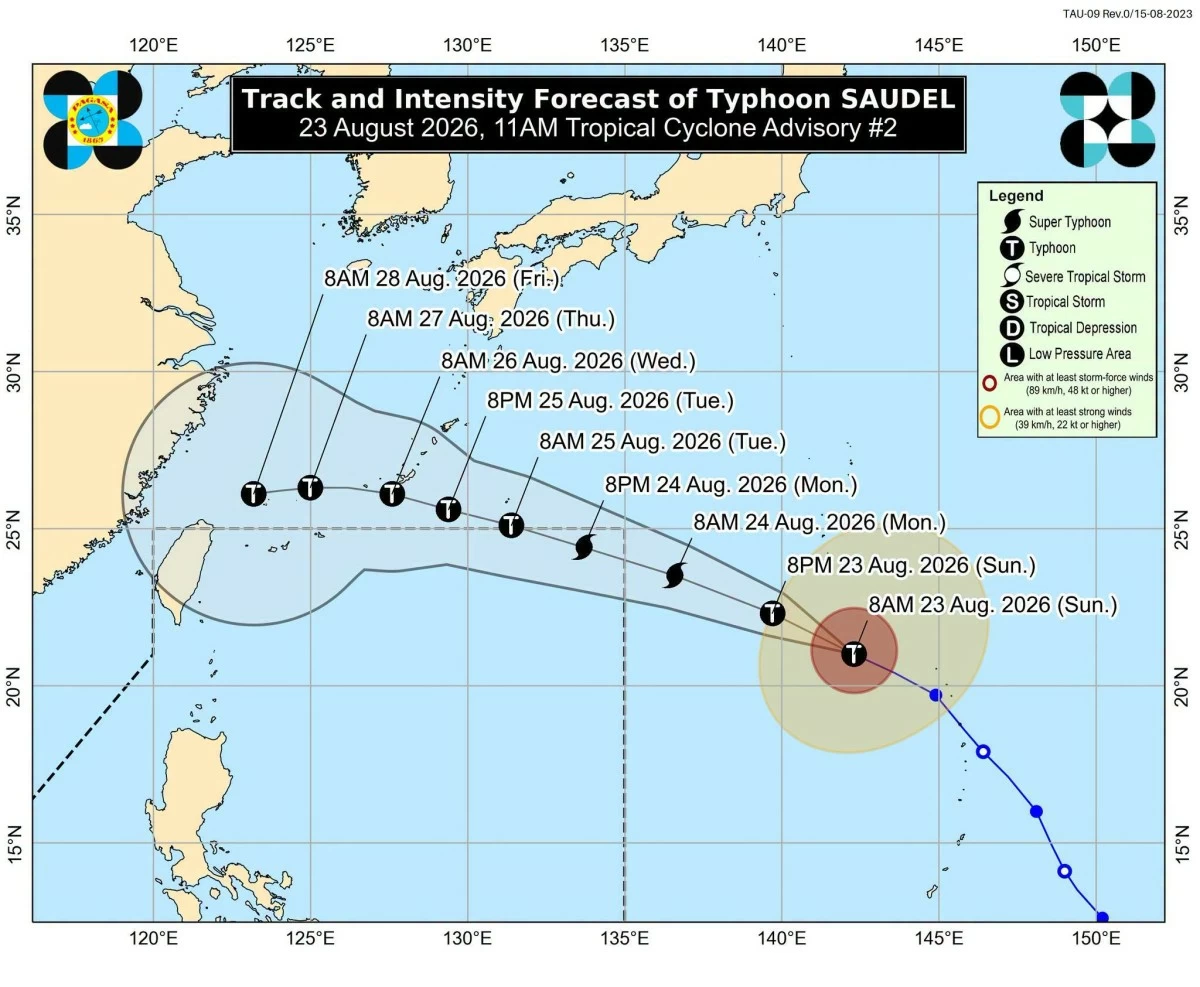
The typhoon with the international name “Saudel” may intensify into a super typhoon before entering the Philippine Area of Responsibility (PAR) on Monday, Aug. 24, said the Philippine Atmospheric, Geophysical and Astronomical Services Administration (PAGASA) on Sunday, Aug. 23.
As of 10 a.m. Sunday, Saudel was located 2,085 kilometers east of extreme Northern Luzon, outside PAR.
It had maximum sustained winds of 165 kilometers per hour (kph) near the center and gustiness of up to 205 kph.
PAGASA said Saudel is forecast to reach super typhoon strength, with maximum sustained winds of at least 180 kph, by Monday before entering PAR.
As of Sunday, the typhoon was moving west-northwestward at 25 kph.
“Saudel will continue moving generally west-northwestward for the next three days before moving generally westward for the remaining forecast period. The center of Saudel is forecast to enter the northeastern boundary of the Philippine Area of Responsibility by tomorrow morning or afternoon (Aug. 24),” PAGASA said.
Based on the forecast track, Saudel is expected to remain over the Philippine Sea and exit PAR by Tuesday, Aug. 25.
However, PAGASA said a more westward track beyond 48 hours could result in Saudel remaining within PAR beyond Tuesday.
Meanwhile, PAGASA is also monitoring a tropical depression east of Southern Luzon, outside PAR, which may enter the country’s monitoring area.
“Saudel will be given the domestic name either Obet or Pilandok, depending on the order of the entry,” PAGASA said.
Saudel is less likely to directly affect the country’s weather and sea conditions in the next three days, PAGASA said.
Although the typhoon is not expected to directly affect the country, it may enhance the southwest monsoon or “habagat” and bring rainy conditions, particularly over the western sections of Luzon and Visayas.
RELATED STORY: