






Manila Bulletin
 Lifestyle
Travel
A journey into Lagen Island Resort's raw beauty, soulful craftsmanship, and quiet magic
Lifestyle
Travel
A journey into Lagen Island Resort's raw beauty, soulful craftsmanship, and quiet magic
Lifestyle
Travel
A journey into Lagen Island Resort's raw beauty, soulful craftsmanship, and quiet magic
A journey into Lagen Island Resort's raw beauty, soulful craftsmanship, and quiet magic
By Rey Ilagan
Published Aug 23, 2026 08:21 am


There are places you leave behind, and there are places that stay with you.
Lagen Island Resort–the enchanting reimagined island sanctuary in the heart of Bacuit Bay in El Nido, Palawan–belongs to the latter. There is something about the island that lingers long after you have left; mystical, enduring, intriguing, and very much alive. I found myself wanting to preserve every part of the experience through photographs, videos, anecdotes, and stories. But eventually, I realized that no image could quite capture what remained with me: the feeling.
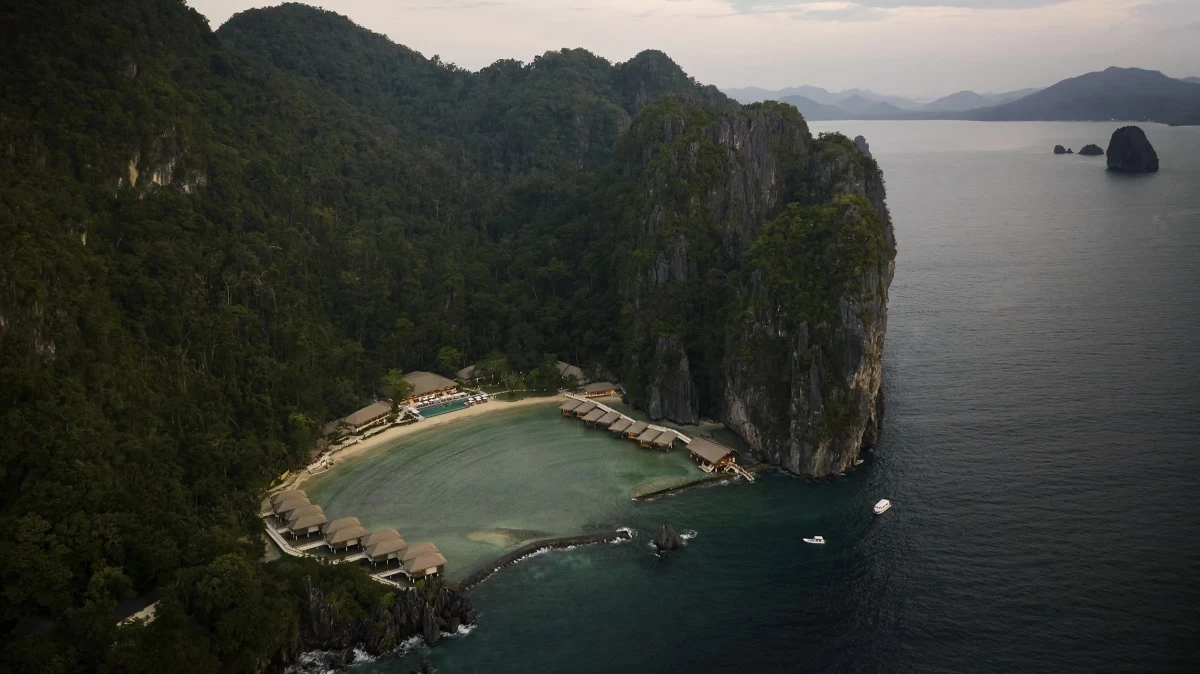
Lagen Island (Photos: Ayala Land Hospitality)
Lagen became a new core memory for me, and one of those rare luxury experiences that feels less like a stay and more like a passage into another world.
Into the island
The experience begins before you even set foot on the island.
Whisked from El Nido town aboard a speedboat, with fresh fruits and refreshments served along the way, there is already a sense that you are leaving something behind and moving toward something different. As Lagen slowly comes into view, the anticipation builds.
Our arrival at the Boathouse set the tone. Inspired by the “paraw,” the open-air structure feels warm and inviting, with earthy interiors and timber beams supporting a canted thatched roof shaped like the upturned hull of a sailing craft. It feels less like a reception area and more like the beginning of a story.
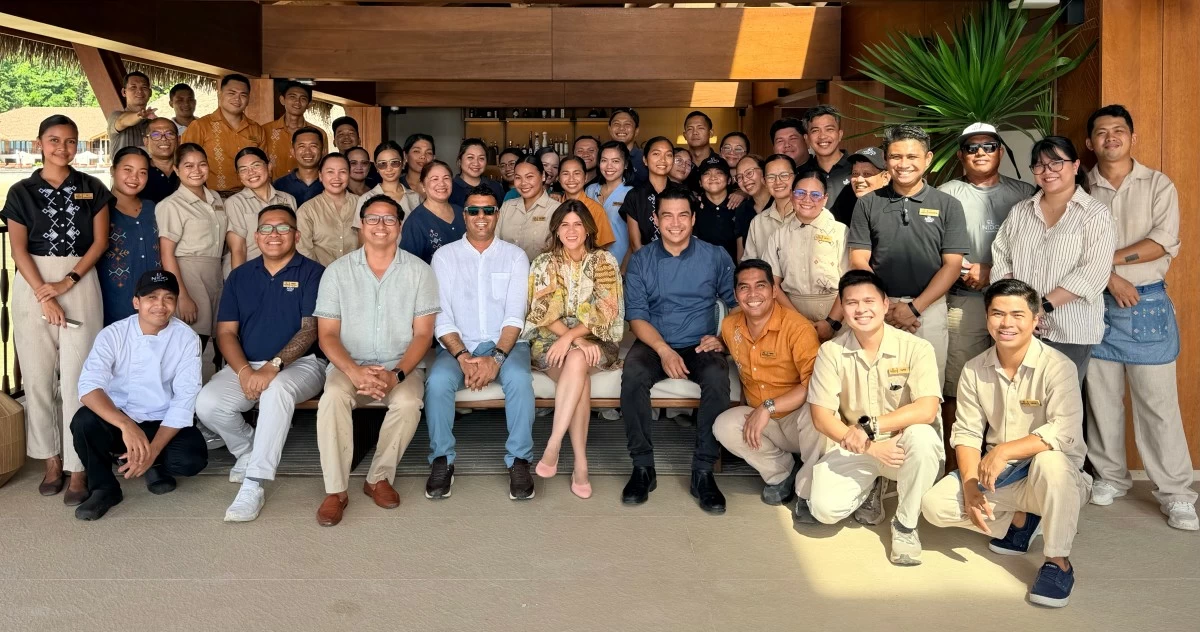
Lagen Island Resort team
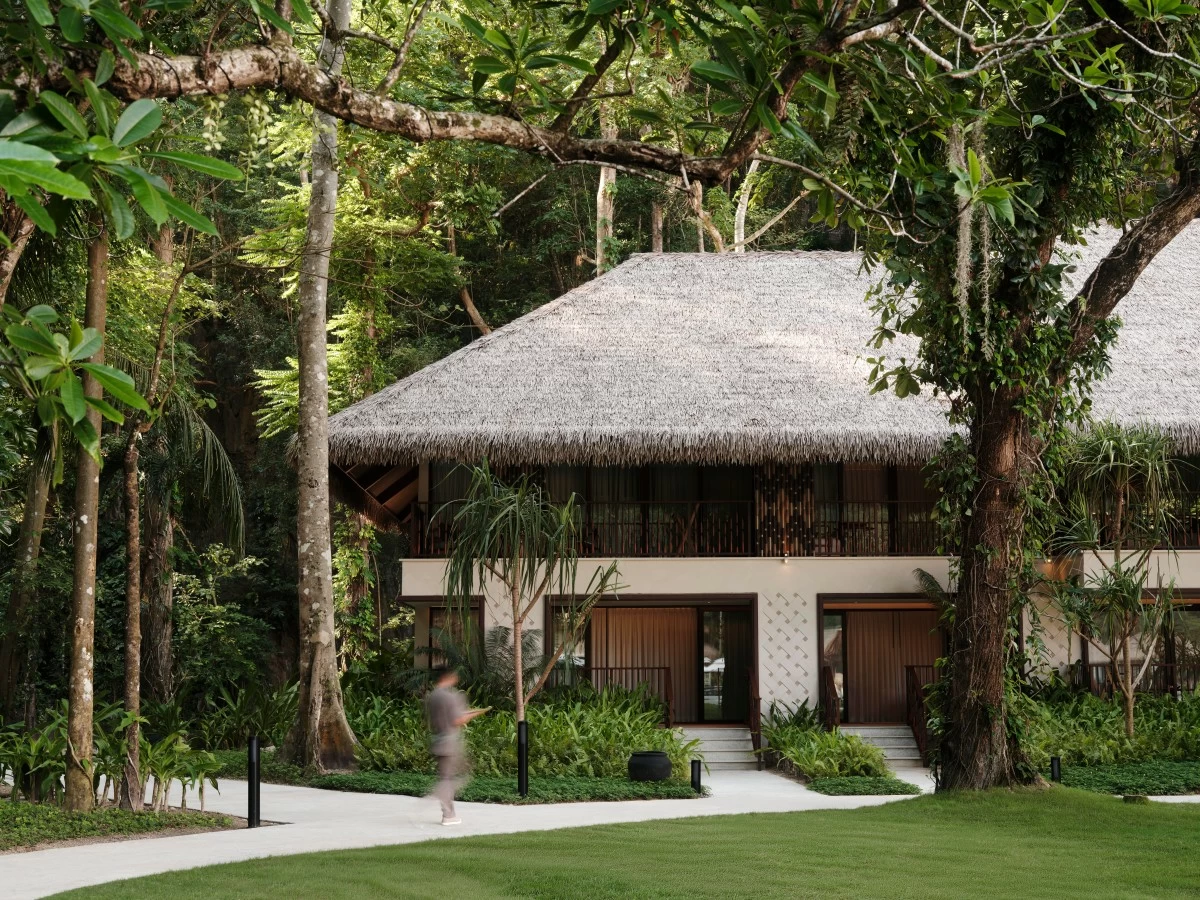
Lagen Forest Complex
“We really wanted Lagen to have its own personality, and it’s where connections blossom,” says Paloma Urquijo Zobel de Ayala, creative director of Ayala Land Hospitality. “It’s either you connect with nature, yourself, or family. What we’ve done is we’ve created a lot of experiences and spaces where that could happen.”
That philosophy is evident throughout the resort’s refreshed design. Rather than imposing itself on the landscape, Lagen appears to have stepped back to allow the island to take center stage.
“This allowed nature to come back and be the protagonist. Not the resort itself but the island,” Paloma explains. “You’ll see the Forest Rooms now have front and back views because we think that the limestone cliffs are as beautiful as the ocean views.”
The approach is one of restraint, knowing what to remove rather than what to add. “It’s really about removing what isn’t necessary and practicing restraint. Even in the rooms, hopefully you have just what you need—the bare essentials for the modern-day traveler—without any unnecessary friction.”
The renovation was completed in less than a year, while retaining as much of the existing footprint as possible. “Our goal was to cause the least amount of stress on the island, so we respected its existing footprint as much as possible. All the structures you see, except for the Wellness and Sports Center, were already there. We simply changed the materials and architectural language to give them a refreshed, contemporary identity,” Paloma says.
Local culture is equally present, not simply as decoration but as a foundation for the resort’s new identity. “We really focus on three main crafts when designing the new refreshed and reimagined Lagen based on local Palawan culture, and those are pottery, weaving, and wood carving. You’ll see elements of those in different touch points around the resort.”
Where nature leads
Lagen is home to 42 thoughtfully reimagined Forest Rooms and Water Villas, set against an extraordinary landscape of dense forest, limestone cliffs, and clear waters.
According to resort manager Andrew Fernandes, the vision was to create spaces and experiences deeply connected to Lagen’s natural surroundings while celebrating the Philippines’ rich cultural heritage. The accommodations are luxurious without feeling overly polished, drawing from Filipino traditions and indigenous art while working with contemporary artisans.
Architectural nods to the traditional “bahay kubo” meet wall designs and partitions inspired by the Batak tribe’s Giyangganan weaving pattern. Throughout the interiors, motifs of the Tagbanua, Tausug, and Maranao people are subtly woven into the spaces, creating a visual language that feels distinctly Filipino without becoming literal.
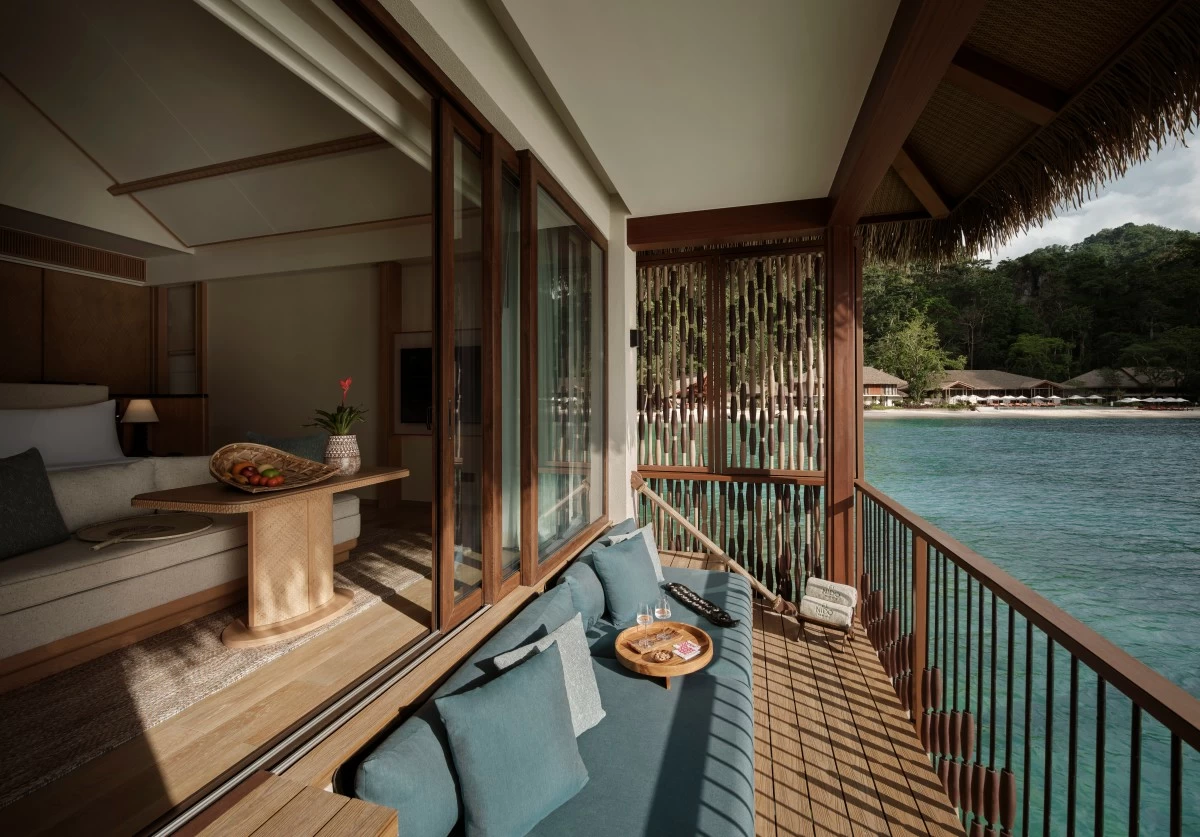
Water Villa Sunken Lounge
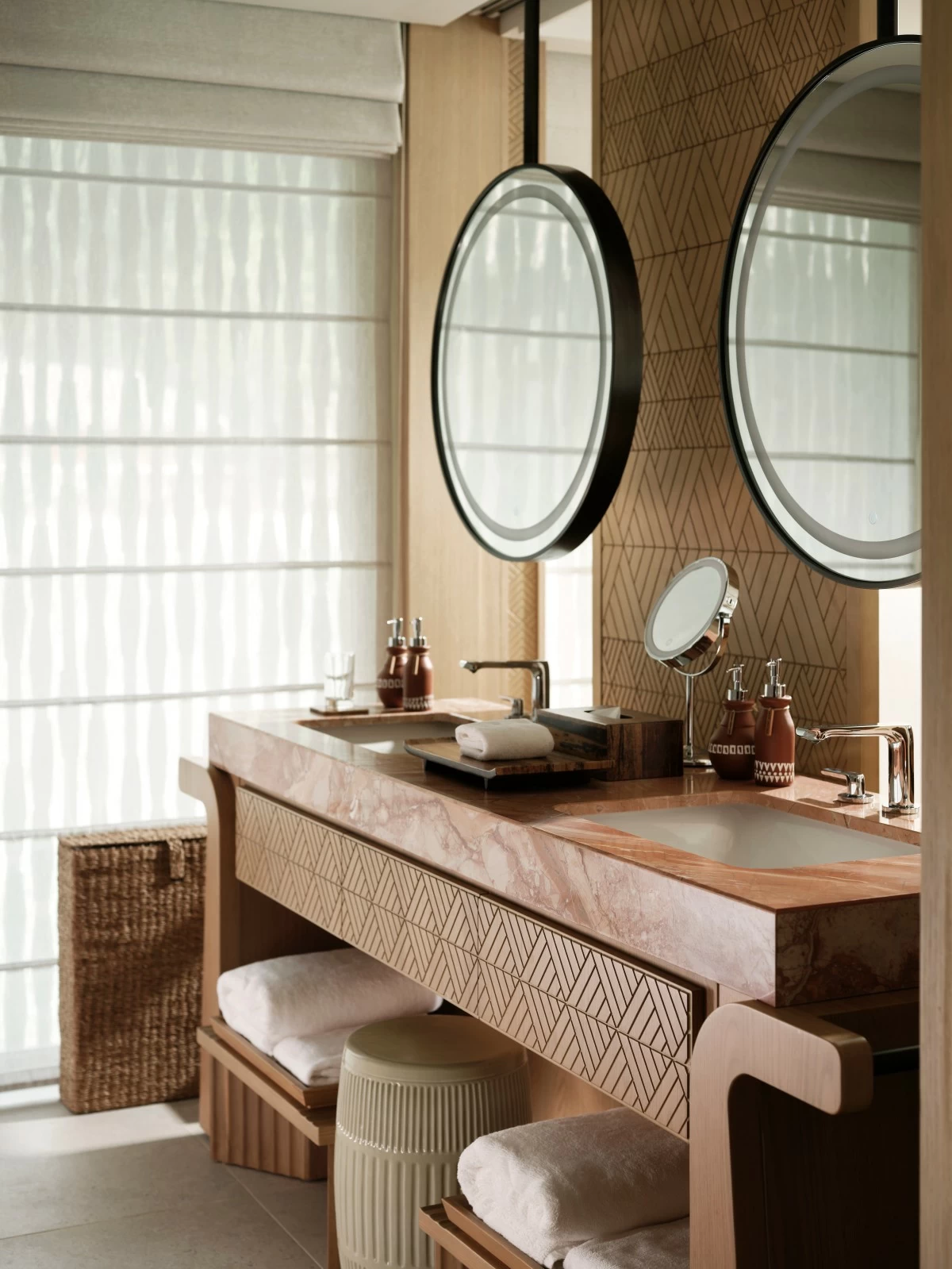
Water Villa's bathroom
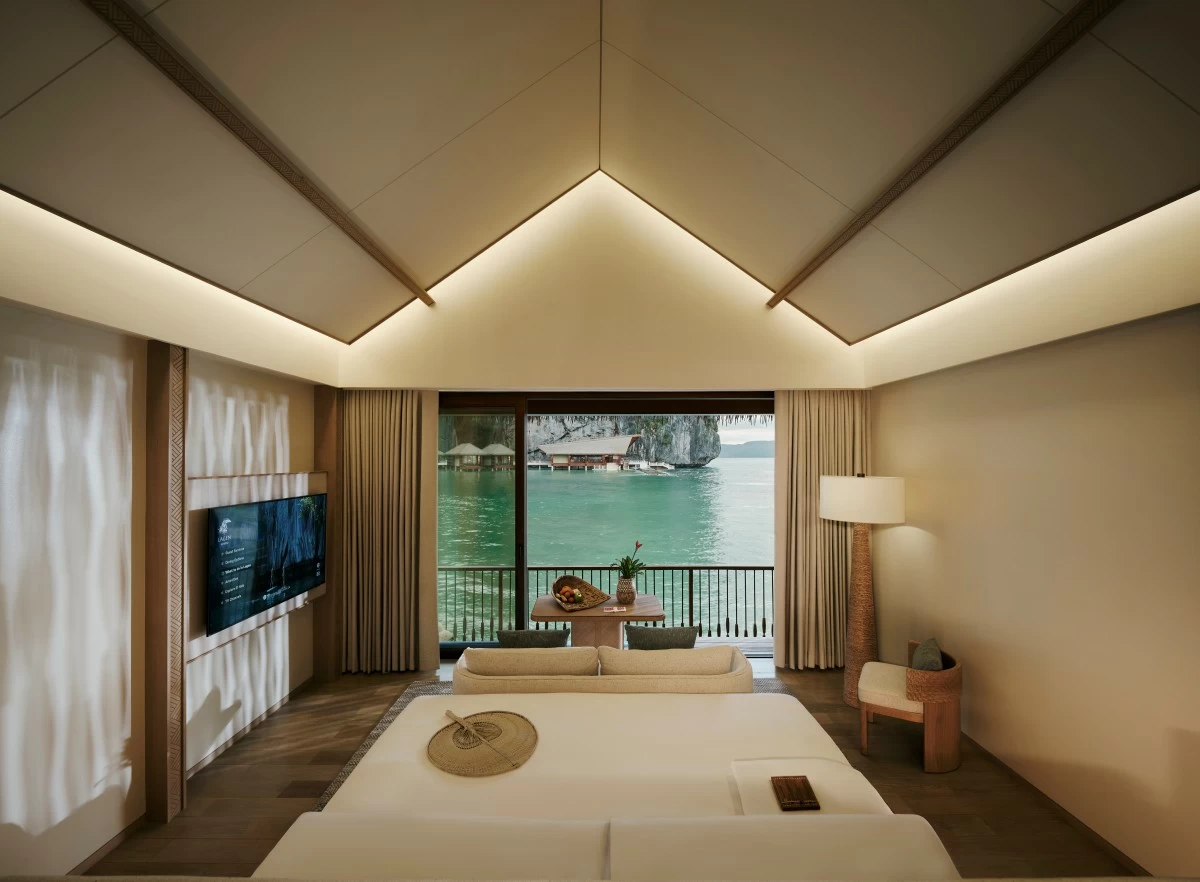
Inside the Water Villa
My Water Villa, one of 18 perched above the water, immediately felt like a retreat. Light pours into the space, creating a natural progression from the bedroom toward the veranda and, beyond it, the sea. A wooden door with etched detailing, coral marble bathroom surfaces, and handcrafted clay pieces bring warmth to the interiors.
The “paraw” motif appears throughout—from etched patterns on sliding doors and ceilings to wave-inspired detailing on the veranda and the roof of The Clubhouse.
Thoughtful touches include motion-activated night lights, bedside charging outlets, smart toilets, and double vanities. The closet comes stocked with stretch ropes, straw sun hats, slippers, and bags, and yoga equipment, while a Dyson hair dryer sits by the desk. On the veranda, a "sungka" set with shells quietly invites you to sit down and play.
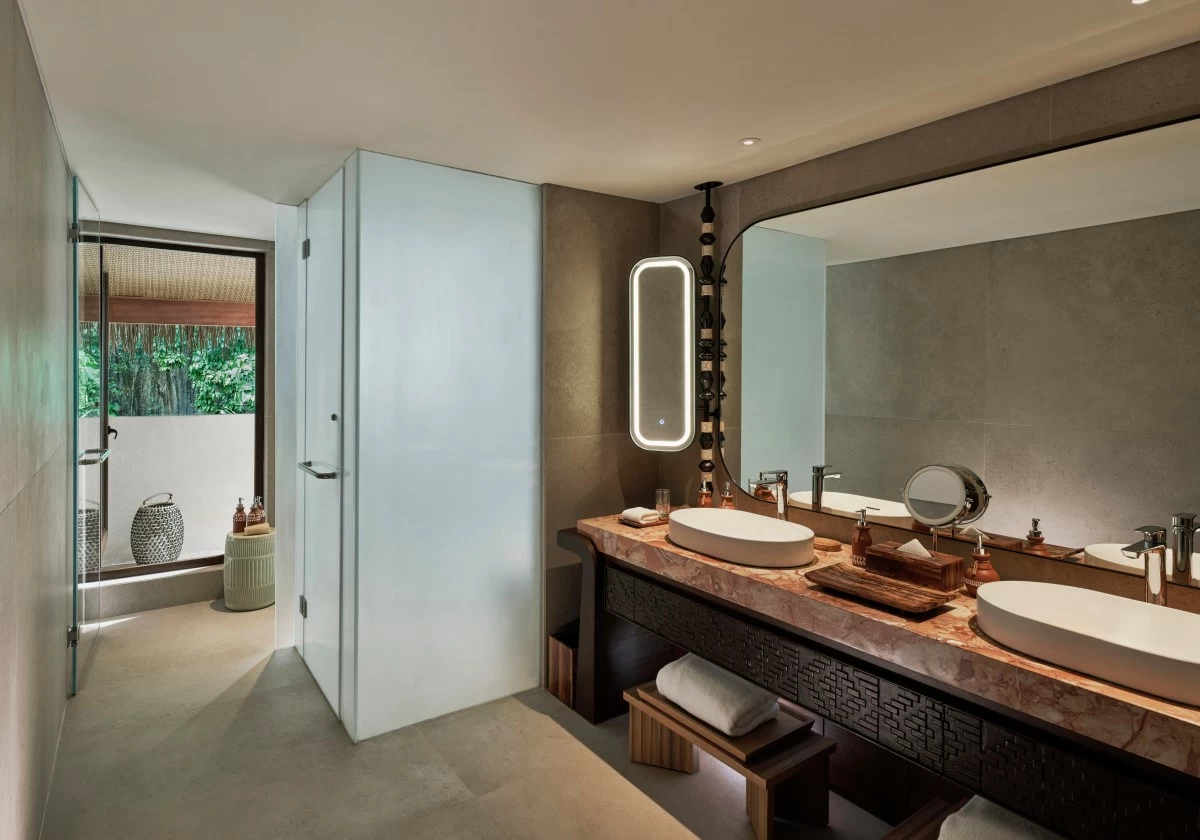
Forest Deluxe Room bathroom and vanity
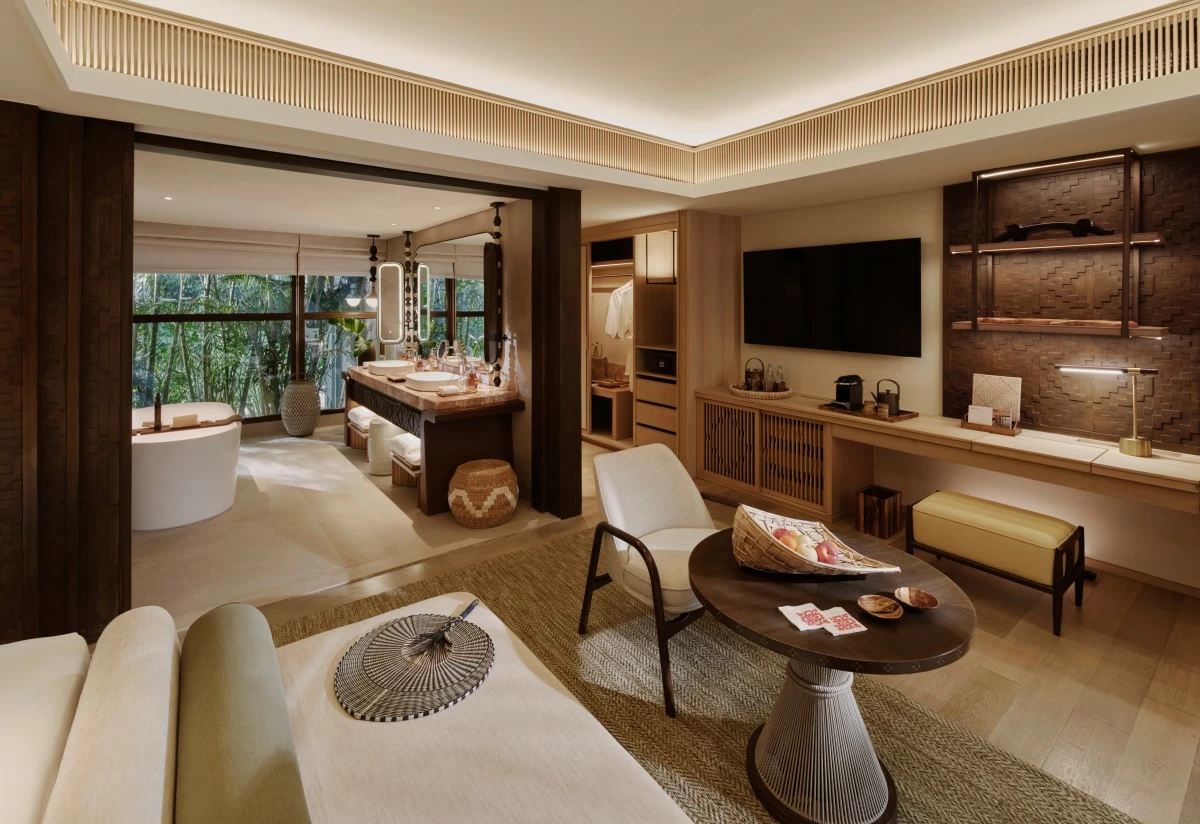
Forest Suite
The Forest Suites, at 63 square meters, sit against the forest and limestone cliffs, with handcrafted woodwork and deep soaking tubs. Forest Rooms and Forest Deluxe Rooms offer more intimate retreats inspired by traditional weaving, ceramic bead patterns, and the surrounding landscape.
Beyond architecture and interiors, Lagen’s spirit is expressed through partnerships with artisans across the archipelago. Artisano Kabalan of Olongapo brings its distinctive clay work, while Cavite-based Creaete Industrial Corp contributes intricate woodcraft rooted in Filipino, Spanish, and indigenous influences. Textile artists and weavers, including Wilson Limon of NiñoFranco, Jenny Mann, the T’boli Weavers, Gemma James Medel, and the Marabatuan Indigenous People Weavers Association, add layers of pattern, texture, and craftsmanship to Lagen’s contemporary interiors.
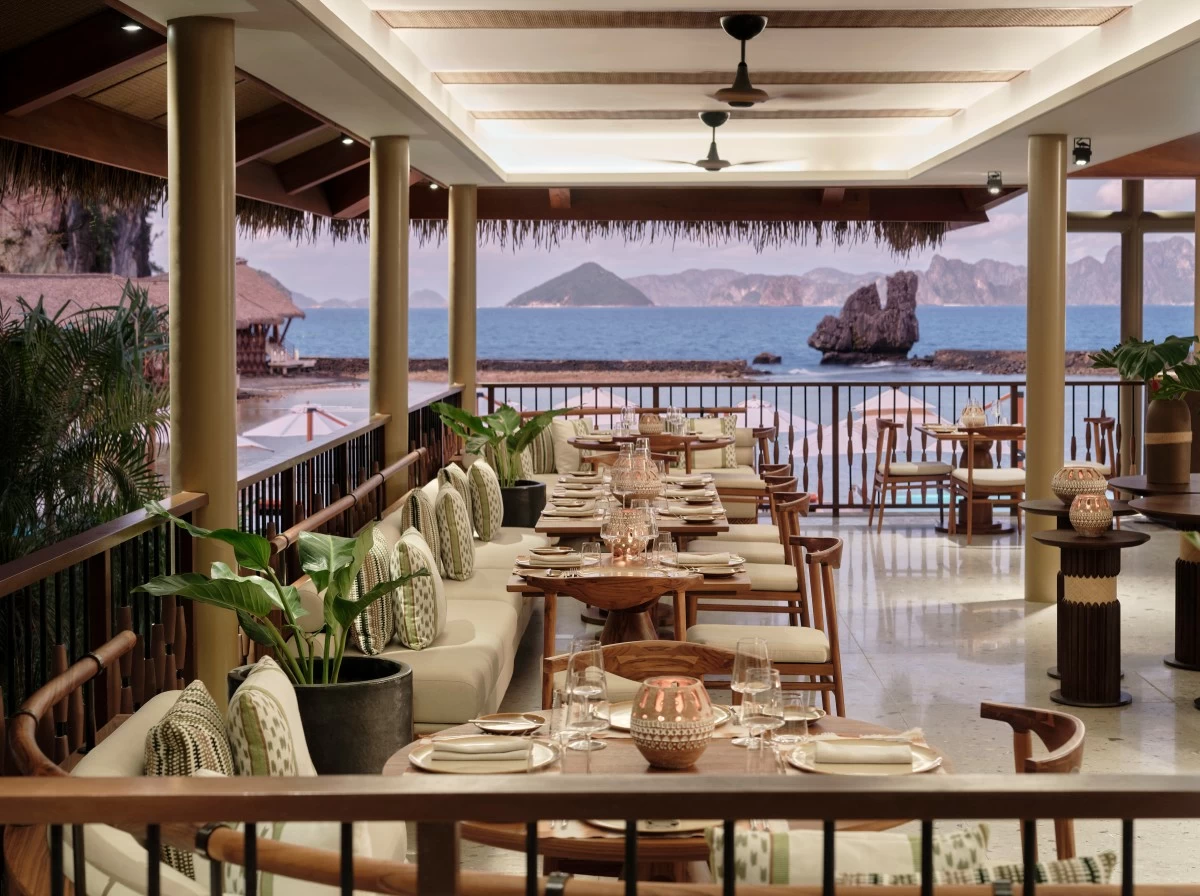
The Clubhouse
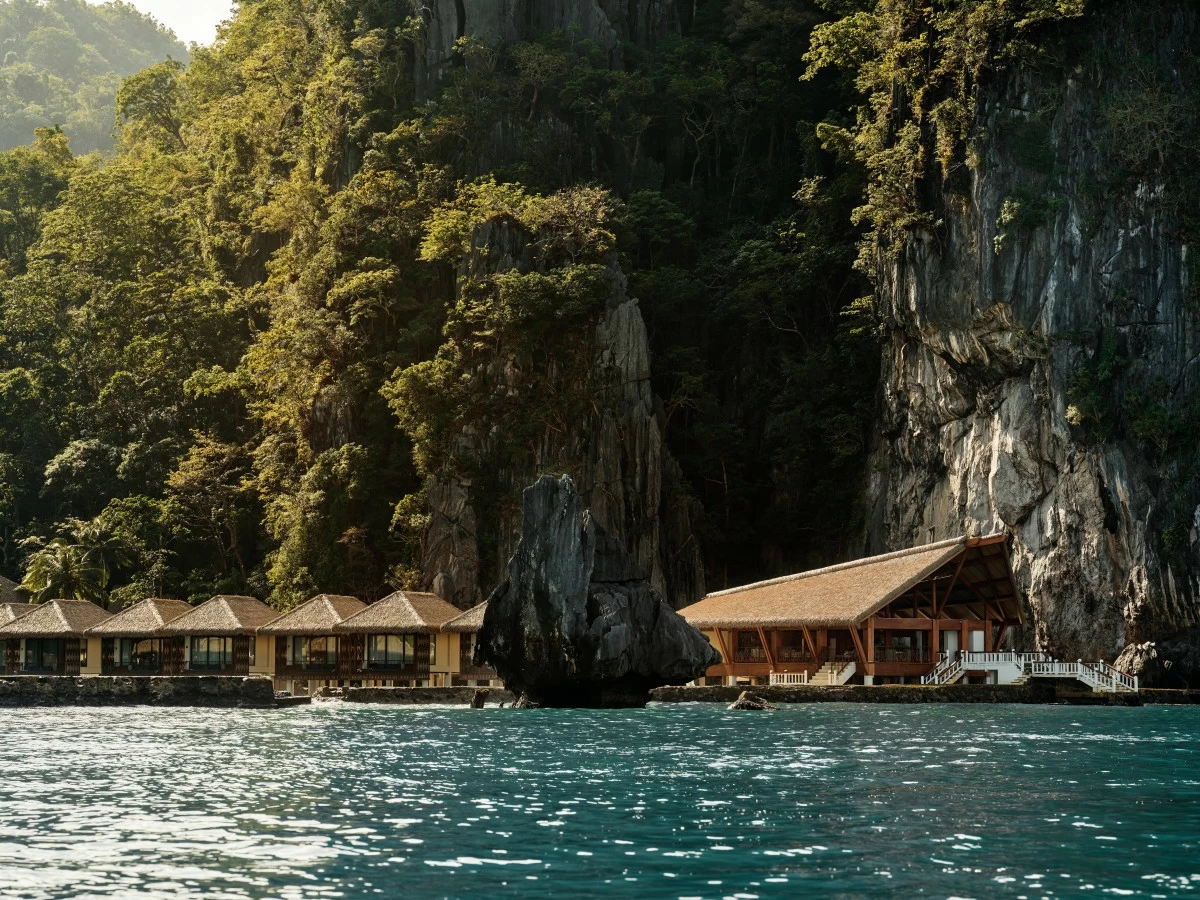
Lagen Rock and The Boathouse
At the table
Dining is another important part of the Lagen experience, with El Nido Resorts executive chef Ric Ramos leading the culinary program.
At The Clubhouse Restaurant, dining is accompanied by open views of the sea and resort, with seafood, local dishes, and international fare. The Boathouse transforms into a relaxed lounge beneath towering limestone cliffs, where handcrafted cocktails and light bites pair beautifully with the setting.
And then there is sunset. From the Boathouse, the view opens dramatically toward the sea and sky, with the limestone landscape framing the horizon. Watching the light change across the water while sipping a drink was one of those moments that felt almost painterly—so beautiful that you instinctively stop talking.
At The Beach Club, light bites and drinks come with views of the bay and Lagen Rock. For something more intimate, private dining can be arranged in caves, secluded coves, on sandbars, beaches, or a private deck.
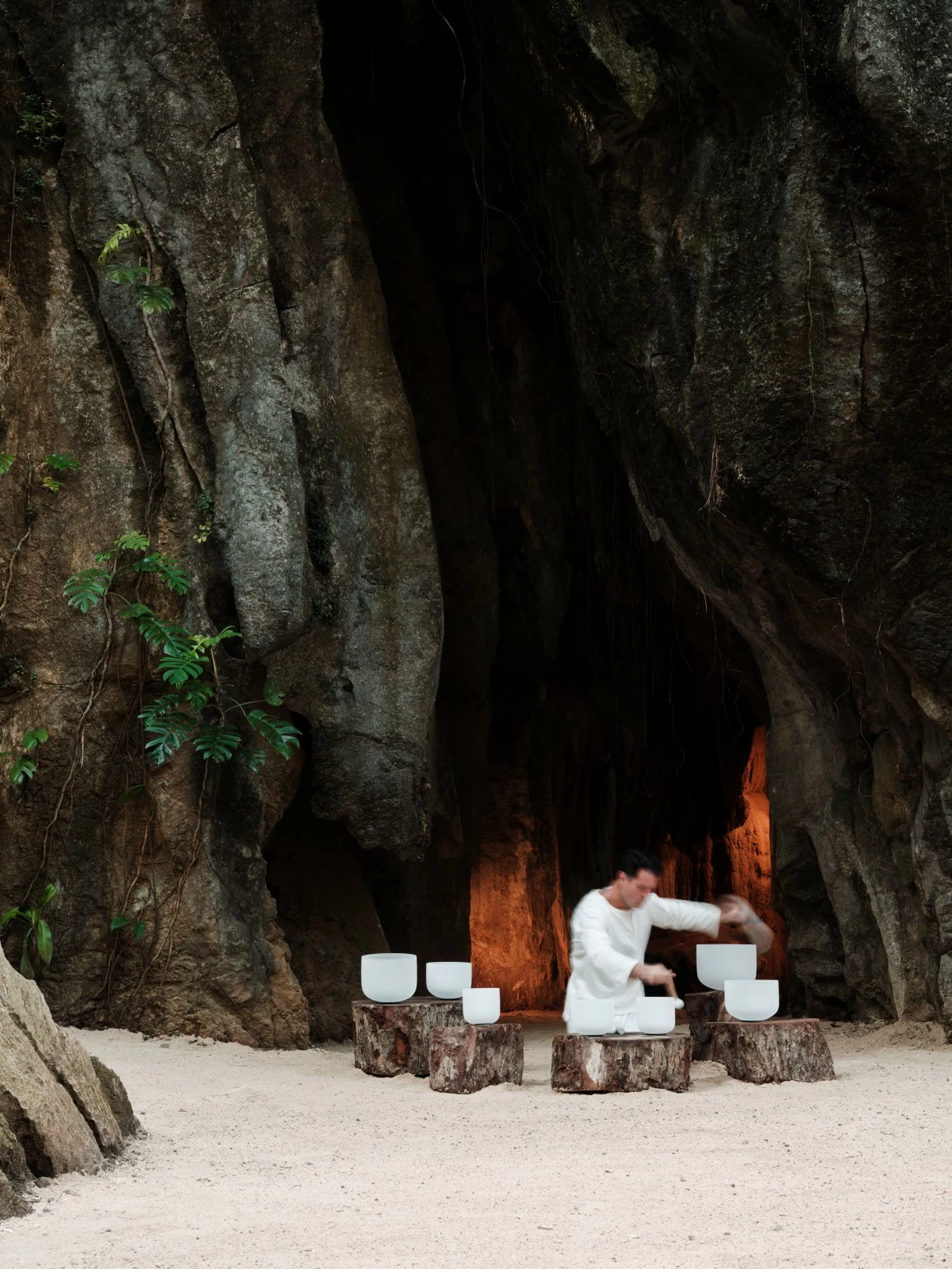
Lagen Wellness Sanctuary singing bowl meditation
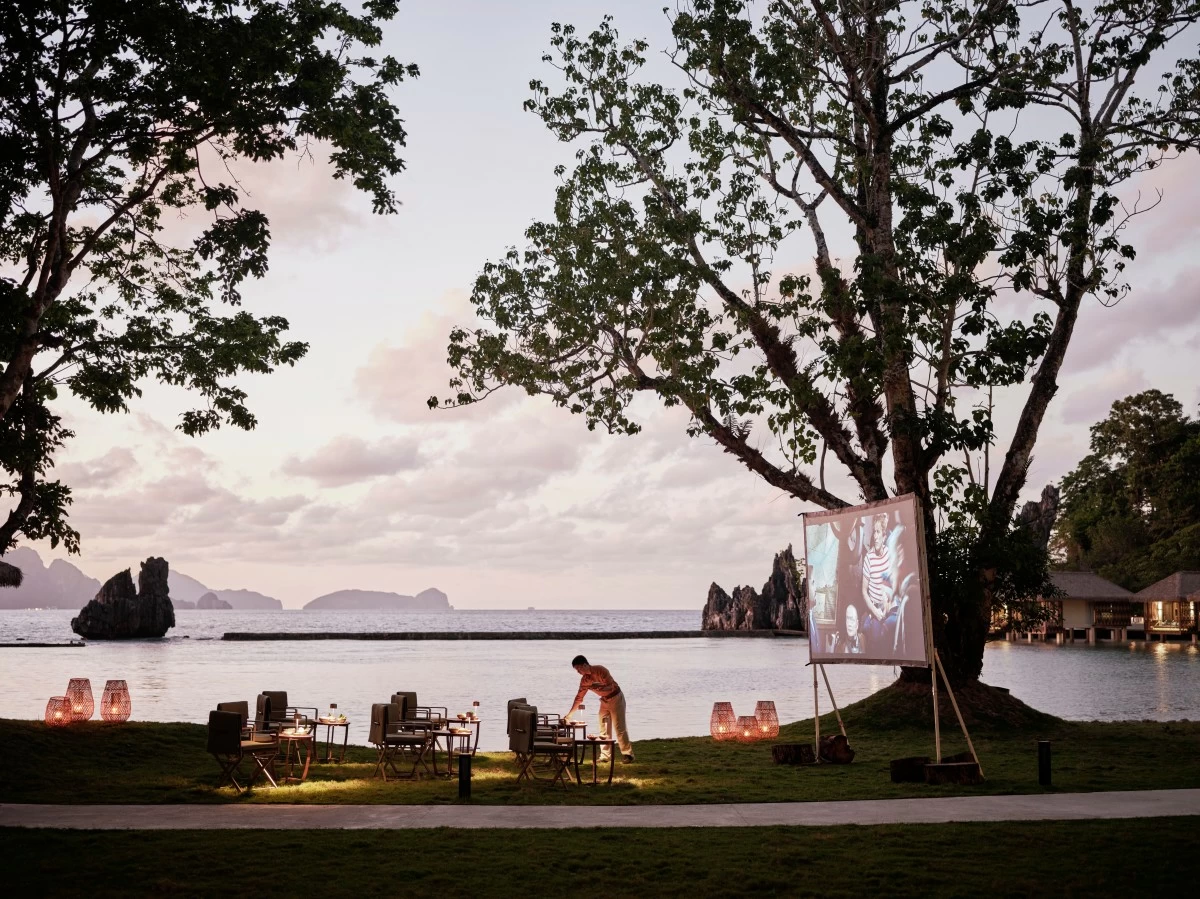
Lagen movie night
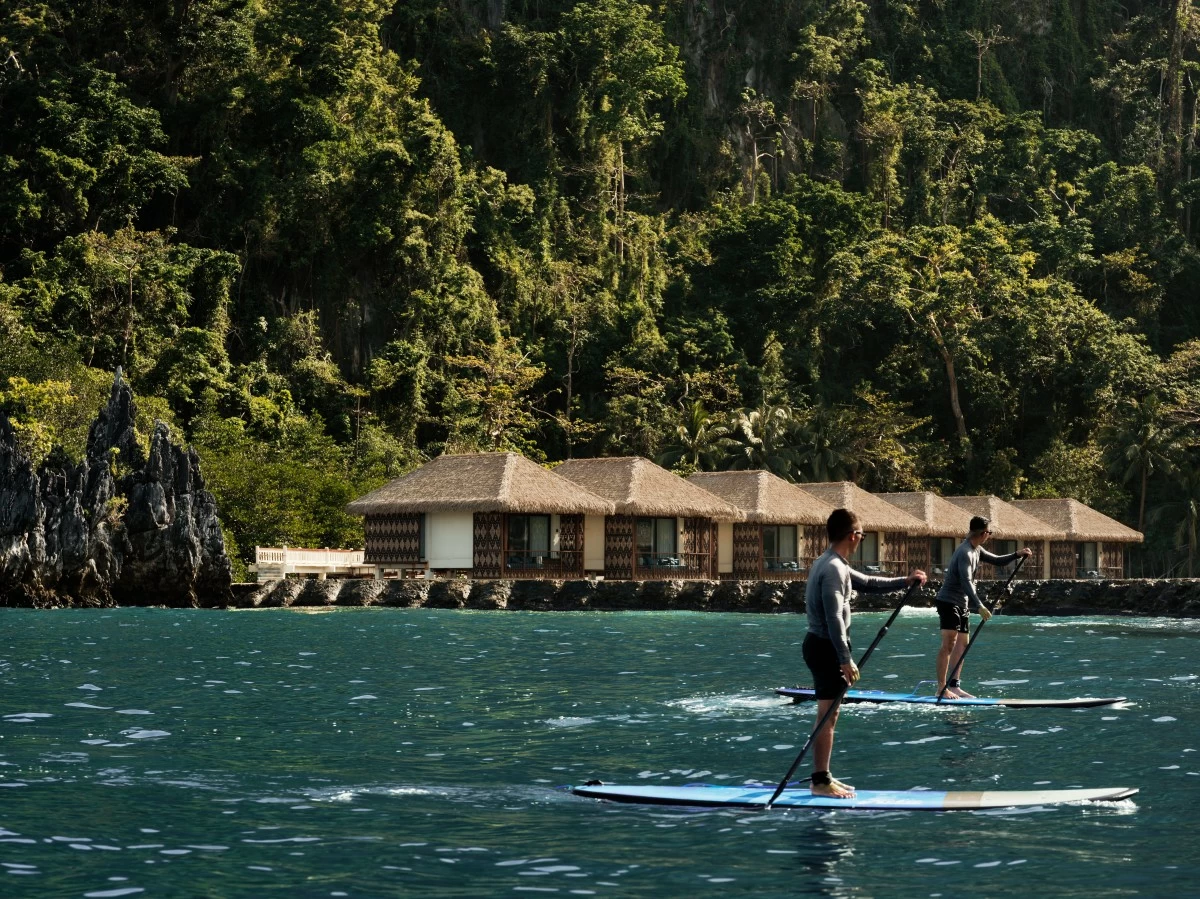
Lagen paddleboarding
The island comes alive
If nature is the protagonist, the experiences are what allow you to become part of the story.
During my stay, I joined a sunset painting session by The Clubhouse, watched the 1957 classic “Badjao (The Sea Gypsies)” starring Rosa Rosal and Tony Santos Sr. near the caves, and took part in a weaving session with a local artisan. The weaving was particularly memorable for me. There was something wonderfully meditative about slowing down, learning the craft, and understanding the hands and traditions behind it.
For the more adventurous, Lagen offers paddleboards, kayaks, eFoils, a Schiller bike, and Subnado sea gliders. On land, there are guided hikes to the majestic Lola Tree, island tours, and nighttime stargazing. Cultural experiences include the Kiminawit Village Tour, Pangangawil fishing, and visits to Kalye Artisano, where local craftsmanship takes center stage.
Then there is the Lagen Wellness Sanctuary, with its tranquil garden, plunge pools, sauna, steam room, and treatment rooms. The Fitness Center provides strength equipment, free weights, and a yoga studio for those who prefer to stay active.
But what I appreciated most was that there was never a sense that I had to do everything. Lagen allows you to move at your own pace. Sometimes the best experience is simply sitting still.
Until we meet again
Before leaving, we took part in one final ritual: crafting our own incense from local ingredients and offering blessings to the island. We placed our wishes and intentions into small bamboo boats and released them into the water with gratitude.
Then it was time to say goodbye. As our boat pulled away, the Lagen team stood along the shore, waving enthusiastically until we were completely out of sight. It was a small gesture, but one I had never experienced quite like it before. Even in the goodbye, there was an unmistakable feeling that this was not really the end. At some point, it felt like you were already being invited to return.
The waves grew bigger as we sped toward the port. Then, through the splashes of water, a rainbow appeared. It was perhaps the most poetic goodbye Lagen could have given me.
And as the island slowly disappeared into the distance, I realized that perhaps this is the real luxury of Lagen. It is not simply the beautiful villa, the thoughtful design, or the food. It is the way the island stays with you. Some places you remember because of what you saw. Lagen, I believe, is remembered because of what you felt.
How to get to Lagen Island Resort
The journey to Lagen Island Resort begins with a flight to El Nido, Palawan. Guests can fly directly to Lio Airport from Clark, Bohol, or Cebu via private charter or Cebu Pacific’s commercial services, with flight times ranging from approximately 50 to 90 minutes.
From Lio Airport, the journey continues by land and sea, with daily scheduled transfers taking guests to the resort. At the El Nido Resorts Jetty Lounge, travelers can take a breather and enjoy refreshments and local snacks before boarding the boat bound for Lagen Island.