







9.7% live below poverty line: Does it reflect the true state of Filipinos?
Published Aug 23, 2026 12:05 am
|
Updated Aug 22, 2026 04:43 pm


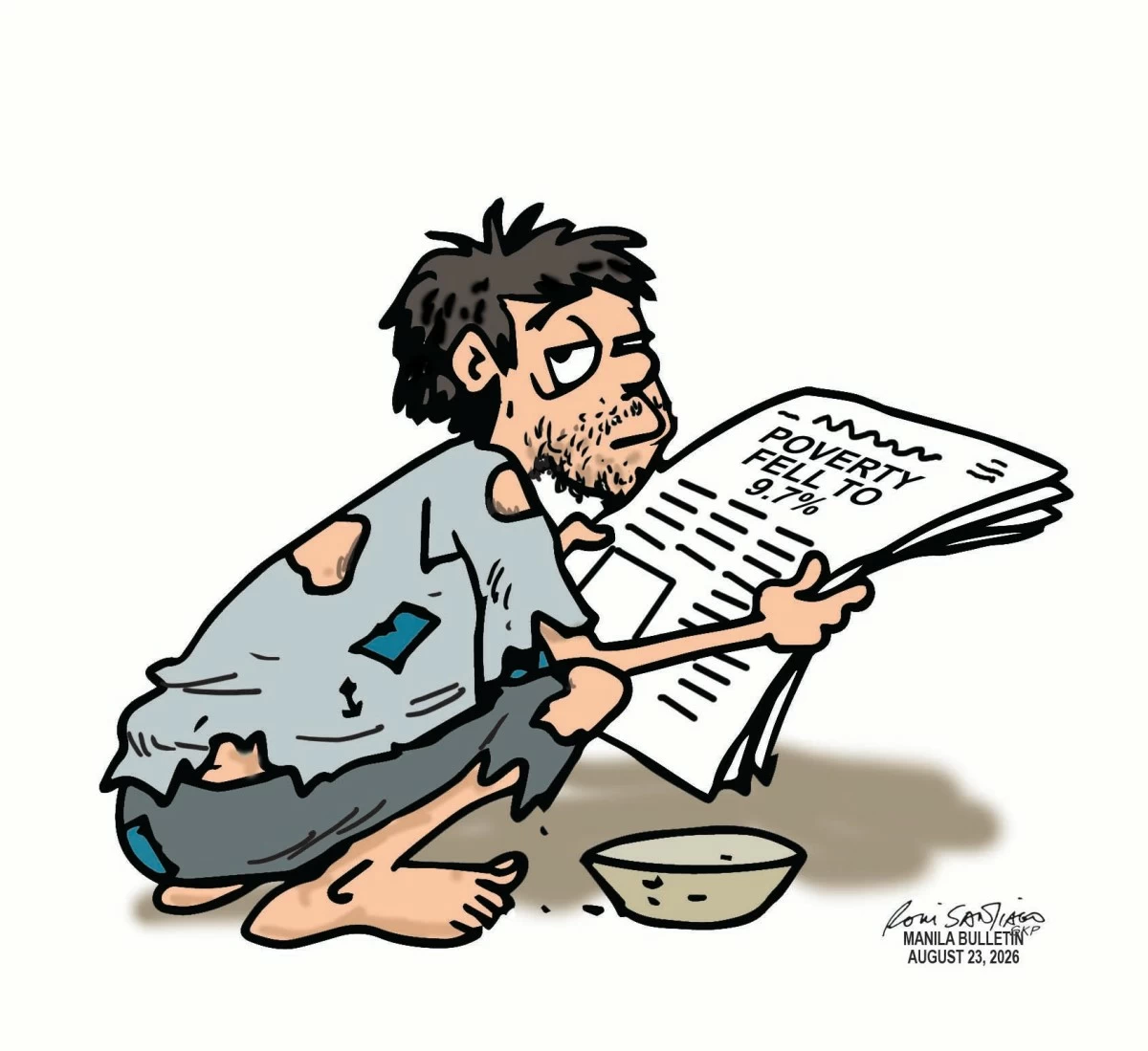
The Philippines has reached a milestone that deserves recognition: poverty incidence fell to 9.7 percent in 2025, the lowest on record and the first time the proportion of Filipinos living below the official poverty line has fallen into single digits. It also means the country achieved the Philippine Development Plan's 2028 poverty target ahead of schedule.
The Philippine Statistics Authority (PSA) reported that the 2025 figure translates to about 11.08 million Filipinos living below the poverty line, down from 17.54 million in 2023. In two years, approximately 6.46 million people were lifted above the official poverty threshold. The decline is substantial and cannot just be dismissed as pure statistics.
This is an achievement the government and the Filipino people can rightly celebrate.
The improvement also indicates that economic growth, easing inflation and employment conditions, together with social protection, can produce tangible gains in household welfare. It demonstrates the value of policies that expand economic opportunities while protecting vulnerable families from economic shocks.
Yet precisely because the achievement is significant, it warrants a deeper question: Does the 9.7-percent poverty rate fully reflect the poverty that Filipinos actually experience?
This is not an argument against the PSA's statistics. Rather, the issue is whether the yardstick remains sufficiently comprehensive, and whether the poverty threshold itself remains sufficiently representative of what it actually costs to live with dignity in the Philippines.
Economist Edita A. Tan, in her 2017 study, “How We Measure Poverty Underestimates Its Extent and Depth,” published in the Philippine Review of Economics, argued that the official income threshold does not adequately account for nonfood needs and may therefore underestimate both the extent of poverty and the rate at which it is being reduced. She examined evidence involving nutrition, education, and housing and proposed alternative poverty thresholds, with particular attention to housing.
This is another observation worth considering.
A household can rise above an official income threshold and still struggle to pay for adequate food, decent housing, education, healthcare, transportation and other necessities. It can remain one illness, job loss, disaster, or sudden price increase away from financial distress.
For many ordinary Filipinos, this distinction is not academic. A family that can technically meet a statistical threshold but cannot afford nutritious food, secure housing or necessary medical care would hardly regard itself as having escaped poverty.
The country should therefore celebrate the 9.7-percent figure without treating it as the final word on poverty.
The next step should be a serious review of how poverty is measured. Income-based poverty incidence remains indispensable, but it could be complemented by measures of housing adequacy, food security, access to healthcare and education, employment quality, debt vulnerability and exposure to economic shocks.
The objective should not be to make the poverty figure look worse. It should be to make it more truthful.
Reaching single-digit poverty ahead of 2028 is a milestone worthy of national recognition. But the more meaningful victory will come when fewer Filipinos are merely above the poverty line—and more are securely beyond the conditions that make poverty a daily reality.
The country has crossed an important statistical threshold. Now it must ensure that the threshold itself reflects the lives of the people it is meant to measure.