ADVERTISEMENT

Spend faster, build better

Published Aug 22, 2026 12:05 am  |  Updated Aug 21, 2026 04:22 pm
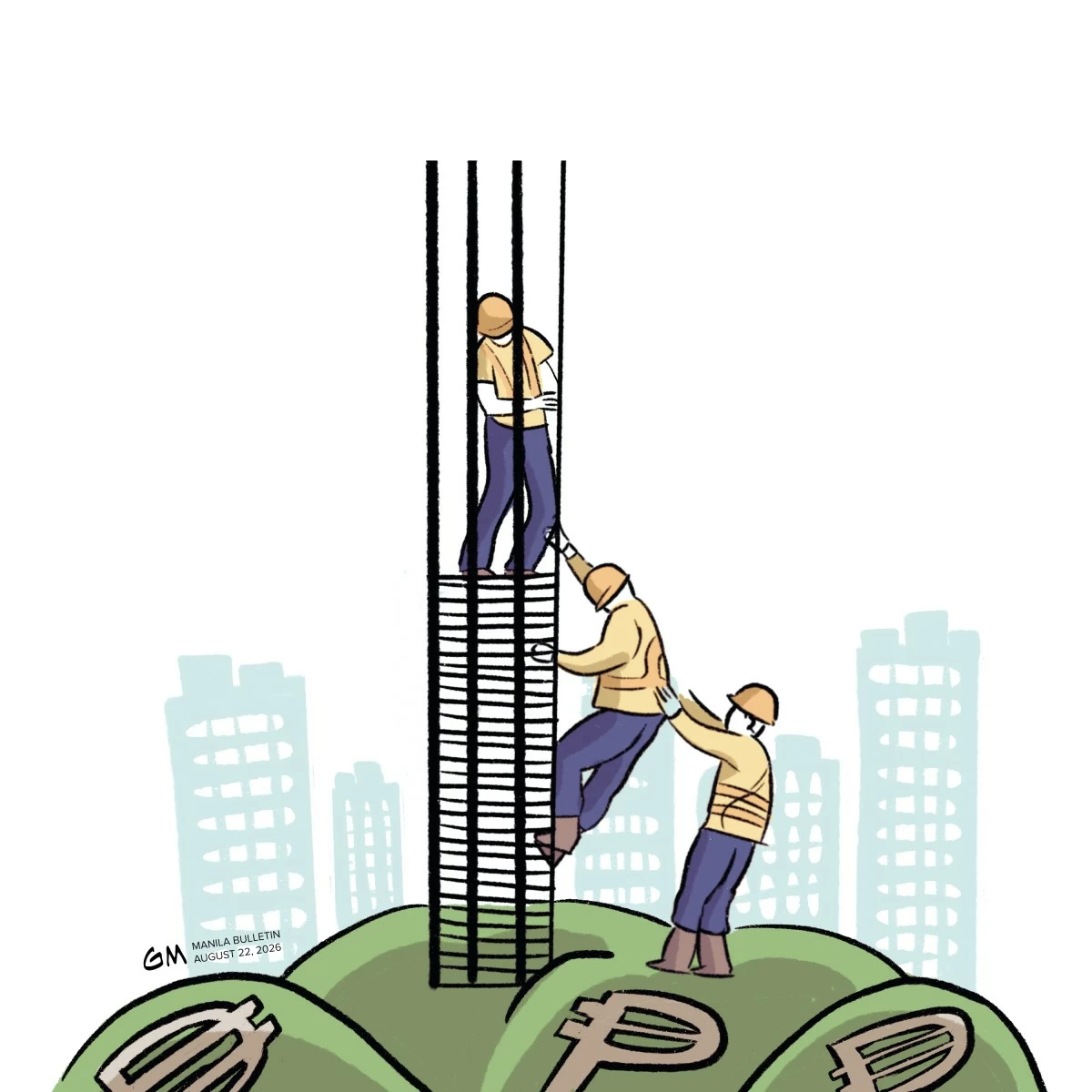
The government’s plan to accelerate infrastructure spending in the second half of 2026 is a welcome development after public construction lagged in the aftermath of last year’s flood-control corruption scandal.
The Marcos Jr. administration has programmed ₱741 billion for its overall infrastructure program in the second half, ₱209.5 billion more than the ₱531.6 billion in the first six months. This would bring the full-year program to ₱1.27 trillion, equivalent to 4.2 percent of gross domestic product (GDP).
The renewed push comes at an opportune time. Infrastructure spending generates jobs in construction and supports industries supplying materials, transport, logistics, and other services. More importantly, well-planned projects improve connectivity, lower business costs, and strengthen the economy’s productive capacity.
Public infrastructure spending had slowed sharply as the government tightened verification and review procedures following the flood-control controversy. The additional safeguards were necessary, but the resulting delays also demonstrated the economic cost when legitimate public works are held back for too long.
The challenge now is to restore momentum without forgetting why tighter scrutiny became necessary in the first place.
This is especially important as flood-control projects return to the infrastructure program in 2027. The government has proposed an overall infrastructure program of ₱1.34 trillion next year, even as the allocation remains lower than previously planned. Restoring flood-control spending is necessary. The scandal should not become a reason to neglect projects that protect communities and economic activity from increasingly disruptive weather.
Recent weeks have again shown why. Persistent rains have caused flooding in roads and communities, disrupting traffic, work, business operations, and daily life. Poor drainage and inadequate flood protection impose costs on households and businesses, while congested roads and the lack of more efficient public transportation, particularly rail systems, reduce productivity even under normal conditions.
Infrastructure is therefore more than a spending target. The quality of roads, railways, drainage systems, and flood defenses affects how efficiently people reach work, how quickly goods move, how reliably businesses operate, and how resilient communities are during severe weather.
But spending more cannot mean returning to old practices.
The Organization for Economic Cooperation and Development (OECD) warned in June that corruption remains a major risk to Philippine infrastructure delivery and that procurement weaknesses continue to undermine development despite existing safeguards. Citing the flood-control controversy, OECD said corruption and mismanagement can waste scarce public resources while weakening climate resilience.
OECD’s recommendations deserve serious attention as infrastructure spending accelerates. It called for stronger procurement transparency, independent audits, competitive bidding, and project-level monitoring. It also recommended publishing contract data and linking budget releases to verified project completion, while embedding anti-corruption provisions in public procurement and public-private partnership (PPP) contracts.
OECD further urged stronger environmental and social safeguards, better capacity among local government units (LGUs), meaningful stakeholder engagement, and operational grievance mechanisms. Climate adaptation should also be integrated throughout project life cycles rather than treated merely as a procedural requirement.
These safeguards should not be viewed as obstacles to faster implementation. Properly designed and consistently enforced, they can help legitimate projects move forward while reducing opportunities for abuse.
The government thus faces a delicate but manageable task: accelerate infrastructure development while ensuring that every project is necessary, properly procured, adequately monitored, and actually delivered.
The country needs infrastructure investment to support growth and create jobs, but it also needs to rebuild confidence in how public money is spent. The lesson of the flood-control scandal is not that the government should build less. It is that the Philippines must build better—with urgency matched by accountability, and spending translated into infrastructure that genuinely improves people’s lives.
ADVERTISEMENT
.most-popular .layout-ratio{ padding-bottom: 79.13%; } @media (min-width: 768px) and (max-width: 1024px) { .widget-title { font-size: 15px !important; } }

{{ articles_filter_1561_widget.title }}

.most-popular .layout-ratio{ padding-bottom: 79.13%; } @media (min-width: 768px) and (max-width: 1024px) { .widget-title { font-size: 15px !important; } }

{{ static_articles_1562_widget.title }}

.most-popular .layout-ratio{ padding-bottom: 79.13%; } @media (min-width: 768px) and (max-width: 1024px) { .widget-title { font-size: 15px !important; } }

{{ articles_filter_1563_widget.title }}

{{ articles_filter_1564_widget.title }}

.mb-article-details { position: relative; } .mb-article-details .article-body-preview, .mb-article-details .article-body-summary{ font-size: 17px; line-height: 30px; font-family: "Libre Caslon Text", serif; color: #000; } .mb-article-details .article-body-preview iframe , .mb-article-details .article-body-summary iframe{ width: 100%; margin: auto; } .read-more-background { background: linear-gradient(180deg, color(display-p3 1.000 1.000 1.000 / 0) 13.75%, color(display-p3 1.000 1.000 1.000 / 0.8) 30.79%, color(display-p3 1.000 1.000 1.000) 72.5%); position: absolute; height: 200px; width: 100%; bottom: 0; display: flex; justify-content: center; align-items: center; padding: 0; } .read-more-background a{ color: #000; } .read-more-btn { padding: 17px 45px; font-family: Inter; font-weight: 700; font-size: 18px; line-height: 16px; text-align: center; vertical-align: middle; border: 1px solid black; background-color: white; } .hidden { display: none; }
function initializeAllSwipers() { // Get all hidden inputs with cms_article_id document.querySelectorAll('[id^="cms_article_id_"]').forEach(function (input) { const cmsArticleId = input.value; const articleSelector = '#article-' + cmsArticleId + ' .body_images'; const swiperElement = document.querySelector(articleSelector); if (swiperElement && !swiperElement.classList.contains('swiper-initialized')) { new Swiper(articleSelector, { loop: true, pagination: false, navigation: { nextEl: '#article-' + cmsArticleId + ' .swiper-button-next', prevEl: '#article-' + cmsArticleId + ' .swiper-button-prev', }, }); } }); } setTimeout(initializeAllSwipers, 3000); const intersectionObserver = new IntersectionObserver( (entries) => { entries.forEach((entry) => { if (entry.isIntersecting) { const newUrl = entry.target.getAttribute("data-url"); if (newUrl) { history.pushState(null, null, newUrl); let article = entry.target; // Extract metadata const author = article.querySelector('.author-section').textContent.replace('By', '').trim(); const section = article.querySelector('.section-info ').textContent.replace(' ', ' '); const title = article.querySelector('.article-title h1').textContent; // Parse URL for Chartbeat path format const parsedUrl = new URL(newUrl, window.location.origin); const cleanUrl = parsedUrl.host + parsedUrl.pathname; // Update Chartbeat configuration if (typeof window._sf_async_config !== 'undefined') { window._sf_async_config.path = cleanUrl; window._sf_async_config.sections = section; window._sf_async_config.authors = author; } // Track virtual page view with Chartbeat if (typeof pSUPERFLY !== 'undefined' && typeof pSUPERFLY.virtualPage === 'function') { try { pSUPERFLY.virtualPage({ path: cleanUrl, title: title, sections: section, authors: author }); } catch (error) { console.error('ping error', error); } } // Optional: Update document title if (title && title !== document.title) { document.title = title; } } } }); }, { threshold: 0.1 } ); function showArticleBody(button) { const article = button.closest("article"); const summary = article.querySelector(".article-body-summary"); const body = article.querySelector(".article-body-preview"); const readMoreSection = article.querySelector(".read-more-background"); // Hide summary and read-more section summary.style.display = "none"; readMoreSection.style.display = "none"; // Show the full article body body.classList.remove("hidden"); } document.addEventListener("DOMContentLoaded", () => { let loadCount = 0; // Track how many times articles are loaded const offset = [1, 2, 3, 4, 5, 6, 7, 8, 9, 10]; // Offset values const currentUrl = window.location.pathname.substring(1); let isLoading = false; // Prevent multiple calls if (!currentUrl) { console.log("Current URL is invalid."); return; } const sentinel = document.getElementById("load-more-sentinel"); if (!sentinel) { console.log("Sentinel element not found."); return; } function isSentinelVisible() { const rect = sentinel.getBoundingClientRect(); return ( rect.top < window.innerHeight && rect.bottom >= 0 ); } function onScroll() { if (isLoading) return; if (isSentinelVisible()) { if (loadCount >= offset.length) { console.log("Maximum load attempts reached."); window.removeEventListener("scroll", onScroll); return; } isLoading = true; const currentOffset = offset[loadCount]; window.loadMoreItems().then(() => { let article = document.querySelector('#widget_1690 > div:nth-last-of-type(2) article'); intersectionObserver.observe(article) loadCount++; }).catch(error => { console.error("Error loading more items:", error); }).finally(() => { isLoading = false; }); } } window.addEventListener("scroll", onScroll); });

Sign up by email to receive news.