







Project Silica — A geopolitical tailwind
Published Aug 21, 2026 12:05 am
|
Updated Aug 20, 2026 05:39 pm


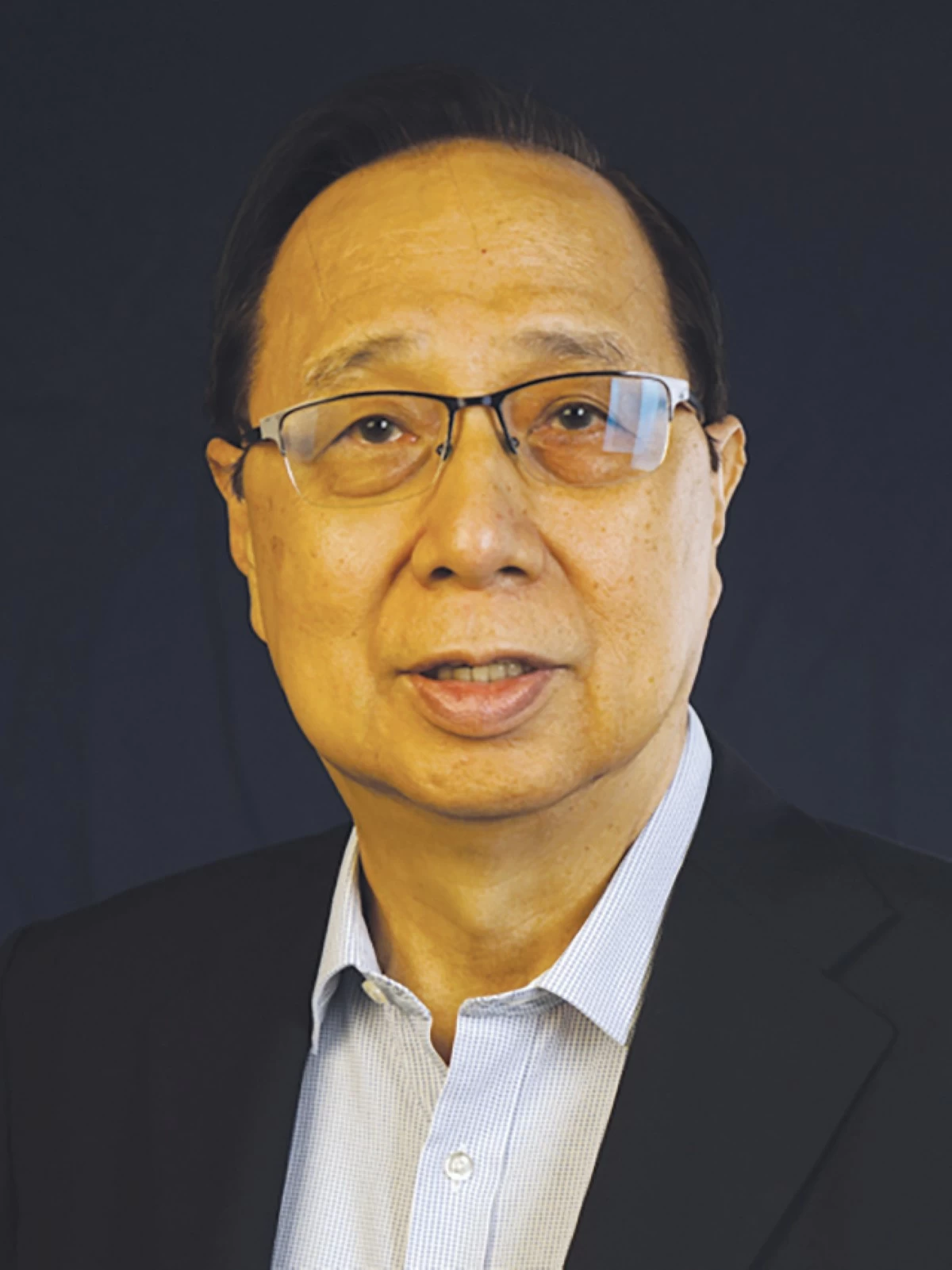
CALIXTO V. CHIKIAMCO, MANILA BULLETIN INDEPENDENT DIRECTOR
Project Silica is one of those government projects that elicit strong reactions, mostly negative, from the get-go. Once it was announced, when the ink had not even turned dry, the bashers and the haters lit up social media with grim scenarios and criticisms. As a friend described it, these are arguments that peddle zombie scenarios: they argue by conjuring the most dire, unfounded consequences.
Part of the negative reaction stems from the Left's knee-jerk reaction. The fact that Project Silica is a US-led initiative already drew condemnation from the Philippine Left with its views against “US Imperialism.”
Part of the negative reaction came from environmentalists and tree huggers, concerned that Project Silica would bring environmental destruction.
Also, part of the zombie scenario being peddled to argue against Project Silica is that IPs (Indigenous Peoples) would be displaced from their IP lands to make way for the industries of Project Silica.
There are reasons to be concerned because the announcement came with few details. The government has also not done a good job of communicating to the public how Project Silica will be implemented.
However, I support Project Silica because it represents a geopolitical tailwind. What do I mean? For the first time, it’s in the interest of the US and other nations to push the Philippines' development toward higher-value industries. Project Silica is an attempt by Western powers to build a resilient supply chain for vital industries, such as nickel processing and semiconductors, that is not controlled by China.
Why the Philippines? Because it has nickel, copper, and other mineral resources critical to EVs, semiconductors, and other industrialized products. Because it already has a semiconductor industry that can be used to move up the value chain. Because it has the human resources - an English-speaking labor force - that can make Project Silica work. Because it’s a democracy. Vietnam, for all its advantages as a base for manufacturing, still is an authoritarian state controlled by the Communist Party.
A geopolitical tailwind is a historic opportunity. One can view the Marshall Plan, in which the US helped Europe to rebuild after World War II, as one such geopolitical tailwind. It was in the United States' interest to rebuild Western Europe as a bulwark against Soviet communism. And the Marshall Plan succeeded. Western Europe rose from the ashes of the war and became prosperous.
The same interest in strengthening allies as front-line states against Soviet expansionism led the US to help Japan and South Korea rebuild and industrialize after World War II. (In contrast, the US had no such interest for its former colony, the Philippines, after World War II. Instead, the Bell Trade Act imposed onerous conditions for the granting of independence.)
Another geopolitical tailwind was the aftermath of the Plaza Accord signed in 1985 among the US and other G5 countries – Japan, UK, France, and Germany. Concerned by its growing trade deficit with Japan and Germany, the United States forced these G5 countries to revalue their currencies against the US dollar. The aftermath of the Plaza Accord was the strengthening of the Japanese yen, which made Japanese manufacturing and exports to the US uncompetitive in certain industries. Japan had to relocate its factories.
It was this geopolitical tailwind that Thailand used to industrialize. It welcomed Japanese industry to Thailand. That is why there’s a thriving car industry in Thailand, with an ecosystem of suppliers. The Philippines, on the other hand, was just recovering from Marcos’ authoritarian rule and was politically unstable. Besides, the 1987 Constitution contained numerous anti-FDI provisions, and the Communist left’s influence on the labor movement made investment in the Philippines inhospitable and unattractive in the 1990s. (The anti-capitalist climate is the reason why labor-intensive industries, such as garments and light manufacturing, hit by strikes and unreasonable labor demands, eventually fled the Philippines for Bangladesh and Vietnam).
Let us, therefore, make use of this geopolitical tailwind to advance manufacturing and development in the country.
However, concerns about environmental impact, including water and energy use, are justified. The high-value industries located in the Clark ecozone are energy- and water-intensive. Where will the government get the baseload power plants and water sources to run them?
Although the concerns are valid, these aren’t without technological solutions. Water can be recycled, limiting utilization of scarce water. The government or the private sector can also build impounding dams primarily to serve the Clark industrial estate where Project Silica will be located. As for power requirements, the government should provide a plan for energizing the Project Silica industries without burdening the national grid.
For the country to maximize the benefits of Project Silica, however, it must amend the 1987 Constitution. Why? For example, the constitutional restriction on the practice of professions will limit our ability to import foreign talent that will lead to technological transfer. Even teaching is considered a profession, and there are many hurdles to bringing in foreign talent to teach advanced technologies.
Another example is the constitutional restriction on foreign investment in tertiary educational institutions. Why don’t we allow reputable foreign educational institutions to operate branches here to produce the talent needed not only by Project Silica industries but also by the Philippine economy in general? Why not a Stanford or a Columbia University here? Or, a University of Melbourne? The benefit will be twofold: we will be able to attract more foreign students to study here, especially at a time when the US, Canada, and Australia are limiting the number of foreign students seeking English-based college and graduate-level education. Another benefit will be the production of world-class graduates who can be employed in the advanced industries that Project Silica will bring. However, these benefits are not possible with the existing constitutional restrictions on the ownership and operation of educational institutions.
Openness to foreign investment and talent was key to China's success in the EV industry. The Chinese government opened the car industry to 100 percent foreign investment to Tesla, so that local manufacturers could learn from it, and they did. Chinese EV manufacturers also hired many foreign automotive engineers and designers.
One final point: the success or failure of Project Silica will depend on governance. It’s not yet clear which agency will have authority over Project Silica. Will it be the Bases Conversion Development Authority? Will it be the Department of Trade and Industry? It’s possible that administration over Project Silica will be politicized, or corruption will mark its governance. The structure of the authority over Project Silica must ensure professionalism and stability in governance. Whether Project Silica advances Philippine interests will depend greatly on the quality of the governance.
The Philippines is being given a historic opportunity to advance on the back of a geopolitical tailwind. Let’s not drop the ball.