ADVERTISEMENT

Philippines hog inventory drops below 9 million as commercial farms shrink

Published Aug 21, 2026 01:28 pm
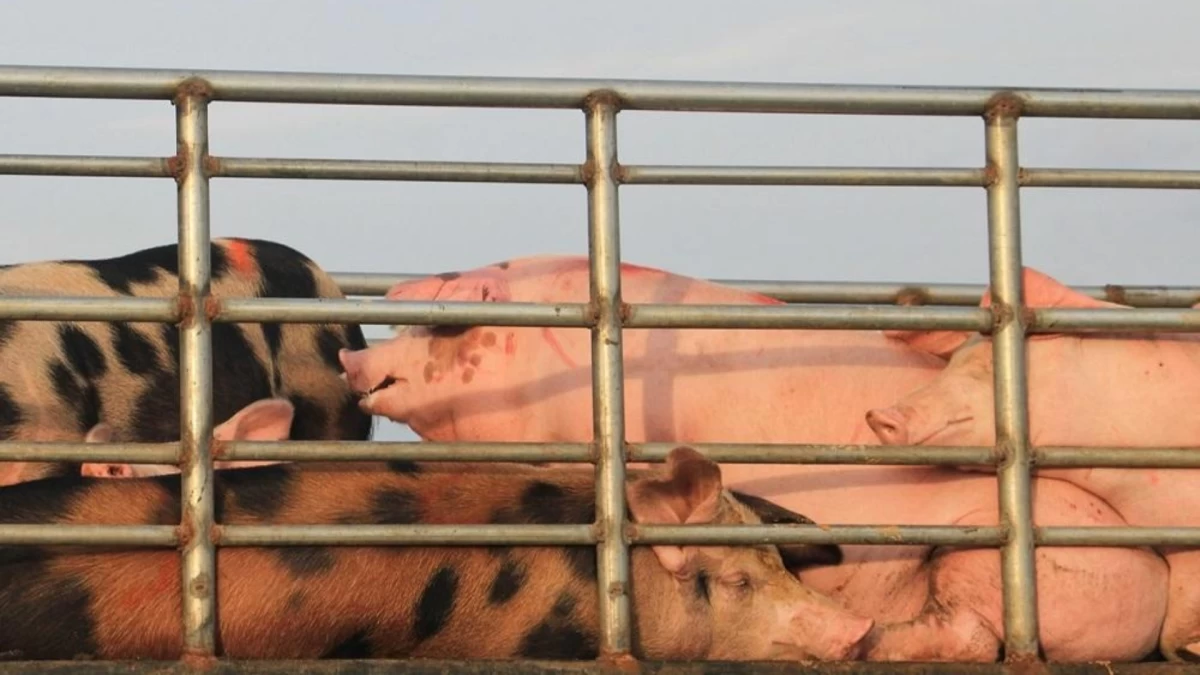
The country’s swine population continued its decline in the first half of the year, with total inventory dropping below nine million heads, according to the Philippine Statistics Authority (PSA).
Preliminary data from the PSA showed that the country's hog inventory reached 8.93 million heads from January to June, down by one percent from 9.01 million heads in the same period last year.
The latest inventory level was a decline of more than five percent compared to the 9.55 million heads recorded in the first half of 2024.
Smallholder farms accounted for nearly 80 percent of the domestic swine population, covering a total of 7.08 million heads, or a 9.7 percent increase from the 6.46 million heads recorded last year.
The PSA noted that the overall decline this year was driven largely by commercial farms, whose inventory dropped by nearly a quarter to 1.70 million heads from 2.24 million heads in 2025.
Additionally, the swine population in semi-commercial farms was slashed by more than half to 149,216 heads in the first six months from 323,473 heads last year.
By region, Calabarzon recorded the highest swine population by the end of June at 1.22 million heads, followed by Central Luzon (1.05 million) and the Bicol Region (754,782).
“These three regions accounted for a 34.2 percent share of the country’s total swine population during the period,” the PSA said.
Mimaropa registered a 21 percent decline in its swine inventory during the first half, falling to 506,949 heads from 642,207.
Similarly, the Negros Island Region’s hog inventory dropped by nearly 18 percent to 671,268 heads, while the Zamboanga Peninsula fell by 12 percent to 591,066.
For the second quarter alone, the PSA reported that total hog production volume rose 5.6 percent to 412,281 metric tons (MT) on a liveweight basis from 390,487 MT in the same period last year.
Central Luzon was the top producer from April to June, contributing 58,447 MT (14.2 percent of the total), followed closely by Calabarzon at 58,351 MT.
The average farmgate price of hogs for slaughter stood at ₱172.44 per kilogram on a liveweight basis in the second quarter, an 18.6 percent drop from ₱211.91 per kilogram last year.
To offset limited local pork production and meet growing domestic demand, the Philippines continues to rely on foreign imports.
The Department of Agriculture (DA) recently lifted the temporary suspension on imported canned pork products, expanding market access following a ban first imposed nearly a decade ago in response to African Swine Fever (ASF), which continues to affect local farms.

Related Tags

Philippine Statistic Authority (PSA) Hogs
ADVERTISEMENT
.most-popular .layout-ratio{ padding-bottom: 79.13%; } @media (min-width: 768px) and (max-width: 1024px) { .widget-title { font-size: 15px !important; } }

{{ articles_filter_1561_widget.title }}

.most-popular .layout-ratio{ padding-bottom: 79.13%; } @media (min-width: 768px) and (max-width: 1024px) { .widget-title { font-size: 15px !important; } }

{{ static_articles_1562_widget.title }}

.most-popular .layout-ratio{ padding-bottom: 79.13%; } @media (min-width: 768px) and (max-width: 1024px) { .widget-title { font-size: 15px !important; } }

{{ articles_filter_1563_widget.title }}

{{ articles_filter_1564_widget.title }}

.mb-article-details { position: relative; } .mb-article-details .article-body-preview, .mb-article-details .article-body-summary{ font-size: 17px; line-height: 30px; font-family: "Libre Caslon Text", serif; color: #000; } .mb-article-details .article-body-preview iframe , .mb-article-details .article-body-summary iframe{ width: 100%; margin: auto; } .read-more-background { background: linear-gradient(180deg, color(display-p3 1.000 1.000 1.000 / 0) 13.75%, color(display-p3 1.000 1.000 1.000 / 0.8) 30.79%, color(display-p3 1.000 1.000 1.000) 72.5%); position: absolute; height: 200px; width: 100%; bottom: 0; display: flex; justify-content: center; align-items: center; padding: 0; } .read-more-background a{ color: #000; } .read-more-btn { padding: 17px 45px; font-family: Inter; font-weight: 700; font-size: 18px; line-height: 16px; text-align: center; vertical-align: middle; border: 1px solid black; background-color: white; } .hidden { display: none; }
function initializeAllSwipers() { // Get all hidden inputs with cms_article_id document.querySelectorAll('[id^="cms_article_id_"]').forEach(function (input) { const cmsArticleId = input.value; const articleSelector = '#article-' + cmsArticleId + ' .body_images'; const swiperElement = document.querySelector(articleSelector); if (swiperElement && !swiperElement.classList.contains('swiper-initialized')) { new Swiper(articleSelector, { loop: true, pagination: false, navigation: { nextEl: '#article-' + cmsArticleId + ' .swiper-button-next', prevEl: '#article-' + cmsArticleId + ' .swiper-button-prev', }, }); } }); } setTimeout(initializeAllSwipers, 3000); const intersectionObserver = new IntersectionObserver( (entries) => { entries.forEach((entry) => { if (entry.isIntersecting) { const newUrl = entry.target.getAttribute("data-url"); if (newUrl) { history.pushState(null, null, newUrl); let article = entry.target; // Extract metadata const author = article.querySelector('.author-section').textContent.replace('By', '').trim(); const section = article.querySelector('.section-info ').textContent.replace(' ', ' '); const title = article.querySelector('.article-title h1').textContent; // Parse URL for Chartbeat path format const parsedUrl = new URL(newUrl, window.location.origin); const cleanUrl = parsedUrl.host + parsedUrl.pathname; // Update Chartbeat configuration if (typeof window._sf_async_config !== 'undefined') { window._sf_async_config.path = cleanUrl; window._sf_async_config.sections = section; window._sf_async_config.authors = author; } // Track virtual page view with Chartbeat if (typeof pSUPERFLY !== 'undefined' && typeof pSUPERFLY.virtualPage === 'function') { try { pSUPERFLY.virtualPage({ path: cleanUrl, title: title, sections: section, authors: author }); } catch (error) { console.error('ping error', error); } } // Optional: Update document title if (title && title !== document.title) { document.title = title; } } } }); }, { threshold: 0.1 } ); function showArticleBody(button) { const article = button.closest("article"); const summary = article.querySelector(".article-body-summary"); const body = article.querySelector(".article-body-preview"); const readMoreSection = article.querySelector(".read-more-background"); // Hide summary and read-more section summary.style.display = "none"; readMoreSection.style.display = "none"; // Show the full article body body.classList.remove("hidden"); } document.addEventListener("DOMContentLoaded", () => { let loadCount = 0; // Track how many times articles are loaded const offset = [1, 2, 3, 4, 5, 6, 7, 8, 9, 10]; // Offset values const currentUrl = window.location.pathname.substring(1); let isLoading = false; // Prevent multiple calls if (!currentUrl) { console.log("Current URL is invalid."); return; } const sentinel = document.getElementById("load-more-sentinel"); if (!sentinel) { console.log("Sentinel element not found."); return; } function isSentinelVisible() { const rect = sentinel.getBoundingClientRect(); return ( rect.top < window.innerHeight && rect.bottom >= 0 ); } function onScroll() { if (isLoading) return; if (isSentinelVisible()) { if (loadCount >= offset.length) { console.log("Maximum load attempts reached."); window.removeEventListener("scroll", onScroll); return; } isLoading = true; const currentOffset = offset[loadCount]; window.loadMoreItems().then(() => { let article = document.querySelector('#widget_1690 > div:nth-last-of-type(2) article'); intersectionObserver.observe(article) loadCount++; }).catch(error => { console.error("Error loading more items:", error); }).finally(() => { isLoading = false; }); } } window.addEventListener("scroll", onScroll); });

Sign up by email to receive news.