






 Philippines
National
Marcos invokes Ninoy legacy in warning against disinformation, division
Philippines
National
Marcos invokes Ninoy legacy in warning against disinformation, division
Marcos invokes Ninoy legacy in warning against disinformation, division


At A Glance
- President Marcos invoked the legacy of the late senator Benigno "Ninoy" Aquino Jr. in warning against disinformation, division, distrust, and civic indifference that he said continue to challenge democracy.
- Marcos said Filipinos share a responsibility to protect freedom, strengthen institutions, and remain actively engaged in the country's affairs.
- The message comes as the Marcoses and Aquinos have maintained increasingly visible personal ties despite their longstanding political differences.
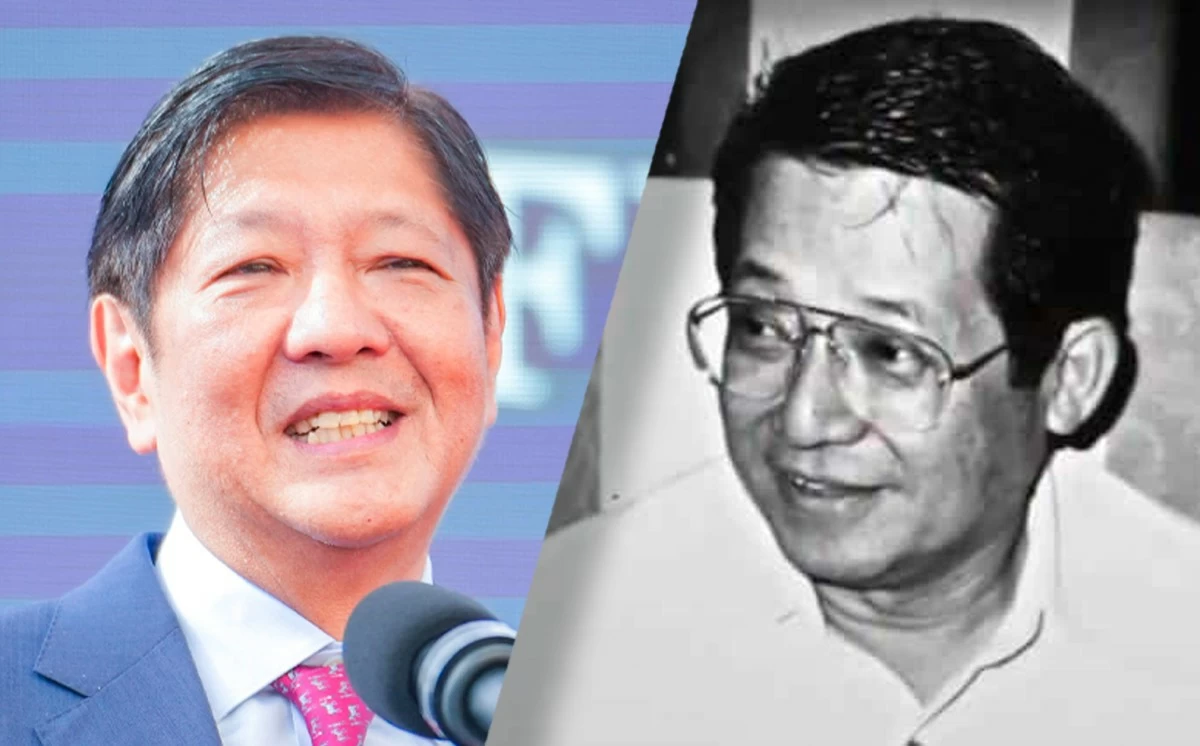
President Marcos on Friday invoked Ninoy Aquino’s legacy in warning that disinformation, division, distrust, and civic indifference remain challenges to Philippine democracy.
In a message posted on the Office of the President’s Facebook page, Marcos said Aquino’s memory should remind Filipinos of the courage to stand by their convictions and contribute to the country’s democratic journey.
“The memory of Ninoy Aquino reminds us of the courage of Filipinos to stand by their convictions and contribute to our nation's democratic journey,” he said in his message marking the 43rd Ninoy Aquino Day.
The President said the nature of the threats confronting democracy may have evolved, but Filipinos continue to have a responsibility to protect and reinforce democratic institutions.
“The challenges facing our democracy may have changed over time, but our shared responsibility to reinforce it remains,” he said.
He pointed out that the current environment requires Filipinos to remain involved in national affairs rather than become disengaged from issues affecting the country.
“Disinformation, division, distrust, and civic indifference underscore the importance of active engagement in our nation's affairs,” Marcos said.
According to the Chief Executive, Aquino’s example remains relevant as Filipinos confront these challenges and work toward progress as a nation.
“Ninoy's legacy encourages us to meet these challenges with vigilance and faith in the Filipino people as we work together to deliver meaningful progress for all,” he said.
Marcos also framed the commemoration as a reminder that freedom entails responsibilities toward other Filipinos and the country as a whole.
“This day reaffirms that freedom carries with it a collective duty to respect the dignity and rights of others, and to contribute to the good of our nation,” he said.
The President vowed that his administration would continue to protect the country’s sovereignty, uphold the rule of law, and ensure that the freedoms Filipinos value are accompanied by opportunities.
“For its part, this administration will remain steadfast in protecting our sovereignty, upholding the rule of law, and ensuring that the liberty we cherish is matched by real opportunities for every Filipino,” Marcos said.
He called on Filipinos to apply the lessons of the past as they work toward a more peaceful and prosperous country.
“Together, let us carry forward the lessons of our history as we continue to nurture a more peaceful and prosperous Philippines,” he said.
Aquino, a staunch critic of the late president Ferdinand Marcos Sr., was assassinated on Aug. 21, 1983, after returning to the Philippines from exile.
Third official Ninoy message
This is the third time Marcos has issued an official message for Ninoy Aquino Day since assuming the presidency, following his messages in 2023 and 2025, while he did not issue a message for the observance in 2022 or 2024.
In 2023, Marcos urged Filipinos to set aside political differences and unite for the country’s welfare and progress, describing Aquino as an example of being “relentless and resolute” in standing by his beliefs.
In 2025, Marcos focused on reflection, civic duty, unity, and reconciliation, saying the passage of time had allowed Filipinos to view Aquino’s death with greater clarity and a deeper perspective.
Marcos, Aquinos ‘always been okay’
The President has previously acknowledged the political differences between the Marcoses and Aquinos while saying the relationship between the two families has remained cordial.
“We've always been okay. We just don't agree politically,” Marcos said on July 10, 2024, when asked about the relationship between the two families after Kris Aquino’s sons, Josh and Bimby, visited First Lady Liza Araneta-Marcos at Malacañan.
Marcos said the visit came after Kris sought the First Lady’s assistance with travel arrangements and described it as “a very fine gesture” that brought more personal and human interaction between the two families.
He also explained that Liza is related to Kris’ children, saying the First Lady is their aunt because her aunt married Pedro “Don Pepe” Cojuangco, the eldest brother of former president Corazon Aquino.
More family encounters
The personal ties have continued in recent years, including a March 2026 lunch at Bahay Pangulo hosted by Liza for Kris, during which Marcos briefly joined them and posed for a photo.
Earlier this month, Kris, Josh, and Bimby again visited the First Lady and gave her advance birthday cakes ahead of her Aug. 21 birthday, with Liza describing the gesture as a thoughtful surprise.
Liza’s birthday falls on the same date as Ninoy Aquino Day, which commemorates the 1983 assassination of the late senator.
Ninoy Aquino
Born on Nov. 27, 1932, in Tarlac, Aquino worked as a journalist before turning to politics, where he became the youngest mayor in the country at 22, later served as a governor, and eventually became a senator. By the late 1960s, he was recognized as one of the sharpest and most outspoken critics of then-President Ferdinand Marcos.
Known for his eloquence and bold criticism of the administration, Aquino believed in participatory democracy, accountability in government, and the importance of safeguarding civil liberties. In the Senate, he consistently warned of the dangers of authoritarianism and reminded Filipinos that public officials are duty-bound to serve — not silence — their citizens.
When martial law was declared in 1972, he was arrested, jailed, and placed in solitary confinement. Aquino spent seven years in prison — enduring long stretches of isolation — until he suffered a heart attack and was allowed to travel to the United States for medical treatment.
Even in exile, he continued to speak out, meeting with Filipino communities and world leaders to rally support for democracy.
Despite repeated warnings that his return could cost him his life, he came back in August 1983, believing that he needed to be with his people — a decision that ultimately awakened a nation and changed the course of history.