






 World
Indonesia and China discuss increasing defense cooperation and energy security
World
Indonesia and China discuss increasing defense cooperation and energy security
Indonesia and China discuss increasing defense cooperation and energy security


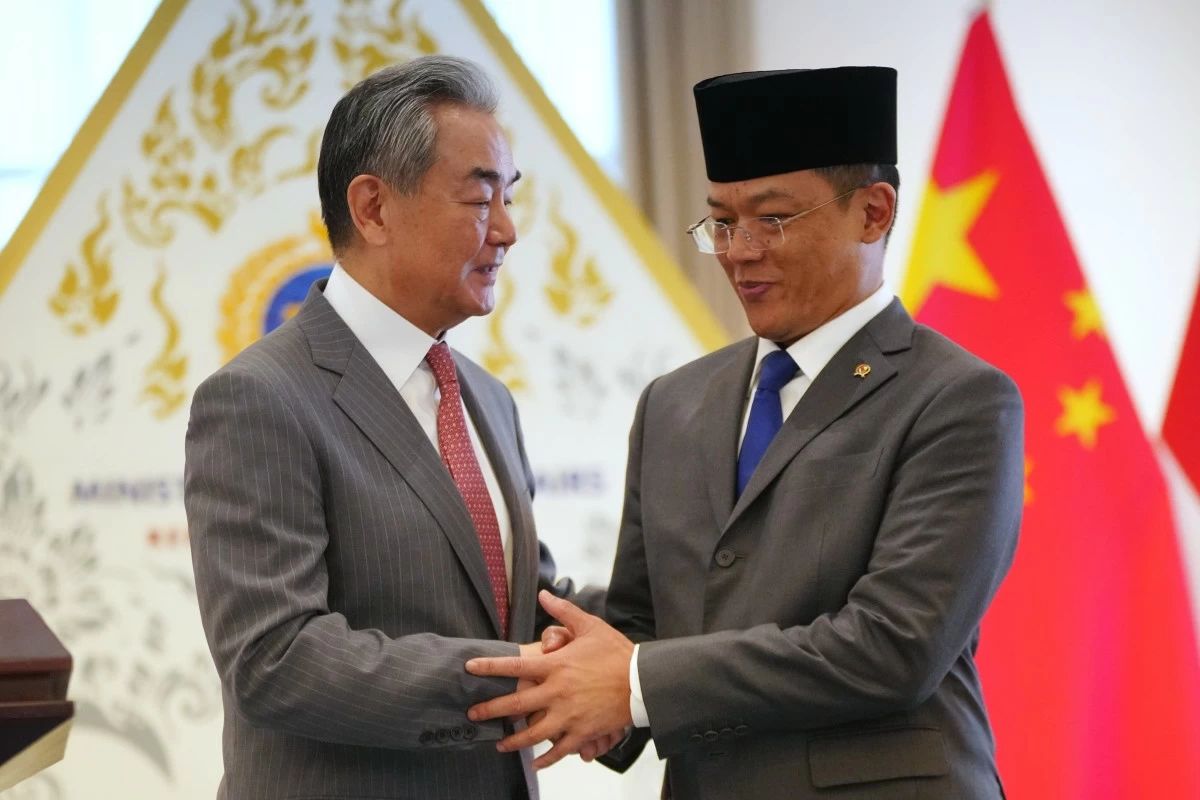
JAKARTA, Indonesia (AP) — Top ministers for Indonesia and China agreed during meetings in Jakarta on Friday to increase their defense cooperation and strengthen food and energy security.
The meetings come as Jakarta deepens military ties with China while trying to maintain its long-standing non-aligned foreign policy and balance relations with other major powers.
China’s Foreign Minister Wang Yi said Indonesia and China agreed to better coordinate on their top development and security priorities as the two countries modernize.
Wang said the dialogue will “send a clear signal to the world of solidarity and cooperation between our two major emerging-market countries.”
Indonesian Foreign Minister Sugiono said the two sides discussed strengthening food, energy and mineral security through the development of industries that support national resilience, which in the future will encompass areas such as artificial intelligence, the joint development of communications satellites and other advanced technology initiatives.
“We also agreed to facilitate trade, including market exploration and the expansion of market access for Indonesia’s flagship commodities,” Sugiono, who uses one name, said in a jointly released statement.
The countries’ defense ministers, Indonesia’s Sjafrie Sjamsoeddin and China’s Dong Jun, met separately and discussed intensifying defense cooperation.
“We also invite the Chinese armed forces to participate in joint exercises, such as the Heping Garuda exercise, which is a concrete example of the relationship between the Indonesian National Armed Forces and the Chinese armed forces,” Sjamsoeddin said.
He added that Indonesia and China will collaborate on a joint munitions factory in Indonesia, which will also produce missiles and rockets. China will transfer technology to Indonesia as part of the plan, which is set to begin in 2027.
Indonesia’s economic ties with China have flourished in recent years, reaching about $167 billion in 2025.
China has become Indonesia’s largest trading partner and plowed billions into major infrastructure projects such as the Jakarta-Bandung high-speed railway and Cirata, Southeast Asia’s largest floating solar power project, on a reservoir in West Java, 130 kilometers (80 miles) from the capital, Jakarta.
Disagreements have emerged over the pricing and timing for the projects, but China says it is determined to follow through on them in keeping with President Xi Jinping’s signature “Belt and Road” initiative to build infrastructure throughout the region.