







Ensure no ghost projects taint ₱107-B flood control fund in 2027
Published Aug 21, 2026 12:05 am
|
Updated Aug 20, 2026 05:22 pm


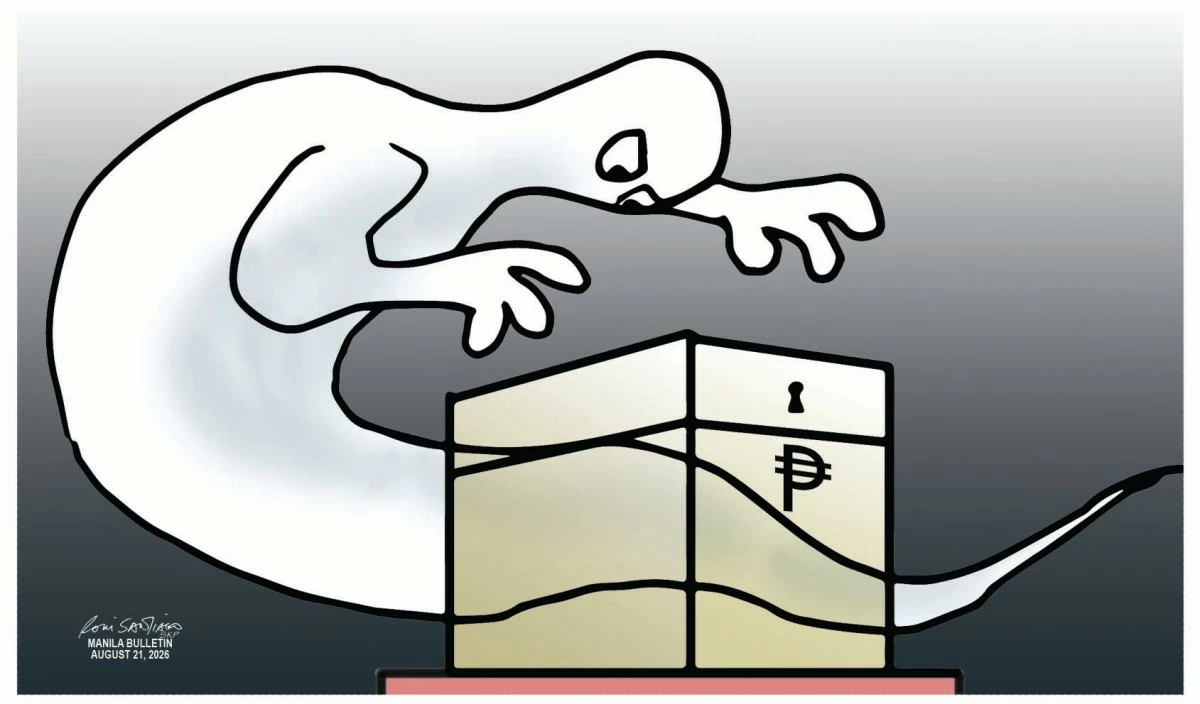
As the House of Representatives begins deliberations on the proposed ₱7.2-trillion national budget for 2027, lawmakers face a test that goes beyond balancing appropriations, especially in the wake of the flood control projects scandal and the flooding we have been experiencing in succession.
Can Congress ensure now that every peso allocated for flood control produces measurable protection for Filipino communities?
The question is particularly urgent. The proposed 2027 budget includes ₱107.4 billion for flood-control projects, including funds for the maintenance, repair, rehabilitation and improvement of existing infrastructure. The Department of Budget and Management said the proposed projects underwent stricter scrutiny, with locations identified and programs of work required before submission to Congress.
But the starting point must be the painful experience of the past.
Sen. Panfilo “Ping” Lacson has reported that the government allocated about ₱1.939 trillion for DPWH flood-control programs from 2011 to 2025. Yet flooding remains a recurring threat to homes, livelihoods, businesses and public infrastructure. With this in mind, the issue is therefore not whether the country should spend more on flood control. It is whether it can finally spend better, meaningfully, and with integrity.
The House has a timely opportunity to impose that discipline during the 2027 budget deliberations. The proposed allocation should not be treated as an automatic entitlement for another round of flood control programs. Every project must answer three basic questions: Where is the flooding? What precisely will the project accomplish? How will the government prove that it works?
Congress should require project-by-project justification, supported by hydrologic studies, flood-risk maps, detailed engineering designs, and measurable targets. Projects should be evaluated according to their ability to reduce flood depth, duration, affected households, and economic losses—not merely by the amount disbursed or the percentage of physical completion.
Transparency must also begin before the first peso is released.
Every major flood-control project should have an accessible digital record containing its location, cost, contractor, procurement documents, detailed design, timetable, change orders, payments, and completion status. Geotagged and time-stamped photographs, drone imagery and satellite monitoring should document construction from beginning to end. Independent engineering audits should verify whether what was paid for was actually built and whether it meets specifications.
The House should also scrutinize whether flood-control appropriations are properly itemized and protected from opaque funding mechanisms. Recent scrutiny of unprogrammed appropriations has underscored why taxpayers need to know precisely where funds originate and where they go.
Most importantly, accountability must have teeth. Contractors responsible for ghost, substandard, defective, or overpriced projects should face blacklisting, restitution, and prosecution when evidence warrants. Officials who approve fraudulent or grossly deficient projects must likewise face administrative and criminal consequences under existing laws.
The larger institutional question should not be avoided, either. Flood control requires expertise extending beyond conventional public works: watershed management, urban planning, environmental protection, hydrology, climate science and water-resource management. The government should therefore consider whether a specialized national flood and water-management authority—with DPWH serving only as an engineering and implementation partner—would provide stronger coordination and accountability.
The private sector can contribute engineering expertise, technology, independent auditing and monitoring systems, while civil society, universities and professional organizations can provide independent scrutiny. Citizens, too, have a role in reporting suspicious projects and comparing promised infrastructure with what actually exists.
The House has promised transparency as it undertakes the 2027 budget process. It should make flood control the clearest demonstration of that commitment.
The ₱107.4-billion allocation should not just be another measure of government spending. It must become a measure of government performance. After ₱1.939 trillion, Filipinos deserve nothing less than flood-control projects that work, budgets that can be traced, and officials and contractors who can be held accountable for every peso.
The government can do it if it doesn’t entertain any compromise and has strong political will to make every peso count.