







Pumping stations won't solve flood woes alone — Marcos
Upgrade, construction of 13 pumping stations in Metro Manila eyed for year-end completion
Published Aug 20, 2026 01:08 pm


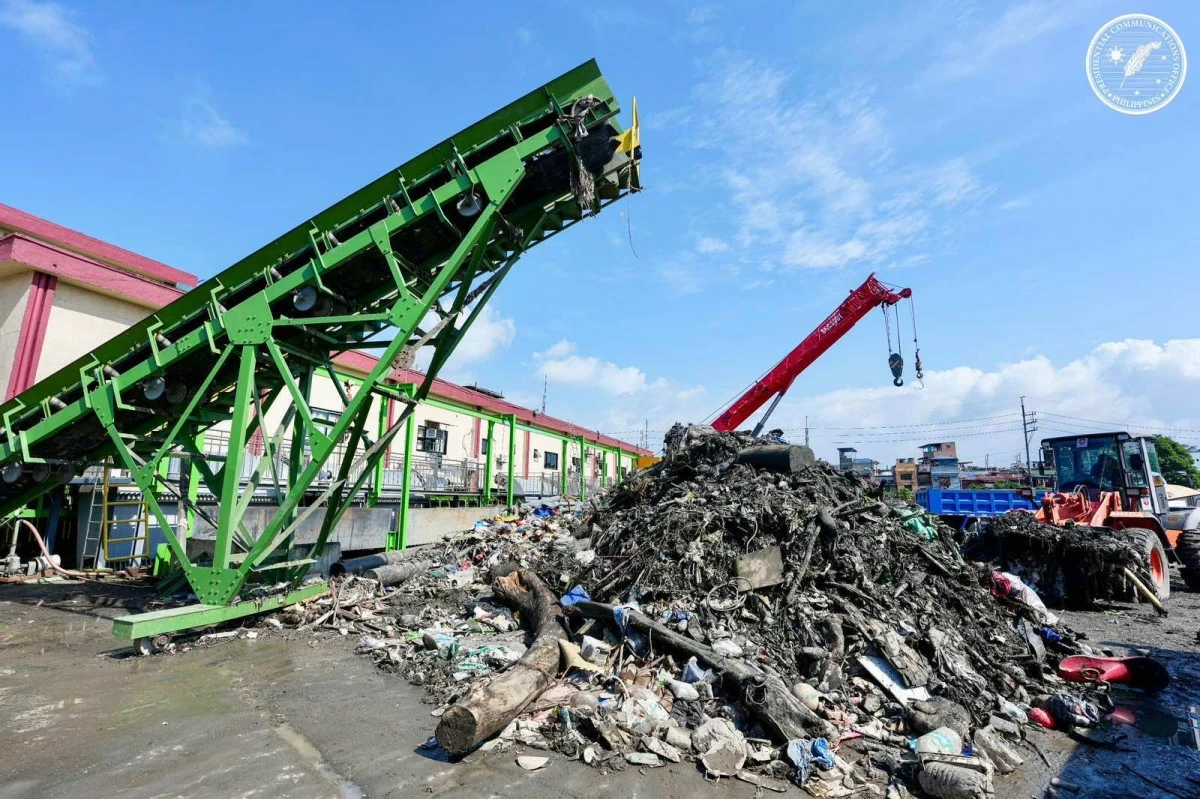
Tripa de Gallina Pumping Station in Pasay City (PCO)
While the government is eyeing the completion of upgrades and the construction of 13 pumping stations in Metro Manila, President Marcos admitted that these measures alone will not solve the perennial flooding problem in the metropolis.
In an interview during his inspection of the Tripa de Gallina Pumping Station in Pasay City on Thursday, Aug. 20, Marcos said improper waste disposal will continue to affect the efficiency of pumping stations if it will not be addressed.
"Okay naman, malakas naman ang mga bomba natin, umaandar naman sila lahat. Pero ang nagiging problema pa rin ay yung pagpasok ng basura (Everything is fine, and our pumps are strong. They are all operating. But the problem remains the entry of garbage into the pumping stations)," Marcos said.
"Kaya't naghahanap tayo ng mga iba’t ibang pamamaraan upang magamit yung basura at iyan ginagawang compost, ginagawang paso na organic, tapos yung iba kailangan talaga itapon sa landfill (That’s why we are looking for different ways to make use of the waste—turning it into compost, making organic plant pots, while some of it really needs to be disposed of in landfills)," Marcos added.
The President stressed the need to address the problem on waste management as it will lead to the decline of the pumping stations' functions.
"Kaya't yun ang kailangan natin ayusin talaga. Kahit na maganda ang ating pumping station, kahit malakas ang ating mga bomba, kapag nandyan pa rin, pumapasok pa rin ang basura, syempre ang efficiency niyan bababa, hindi na masyado maganda ang takbo. Kaya 'yan ang kailangan natin ayusin ngayon (“That’s what we really need to address. Even if our pumping stations are in good condition and our pumps are powerful, if garbage continues to enter the system, their efficiency will inevitably decline, and they will not operate as effectively. That’s what we need to address now)," Marcos said.
New pumping stations
Thirteen pumping stations around Metro Manila are eyed for completion by the end of this year or early next year, Marcos said.
"We are installing additional pumping stations and those pumping stations are in and around Manila. I think altogether we will have 13 additional pumping stations which we should have in place by the end of this year or the beginning of next year. Most of them should be in place already," Marcos said.
According to Metropolitan Manila Development Authority (MMDA) Don Artes, of the 13 pumping stations, four of them are newly-built while the rest had undergone upgrade.
Marcos, however, stressed that the construction and upgrade of new pumping stations "does not solve our problem with garbage."
"So that is why we are here trying to find ways to dispose of the garbage in an environmentally friendly way. That's why they are creating compost. None of the organic waste goes to waste as it were. Lahat ng organic waste nagagamit (All organic waste will be be used)," Marcos said.
The Chief Executive said all inorganic waste being thrown into the system is "where we are encountering problems."
"Ang biro nga nila is that kung kukunin mo lahat ng lumalabas na basura, pwede kang magbuo ng bahay dahil meron mga kitchen sink, may mattress tayo nakita, may kung ano-ano yung kinatapon (As they often joke, if you collected all the garbage that comes out, you could build a house because we have found kitchen sinks, mattresses, and all sorts of things that people have thrown away)," Marcos said.
"Kaya kailangan talagang, kailangan natin tugunan yung problema sa basura (This is why we really need to address the waste problem)," he added.
According to the President, waste-to-energy efforts should be put into action by next year, "as long as the financing is available."
EPR Act violators
In a Palace briefing on Thursday, Castro disclosed that 155 show cause letters were issued to potential obliged enterprises for possibly failing to fulfill their obligations under the Extended Producer Responsibility (EPR) Act.
According to the Department of Environment and Natural Resources (DENR), it is actively monitoring companies’ compliance with the EPR Law by auditing their recovery rates to ensure adherence.
"The agency has issued 155 show-cause letters to potential obliged enterprises that are not complying with their EPR obligations," Castro said quoting a statement from the DENR.
The EPR Act serves as a carrot-and-stick mechanism, where producers are required to recover and recycle their plastic packaging waste.
However, DENR said "there is still a need to further monitor the actions being taken by companies."
In 2024, the audited recovery rates reached 59.98 percent for rigid plastics and 56.33 percent for flexible plastics, which were higher than the legal target of 40 percent, according to DENR.
It added that the prescribed targets for the following years are: 20 percent in 2023, 40 percent in 2024, 60 percent in 2026, and 80 percent in 2028.
Those who fail to comply will be issued penalties and be subject to fines, the agency warned.
"Sa mga kumpanyang hindi makaka-recover ng kanilang plastic wastes, footprint o hindi makakasunod sa mga requirement ng batas ay nahaharap sa mga multimillion peso na multa (Companies that fail to recover their plastic waste footprint or do not comply with the requirements of the law may face multimillion-peso fines)," the DENR said.
Stressing that if companies are complying with and even exceeding the targets that have been set, Castro appealed to the public to also do their part and help.
"[D]ahil nga nakita po natin na karamihan ng lumulutang dito sa river ay halos plastik at kailangan talaga na mas magkaroon ng responsibilidad, magkaroon ng pagpapatupad or pagtugon sa obligasyon hindi lang ng gobyerno kung hindi lahat tayo lalung-lalo na siguro ang ating mga kababayan, mga residente at mga entities or korporasyon (Because we have seen that most of what is floating in the river is plastic, there is really a need to promote greater responsibility and ensure the enforcement of obligations, not only on the part of the government, but from all of us, especially our fellow citizens, residents, and entities or corporations)," Castro said.