ADVERTISEMENT

Connectivity as capital: The impact of mega infrastructures on real estate

Published Aug 20, 2026 11:27 am
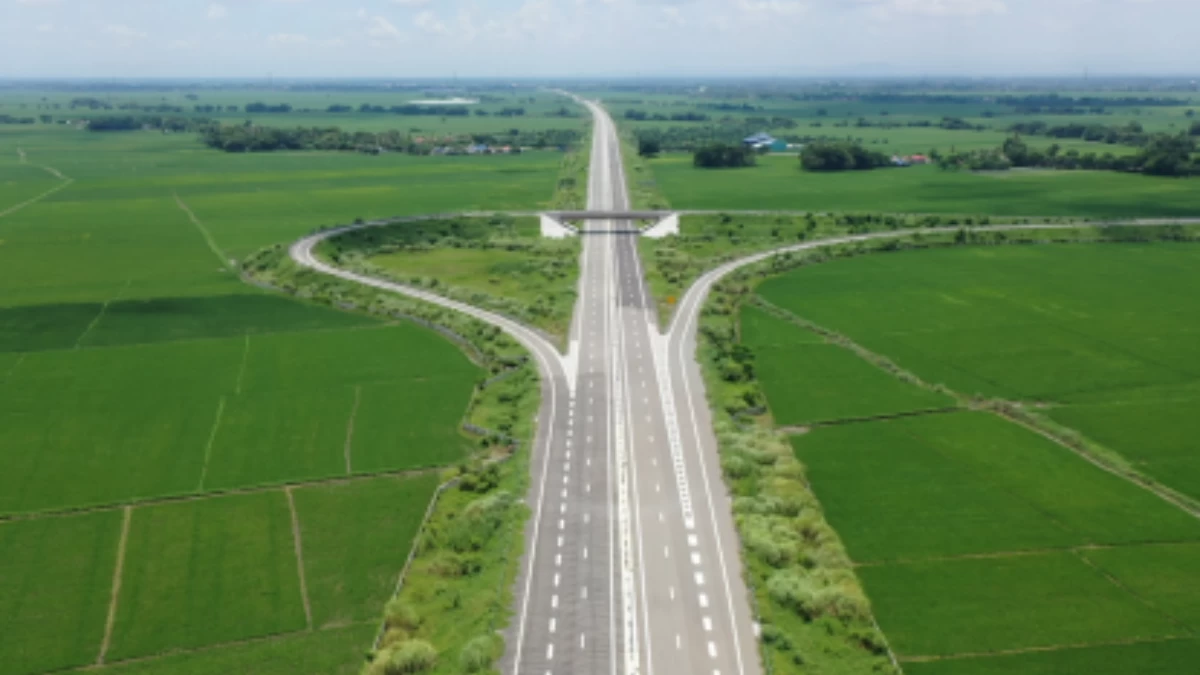
Central Luzon Link Expressway (CCLEX) (Photo: DPWH)
By Sheila Lobien, CEO, Lobien Reality Group Inc.
The Luzon Spine Expressway Network (LSEN), DPWH's 1,213-km program linking Ilocos to Bicol, is the largest infrastructure undertaking touching Pampanga, Bulacan, Cavite, Laguna, Batangas, and Rizal. National infrastructure disbursement averaged just 2.9 percent of GDP from 2010 to 2016; it more than doubled to 5.3 to 6.3 percent of GDP through 2017-2018, reaching about ₱568.8 billion in 2017 from ₱493 billion in 2016, en route to a 7-percent-of-GDP target by 2022. By 2023, outlays exceeded ₱1 trillion in eleven months (5.5 percent of GDP), and ₱1.51 trillion was allocated to the Build Better More program in 2024. Flagship LSEN segments in these six provinces, including CLLEX (₱14.94 billion), CALAX, the NLEX-SLEX Connector, and TPLEX extensions, were substantially completed between 2020 and 2023.
Although the Philippine Statistics Authority does not publish province-level GDP, we can approximate it by using the closest verifiable proxy, which is gross regional domestic product (GRDP) for Central Luzon (Region III, including Pampanga and Bulacan) and CALABARZON (Region IV-A, including Cavite, Laguna, Batangas, and Rizal). Both expanded through the decade despite the 2020 pandemic contraction. By 2024, Central Luzon grew by 6.5 percent and CALABARZON by 5.6 percent, against a 5.7 percent national rate; in 2025, as national growth eased to 4.4 percent, CALABARZON still posted 5.10 percent while Central Luzon logged 4.46 percent. Both now rank among the country's three largest regional economies alongside NCR. This pattern of sustained near- or above-national growth through heavy expressway construction points to the role of infrastructure in the corridor's manufacturing and logistics base, though it cannot be isolated from ecozone growth and OFW-funded consumption, among others. For this article, we look at two other areas of infrastructure concentration to find further correlation.
Central Visayas, anchored by Metro Cebu, posted the country's fastest regional growth in both 2023 and 2024, reaching 7.3 percent in 2024, alongside the New Cebu International Container Port, the Mactan-Cebu airport's parallel runway, and the planned Metro Cebu Expressway (NEDA-7). Mindanao's combined GRDP reached ₱3.60 trillion in 2023; Davao Region grew 6.7 percent that year, and Davao City grew 7.9 percent in 2024, supported by the Davao coastal bypass and ongoing Mindanao Railway and power interconnection works, though island-wide growth still trails Cebu's pace.

Davao City Coastal Bypass Road Project (Photo: PIA)
Is there a correlation? Directionally, yes: every area here posting above-national growth—CALABARZON, Central Luzon, Metro Cebu, and Davao—is served by a completed or advancing expressway, port, or airport corridor. However, the sample size is limited, and the period encompasses a pandemic shock; causality likely operates in both directions, as growing regions attract budgets just as budgets stimulate growth. This is a directional association, not statistical proof.
Following the money to home prices, we see in the BSP residential price index (RREPI through 2024, rebased as RPPI from the first quarter of 2025) report that CALABARZON and Central Luzon together accounted for 45.1 percent of residential real estate loans nationwide in the fourth quarter of 2023 (BSP), a financing footprint tracing the LSEN corridor. By the second quarter of 2025, Metro Cebu and “Balance GMA” (the same Luzon provinces written above) posted double-digit quarter-on-quarter price gains of 12.2 percent and 11.7 percent, their strongest since the second quarter of 2019.
In conclusion, mega infrastructure builds the roads, bridges, airports, and seaports that allow communities to form and function. It converts raw land into serviceable, bankable real estate. Growing regional economies then supply the purchasing power while developers respond with projects. A decade of LSEN construction has coincided with Luzon's secondary provinces holding growth near or above the national average and with residential prices and mortgage volumes in Balance GMA proving resilient, even accelerating, through the 2023 to 2025 headwinds of elevated inflation and interest rates. The relationship is directional and mutually reinforcing rather than a proven single cause. Still, the pattern across Luzon, Cebu, and Davao is consistent enough to support informed site selection, investments, and market-entry timing for residential real estate players.

Related Tags

Sheila Lobien Lobien Realty Group Inc Luzon Spine Expressway Network
ADVERTISEMENT
.most-popular .layout-ratio{ padding-bottom: 79.13%; } @media (min-width: 768px) and (max-width: 1024px) { .widget-title { font-size: 15px !important; } }

{{ articles_filter_1561_widget.title }}

.most-popular .layout-ratio{ padding-bottom: 79.13%; } @media (min-width: 768px) and (max-width: 1024px) { .widget-title { font-size: 15px !important; } }

{{ static_articles_1562_widget.title }}

.most-popular .layout-ratio{ padding-bottom: 79.13%; } @media (min-width: 768px) and (max-width: 1024px) { .widget-title { font-size: 15px !important; } }

{{ articles_filter_1563_widget.title }}

{{ articles_filter_1564_widget.title }}

.mb-article-details { position: relative; } .mb-article-details .article-body-preview, .mb-article-details .article-body-summary{ font-size: 17px; line-height: 30px; font-family: "Libre Caslon Text", serif; color: #000; } .mb-article-details .article-body-preview iframe , .mb-article-details .article-body-summary iframe{ width: 100%; margin: auto; } .read-more-background { background: linear-gradient(180deg, color(display-p3 1.000 1.000 1.000 / 0) 13.75%, color(display-p3 1.000 1.000 1.000 / 0.8) 30.79%, color(display-p3 1.000 1.000 1.000) 72.5%); position: absolute; height: 200px; width: 100%; bottom: 0; display: flex; justify-content: center; align-items: center; padding: 0; } .read-more-background a{ color: #000; } .read-more-btn { padding: 17px 45px; font-family: Inter; font-weight: 700; font-size: 18px; line-height: 16px; text-align: center; vertical-align: middle; border: 1px solid black; background-color: white; } .hidden { display: none; }
function initializeAllSwipers() { // Get all hidden inputs with cms_article_id document.querySelectorAll('[id^="cms_article_id_"]').forEach(function (input) { const cmsArticleId = input.value; const articleSelector = '#article-' + cmsArticleId + ' .body_images'; const swiperElement = document.querySelector(articleSelector); if (swiperElement && !swiperElement.classList.contains('swiper-initialized')) { new Swiper(articleSelector, { loop: true, pagination: false, navigation: { nextEl: '#article-' + cmsArticleId + ' .swiper-button-next', prevEl: '#article-' + cmsArticleId + ' .swiper-button-prev', }, }); } }); } setTimeout(initializeAllSwipers, 3000); const intersectionObserver = new IntersectionObserver( (entries) => { entries.forEach((entry) => { if (entry.isIntersecting) { const newUrl = entry.target.getAttribute("data-url"); if (newUrl) { history.pushState(null, null, newUrl); let article = entry.target; // Extract metadata const author = article.querySelector('.author-section').textContent.replace('By', '').trim(); const section = article.querySelector('.section-info ').textContent.replace(' ', ' '); const title = article.querySelector('.article-title h1').textContent; // Parse URL for Chartbeat path format const parsedUrl = new URL(newUrl, window.location.origin); const cleanUrl = parsedUrl.host + parsedUrl.pathname; // Update Chartbeat configuration if (typeof window._sf_async_config !== 'undefined') { window._sf_async_config.path = cleanUrl; window._sf_async_config.sections = section; window._sf_async_config.authors = author; } // Track virtual page view with Chartbeat if (typeof pSUPERFLY !== 'undefined' && typeof pSUPERFLY.virtualPage === 'function') { try { pSUPERFLY.virtualPage({ path: cleanUrl, title: title, sections: section, authors: author }); } catch (error) { console.error('ping error', error); } } // Optional: Update document title if (title && title !== document.title) { document.title = title; } } } }); }, { threshold: 0.1 } ); function showArticleBody(button) { const article = button.closest("article"); const summary = article.querySelector(".article-body-summary"); const body = article.querySelector(".article-body-preview"); const readMoreSection = article.querySelector(".read-more-background"); // Hide summary and read-more section summary.style.display = "none"; readMoreSection.style.display = "none"; // Show the full article body body.classList.remove("hidden"); } document.addEventListener("DOMContentLoaded", () => { let loadCount = 0; // Track how many times articles are loaded const offset = [1, 2, 3, 4, 5, 6, 7, 8, 9, 10]; // Offset values const currentUrl = window.location.pathname.substring(1); let isLoading = false; // Prevent multiple calls if (!currentUrl) { console.log("Current URL is invalid."); return; } const sentinel = document.getElementById("load-more-sentinel"); if (!sentinel) { console.log("Sentinel element not found."); return; } function isSentinelVisible() { const rect = sentinel.getBoundingClientRect(); return ( rect.top < window.innerHeight && rect.bottom >= 0 ); } function onScroll() { if (isLoading) return; if (isSentinelVisible()) { if (loadCount >= offset.length) { console.log("Maximum load attempts reached."); window.removeEventListener("scroll", onScroll); return; } isLoading = true; const currentOffset = offset[loadCount]; window.loadMoreItems().then(() => { let article = document.querySelector('#widget_1690 > div:nth-last-of-type(2) article'); intersectionObserver.observe(article) loadCount++; }).catch(error => { console.error("Error loading more items:", error); }).finally(() => { isLoading = false; }); } } window.addEventListener("scroll", onScroll); });

Sign up by email to receive news.