






Manila Bulletin
 Environment and Sustainability
Accelerating regional green energy transition as ASEAN advances battery industrialization
Environment and Sustainability
Accelerating regional green energy transition as ASEAN advances battery industrialization
Environment and Sustainability
Accelerating regional green energy transition as ASEAN advances battery industrialization
Accelerating regional green energy transition as ASEAN advances battery industrialization
Published Aug 20, 2026 03:36 pm


Following a successful 2025 edition in Phuket, Thailand, the ASEAN Battery Technology Conference (ABTC) has moved to Malaysia, bringing together policymakers, manufacturers, researchers, investors, media and industry leaders from across ASEAN and beyond.
Hosted by NMB (NanoMalaysia Berhad) at the Mövenpick Hotel & Convention Centre KLIA in Sepang from 19 to 21 August, ABTC 2026 continues a regional journey that began in Bali in 2023, followed by Singapore and Phuket.
Hioki E.E. Corporation, the Japanese electrical measuring instrument manufacturer, has supported the initiative since its beginnings in Bali, alongside regional partners, helping shape what has since grown into a dedicated platform for collaboration across ASEAN’s battery industry.
Now in its fourth edition, the conversation is moving from innovation to implementation. Under the theme “Industrialising Battery Technologies: Strengthening ASEAN’s Battery Value Chain for Global Competitiveness,” ABTC 2026 focuses on scaling manufacturing, strengthening safety and certification, enabling investment and commercialization, and building a more integrated regional battery ecosystem.
Officially opening the conference, YB Datuk Chang Lih Kang, Minister of Science, Technology & Innovation (MOSTI), Malaysia, called on ASEAN to move “from discussion to industrialization”.
He said, “ASEAN's strength lies in our ability to complement one another through research, manufacturing, standards development, investment, and market integration. By working together, we can build a resilient regional value chain that benefits all our economies.”
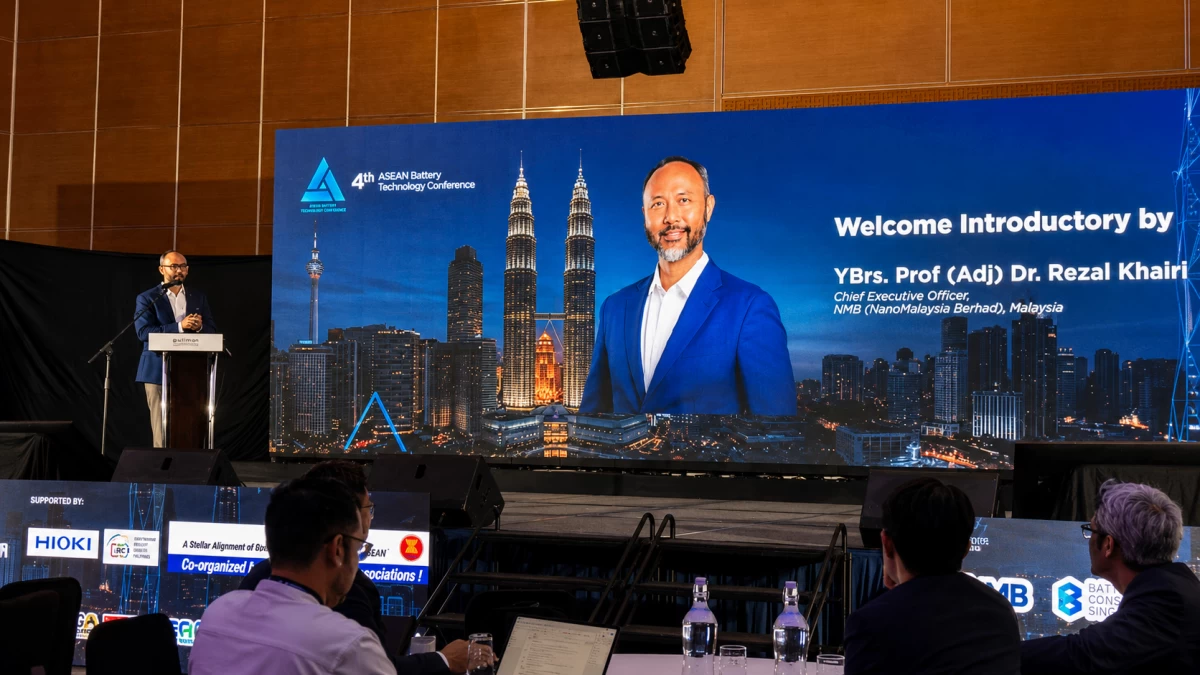
A charged-up start to ABTC 2026. Prof. (Adj.) Dr. Rezal Khairi welcomed delegates to the 4th ASEAN Battery Technology Conference, marking the official opening with the traditional sounding of the gong. Photo by Millie Manahan
Malaysia’s role as host comes as the country strengthens its own pathway from battery research to industrial application. Initiatives such as the NanoMalaysia Energy Storage Technology Initiative (NESTI) and the Hydrogen–EV–Battery Centre (HEBATT) have supported capabilities spanning research, prototyping, testing, validation and pilot-scale manufacturing. More recently, the establishment of GigaFactory Malaysia Sdn Bhd (GMSB) and the introduction of Malaysia’s Graphene-Enhanced Lithium-ion Battery Technology have demonstrated the country’s efforts to translate local research and innovation into industrial-scale capabilities.
These developments provide a practical backdrop for ABTC 2026’s wider regional ambition: connecting the different strengths being developed across ASEAN into a more integrated and commercially competitive battery industry.
Prof. (Adj.) Dr Rezal Khairi Ahmad, Chief Executive Officer of NMB Group, said, “Hosting ABTC 2026 in Malaysia is significant because ASEAN already has considerable technical capabilities and innovation strengths across the region. The priority now is how we scale, integrate and commercialize them. Malaysia has been building the infrastructure to move technologies from research into pilot and industrial application, but no single market can build the battery economy alone. ABTC gives us the opportunity to connect capabilities across ASEAN, develop stronger cross-border pathways and collectively build an industry that can compete globally.”
Malaysia-Indonesia Collaboration Marks Milestone in Regional Battery Development
A key highlight of the opening day was the launch of the Malaysia-Indonesia NMC-graphene lithium-ion pouch cell, marking the next step in regional battery collaboration between NMB (NanoMalaysia Berhad) and the National Battery Research Institute (NBRI), Indonesia. The development builds on the Memorandum of Understanding (MoU) formalised between NMB and NBRI during ABTC 2025, which established a collaborative framework for technology transfer, joint research and innovation, testing and standardisation, as well as education and industrial training.
By combining Indonesia’s capabilities in NMC active material production with Malaysia’s expertise in battery formulation, graphene technology and cell development, the pouch cell initiative provides a tangible example of how complementary ASEAN capabilities can be connected across battery materials, technology development and future commercialization.
Strategic Partnerships Advance Regional Battery Development
ABTC 2026 also witnessed the exchange of several strategic partnerships and agreements aimed at accelerating battery innovation, commercialization and industry development across the region. The collaborations announced include:
● GigaFactory Malaysia Sdn Bhd (GMSB) and Milan Utama: A Supply Agreement for the prototyping of Compact Battery Energy Storage Systems (BESS), supporting the development of energy storage solutions for future applications.
● Infien Energy and Ampace: A strategic collaboration to explore opportunities within the evolving battery technology ecosystem.
● Green Tenaga and Go Rental Singapore: A partnership supporting sustainable energy solutions and wider adoption of clean technologies.
● Neuron Energy Network, Aryva Energy, Nano Commerce Sdn Bhd (NCSB) and GigaFactory Malaysia Sdn Bhd (GMSB): A strategic partnership to accelerate the development and commercialisation of battery and energy storage solutions, strengthening manufacturing and strategic partnerships.
● GigaFactory Malaysia Sdn Bhd (GMSB) and Axium Industries: A joint initiative to leverage AI and digital technologies to enhance battery manufacturing, operational efficiency and supply chain management, while driving continuous improvement and innovation.
● GigaFactory Malaysia Sdn Bhd (GMSB) and Montavista Energy Technologies Corporation: A strategic collaboration to accelerate high-energy-density battery innovation and commercialization through advanced materials, battery recycling, manufacturing capabilities, equipment facilitation and market development.
Driving Knowledge Exchange and Innovation Across ASEAN
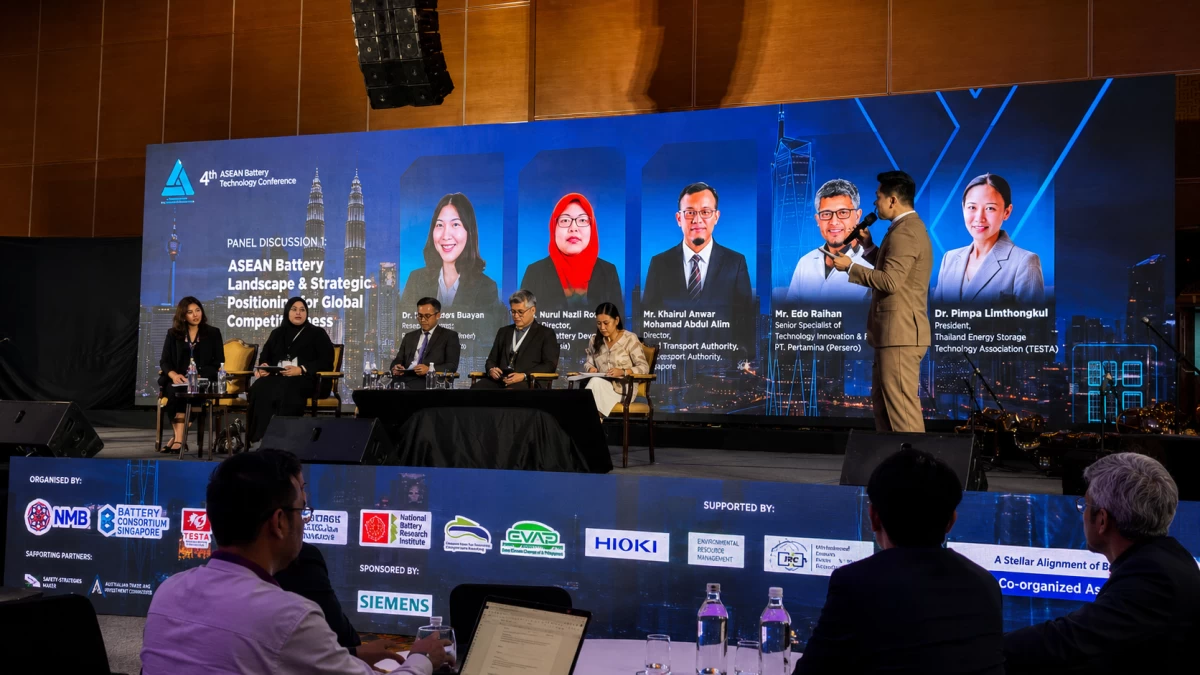
The opening day also examined battery safety, manufacturing scale-up, energy storage, circularity and emerging technologies, drawing perspectives from internationally recognized experts, Professor Ying Shirley Meng of the University of Chicago and Argonne National Laboratory and Professor Khalil Amine of Argonne National Laboratory. They were joined by regional leaders from SEDA, MARii, Pertamina, A*STAR and the Electric Vehicle Association of the Philippines (EVAP).
Ts. Dr Nurul Akmaliah Bt Dzulkurnain, Chief Executive Officer of International Battery Center (IBC), said, “ABTC has become an important platform for ASEAN stakeholders to explore shared opportunities within the battery industry. Each country brings unique strengths across policy, research, manufacturing, safety, and deployment. By connecting these capabilities across the region, we can work towards building a more resilient and competitive battery ecosystem.”
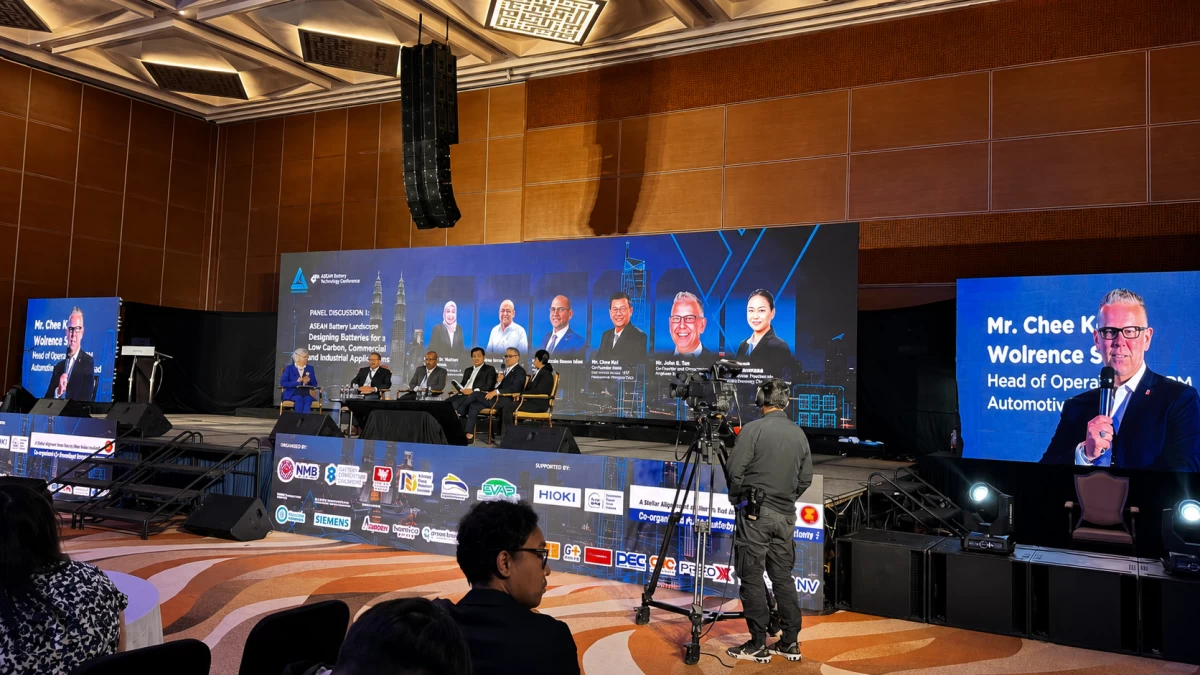
Looking Ahead: From Manufacturing Scale-Up to Market Deployment
The conference continues with a Battery Manufacturing Deep Dive, examining how ASEAN can scale production, improve manufacturing efficiency and better connect capabilities from materials through to cell and system integration. Thereafter, discussions will shift towards application integration and market enablement, including investment, energy storage, and the conditions required for wider commercial deployment. Together, these discussions will explore how ASEAN can translate its complementary strengths into a more integrated and competitive regional battery industry. Closing the conference will be the ceremonial handover of the ABTC hostship from Malaysia to the Electric Vehicle Association of the Philippines (EVAP), host of the 5th ASEAN Battery Technology Conference in 2027, symbolizing ASEAN's continued commitment to advancing the region's battery and electric mobility ecosystem.
The 4th ASEAN Battery Technology Conference is supported by Platinum sponsors Xiamen Ampace Technology Limited, Siemens Malaysia Sdn. Bhd. and Montavista Energy Technologies Corporation, Gold sponsors Green Tenaga Pte. Limited and MTI Kejing & KGC, Silver sponsors Neware Technology Limited, GoRental.MY, Thermo Fisher Scientific Pte. Ltd. and PEC, and Bronze sponsors UL Standards & Engagement (ULSE), Pyro X Sdn Bhd, Axium Industries Group Pte. Ltd., EV Connection Sdn. Bhd. and INV New Material Technology (M) Sdn Bhd.