






Manila Bulletin
 Philippines
National
Tongol: 'Dangerous' to propose lowering 16-vote conviction threshold mid-trial
Philippines
National
Tongol: 'Dangerous' to propose lowering 16-vote conviction threshold mid-trial
Philippines
National
Tongol: 'Dangerous' to propose lowering 16-vote conviction threshold mid-trial
Tongol: 'Dangerous' to propose lowering 16-vote conviction threshold mid-trial
By Dhel Nazario
Published Aug 19, 2026 01:40 pm


At A Glance
- Senate Impeachment Court spokesperson Atty. Regie Tongol said the 16-vote threshold for convicting or acquitting VP Sara Duterte remains in effect unless overturned by the Supreme Court, warning that changing it mid-trial could violate due process.
- Tongol said the 16-vote requirement is not specifically written in the Senate Rules on Impeachment, but was established through the presiding officer's July 6 ruling based on the Constitution's two-thirds requirement.
- Tongol said senator-judges who temporarily leave the session hall may still be counted toward the quorum under parliamentary practice, as long as they remain within the Senate President's control and can be called back when needed.
Senate Impeachment Court spokesperson Atty. Regie Tongol on Wednesday warned that lowering the 16-vote threshold for convicting Vice President Sara Duterte would amount to changing the rules of the impeachment trial midway through the proceedings.
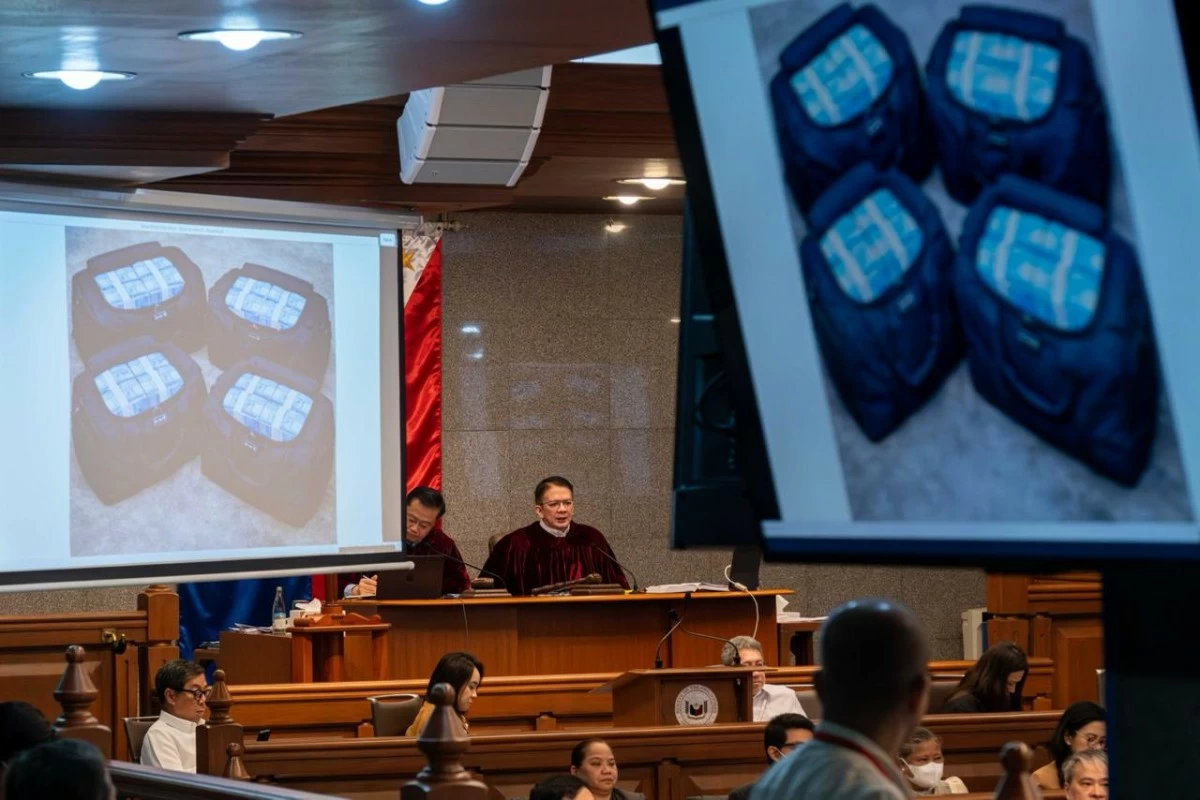
The 16th day of the impeachment trial of Vice President Sara Duterte at the Senate in Pasay City on Monday, August 17, 2026. (SPPA POOL - Ryan Baldemor)
Tongol said Presiding Officer Francis "Chiz" Escudero's July 6 ruling that at least 16 votes are needed to convict or acquit Duterte remains in effect unless it is overturned by the Supreme Court.
“That is already set in stone for the meantime that it is not overturned by the Supreme Court,” Tongol said in an online interview.
He said this after prosecution said it's "reasonable" to revisit the threshold rule, particularly as the number of senator-judges attending the proceedings has declined because of absences.
Tongol said revisiting the ruling would be a “dangerous proposal” because it would require the impeachment court to change the rules in the middle of the trial.
“It will necessarily entail the impeachment court to change the rules of the game mid-trial,” he said, stressing that the court must uphold due process rather than act for the convenience of either the prosecution or defense.
Tongol said the 16-vote requirement is based on the constitutional requirement that conviction in an impeachment trial needs a two-thirds vote of the Senate.
He cited the Supreme Court’s decision in Bayan v. Zamora, saying the Constitution deliberately makes the removal of an impeachable official difficult because conviction would effectively cancel the mandate given by voters.
“It was the intention of the framers of the Constitution to make it hard for the impeachment to happen,” Tongol said.
However, Tongol acknowledged that it remains within the realm of possibility for a senator-judge to challenge the presiding officer’s ruling.
Under the Senate impeachment rules, he said, senator-judges may appeal a ruling of the presiding officer, but they would first have to muster the required majority of the quorum to do so.
For example, if the quorum is 13, seven senator-judges would be needed to appeal or overturn the ruling, Tongol said.
But Tongol noted that no senator-judge appealed the July 6 ruling when it was issued, when the Senate had 21 members sitting as senator-judges.
He said it is unclear under the Senate impeachment rules whether the appeal may still be made at any point during the 90-day trial or whether the opportunity to challenge the ruling has already lapsed.
“In the Senate impeachment rules, it is not so clear kung meron bang ganun o wala (if there's something like that or not),” Tongol said.
He added that ordinary court rules generally prescribe periods within which parties may seek reconsideration or appeal, but the Senate impeachment rules do not clearly establish a similar timeframe for challenging the presiding officer’s ruling.
Tongol also confirmed that the 16-vote threshold itself is not expressly stated in the Senate Rules on Impeachment.
He said any future amendment of the rules should clarify matters such as the conviction threshold and rules on evidence.
However, he agreed that amending the impeachment rules to change the threshold during the ongoing proceedings would not be appropriate.
“Hindi na natin pwedeng gawin ngayong mid-game (We cannot do it mid-game),” Tongol said.
Legally acceptable
Meanwhile, Tongol said the absence of some senator-judges from the session hall does not necessarily mean the impeachment court has lost its quorum.
The issue was raised after some senator-judges were observed monitoring the proceedings outside the session hall during recent trial days.
Tongol said this is legally permissible under the principle of a “continuing quorum,” which he said is recognized under Senate rules and parliamentary practice.
He cited Rule 6 of the Senate Rules on Impeachment, which provides for the supplementary application of Senate rules. He said Senate rules, in turn, recognize parliamentary rules and practices that allow a legislator's presence to continue to be counted even after temporarily leaving the plenary.
“Kapag ang isang legislative person, senator or congressman ay nakapag-enter na ng kanyang presence sa plenary, kahit lumabas siya dyan, continuing pa rin yung quorum (Once a legislator, whether a senator or congressman, has entered the plenary and established their presence, the quorum continues even if they leave the session hall),” Tongol said.
He explained that this applies as long as the senator remains within the control of the Senate President and can be called back when a vote is needed.
According to Tongol, areas such as the Senators' Lounge and antechambers are within the Senate President's control and are located near the plenary hall.
The senator's presence therefore continues to count toward the quorum unless another member formally questions it, he said.
Tongol specifically identified Senator Robinhood Padilla, Senator Mark Villar and Senator Bong Go as senator-judges who had been seen outside the session hall but continued monitoring the proceedings.
He said the three had continued performing their duties as senator-judges, noting that they were still wearing their robes and were able to watch the proceedings through television monitors outside the chamber.
“They didn't really take a break from their duty as a senator-judge,” Tongol said.