






Manila Bulletin
 Spotlight Features
Reading between the lines: Meet the podcaster sharing little known facts about Philippine history
Spotlight Features
Reading between the lines: Meet the podcaster sharing little known facts about Philippine history
Spotlight Features
Reading between the lines: Meet the podcaster sharing little known facts about Philippine history
Reading between the lines: Meet the podcaster sharing little known facts about Philippine history
By Yvette Tan
Published Aug 19, 2026 04:39 pm


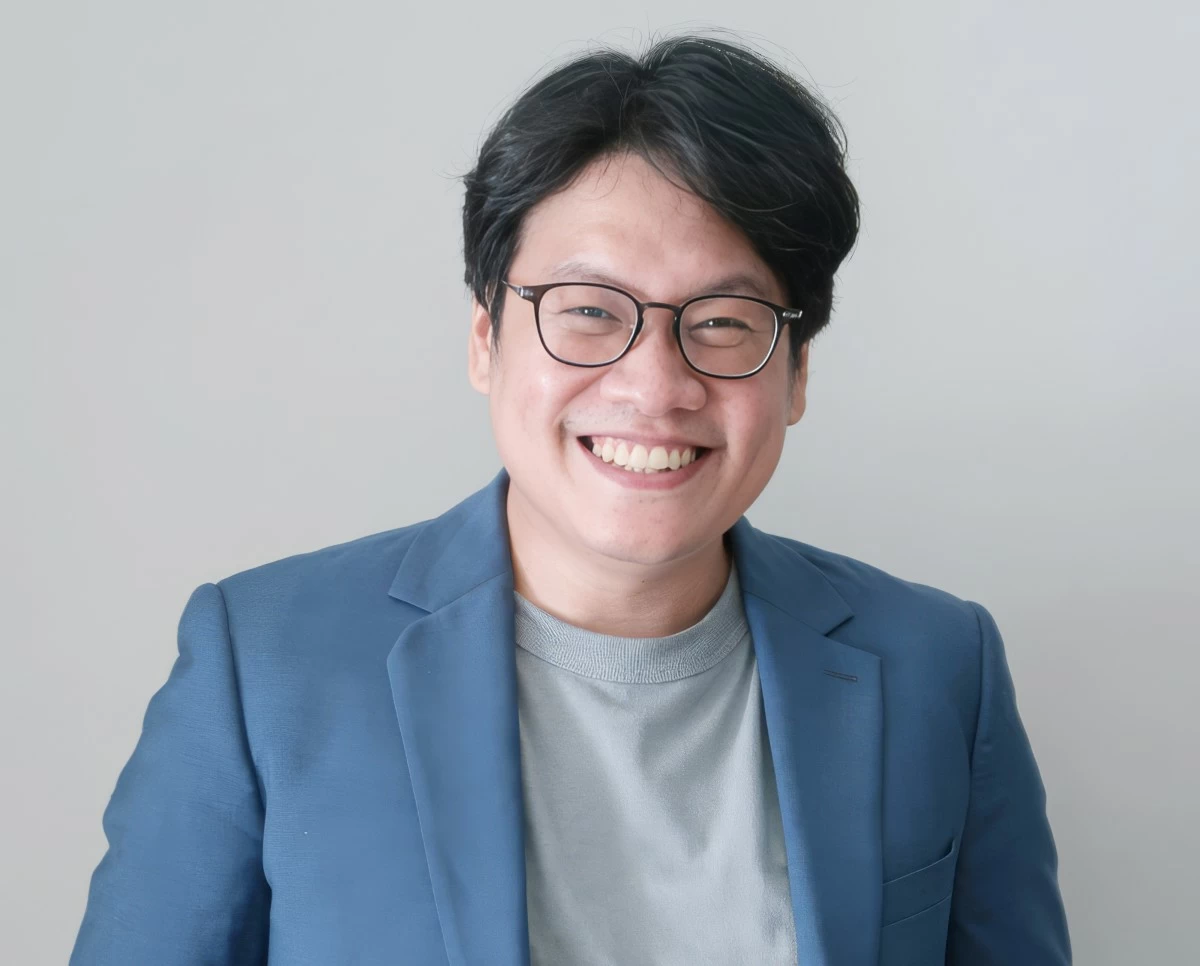
Lio Mangubat,
Writer, publisher, podcaster, and author
Many people think that history is boring. According to Lio Mangubat, Summit Publishing’s editor-in-chief and the podcaster behind The Colonial Department. and author of the book, Silk, Silver, Spices, Slaves, it’s because it usually isn’t discussed in an interesting way.
Mangubat’s interest in history was sparked in childhood with “the standard for many little boys” like World War II, Roman history, and Egyptian history, but he didn’t start reading and writing about it seriously until he read The Lost City of Z a book about British explorer Percy Fawcett’s disappearance in the Amazon rainforest as an adult. “I immediately saw that, wow, history could be written in a very exciting way,” he said.
Around 2017, he began contributing Philippine history articles such as on the 1762 British invasion of Manila to Esquire Philippines.
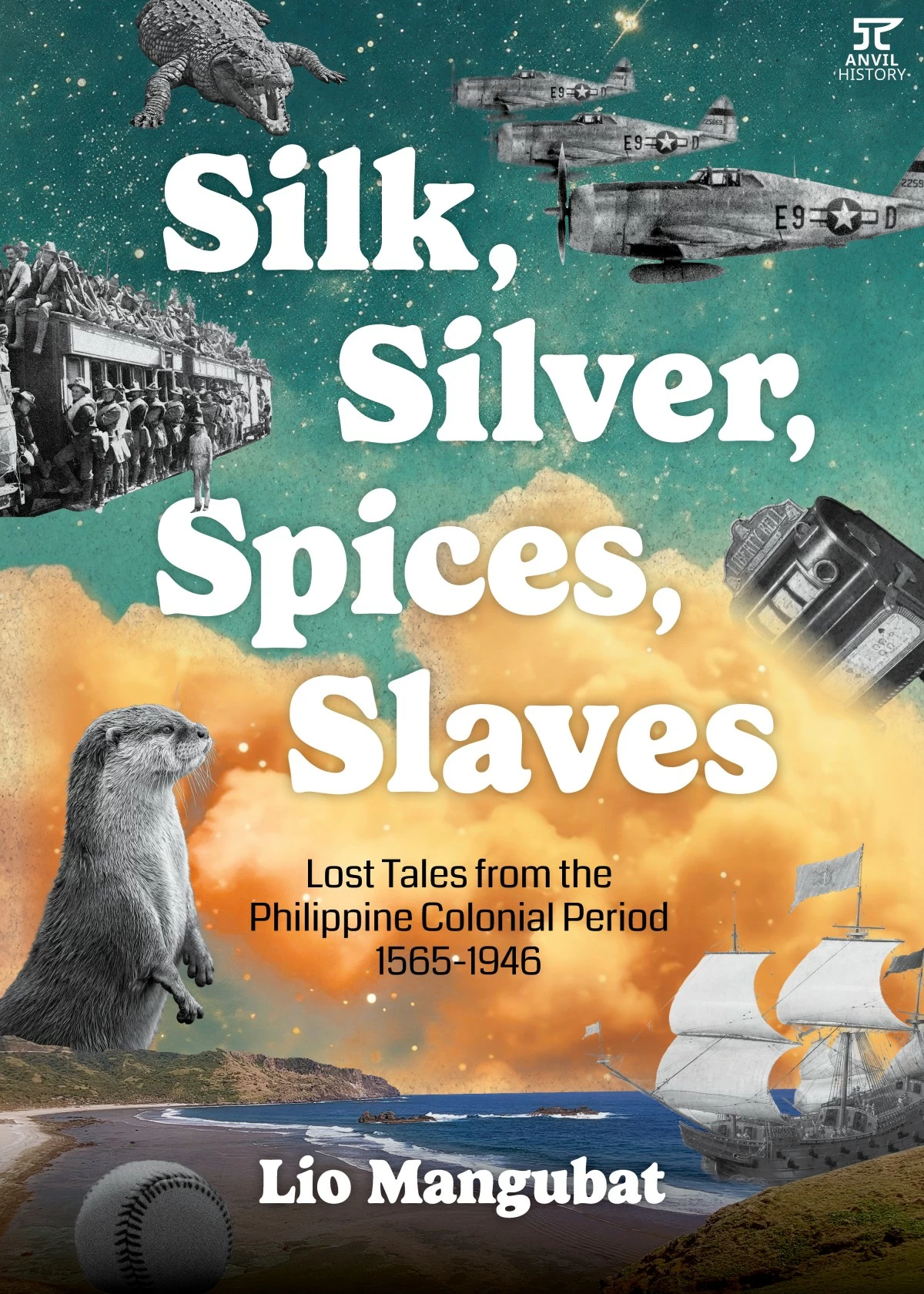
Silk, Silver, Spices, Slave’s Philippine edition under Anvil Publishing.
“There’s so much to write about Philippine history, he said. “We know this, but [historian] Renato Constantino made this point that, what you’re taught in school is that a lot of centuries for history are compressed because we want to get into the parts that we feel are important, which is the Illustrados, the revolution, and how we gained our independence from Spain. Rightly enough, because schools are pressed for time. So I wanted to see what else I could discover within that time period.”
The Colonial Department
The Colonial Department started, as many local podcasts did, during the pandemic. But unlike most of them, this one is still ongoing.
“We were all at home, and millions of other people and I started weird little hobbies, and I thought, what if I tried recording my history articles as a narration [with] sound effects and music,” he said in Taglish.
“My model was Pirates of the Caribbean, with the whole atmosphere of sailing ships and the ocean spray and the creak of wood. I want that experience to kind of accompany all these interesting bits that you can find in papers or books. That was the genesis of The Colonial Department.”
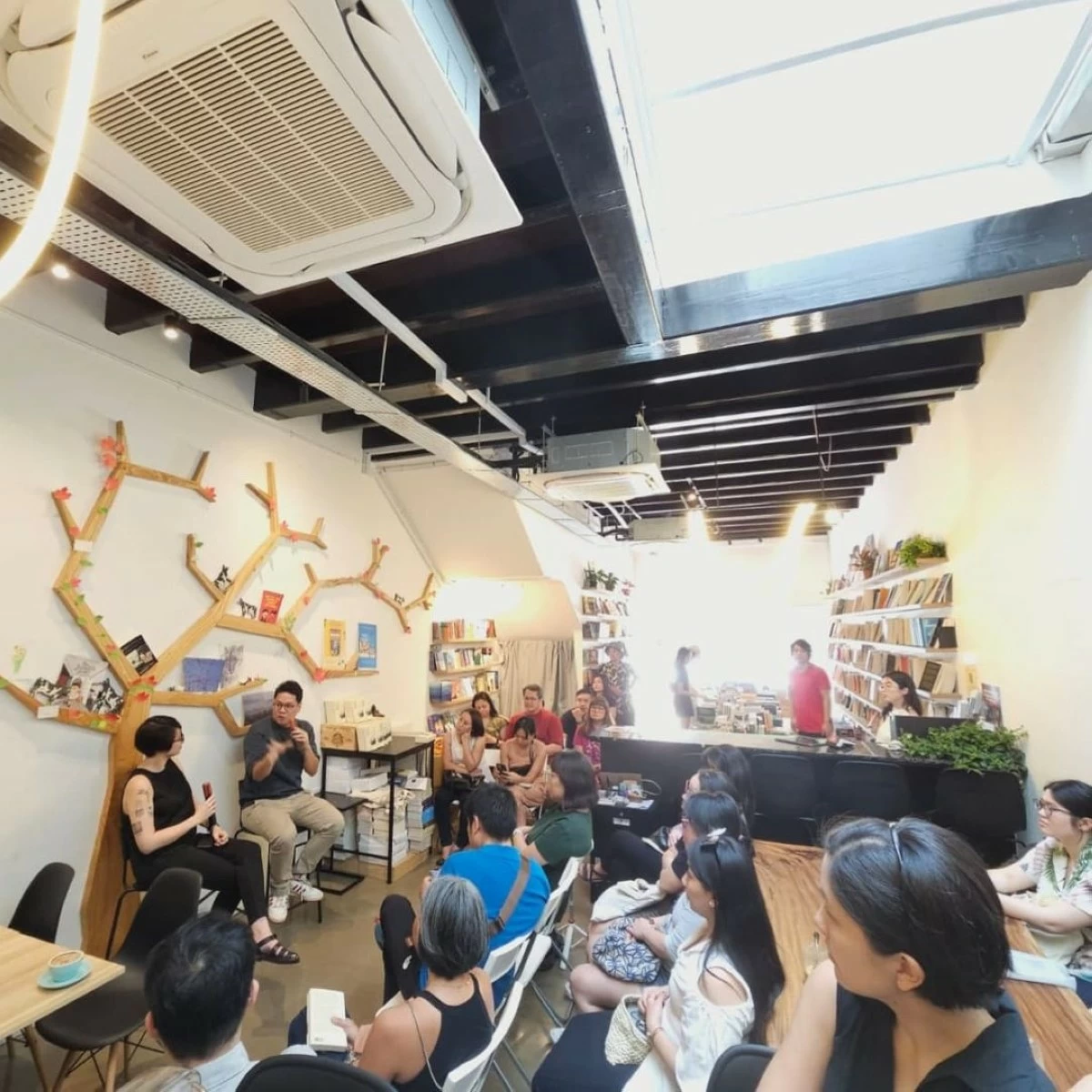
Silk, Silver, Spices, Slaves was first launched on July 13, 2024, at Book Bar SG in Duxton Road. Afterwards, it went on sale in Singapore bookstores like Kinokuniya along Orchard Road.
Podcasting offered a creative outlet, complete with a new skillset. “I’ve been a writer all my life. I worked in print. I’ve worked in digital. I work with words, and it’s a really different thing to suddenly start working with sound effects, and I really set this super impossible goal for myself to make it cinematic,” he said. “It was really tough as a podcastcaster, but I’ve been doing it for five years now, and it’s pretty fun.”
Silk, Silver, Spices, Slaves was published in 2024.
“I was part of a book club during the pandemic, and one of the other members was a Singaporean publisher who was starting a micro press [specializing in non-fiction],” Mangubat said. “She said, hey, why don’t you collect your podcast scripts? We finished it in a year.”
The process was fairly straightforward, since, as Mangubat said, “When I write my scripts, they’re really meant to be essays.” That said, the book format allowed him to expound on subjects that the podcast did not have room for. “A lot more descriptions and digressions are what I put in the final text version of the chapters.”
Echoes in history
As a history buff, Mangubat is often struck, not by repetitions, as the famous saying goes, but by historical similarities to modern day concerns.
“I think the parallels and the echoes are what I try to find in history. Is it important? I think yes, definitely. I don’t know if I can say that we can learn from our past, that’s why I like the word echoes because… it’s not a direct reflection, but you can see how our ancestors reacted to these changes before. I feel like it can give us more perspective on the things that we’re going through right now.”
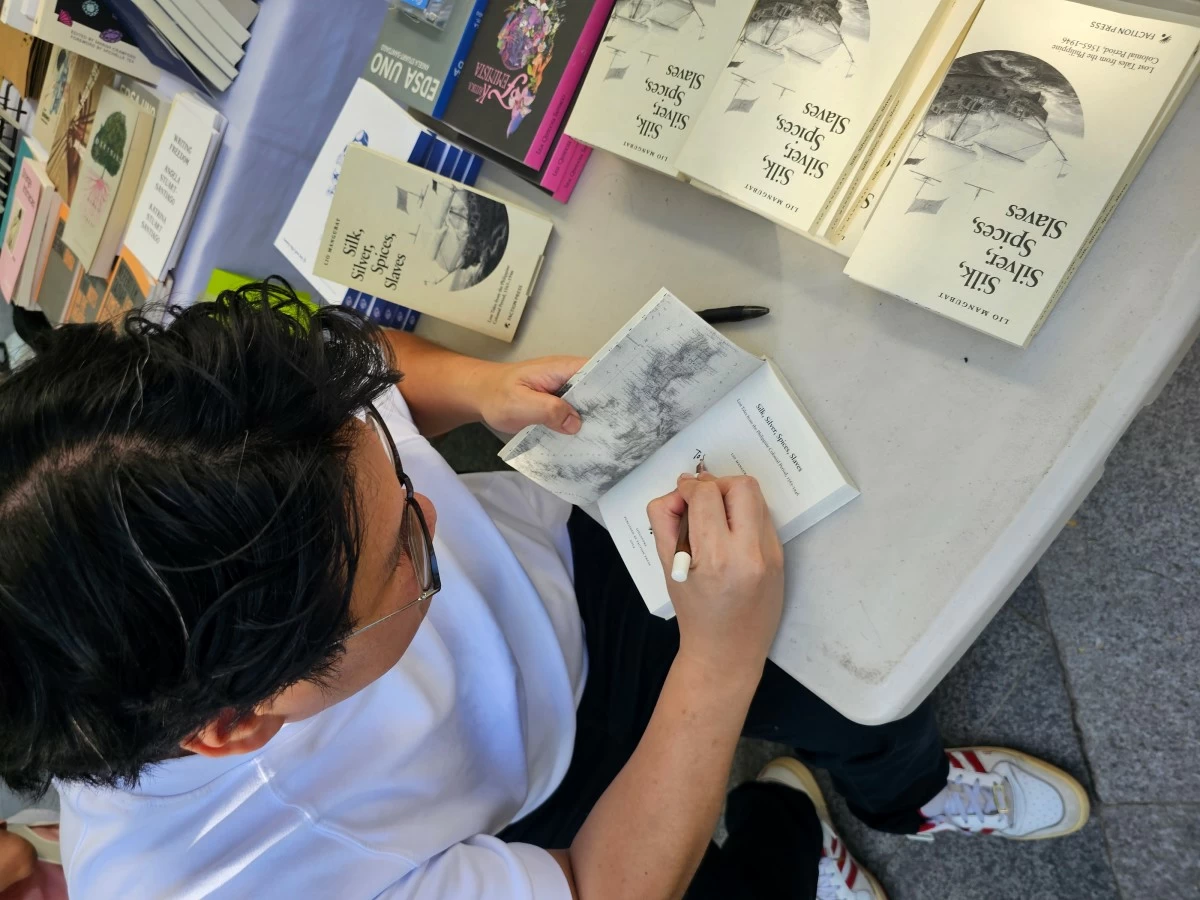
Mangubat at Everything’s Fine’s signing event for Silk, Silver, Spices, Slaves at Dia del Libro 2025.
One of his most unexpected discoveries involves Filipino migrant workers. “We all know… Filipino settlers were able to found a town in Mainland United States way back when or when they got left behind in Mexico and inspired the creation of mescal during galleon trade,” he said “But even centuries after, you had band players in Cambodia playing in the royal court. You had mercenaries in Shanghai who were fighting the Taiping rebellion. You had boxers in Singapore who were kind of involved with the Triad… So this phenomenon of the migrant workers echoes in every century, and to me, it was too mind-blowing that we’ve kind of skirted around the edge of all of these stories. There’s the joke that no matter where you go in the world, there will be a Filipino there. Apparently, it’s been going on for quite a long time.”
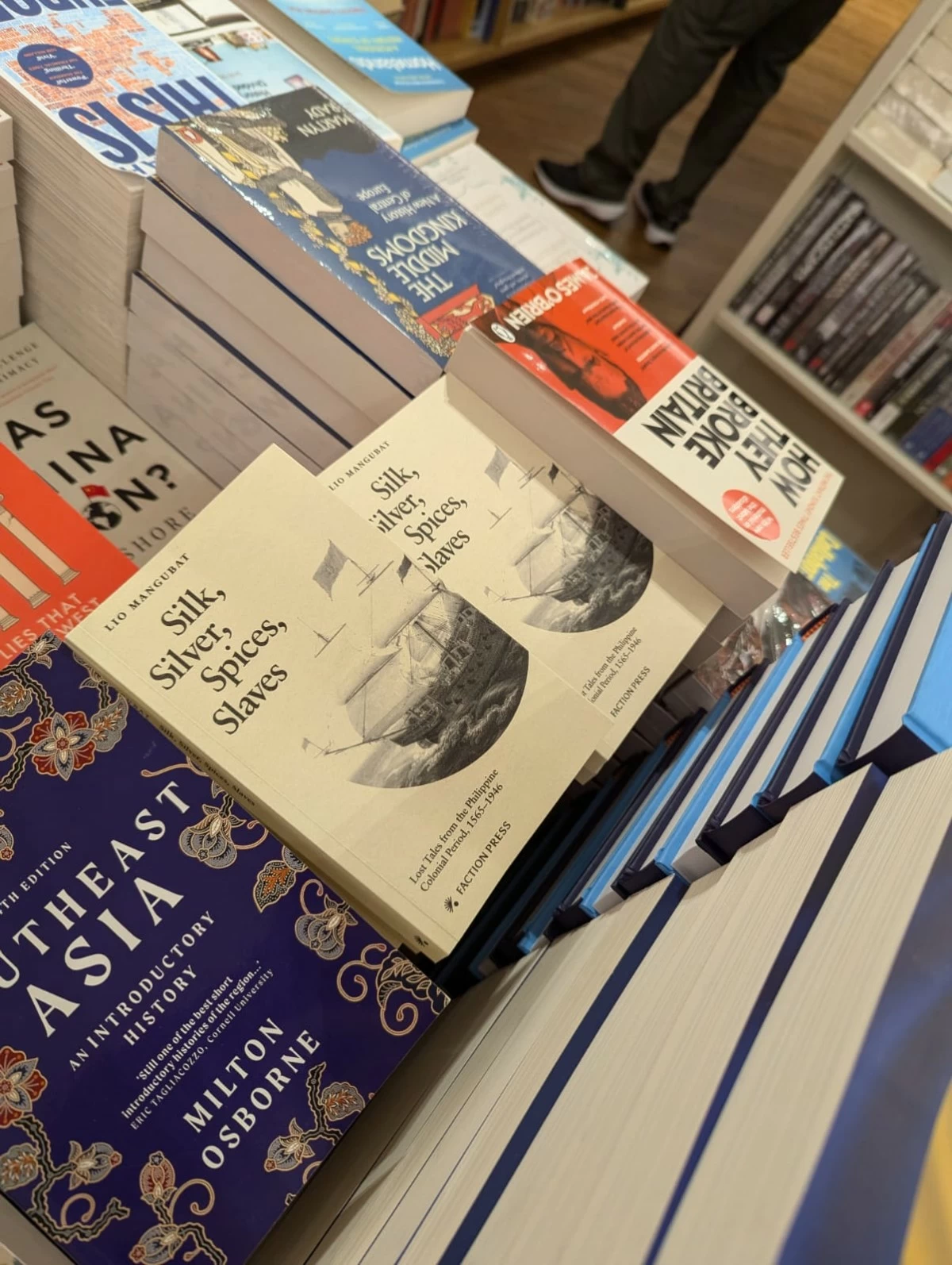
Silk, Silver, Spices, Slaves available in Kinokuniya, Singapore.
His listeners have sometimes given him ideas as well, such as how, during a smallpox outbreak in the 1800s, the King of Spain ordered that vaccines be delivered to the Philippines.
“My reader telling me to do more research on smallpox made me go into this rabbit hole of medicinal knowledge that the galleons were carrying from Mexico to the Philippines and back again. It really became this entire episode, I called it “Pacific Sick Ships,” of how disease and medical knowledge were really contained within these ships. It was so interesting for me that a reader’s suggestion would bring that out.”
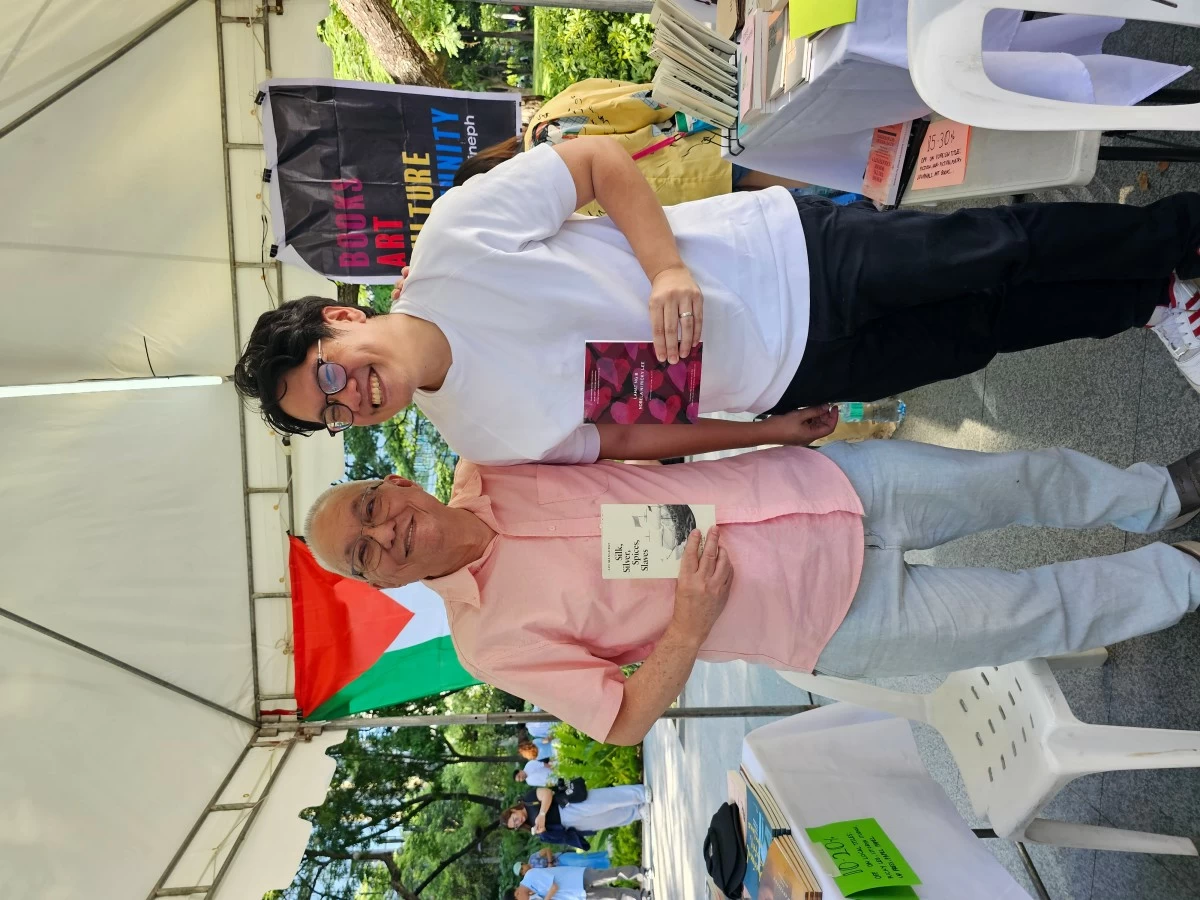
Ricky Lee had a signing event right beside Mangubat at Dia del Libro 2025, so they were able to exchange books.
Silk, Silver, Spices, Slaves
Silk, Silver, Spices, Slaves has been reissued under Anvil Publishing, making it easily available in the Philippines. The Filipino Edition has two new chapters, one inspired by Ivatan poet Dorian Medina’s stories of his grandparents joining the resistance against the Japanese in Batanes during WWII.
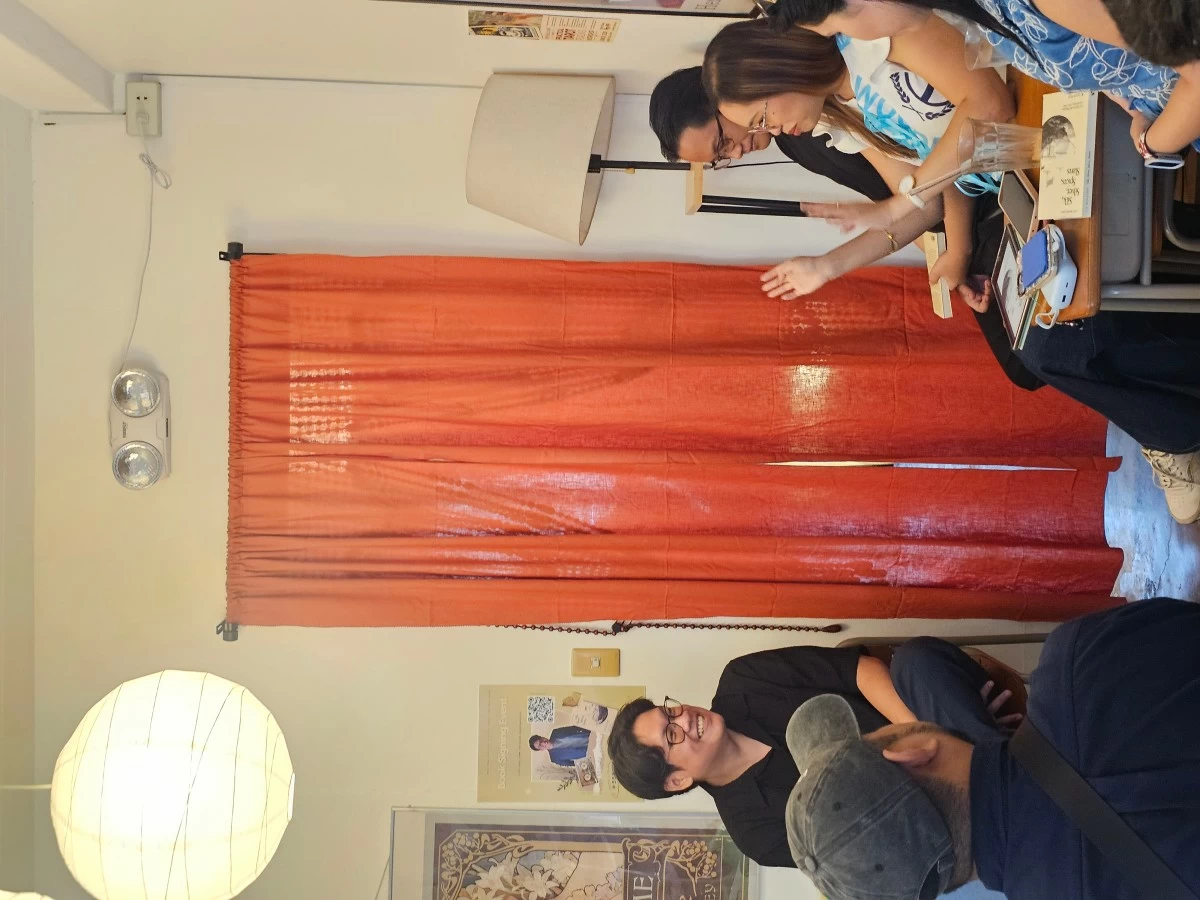
Beach Reads hosted a history talk and book signing session at the Beach House cafe in Kapitolyo, July 5, 2025. This was also the first time I had a live premiere of a podcast episode.
“I interviewed Dorian, I went through the archives of World War II in Batanes, and I connected it to the Ivatan tradition of resistance,” he said. “So hopefully, this exclusive chapter to the Philippine edition would really shine a light to a part of World War II that not a lot of us know.”
Lio Mangubat’s work is proof that history becomes fascinating when approached with curiosity, and when read between the lines. (Photos courtesy of Lio Mangubat and Anvil Publishing)