ADVERTISEMENT

Marcos admin prepares massive ₱741-billion second-half infra spending

Published Aug 19, 2026 06:00 pm  |  Updated Aug 19, 2026 04:44 pm
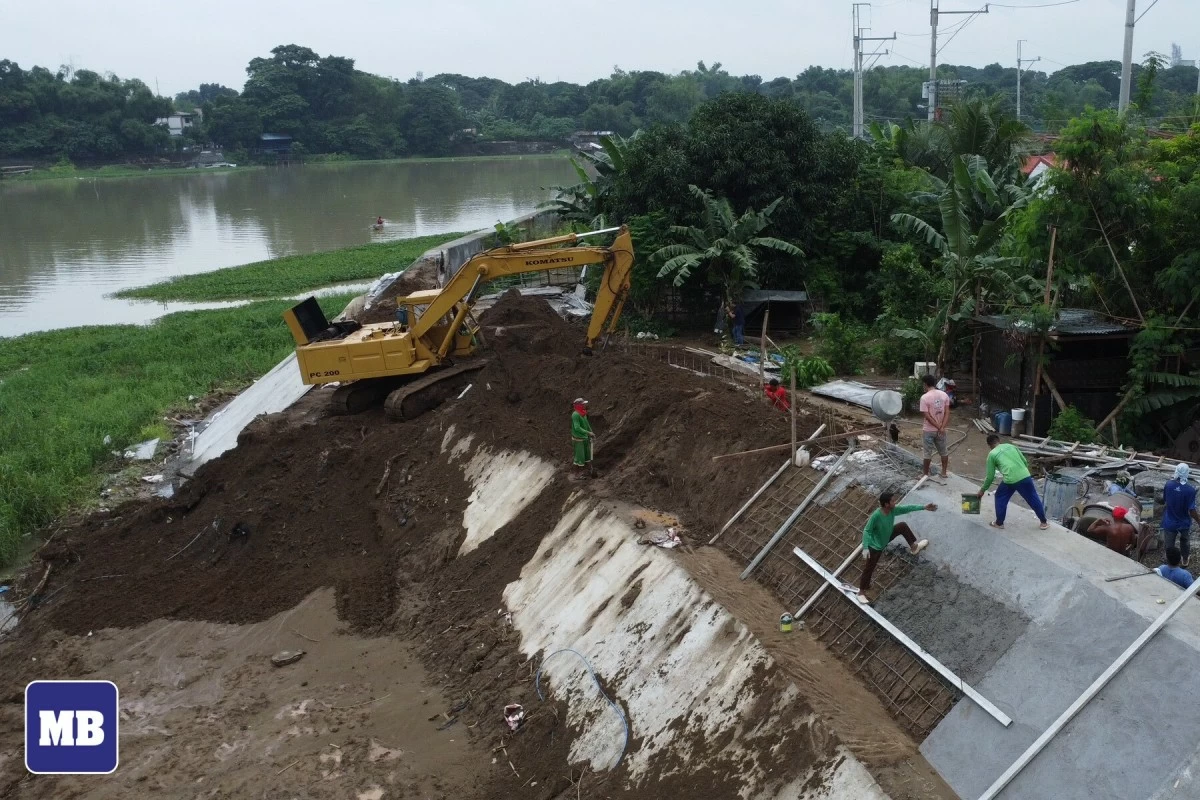
Workers apply concrete and conduct plastering on a P96-million flood control structure along the Angat River in Barangay Sipat, Plaridel, Bulacan on Sept. 8, 2025. The flood mitigation project was tagged a “ghost project” after an inspection revealed that, despite being declared completed in 2024, the structure remained largely unfinished. Santi San Juan / MANILA BULLETIN)

The Marcos Jr. administration is accelerating infrastructure spending in the second half of the year, boosting planned national and local capital outlays by ₱209.5 billion over the first six months to hit its ₱1.27-trillion disbursement target for 2026.

According to the national government’s (NG) quarterly fiscal program for fiscal year (FY) 2026, overall infrastructure spending is set to increase quarter-on-quarter, peaking in the final three months of the year.

For the first half, the Cabinet-level Development Budget Coordination Committee (DBCC) slated ₱531.6 billion for the infrastructure program—actual spending of ₱236.1 billion in the first quarter and a programmed ₱295.4 billion for the second quarter. That spending plan was raised by 39.4 percent to ₱741 billion for the second half, of which ₱337.2 billion has been set aside for the third quarter and the year’s biggest quarterly program of ₱403.8 billion for the fourth quarter.

The overall infrastructure program includes estimated NG infrastructure disbursements, infrastructure components of subsidy and equity to government-owned and/or -controlled corporations (GOCCs), and transfers to local government units (LGUs).

The infrastructure spending program is central to this year’s fiscal strategy, representing 4.2 percent of gross domestic product (GDP).

However, this year’s program is lower than the actual total infrastructure spending of ₱1.32 trillion in 2025, equivalent to 4.7 percent of GDP.

For the entire year, NG infrastructure has been set at ₱902.6 billion, lower than last year’s ₱1.01 trillion.

On the other hand, this year’s infrastructure subsidy, equity, and transfers to LGUs are all higher than in 2025 at ₱74.1 billion, ₱1.8 billion, and ₱294.2 billion, respectively.

The NG’s capital outlays are poised to cross the ₱300-billion threshold in the third quarter before peaking at nearly ₱400 billion in the fourth. This aggressive second-half push brings full-year programmed capital outlays to ₱1.26 trillion, or 4.1 percent of GDP.

Similarly, current operating spending will follow a steady upward trend through the end of the year, with quarterly expenditures of ₱1.27 trillion in the third quarter and ₱1.28 trillion in the fourth. These figures align with the government’s ₱5.2-trillion full-year target for operating expenses.

Broader total disbursements are heavily backloaded, with the largest portion—26.2 percent of the annual total, or ₱1.69 trillion—scheduled for the fourth quarter. By year-end, total disbursements are projected to reach ₱6.47 trillion, equivalent to 21.2 percent of GDP.

Department of Budget and Management (DBM) Assistant Secretary Romeo Matthew T. Balanquit earlier stated that public construction is expected to rebound strongly in the second half following two consecutive quarters of contraction.

Balanquit explained that the government had to tighten spending after “ghost” projects raised serious concerns over the use of public funds, particularly for flood control. Those anomalies warranted a thorough review before additional funds could be released.

As a result of stricter governance protocols and validation procedures, capital outlays fell by ₱202.1 billion to ₱269.4 billion through May, down from ₱471.5 billion during the same five-month period in 2025. However, Balanquit noted that recent fund releases—which have yet to fully reflect in official economic data—will drive the second-half recovery.

According to documents on the proposed ₱7.2-trillion 2027 national budget, the government’s infrastructure program would gradually rise to ₱1.34 trillion in 2027, ₱1.42 trillion in 2028, and ₱1.51 trillion in 2029, even as its share of GDP would remain at around four percent.

Related Tags

Budget 2026 infrastructure Department of Budget and Management (DBM)
ADVERTISEMENT
.most-popular .layout-ratio{ padding-bottom: 79.13%; } @media (min-width: 768px) and (max-width: 1024px) { .widget-title { font-size: 15px !important; } }

{{ articles_filter_1561_widget.title }}

.most-popular .layout-ratio{ padding-bottom: 79.13%; } @media (min-width: 768px) and (max-width: 1024px) { .widget-title { font-size: 15px !important; } }

{{ static_articles_1562_widget.title }}

.most-popular .layout-ratio{ padding-bottom: 79.13%; } @media (min-width: 768px) and (max-width: 1024px) { .widget-title { font-size: 15px !important; } }

{{ articles_filter_1563_widget.title }}

{{ articles_filter_1564_widget.title }}

.mb-article-details { position: relative; } .mb-article-details .article-body-preview, .mb-article-details .article-body-summary{ font-size: 17px; line-height: 30px; font-family: "Libre Caslon Text", serif; color: #000; } .mb-article-details .article-body-preview iframe , .mb-article-details .article-body-summary iframe{ width: 100%; margin: auto; } .read-more-background { background: linear-gradient(180deg, color(display-p3 1.000 1.000 1.000 / 0) 13.75%, color(display-p3 1.000 1.000 1.000 / 0.8) 30.79%, color(display-p3 1.000 1.000 1.000) 72.5%); position: absolute; height: 200px; width: 100%; bottom: 0; display: flex; justify-content: center; align-items: center; padding: 0; } .read-more-background a{ color: #000; } .read-more-btn { padding: 17px 45px; font-family: Inter; font-weight: 700; font-size: 18px; line-height: 16px; text-align: center; vertical-align: middle; border: 1px solid black; background-color: white; } .hidden { display: none; }
function initializeAllSwipers() { // Get all hidden inputs with cms_article_id document.querySelectorAll('[id^="cms_article_id_"]').forEach(function (input) { const cmsArticleId = input.value; const articleSelector = '#article-' + cmsArticleId + ' .body_images'; const swiperElement = document.querySelector(articleSelector); if (swiperElement && !swiperElement.classList.contains('swiper-initialized')) { new Swiper(articleSelector, { loop: true, pagination: false, navigation: { nextEl: '#article-' + cmsArticleId + ' .swiper-button-next', prevEl: '#article-' + cmsArticleId + ' .swiper-button-prev', }, }); } }); } setTimeout(initializeAllSwipers, 3000); const intersectionObserver = new IntersectionObserver( (entries) => { entries.forEach((entry) => { if (entry.isIntersecting) { const newUrl = entry.target.getAttribute("data-url"); if (newUrl) { history.pushState(null, null, newUrl); let article = entry.target; // Extract metadata const author = article.querySelector('.author-section').textContent.replace('By', '').trim(); const section = article.querySelector('.section-info ').textContent.replace(' ', ' '); const title = article.querySelector('.article-title h1').textContent; // Parse URL for Chartbeat path format const parsedUrl = new URL(newUrl, window.location.origin); const cleanUrl = parsedUrl.host + parsedUrl.pathname; // Update Chartbeat configuration if (typeof window._sf_async_config !== 'undefined') { window._sf_async_config.path = cleanUrl; window._sf_async_config.sections = section; window._sf_async_config.authors = author; } // Track virtual page view with Chartbeat if (typeof pSUPERFLY !== 'undefined' && typeof pSUPERFLY.virtualPage === 'function') { try { pSUPERFLY.virtualPage({ path: cleanUrl, title: title, sections: section, authors: author }); } catch (error) { console.error('ping error', error); } } // Optional: Update document title if (title && title !== document.title) { document.title = title; } } } }); }, { threshold: 0.1 } ); function showArticleBody(button) { const article = button.closest("article"); const summary = article.querySelector(".article-body-summary"); const body = article.querySelector(".article-body-preview"); const readMoreSection = article.querySelector(".read-more-background"); // Hide summary and read-more section summary.style.display = "none"; readMoreSection.style.display = "none"; // Show the full article body body.classList.remove("hidden"); } document.addEventListener("DOMContentLoaded", () => { let loadCount = 0; // Track how many times articles are loaded const offset = [1, 2, 3, 4, 5, 6, 7, 8, 9, 10]; // Offset values const currentUrl = window.location.pathname.substring(1); let isLoading = false; // Prevent multiple calls if (!currentUrl) { console.log("Current URL is invalid."); return; } const sentinel = document.getElementById("load-more-sentinel"); if (!sentinel) { console.log("Sentinel element not found."); return; } function isSentinelVisible() { const rect = sentinel.getBoundingClientRect(); return ( rect.top < window.innerHeight && rect.bottom >= 0 ); } function onScroll() { if (isLoading) return; if (isSentinelVisible()) { if (loadCount >= offset.length) { console.log("Maximum load attempts reached."); window.removeEventListener("scroll", onScroll); return; } isLoading = true; const currentOffset = offset[loadCount]; window.loadMoreItems().then(() => { let article = document.querySelector('#widget_1690 > div:nth-last-of-type(2) article'); intersectionObserver.observe(article) loadCount++; }).catch(error => { console.error("Error loading more items:", error); }).finally(() => { isLoading = false; }); } } window.addEventListener("scroll", onScroll); });

Sign up by email to receive news.