






Manila Bulletin
 Business
The Economy
Ex-NEDA chief: Blanket class suspensions do more harm than good
Business
The Economy
Ex-NEDA chief: Blanket class suspensions do more harm than good
Business
The Economy
Ex-NEDA chief: Blanket class suspensions do more harm than good
Ex-NEDA chief: Blanket class suspensions do more harm than good
Published Aug 19, 2026 07:36 am


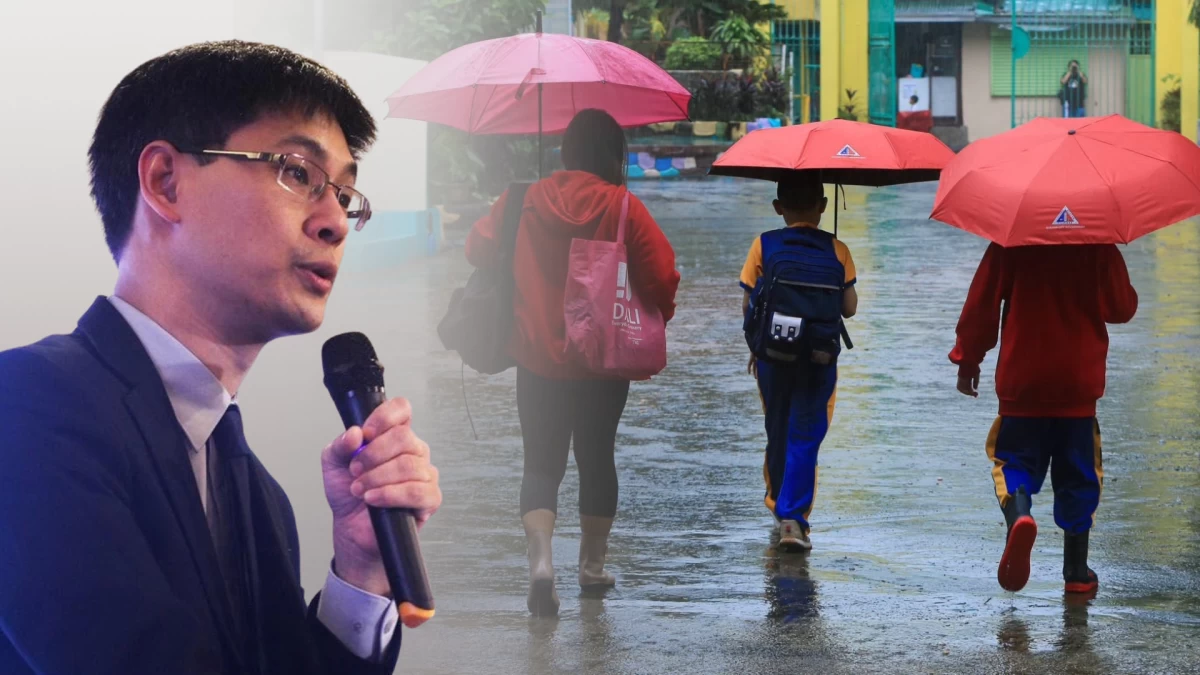
Former Socioeconomic Planning Secretary Karl Kendrick Chua
The government’s practice of issuing blanket class suspensions during severe weather is threatening long-term economic growth by deepening the existing learning crisis, according to a former state planning chief.
Karl Kendrick Chua, who served as socioeconomic planning secretary, cautioned that sweeping, jurisdiction-wide cancellations imposed by national and local authorities do more harm than good to student development.
On his social media page, the former head of the National Economic and Development Authority (NEDA) urged officials to replace blanket mandates with localized, school-level decisions that account for hyper-local weather conditions.
In particular, Chua pointed to the recent forecast in Laguna, where conditions varied widely from light showers to heavy downpours across different districts.
“The right policy is to decentralize cancellation to schools since they know the reality better in their communities,” Chua wrote. “Policy should be to protect children who are at high risk but not harm the education of those who are not at risk.”
Widespread instructional disruptions have drawn criticism from policy experts, who argued that missed school days compound structural losses in the country’s education system.
“Every day of class cancellation has severe consequences on learning and the future of our children and country,” Chua added.
Economists already warned that lost learning time erodes human capital development, impairing future labor productivity and imposing economic costs that can linger for decades.
In response, the Department of Education (DepEd) is pushing for updated emergency guidelines to give school principals greater operational autonomy.
Under a proposed executive order, schools that remain safe or recover quickly from severe weather would be allowed to resume in-person classes, even during city- or municipality-wide suspensions.
To reopen, school authorities would need to submit site-specific safety assessments and secure concurrence from their local chief executives.
Education Secretary Sonny Angara said the draft policy aims to balance physical safety with the urgent need to reclaim lost instructional time, ensuring localized disruptions do not freeze entire regional education networks.