







AFP: US carrier pullout will not weaken defense ties
Published Aug 19, 2026 02:47 pm


At A Glance
- The movement of the USS George Washington from the Indo-Pacific to the Middle East will not diminish ongoing defense cooperation between Manila and Washington, the Armed Forces of the Philippines (AFP) said.
- AFP WPS spokesperson retired admiral Roy Vincent Trinidad said scheduled military activities under the Mutual Defense Board-Security Engagement Board will proceed, stressing that the US-Philippines defense commitment remains "ironclad."
- Trinidad said US naval forces are designed to be expeditionary and can be shifted between theaters depending on security needs. He added that US capabilities pulled from the Indo-Pacific have historically been replaced once contingencies elsewhere ease.
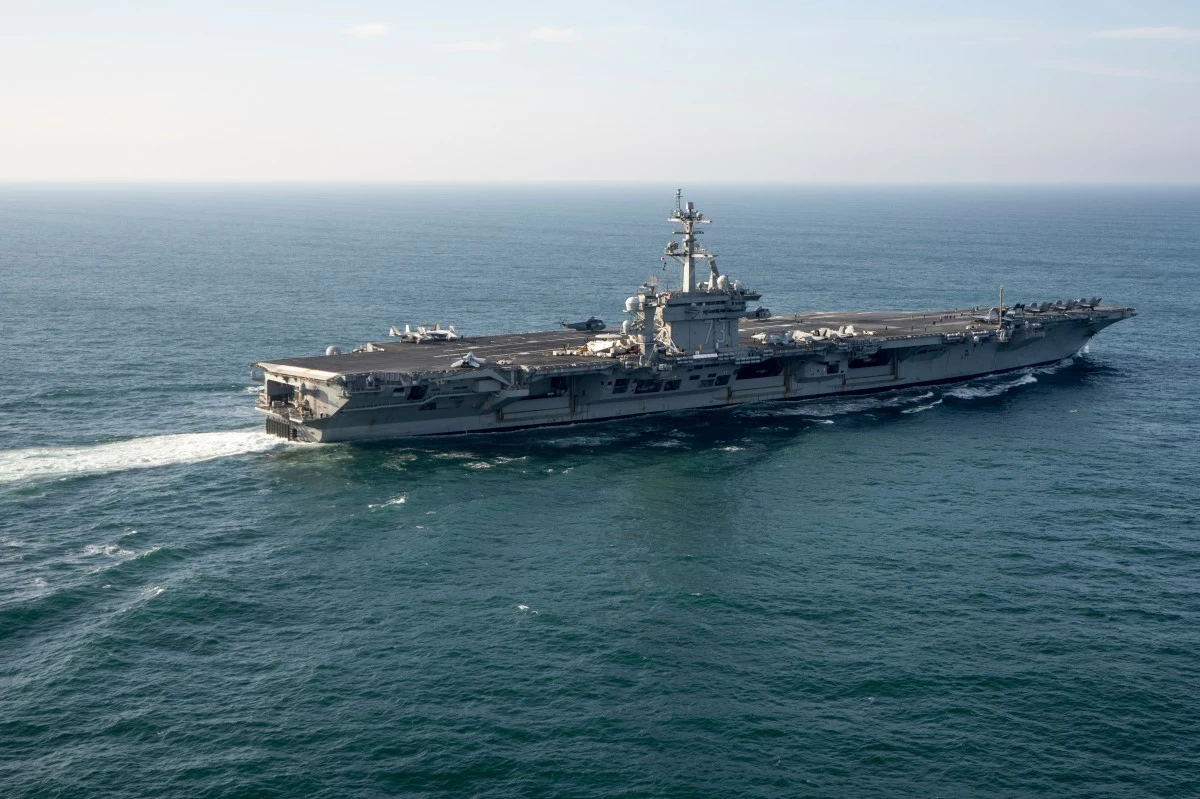
FILE - The USS George Washington aircraft carrier is pictured off the coast of Argentina, May 30, 2024. (AP Photo/Victor R. Caivano, File)
The Armed Forces of the Philippines (AFP) said the redeployment of America’s last aircraft carrier in Asia to the Middle East will not diminish joint defense activities with Manila.
AFP spokesperson for West Philippine Sea (WPS) retired admiral Roy Vincent Trinidad said it will continue its defense activities with the Washington despite the movement of the USS George Washington from the Western Pacific to the Middle East.
This temporarily leaves the Western Pacific without a US aircraft carrier, raising questions about the US military’s ability to maintain its presence in Asia while meeting demands in other theaters.
“Naval capabilities and naval power are designed to be expeditionary. They utilize the sea not as a barrier but as a mobility corridor, as a bridge depending on the requirements. They could be reassigned or reallocated to different areas of concern,” Trinidad said.
The U.S. Navy is reportedly moving the carrier battle group USS George Washington from the Pacific to the Middle East to replace the USS Abraham Lincoln, which has been deployed in the region for more than eight months amid the ongoing US war with Iran.
The AFP said that the US carrier presence is particularly significant for the Philippines because of China’s growing military and maritime activity in the South China Sea.
Trinidad stressed that the shift will not affect ongoing military exercises under the Mutual Defense Board–Security Engagement Board (MDB-SEB).
“So far as the Philippines is concerned, the movement of a carrier battle group from IndoPacom to the Middle East will not affect the MDB-SEB activities for this year. In fact, we are already past the middle of the year. A lot of the activities have already been conducted,” he said.
MDB-SEB serves as the main bilateral mechanism for coordinating defense and security activities between Manila and Washington.
However, the AFP said Manila does not expect the redeployment to slow down its military cooperation with Washington.
“The defense commitment between the US and the Philippines is ironclad,” Trinidad added.
He also pointed to the US military’s long-standing practice of shifting forces between theaters as global security requirements change.
“Historically, the pulling out of any particular capability from the INDOPACOM, the PACOM theater, will always be replaced when the contingencies in the other parts of the globe have subsided,” Trinidad said.
Manila and Washington maintain a long-standing military alliance supported by the Mutual Defense Treaty (MDT), Enhanced Defense Cooperation Agreement (EDCA), and a range of annual exercises and security engagements.
The two countries have also increased operational cooperation in recent years amid heightened tensions in the WPS.