








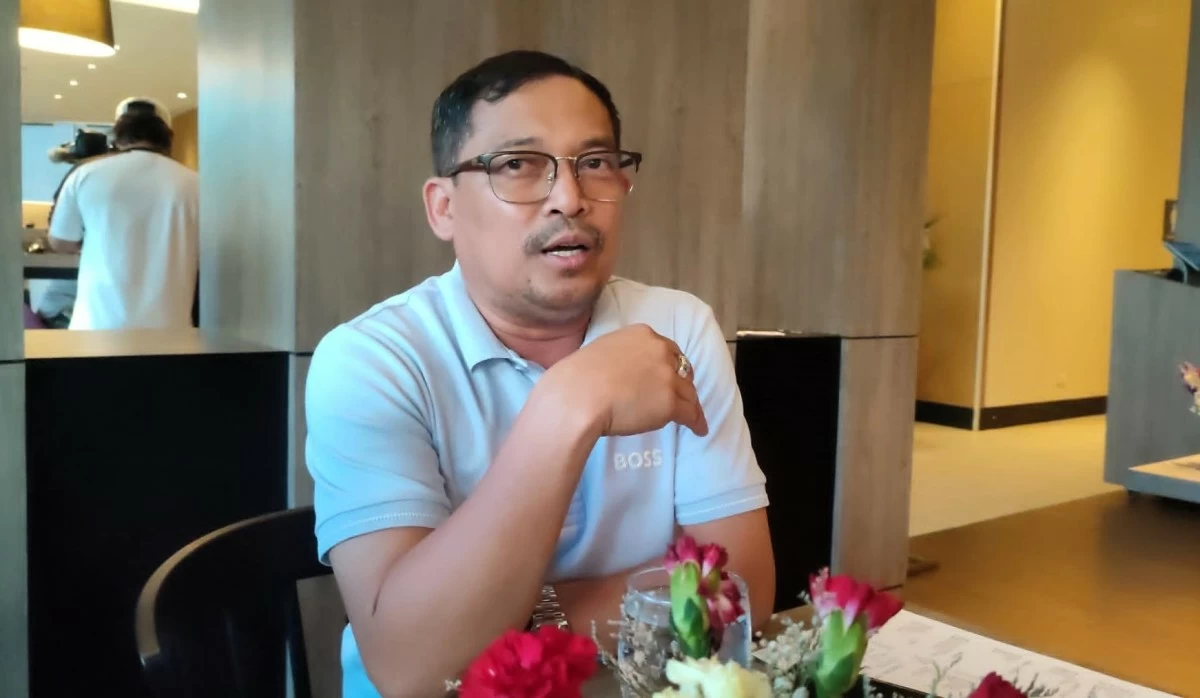
DAVAO CITY – The Davao Regional Development Council (RDC) is prioritizing the continued funding and implementation of major infrastructure projects, including the Samal Island-Davao City Connector Bridge and the Mindanao Railway Project.
"We don't want the follow-up on the funding and implementation of these projects to be disrupted," said RDC-11 Chair and Davao del Norte Governor Edwin Jubahib in an on-the-spot interview in Davao City.
Regarding the SIDC Project, Jubahib said the government's target remains to complete it by 2028, although funding requirements and counterpart concerns are still being addressed.
The latest Department of Public Works and Highways (DPWH) update showed that the 4.76-kilometer, four-lane bridge had reached about 62 percent physical accomplishment as of July 2026.
DPWH Secretary Vince Dizon said on July 23 that he was confident the project, which has faced funding concerns, could be completed before the end of President Ferdinand Marcos Jr. 's term in June 2028.
The DPWH official said it requested about P4.86 billion for 2026 but had received only P314 million as of July, prompting the agency to seek additional funds to keep construction moving. The SIDC Project target completion remains September 2028.
Jubahib said preparations in Samal must also keep pace with the expected increase in tourists, residents, and investors once the bridge opens.
He said provincial officials have been coordinating with Samal authorities on road widening and other infrastructure improvements.
"The island's existing circumferential road, much of which is only two lanes, may need to be expanded to four lanes, with sidewalks and drainage systems included," Jubahib said.
Samal authorities have begun preparations for the bridge's expected impact.
In July, the Island Garden City of Samal launched a "Bridge-Ready Samal" initiative to assess whether its infrastructure, government programs, and public services can accommodate increased economic activity once the bridge is completed.
Jubahib also identified electricity, sewage, and wastewater treatment as key concerns. He said residents expect the power service to become even more reliable once the rehabilitation of the remaining lines of Davao Light and Power Co. Inc. is done.
He said the island's power supply has improved with additional capacity delivered through the submarine cable, but proper wastewater management will be important as development accelerates.
"We do not want Samal to replicate the problems of other islands that experienced water pollution because of a lack of proper waste treatment," Jubahib said.
On the Mindanao Railway Project, Jubahib said the RDCs across Mindanao, together with the Mindanao Development Authority, are recommending a double-track, electric railway capable of carrying both passengers and cargo.
The provincial governor said the project should proceed through feasibility studies and be implemented in segments, with the Tagum–Davao–Digos corridor identified as one of the priority segments.
According to the latest developments, the long-delayed project is still in the preparation and financing stage. The Department of Transportation is updating the feasibility study for the first phase with the Asian Development Bank.
The Tagum–Davao–Digos segment is the proposed first phase of the railway. DOTr is also exploring alternative financing options, including public-private partnerships, after the country withdrew its request for Chinese financing for the project in 2023.
ADB has said it is willing to finance the project if requested by the Philippine government, either through official development assistance or by supporting a PPP structure.
In May, MinDA announced that efforts were being stepped up to advance the Tagum–Davao–Digos segment, including discussions on national government funding.
"MinDA and the DOTr had earlier strengthened their coordination through a partnership to accelerate the railway project," Jubahib said.
Jubahib said the RDCs remain optimistic about the railway project but stressed that feasibility studies, budgeting, and national government support must continue.
He said segmenting the project could allow the government to move forward with priority corridors while gradually developing the larger Mindanao railway network.
Jubahib said the RDCs across Mindanao and the MinDA board are also pushing for a larger share of the national budget for the region. He added that Mindanao's share, currently about 11 percent, is being proposed to increase to 21 percent in 2027.
He said the proposed increase is intended to fund projects benefiting Mindanao as a whole, including railway systems, bridges, power infrastructure, agriculture, and other strategic projects.
"This is not only for one region," Jubahib said. "We are looking at common mega-projects that can benefit the entire Mindanao."