ADVERTISEMENT

Protecting the Filipino youth in the digital space

Published Aug 18, 2026 12:05 am  |  Updated Aug 17, 2026 04:53 pm
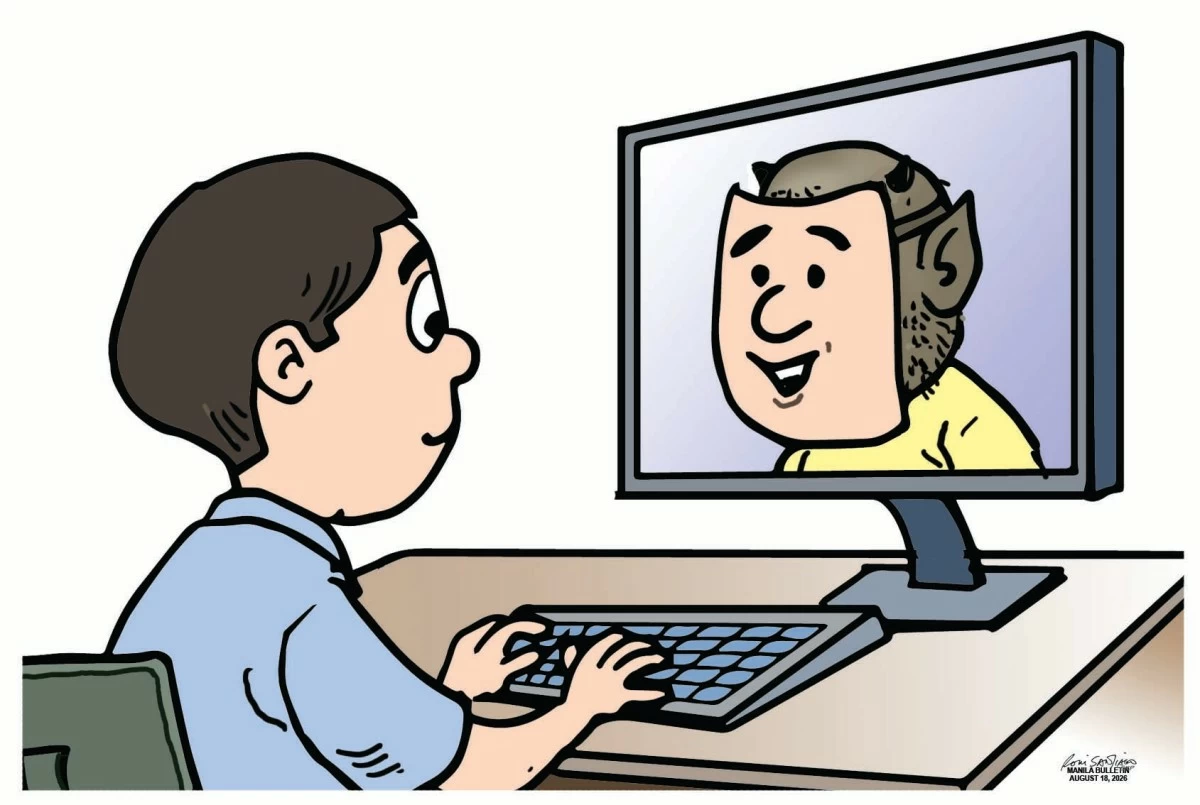
President Ferdinand Marcos Jr. has raised a concern that deserves far more than passing attention: the growing influence of social media and online personalities, including politicians, on children and young people.
Speaking before the Foreign Correspondents Association of the Philippines (FOCAP) in Malacañang, the President warned about children’s exposure to harmful online content and distorted realities.
His observation comes at a critical time. For Filipino children, the smartphone is no longer merely a communication device. It has multiple functions: classroom, playground, entertainment center and, increasingly, a source of news and political information. The line separating the conveyance of factual information from engaging in persuasion can be dangerously thin.
That young Filipinos have, in fact, become more politically aware is not being disputed. The concern is whether they are being equipped to distinguish fact from fiction and public service from self-promotion.
Unscrupulous politicians possess an unprecedented ability to communicate directly with young audiences, bypassing traditional media filters and reaching them through short videos, memes, influencers and algorithmically curated feeds. What attracts attention is not necessarily what is true or socially beneficial. Content that provokes anger, fear or amusement can travel faster than careful explanations of complex public issues.
Are our safeguards adequate? Clearly, they need strengthening.
The Philippines already has laws and institutions addressing cybercrime, child exploitation, data privacy and online harms. Congress is also considering stronger measures. A House proposal would prohibit children below the age of 13 from creating or maintaining social media accounts and require platforms to implement reliable age-verification systems and safeguards against evasion. A Senate measure has proposed raising the threshold to age 16.
These initiatives merit serious consideration, but legislation alone will not solve the problem. A prohibition that cannot be effectively enforced risks becoming another rule honored more in the breach than in practice.
There are useful lessons to be learned from other countries.
Australia now requires age-restricted social media platforms to take reasonable steps to prevent those below age 16 from holding accounts. Its approach is backed by an independent online safety regulator and consultation involving industry, educators, researchers, parents and young people themselves.
Britain, meanwhile, is examining minimum-age requirements alongside restrictions on risky design features such as infinite scrolling and autoplay, while considering how age-assurance technology can support implementation.
The lesson is not necessarily to copy Australia’s under-16 model wholesale. It is to build a comprehensive ecosystem of protection: enforceable platform responsibility, privacy-conscious age assurance, parental guidance, school-based digital and media literacy, accessible reporting mechanisms, and meaningful penalties for platforms that repeatedly fail to protect children.
Equally important is teaching young Filipinos how algorithms work and why their feeds are not neutral windows to reality. Critical thinking must become as essential a digital skill as reading and writing.
Government, platforms, schools, parents and the news media all have responsibilities. So do political leaders. Those who seek the attention and trust of young people must recognize that influence carries a corresponding obligation to uphold truth, civility and democratic values.
The President’s warning should, therefore, become a call to action for responsible digital citizenship.
The objective should be neither to keep young Filipinos away from the digital world nor to dictate what they should think. It is to ensure that when they enter that world, they are sufficiently informed, critical and discerning to decide for themselves.
In a democracy, protecting young minds is ultimately about protecting the quality of tomorrow’s electorate.
ADVERTISEMENT
.most-popular .layout-ratio{ padding-bottom: 79.13%; } @media (min-width: 768px) and (max-width: 1024px) { .widget-title { font-size: 15px !important; } }

{{ articles_filter_1561_widget.title }}

.most-popular .layout-ratio{ padding-bottom: 79.13%; } @media (min-width: 768px) and (max-width: 1024px) { .widget-title { font-size: 15px !important; } }

{{ static_articles_1562_widget.title }}

.most-popular .layout-ratio{ padding-bottom: 79.13%; } @media (min-width: 768px) and (max-width: 1024px) { .widget-title { font-size: 15px !important; } }

{{ articles_filter_1563_widget.title }}

{{ articles_filter_1564_widget.title }}

.mb-article-details { position: relative; } .mb-article-details .article-body-preview, .mb-article-details .article-body-summary{ font-size: 17px; line-height: 30px; font-family: "Libre Caslon Text", serif; color: #000; } .mb-article-details .article-body-preview iframe , .mb-article-details .article-body-summary iframe{ width: 100%; margin: auto; } .read-more-background { background: linear-gradient(180deg, color(display-p3 1.000 1.000 1.000 / 0) 13.75%, color(display-p3 1.000 1.000 1.000 / 0.8) 30.79%, color(display-p3 1.000 1.000 1.000) 72.5%); position: absolute; height: 200px; width: 100%; bottom: 0; display: flex; justify-content: center; align-items: center; padding: 0; } .read-more-background a{ color: #000; } .read-more-btn { padding: 17px 45px; font-family: Inter; font-weight: 700; font-size: 18px; line-height: 16px; text-align: center; vertical-align: middle; border: 1px solid black; background-color: white; } .hidden { display: none; }
function initializeAllSwipers() { // Get all hidden inputs with cms_article_id document.querySelectorAll('[id^="cms_article_id_"]').forEach(function (input) { const cmsArticleId = input.value; const articleSelector = '#article-' + cmsArticleId + ' .body_images'; const swiperElement = document.querySelector(articleSelector); if (swiperElement && !swiperElement.classList.contains('swiper-initialized')) { new Swiper(articleSelector, { loop: true, pagination: false, navigation: { nextEl: '#article-' + cmsArticleId + ' .swiper-button-next', prevEl: '#article-' + cmsArticleId + ' .swiper-button-prev', }, }); } }); } setTimeout(initializeAllSwipers, 3000); const intersectionObserver = new IntersectionObserver( (entries) => { entries.forEach((entry) => { if (entry.isIntersecting) { const newUrl = entry.target.getAttribute("data-url"); if (newUrl) { history.pushState(null, null, newUrl); let article = entry.target; // Extract metadata const author = article.querySelector('.author-section').textContent.replace('By', '').trim(); const section = article.querySelector('.section-info ').textContent.replace(' ', ' '); const title = article.querySelector('.article-title h1').textContent; // Parse URL for Chartbeat path format const parsedUrl = new URL(newUrl, window.location.origin); const cleanUrl = parsedUrl.host + parsedUrl.pathname; // Update Chartbeat configuration if (typeof window._sf_async_config !== 'undefined') { window._sf_async_config.path = cleanUrl; window._sf_async_config.sections = section; window._sf_async_config.authors = author; } // Track virtual page view with Chartbeat if (typeof pSUPERFLY !== 'undefined' && typeof pSUPERFLY.virtualPage === 'function') { try { pSUPERFLY.virtualPage({ path: cleanUrl, title: title, sections: section, authors: author }); } catch (error) { console.error('ping error', error); } } // Optional: Update document title if (title && title !== document.title) { document.title = title; } } } }); }, { threshold: 0.1 } ); function showArticleBody(button) { const article = button.closest("article"); const summary = article.querySelector(".article-body-summary"); const body = article.querySelector(".article-body-preview"); const readMoreSection = article.querySelector(".read-more-background"); // Hide summary and read-more section summary.style.display = "none"; readMoreSection.style.display = "none"; // Show the full article body body.classList.remove("hidden"); } document.addEventListener("DOMContentLoaded", () => { let loadCount = 0; // Track how many times articles are loaded const offset = [1, 2, 3, 4, 5, 6, 7, 8, 9, 10]; // Offset values const currentUrl = window.location.pathname.substring(1); let isLoading = false; // Prevent multiple calls if (!currentUrl) { console.log("Current URL is invalid."); return; } const sentinel = document.getElementById("load-more-sentinel"); if (!sentinel) { console.log("Sentinel element not found."); return; } function isSentinelVisible() { const rect = sentinel.getBoundingClientRect(); return ( rect.top < window.innerHeight && rect.bottom >= 0 ); } function onScroll() { if (isLoading) return; if (isSentinelVisible()) { if (loadCount >= offset.length) { console.log("Maximum load attempts reached."); window.removeEventListener("scroll", onScroll); return; } isLoading = true; const currentOffset = offset[loadCount]; window.loadMoreItems().then(() => { let article = document.querySelector('#widget_1690 > div:nth-last-of-type(2) article'); intersectionObserver.observe(article) loadCount++; }).catch(error => { console.error("Error loading more items:", error); }).finally(() => { isLoading = false; }); } } window.addEventListener("scroll", onScroll); });

Sign up by email to receive news.