






Manila Bulletin
 Philippines
National
Phivolcs: Mayon sulfur dioxide emissions spike, may signal renewed eruptive unrest
Philippines
National
Phivolcs: Mayon sulfur dioxide emissions spike, may signal renewed eruptive unrest
Philippines
National
Phivolcs: Mayon sulfur dioxide emissions spike, may signal renewed eruptive unrest
Phivolcs: Mayon sulfur dioxide emissions spike, may signal renewed eruptive unrest
Published Aug 18, 2026 09:47 am


At A Glance
- The 8,393-ton daily emission rate was based on averaged measurements from campaign ultraviolet spectrometry conducted on Aug. 17.
- "This is the highest emission from Mayon recorded since volcanic gas concentrations began decreasing on 16 July 2026," Phivolcs said.
- Mayon Volcano remains under Alert Level 2, but Phivolcs stressed that there are new possibilities of renewed eruptive unrest due to the elevated SO2 emissions.
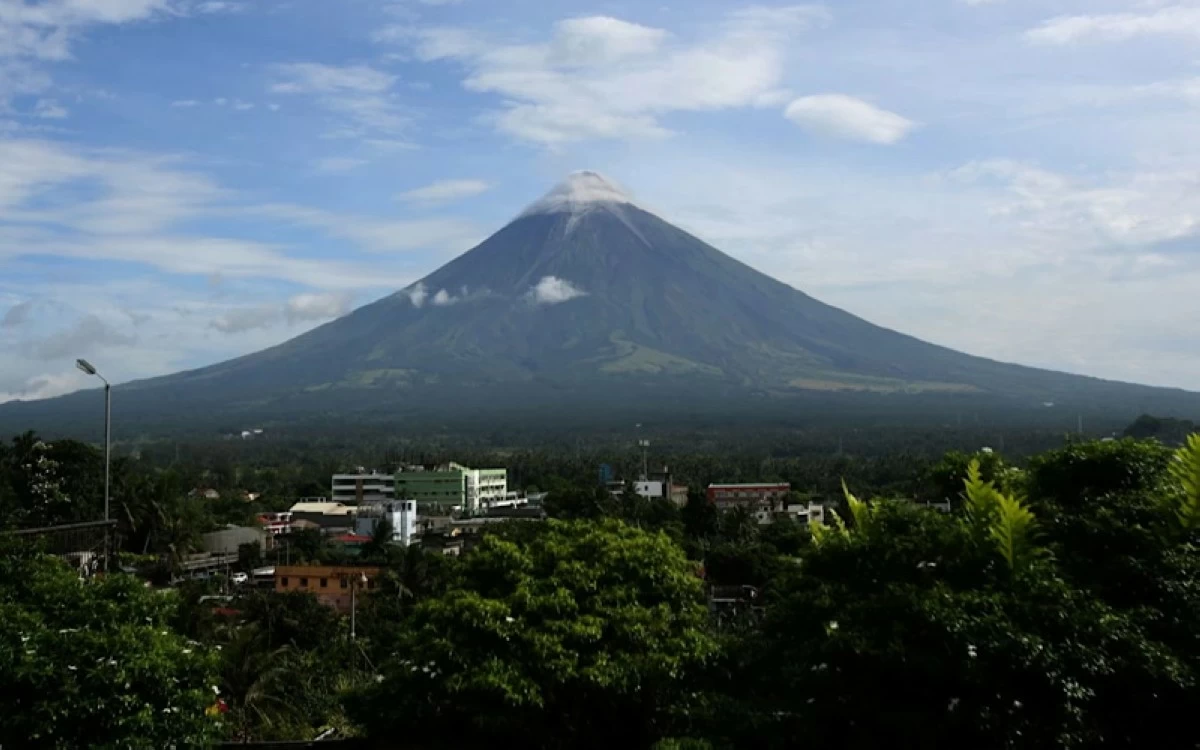
Mayon Volcano (Manila Bulletin file)
Mayon Volcano’s sulfur dioxide (SO2) emissions surged to 8,393 tons per day on Monday, Aug. 17, the highest level recorded since mid-July, state volcanologists said.
The Philippine Institute of Volcanology and Seismology (Phivolcs) said the sharp rise in volcanic gas emissions followed a short-term trend of swelling or pressurization in the northern and eastern sectors of the volcano’s edifice.
“This is the highest emission from Mayon recorded since volcanic gas concentrations began decreasing on 16 July 2026,” Phivolcs said.
Since Mayon’s status was lowered to Alert Level 2, or moderate level of unrest, on Aug. 5, its SO2 emissions had averaged only 2,532 tons per day.
Despite the sudden increase in volcanic gas emissions, Phivolcs said volcanic seismicity and real-time seismic energy release remained at background levels.
Mayon Volcano remains under Alert Level 2, but Phivolcs stressed that there are new possibilities of renewed eruptive unrest due to the elevated SO2 emissions.
“Elevated volcanic SO2 emissions could forewarn of a potential shift to renewed eruptive activity at the summit crater that could generate volcanic hazards all around the volcano, the impacts of which can be worsened by the prevailing poor weather conditions,” Phivolcs warned.
Phivolcs urged the public to remain vigilant and strictly avoid entering Mayon’s six-kilometer permanent danger zone.
“A new phase of eruption could generate life-threatening volcanic hazards that include pyroclastic density currents (PDCs) or uson, rockfall, ballistic fragments that can be thrown out as projectiles from the crater and extensive ashfall that could severely impact communities downwind of the volcano,” it said.
Phivolcs also called on communities and local government units within predetermined pyroclastic density current hazard zones to prepare for a possible escalation of volcanic activity and a corresponding increase in the alert level to Alert Level 3.
Civil aviation authorities were also advised to continue warning pilots against flying close to Mayon’s summit, as ash and ballistic fragments from a sudden eruption could pose hazards to aircraft.