






Manila Bulletin
 Philippines
National
Philippines, Malaysia deepen ties on security, economy; back South China Sea COC talks
Philippines
National
Philippines, Malaysia deepen ties on security, economy; back South China Sea COC talks
Philippines
National
Philippines, Malaysia deepen ties on security, economy; back South China Sea COC talks
Philippines, Malaysia deepen ties on security, economy; back South China Sea COC talks
Published Aug 18, 2026 04:41 pm


At A Glance
- The Philippines and Malaysia agreed to deepen defense, law enforcement, and intelligence cooperation, including efforts against transnational crimes and illegal drugs.
- Both sides committed to stronger cooperation in trade, investment, the digital economy, AI, food security, energy, tourism, connectivity, and higher education.
- The Philippines and Malaysia reaffirmed adherence to international law and welcomed progress in South China Sea Code of Conduct negotiations, with Manila optimistic about concluding the talks within 2026.
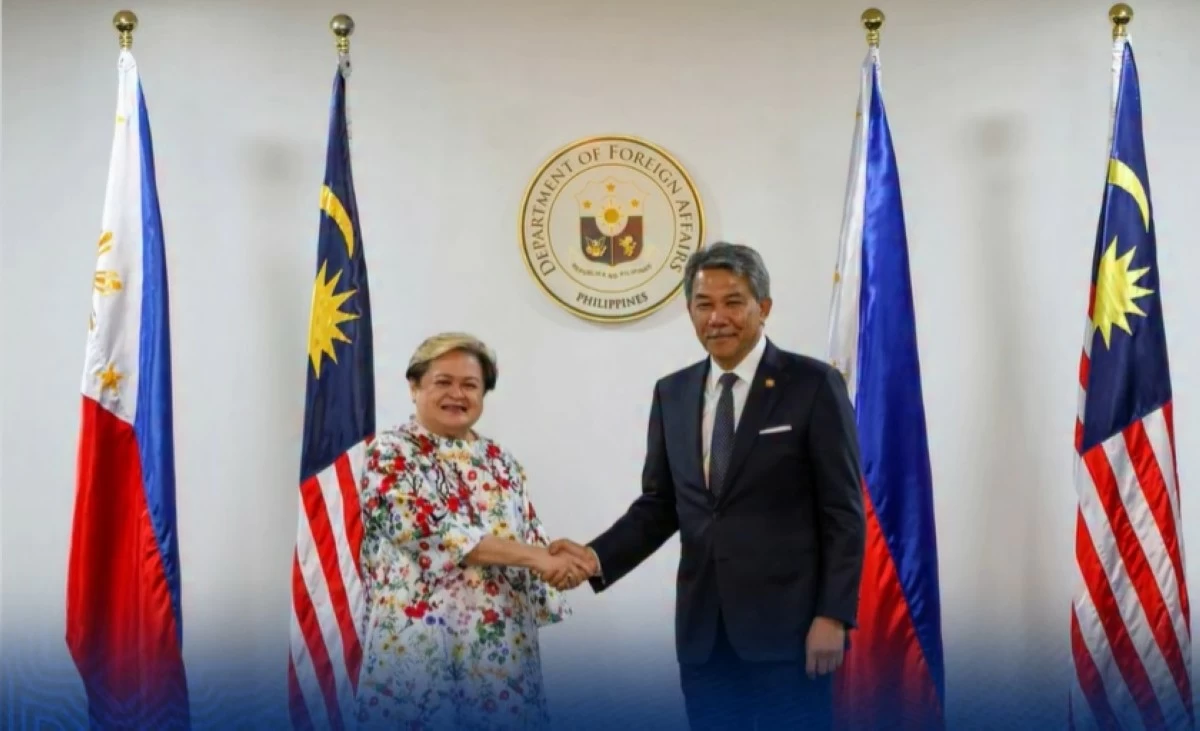
Foreign Affairs Secretary Ma. Theresa P. Lazaro and Malaysian Foreign Minister Dato’ Seri Utama Haji Mohamad Bin Haji Hasan co-chair the 9th Philippines-Malaysia Joint Commission Meeting in Manila on Aug. 18, 2026. (Screengrab from DFA Philippines / FB)
The Philippines and Malaysia have agreed to deepen cooperation in defense and security, law enforcement, migrant worker protection, trade, the digital economy, food security, and energy as the two countries renewed their commitment to strengthening bilateral ties.
Foreign Affairs Secretary Ma. Theresa P. Lazaro said the agreements were reached during the 9th Philippines-Malaysia Joint Commission Meeting (JCM) held Tuesday, Aug. 18, at the Department of Foreign Affairs (DFA) Temporary Headquarters in Manila.
Lazaro co-chaired the meeting with Malaysian Foreign Minister Dato’ Seri Utama Haji Mohamad Bin Haji Hasan.
The meeting built on the 8th JCM held in Kuala Lumpur in 2024 and marked the second meeting between the two countries in two years, following a 13-year hiatus after the 7th JCM in 2011.
“With over six decades of warm diplomatic ties, reinforced by the sustained frequency of interaction between leaders and officials, and bolstered by the kinship that our peoples share, the meeting today is indeed an opportunity to reaffirm and reinforce the strong and productive diplomatic ties between the Philippines and Malaysia, and to see how we can build upon them further,” Lazaro said.
Security cooperation, transnational crime
The Philippines and Malaysia recognized growing ties between their armed forces and efforts to strengthen camaraderie among Filipino and Malaysian soldiers, sailors, and airmen.
They also cited the Trilateral Cooperative Arrangement (TCA) among the Philippines, Malaysia, and Indonesia, which marks its 10th anniversary this year.
“On defense and security, we have acknowledged the growing ties between our armed forces, the ongoing efforts to promote camaraderie among our soldiers, sailors, and airmen, as well as the successful sub-regional cooperation in the form of the Trilateral Cooperative Arrangement (TCA) among the Philippines, Malaysia and Indonesia, which marks its tenth anniversary this year, and which has hugely contributed to the security and stability in the common area of operations of the TCA,” Lazaro said.
The two countries also reaffirmed their commitment to strengthening law enforcement cooperation through capacity building, technical development, technology transfer, and expanded intelligence exchanges.
Both sides recognized the importance of proposed agreements aimed at combating transnational crimes, including the illicit traffic and abuse of illegal drugs.
Protection of Filipino migrant workers
The two countries also discussed social security and labor cooperation, including Malaysian labor policies and ways to strengthen social protection for migrant workers.
Lazaro said the discussions covered the welfare of Filipinos living and working in Malaysia, noting their contributions to the Malaysian economy and society.
The two governments agreed to explore further avenues for strengthening social protection for migrant workers.
Trade, digital economy cooperation
Beyond political and security relations, the two countries agreed to expand economic cooperation and pursue stable, constructive, and mutually beneficial trade and investment relations.
“In line with the ASEAN commitment to strengthen intra-ASEAN economic ties,” Lazaro said, “we commit to fostering stable, constructive, and mutually beneficial trade, investment, and economic relations.”
The Philippines and Malaysia also welcomed stronger bilateral cooperation in the digital economy, particularly in digital creative content and artificial intelligence.
The two countries further agreed to bolster cooperation in food security and energy, recognizing the need to strengthen supply chains, address vulnerabilities, and mitigate emerging challenges.
Tourism, culture, connectivity
The Philippines and Malaysia reaffirmed their commitment to strengthening people-to-people exchanges through tourism and culture.
Both sides agreed to promote their respective national offerings while preserving their cultural heritage for future generations.
The two countries also agreed to pursue expanded cooperation in growth sectors, including digital and air connectivity and higher education.
South China Sea, COC talks
The South China Sea was among the regional issues discussed by Lazaro and Hasan.
Lazaro said the Philippines and Malaysia shared perspectives on concerns involving illegal and coercive actions that infringe upon the rights and entitlements of coastal states.
At the same time, both countries underscored “the importance of self-restraint and adherence to international law, particularly UNCLOS.”
The Philippines also welcomed progress in negotiations for the Code of Conduct (COC) on the South China Sea, including Malaysia’s contribution as co-chair of the negotiations with China.
Lazaro urged all parties to maintain the momentum generated by the monthly meetings and to pursue deeper discussions of the remaining sensitive issues.
“The Philippines urges all parties to maintain the momentum brought about by the monthly frequency of meetings and advance further the in-depth discussions on the remaining sensitive issues,” Lazaro said. “We remain optimistic about the conclusion of the negotiations within the year,” she added.
ASEAN Centrality, regional issues
The Philippines and Malaysia also reaffirmed the importance of ASEAN Centrality in managing differences and addressing issues with significant regional implications.
Lazaro said the two sides discussed developments in Myanmar, the Cambodia-Thailand border issue, and the situation in the Middle East.
Both countries reiterated their commitment to international law, the rules-based international order, effective diplomacy, and stronger platforms for regional engagement and cooperation.
Lazaro said these principles should also guide efforts to address unresolved bilateral issues between the Philippines and Malaysia.
Leaders seek stronger bilateral relations
The 9th JCM followed a Senior Officials Meeting held Monday, Aug. 17, led by Philippine Foreign Affairs Undersecretary for Policy Leo M. Herrera-Lim and Malaysian Foreign Ministry Secretary General Dato’ Sri Amran Mohamed Zin.
Lazaro said the latest JCM reflected renewed momentum in Philippine-Malaysian relations.
She also recalled the successful exchange of visits by President Ferdinand R. Marcos Jr. and Malaysian Prime Minister Anwar Ibrahim in 2023.
Lazaro also thanked Hasan for traveling to the Philippines and co-chairing the meeting, describing it as an important step toward further strengthening the longstanding relationship between the two countries.
“I wish to express once again my sincere appreciation for our meaningful exchange of views and the further strengthening of the bilateral relations between the Philippines and Malaysia,” Lazaro said.