







Louis Vuitton collaborates with Singer to create two custom vehicles
Classic Porsche 911s reimagined by Singer and LV
By Inigo Roces
Published Aug 18, 2026 09:22 am


At A Glance
- Luxury brand, Louis Vuitton has collaborated with Singer, creator of resto-mod Porsches, to build two truly unique classic 911s.
- The two vehicles were created as showpieces, in time for the 75th Pebble Beach Concours d'Elegance at Monterey Bay, a world-renowned vintage and classic auto show were some of the world's rarest, finest, and most painstakingly restored vehicles are put on display and compete for the highly coveted crown.
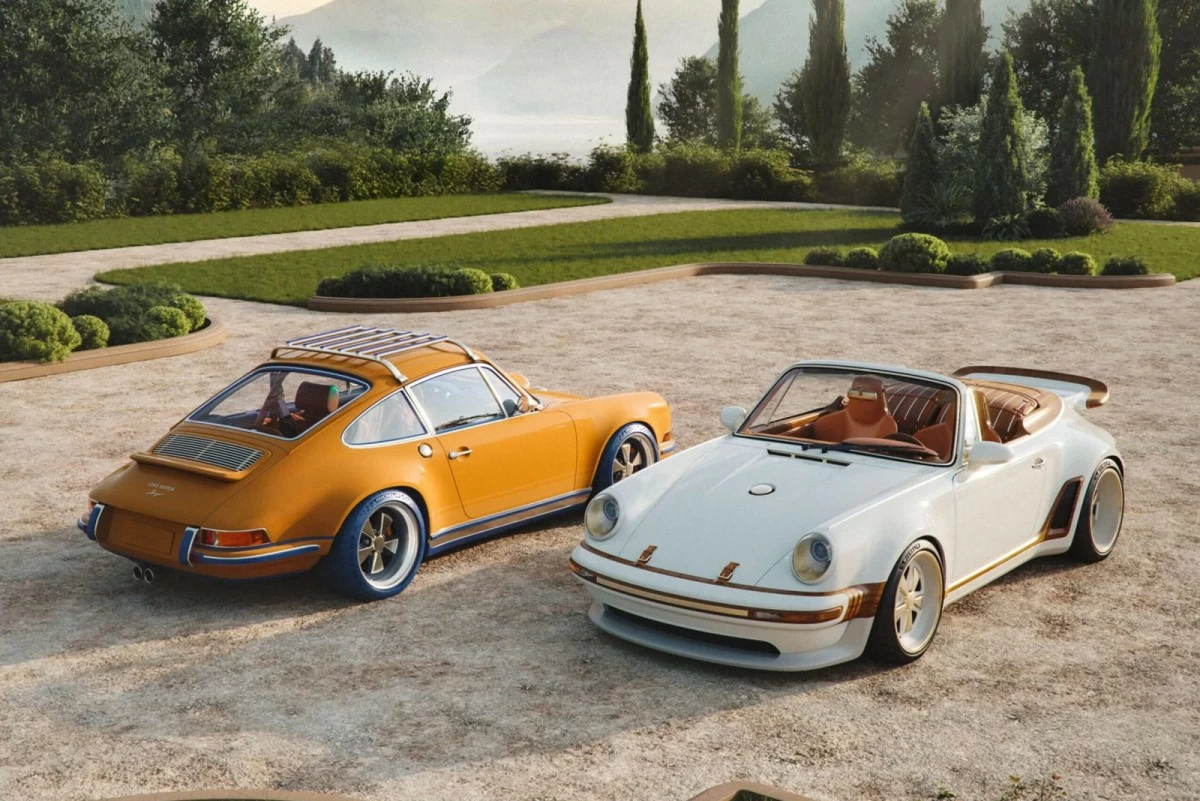
Luxury brand, Louis Vuitton has collaborated with Singer, creator of resto-mod Porsches, to build two truly unique classic 911s. Guided by its Art of Travel philosophy, Louis Vuitton brings its expertise and savoir-faire to an exceptional automotive project. Singer is a California-based atelier renowned for its highly personalized restorations of classic Porsche 911s.
The two vehicles were created as showpieces (and are not for sale), in time for the 75th Pebble Beach Concours d'Elegance at Monterey Bay, a world-renowned vintage and classic auto show were some of the world’s rarest, finest, and most painstakingly restored vehicles are put on display and compete for the highly coveted crown.
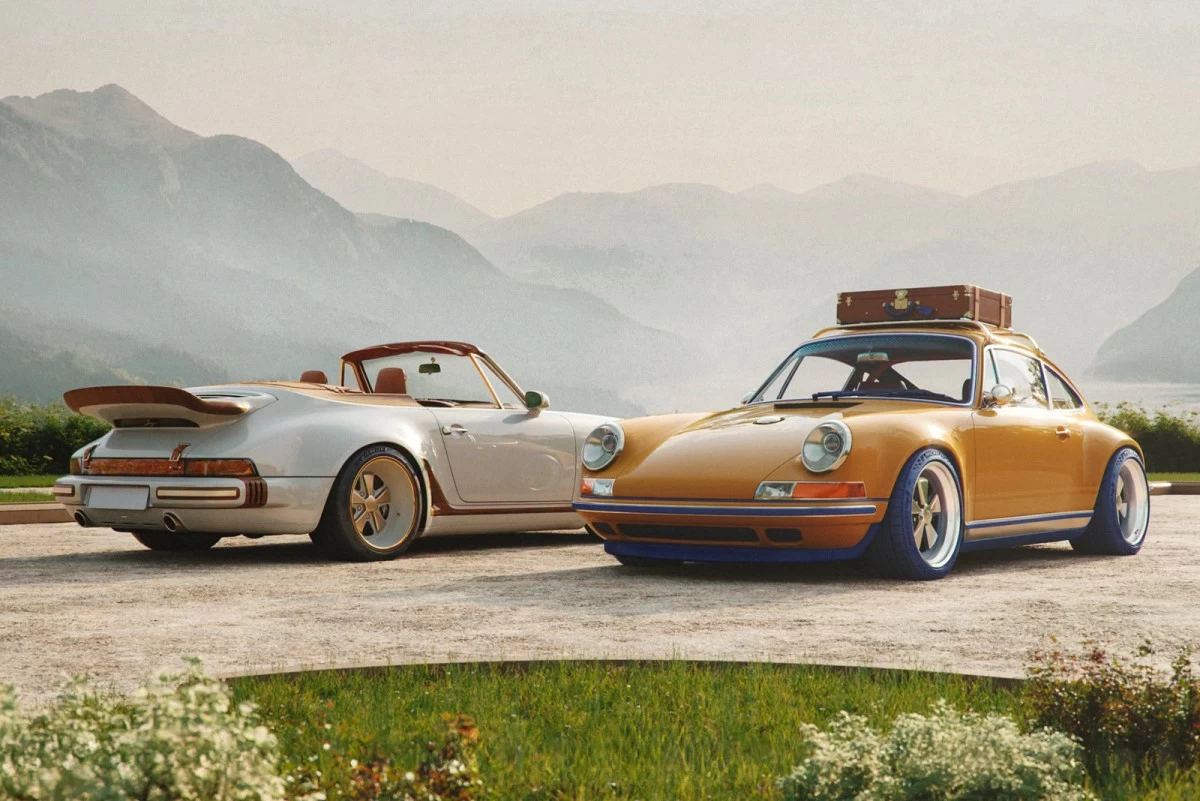
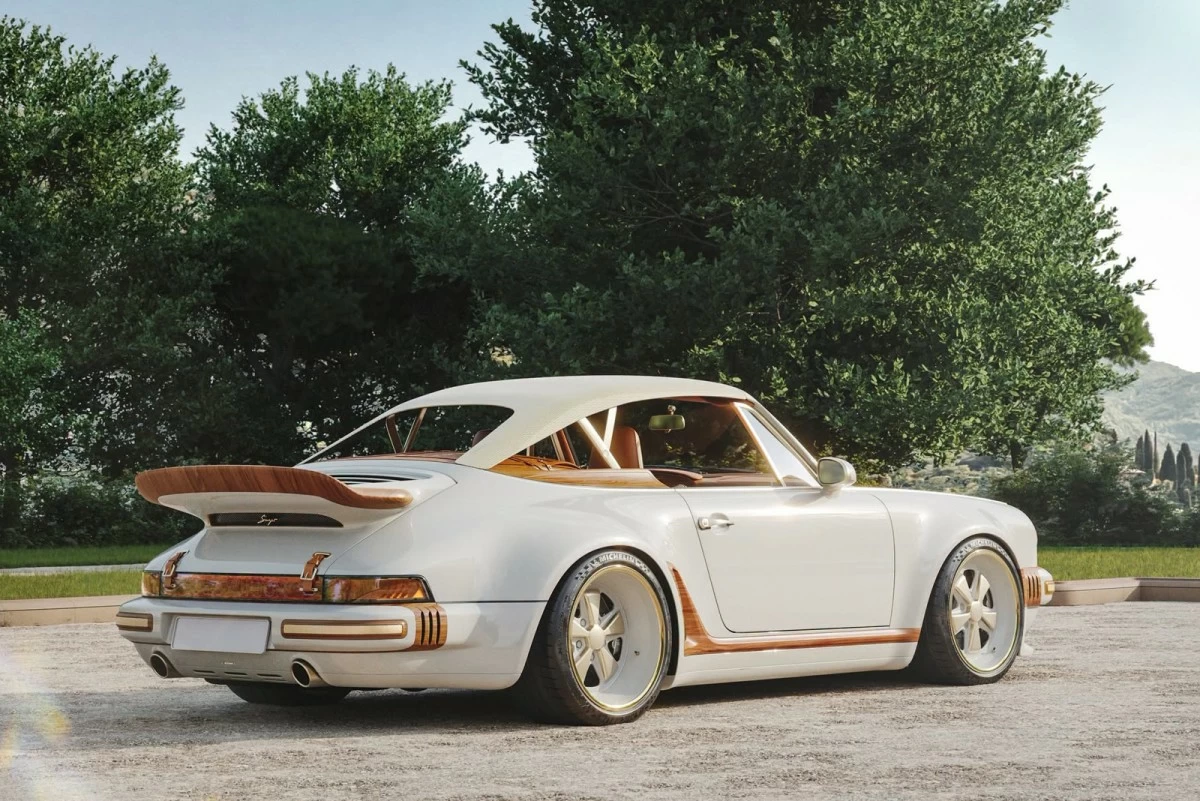
The two vehicles are classic 911s. The first, a hard top, showcases an exclusive livery in the House’s iconic colors – saffron, cobalt blue and yellow – specially crafted with and for Louis Vuitton. The second, a classic Turbo cabriolet, was conceived by Louis Vuitton’s Artistic Director of Women’s Collections, Nicolas Ghesquière, finished in Calcaire Lutétien white and complemented by exquisite precious-wood trim. Both vehicles are enhanced with made-to-measure Louis Vuitton creations.
For this project, Louis Vuitton wanted the cars to transcend their role as a mere means of transport; and become an intimate world, an expression of personality and a pillar of the art of living. Drawing on California’s ethos of freedom, these creations are deeply rooted in the House’s heritage and DNA, offering an experience in which the journey itself becomes a work of art in motion.
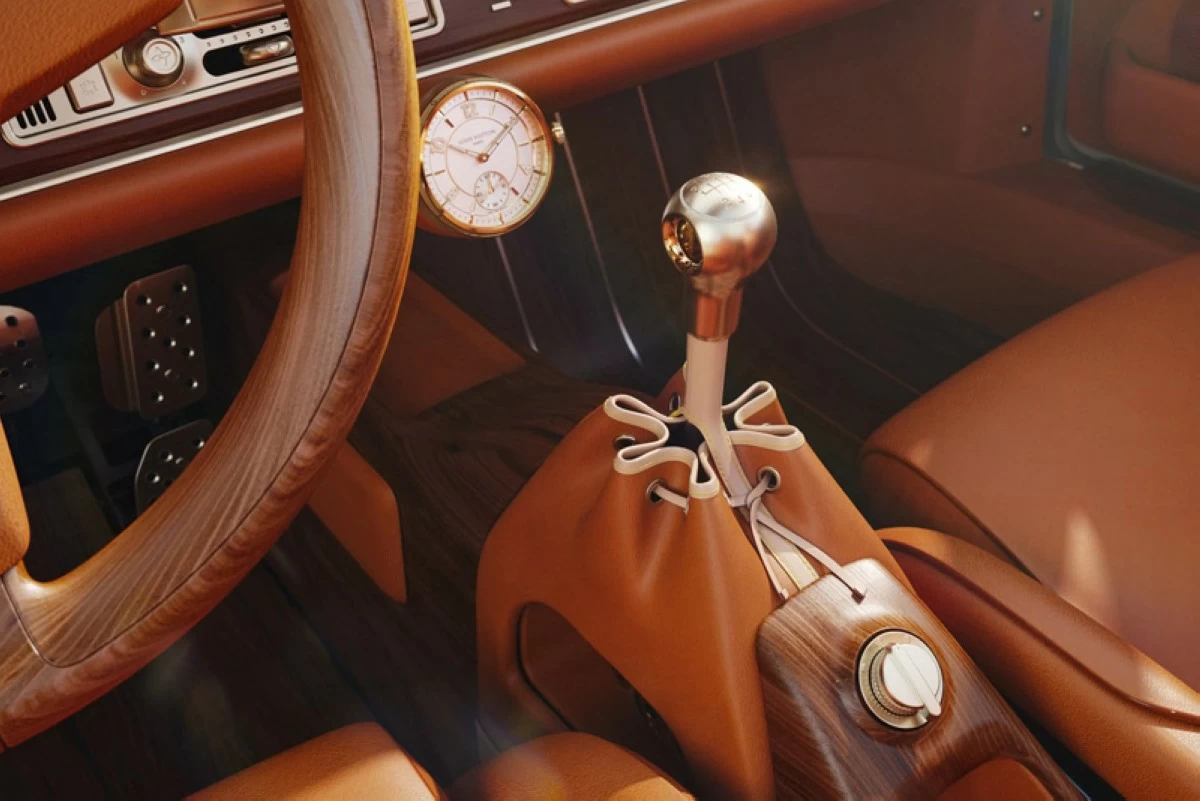
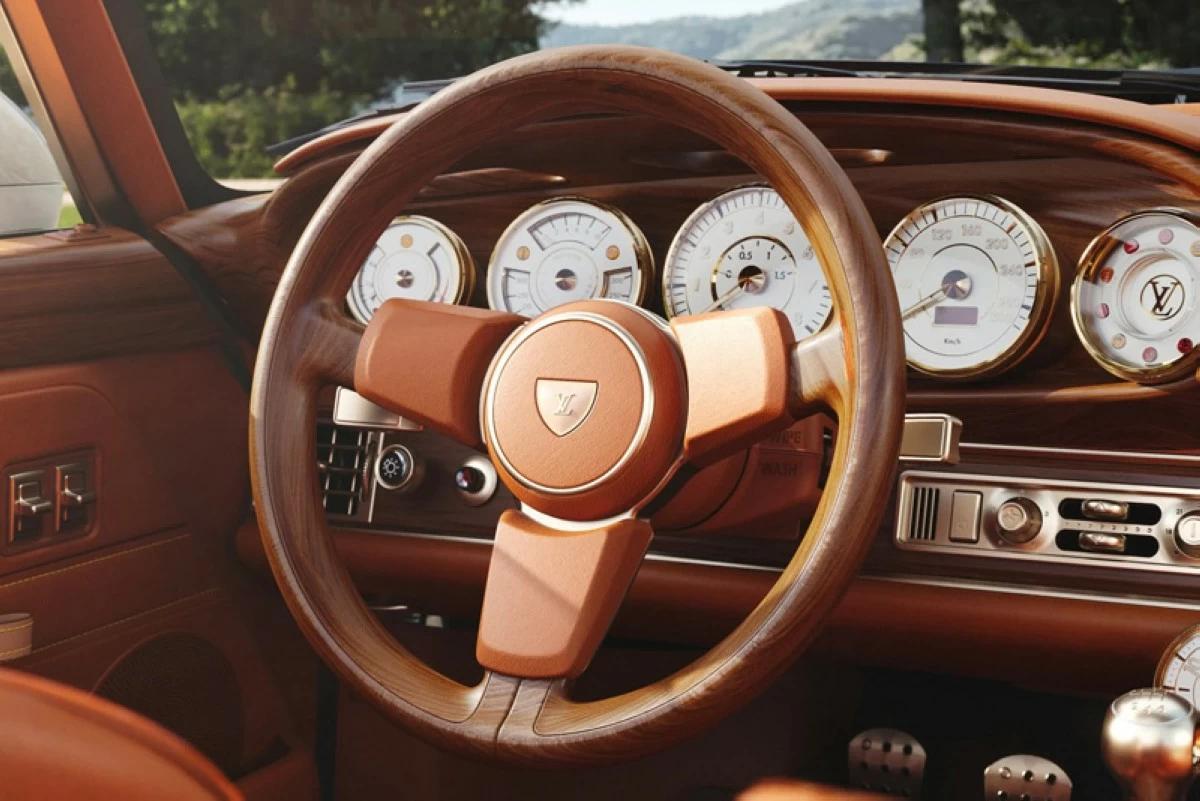
At the heart of the project, in each vehicles, lies a detachable, mechanical timepiece, which can be converted into a desk clock, and whose design is inspired by the iconic Tambour watch, recognizable by its distinctive shape and its twelve polished and engraved letters forming the name of the House on the bezel. The redesign of the instrument display, a major technical and aesthetic challenge, then became essential to ensure absolute coherence within the interior. The House’s designers reimagined every detail, including the speedometer, rev counter and gauges, to ensure they adopted the iconic graphic codes of the Tambour line, particularly through their hands, terminations on the dials and index systems.
“This unique and remarkable adventure began with a request for a dashboard clock for a car reimagined by Singer. In addition to the design and production of this clock by La Fabrique du Temps Louis Vuitton workshops in Switzerland, it quickly became apparent to us that this collaboration with Singer could extend to the personalization of every functional element of the vehicle, enhancing them through our expertise in leather craftsmanship and watchmaking,” said Jean Arnault, Louis Vuitton Watch Director.
“The specifications chosen by Louis Vuitton exposed us to techniques and methods developed over decades of experience,” said Rob Dickinson, Founder and Executive Chairman at Singer. “They trusted us with their esteemed brand, their traditions and their vision and it was a joy to bring our two worlds together.”
Porsche 911 hardtop
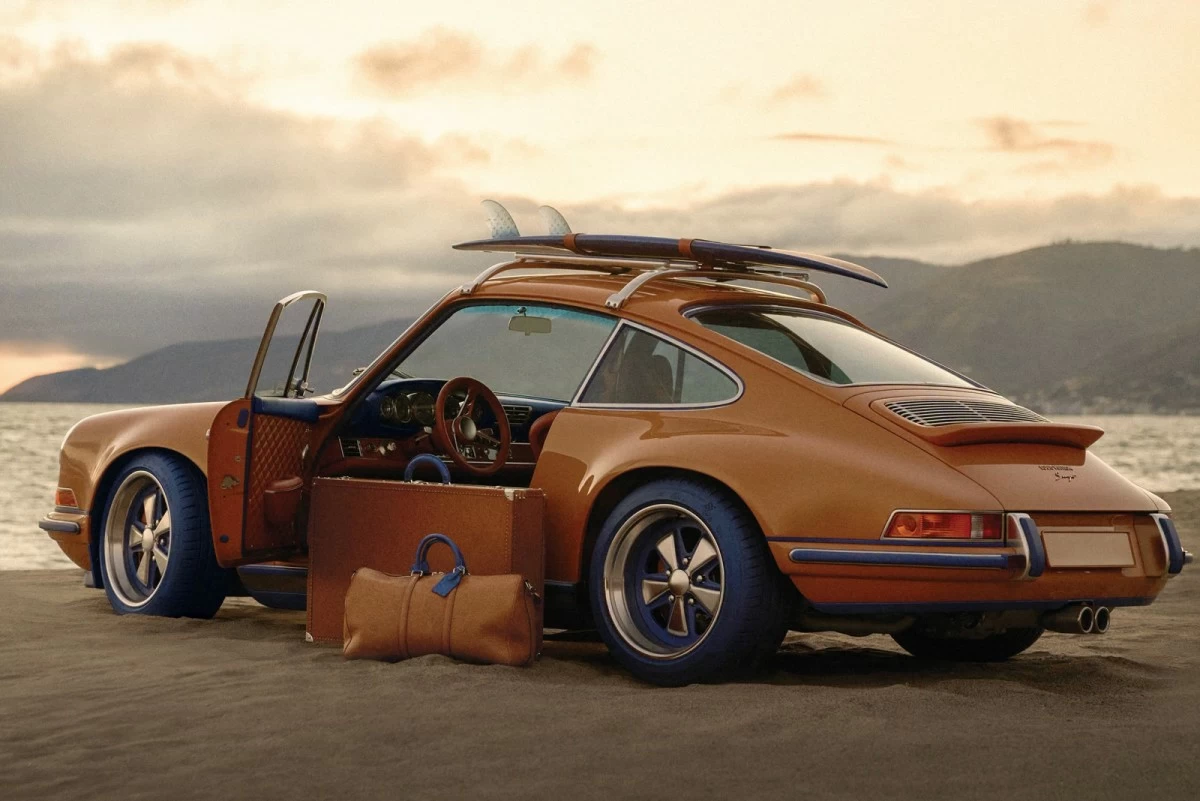
The classic 911 is fitted with a specially designed roof rack, which can accommodate a trunk, a surfboard or a pair of skis. It is finished in a saffron shade present in the House’s archives for over a century and a half and used across its packaging for more than twenty years. , also resonates with Bahama Yellow, a hallmark hue closely associated with Singer’s earliest commissions. Notably, it has a particular connection with the automotive world, paying homage to the travel trunks designed for Citroën in 1924. These types of travel cases already featured cobalt blue interior reinforcements. This two-tone colour combination therefore embodies Louis Vuitton’s identity particularly well, as does the bright yellow thread used for the saddle-stitch seams on the brand’s leather goods and trunks.
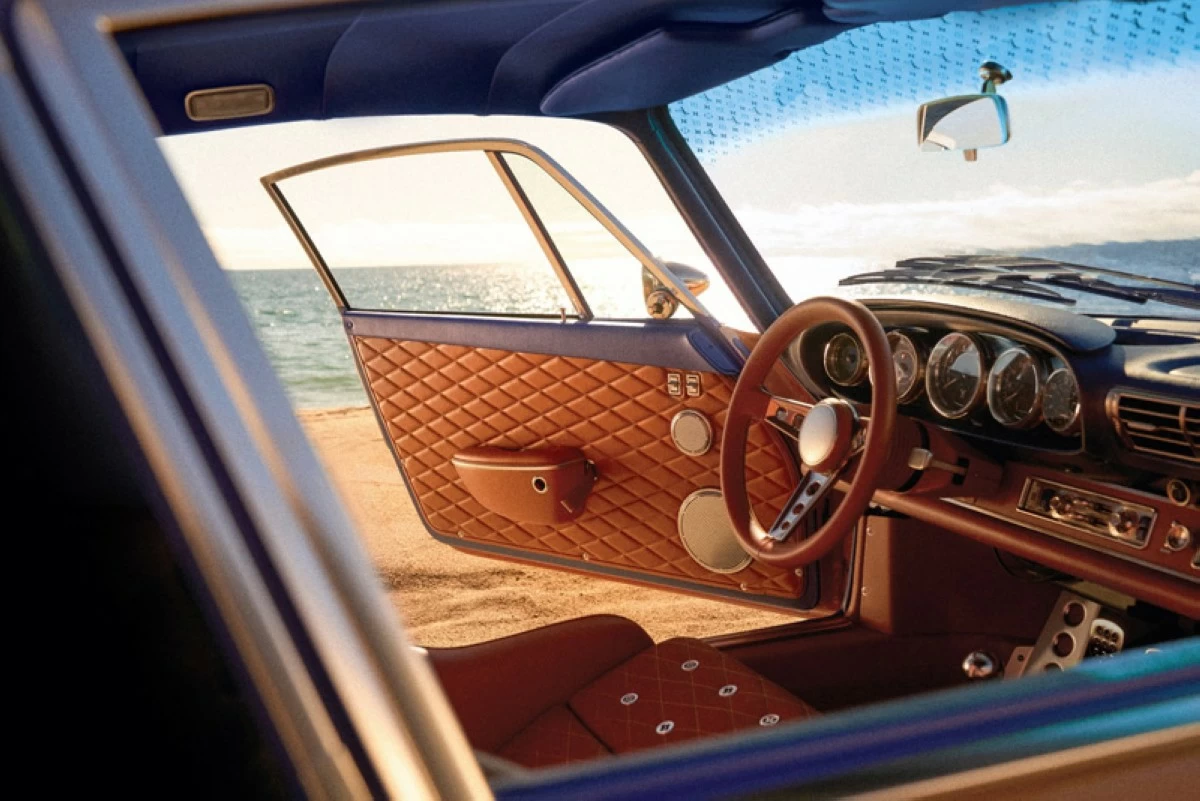
Louis Vuitton has, naturally, adorned the interior of the car with its signature; the cabin is entirely upholstered in leather with a natural hue inspired by VVT leather, one of the House’s most utilized leathers found in handles, shoulder straps, edging, and labels of the brand’s luggage. The interior leatherworking was then executed by Singer’s team. The edges of the door handles feature the same edge-dyeing technique used on Louis Vuitton bags, while the stitching is executed in yellow thread. The diamond-patterned embossing on the seats and the front boot trim, as well as the engine compartment at the rear, echoes the “malletage” motif characteristic of the inside of Louis Vuitton trunks. To ensure comfort for the driver and passenger, the seats are fitted with ventilation eyelets.
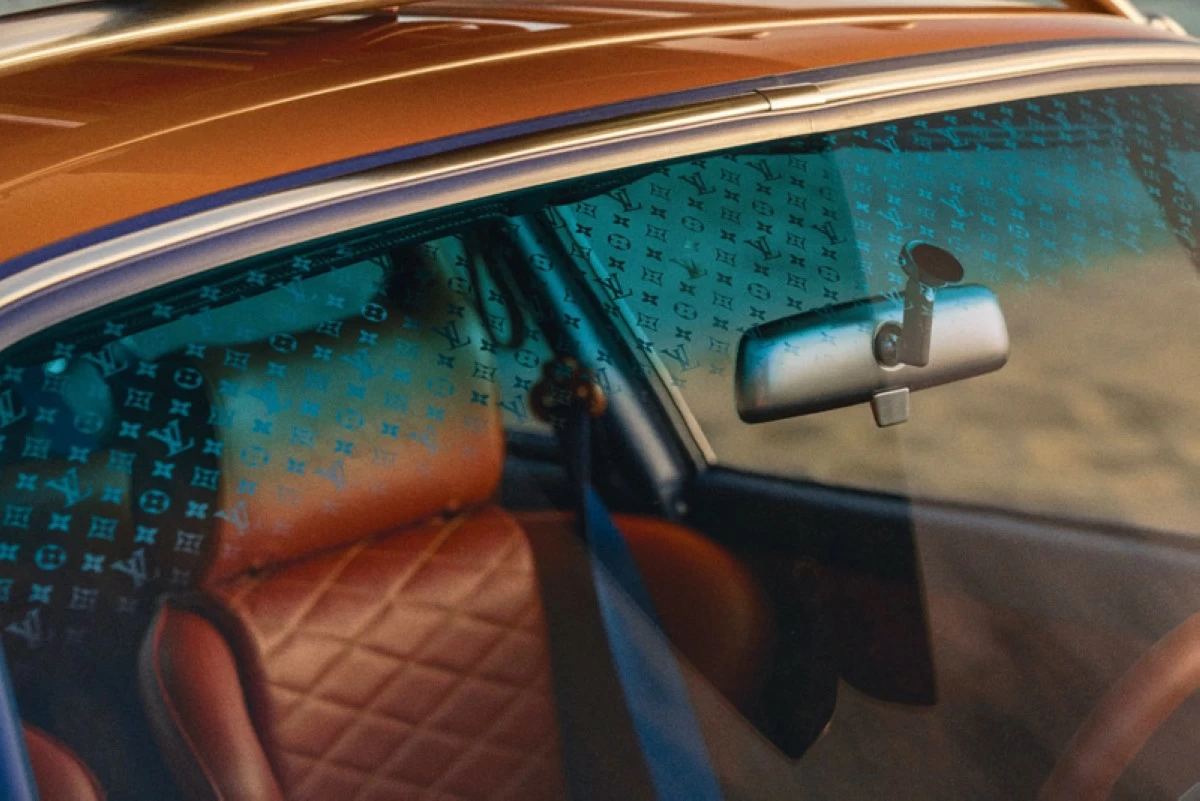
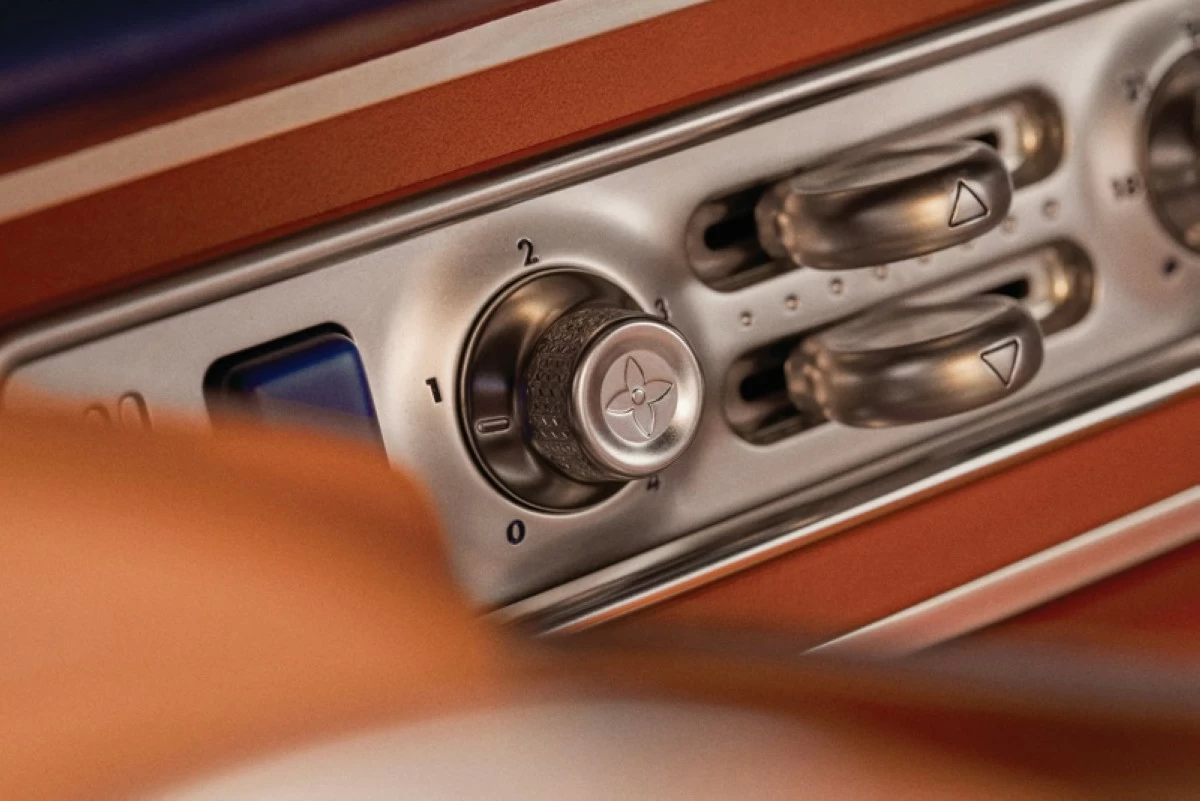
Each one crafted and finished by hand, they bear the iconic Louis Vuitton Monogram flower designs; a motif that also appears on the sun visor and headrests, echoing the windscreen. Adjustment knobs, control switches, locks, pull-tabs and air vents have thus been crafted in metal, predominantly rhodium-plated, using traditional artisanal techniques.
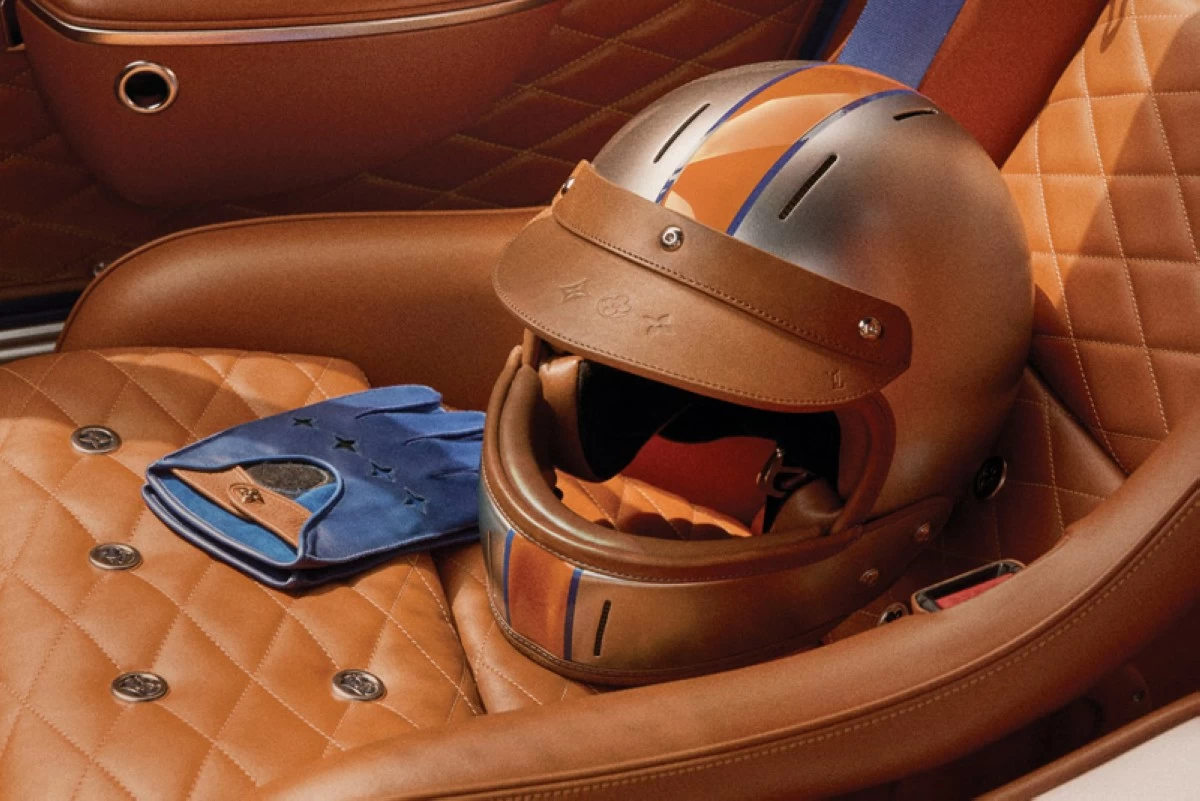
To truly celebrate the Art of Travel, Louis Vuitton has dressed the classic car’s owner as carefully as it dressed the car. The driver gets a racing jacket crafted from naturally grained leather, featuring a perforated LV zip closure and three Monogram Flower eyelets across the chest—a motif directly drawn from the car’s seats and sun visor. The silk lining discreetly repeats the embroidered flower, a detail visible only to the wearer. Beneath it, straight-cut jeans in a heavy cotton-and-silk denim are washed for a worn-in aesthetic, subtly detailed with contrast topstitching, an aged-gold engraved button and a Louis Vuitton x Singer tab at the rear waist. Footwear for the drive is presented in two distinct options: the LV Rally, a car-shoe adorned with LV initials on the side and featuring a rubber-pad sole, or the LV Remix Derby, a hiking silhouette infused with heritage accents, with a deep blue key bell decorated with the ‘Louis Vuitton Singer’ project and Monogram Flower eyelets. Driving gloves come perforated, in a natural hue or cobalt blue. Finally, a jet helmet made of carbon and glass fiber, trimmed with calfskin leather and finished with a riveted peak, completes the figure.
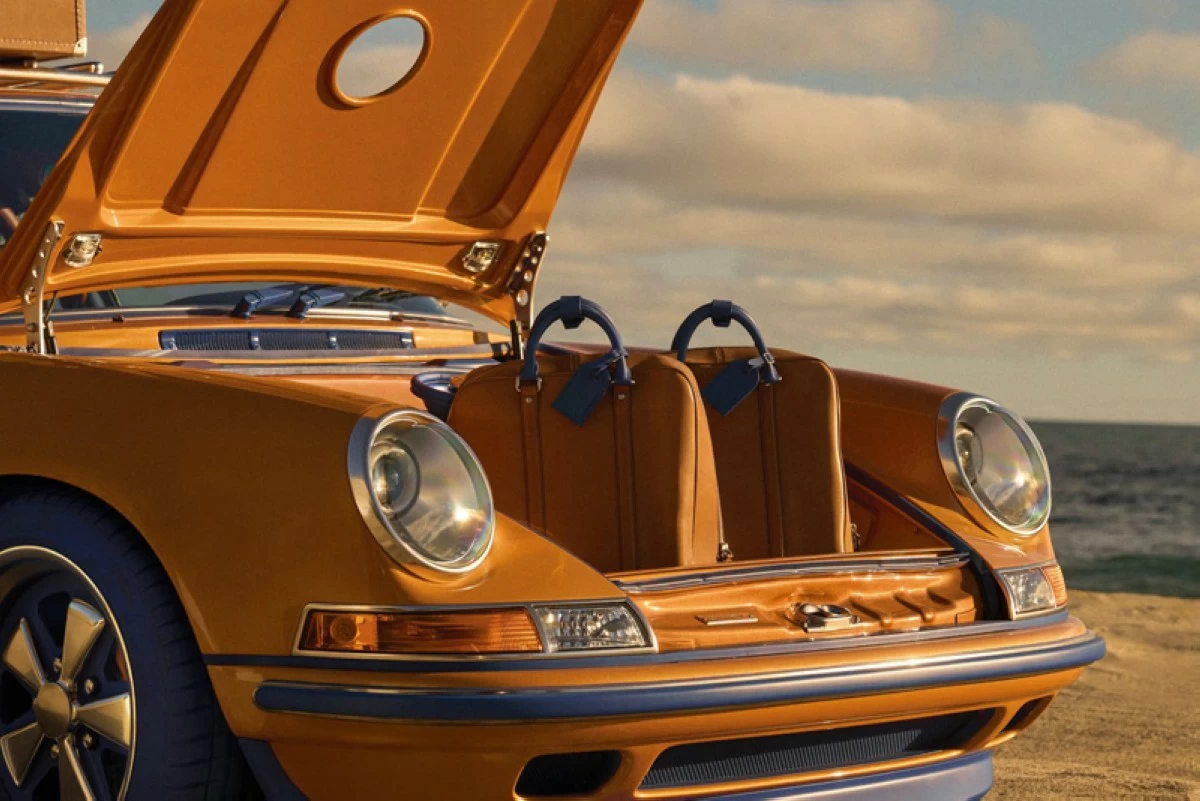
The luggage is custom-fitted to the car. A 1950s-inspired helmet bag holds the bespoke helmet, its hardware tuned to the fuel cap’s shade. The Bisten, a direct descendant of the suitcases the House first catalogued in 1892, adorned with a blue handle and a name tag, keeps the wardrobe flat and crease-free. The Keepall, a House icon since 1930, packs a week’s wardrobe into the cabin, and a pair of front-trunk bags is shaped so the two sit perfectly in the nose of the car.
Porsche 911 convertible
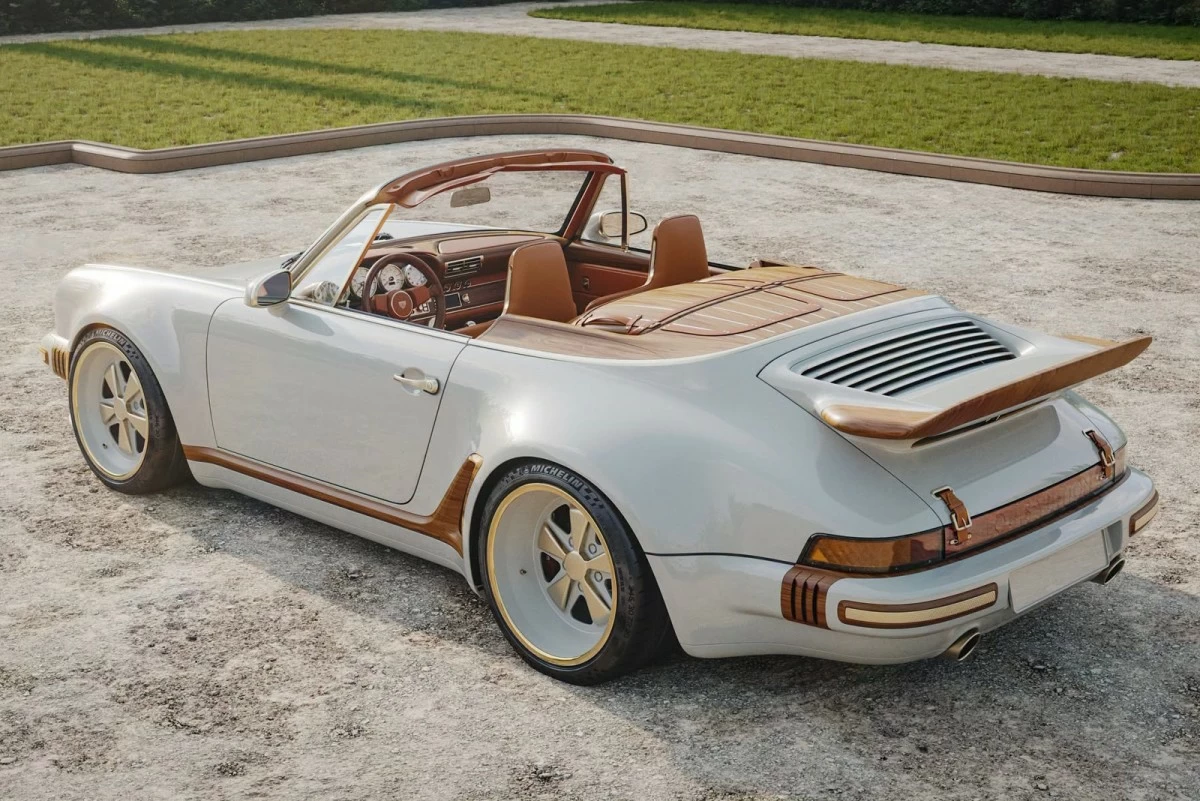
Just one car simply wasn’t enough. The 911 Turbo Cabriolet was built to blend two distinct worlds: the nautical and the automotive. It was conceived to be a vehicle open to the world, to nature and to the fullness of life, fostering direct contact with the sun and a profound sense of sensuality. The use of wood lends this cabriolet a unique and decidedly contemporary feel.
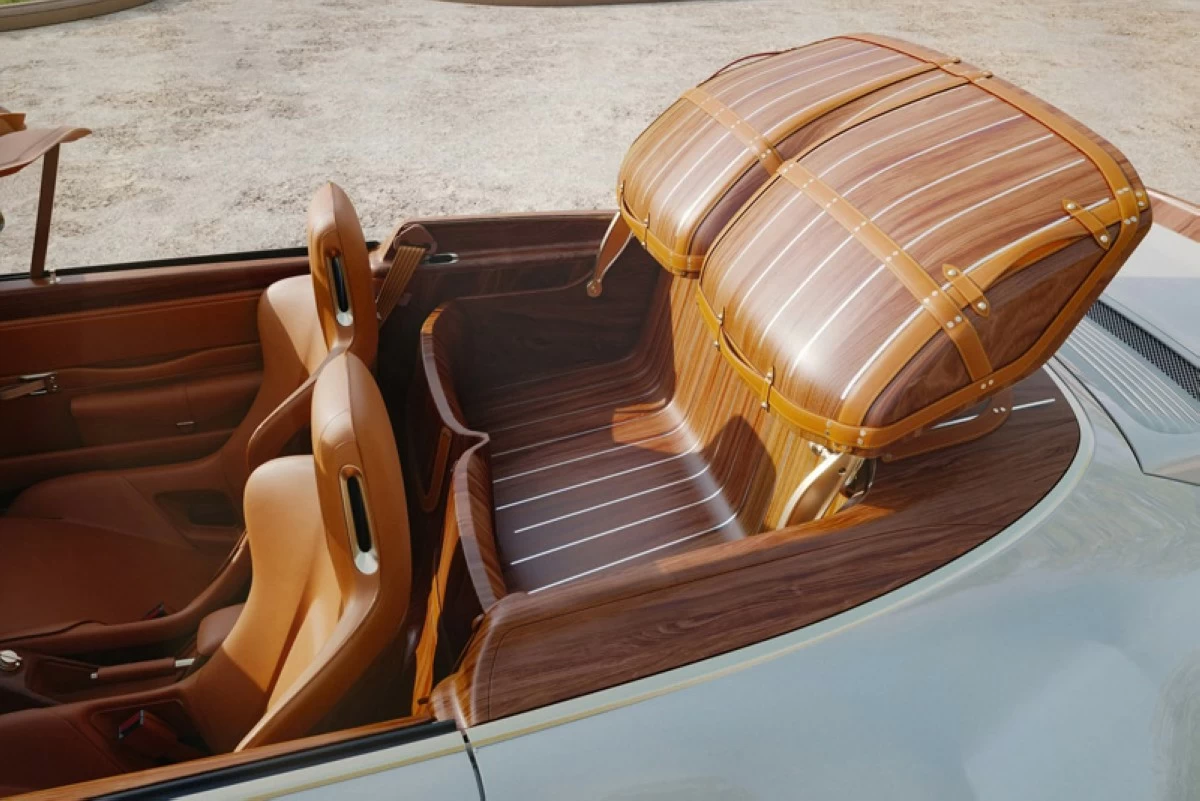
The rear-opening luggage compartment stands as an impressive feat of engineering, revealing a teak-inspired wooden deck that extends the dialogue with the timeless beauty of motorboats. The color scheme, combining an echo of Calcaire Lutétien – the white limestone that has shaped the Parisian landscape.
Every element of the vehicle, whether functional or decorative, has been reimagined by the teams at Louis Vuitton and Singer, with the same attention to the finest details, materials, savoir-faire and finishes.
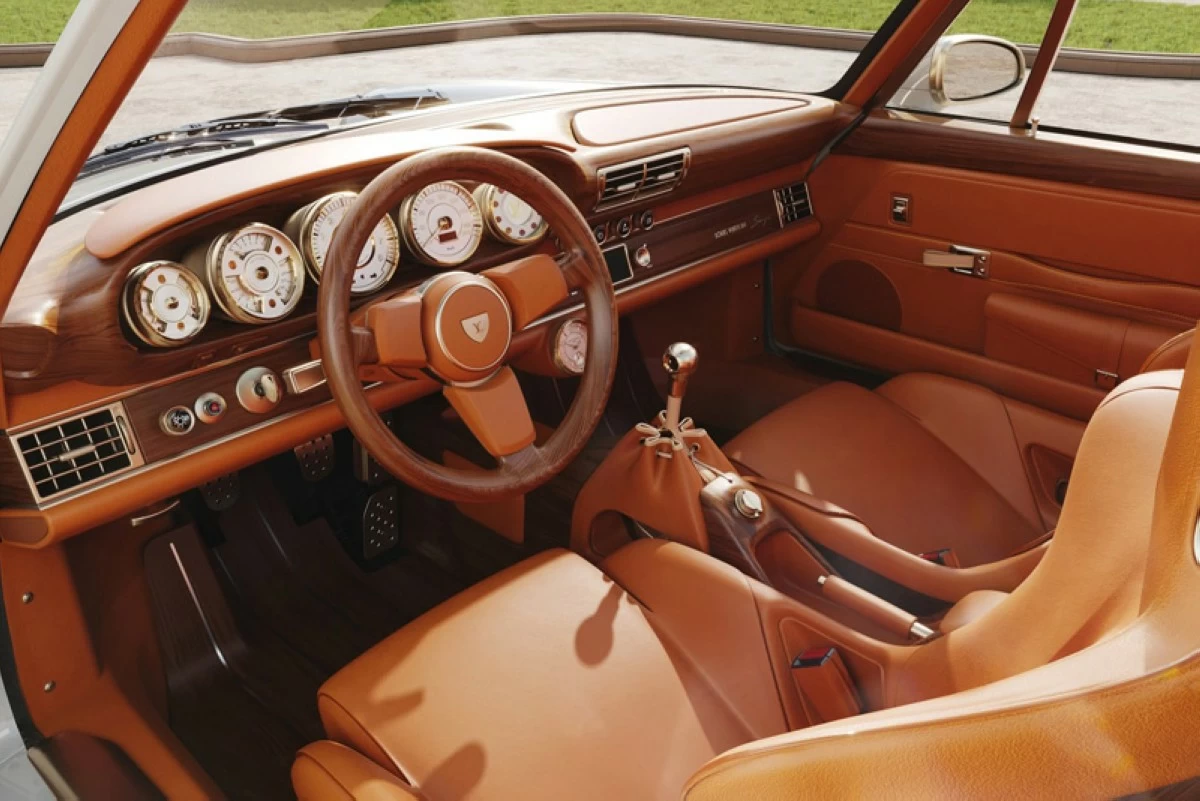
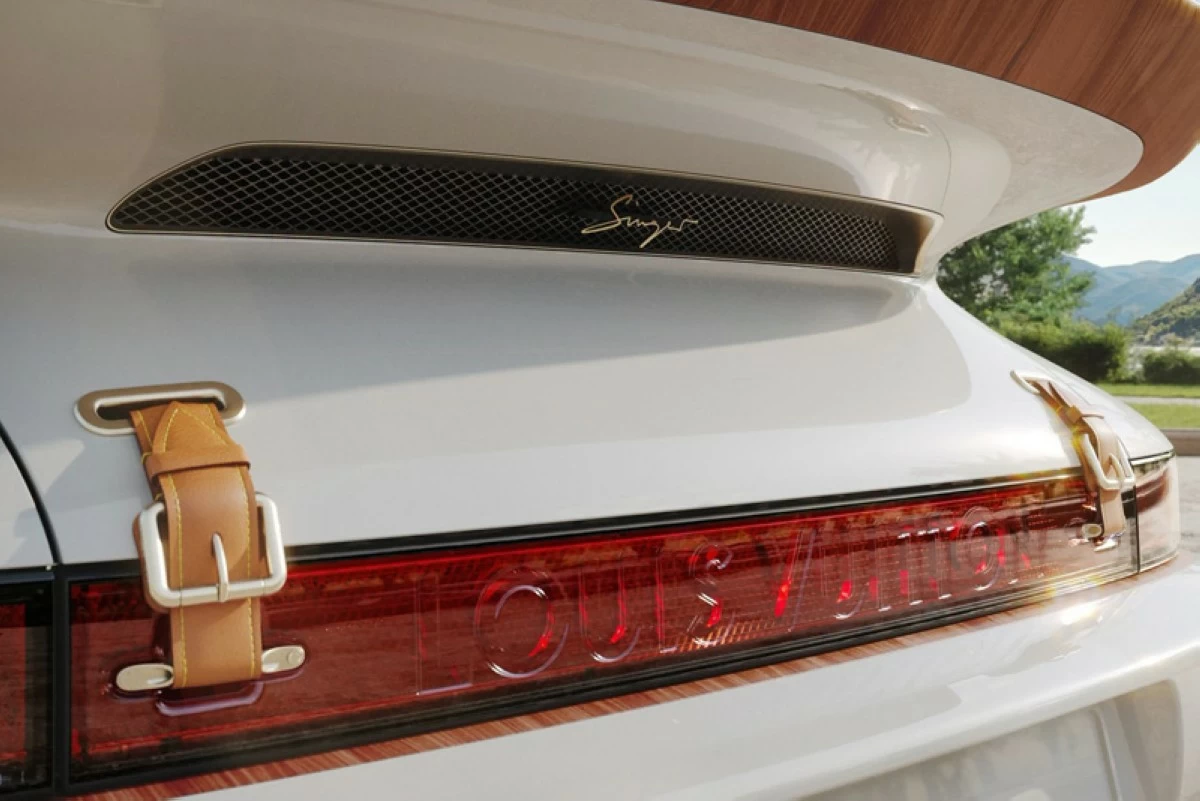
The bespoke dashboard clock is not integrated into the instrumentation behind the steering wheel. Instead, it occupies the center of the console, upholstered in natural leather, where warm golden gauges, a dial finished in the exact shade of the exterior bodywork and a matching golden ignition key create a seamless dialogue between the interior and exterior. The dashboard bears the Louis Vuitton signature, echoed after dark within the Tail Lamps, while a distinctive leather patch on the steering wheel subtly reinforces the House’s identity. Beneath the dashboard clock, the gearshift trim evokes the silhouette of the Noé bag through its natural leather drawstring.
Behind the seats, upholstered in leather over a technical wooden shell, lies a luggage compartment developed specifically for the car’s unique form. It is crafted from varnished wood using the same technique employed for runabout decks. There is ample space for bespoke Louis Vuitton luggage fitted to the car, as well as for the lightweight soft top, which is itself inspired by the nautical world. Wood paneling also lines the rear engine compartment and the front boot, which houses a bespoke trunk composed of three cases that slot together to form storage compartments that are both highly functional and elegantly crafted. Leather fastening straps on the front and rear hoods, equipped with pin buckles, subtly recall references to motorsport, the traditions of trunk making and watch straps.
For the driver, a made-to-measure suit in parachute silk works the House’s second initial into raised, V-shaped seams rather than any badge, its zip pulls and snaps discreetly engraved. The driving gloves follow the hand in braided leather and a single hand-painted Monogram snap, echoing the wood that lines the cabin. The LV Sneakerina sits low and light underfoot, its signature read only in a cut-out at the side. Completing the look, sunglasses in gold and acetate hide a Monogram flower beneath one lens, augmented by a helmet in carbon, glass fiber and varnished cream, finished with a tan visor.
As for luggage, a garment bag folds flat against the cabin with a hanger and name tag inside. The Alma softens into a travelling shape and the Express returns the malletage of a trunk lining to its interior, while the Noé carries the drawstring silhouette the gearshift borrows. The Cruiser is sized for little more than a pair of gloves and sunglasses, with a loop to hold its own handle open. The Petite Malle is cut from a wood that mirrors the vehicle’s finest details, drawing on a species whose warm hue resonates in perfect harmony with the car’s signature palette and the papers for a one-of-a-kind automobile travel in their own flat case.
The larger luggage is built to the car. The three-part trunk already fitted to the front boot lifts out as three individual cases when the journey calls for it, and the Keepall 45 wears a removable cover that doubles its protection and changes its face, the way a car waits beneath its own fitted sheet.
The collaboration between Louis Vuitton and Singer, singular and unprecedented, transcends a simple partnership. It represents a meeting of two worlds of excellence, where the depth of exchange has profoundly shaped the distinct identities of each House.