ADVERTISEMENT

Japan Edo-era diets richer in minerals than modern ones - study

Published Aug 18, 2026 02:15 pm
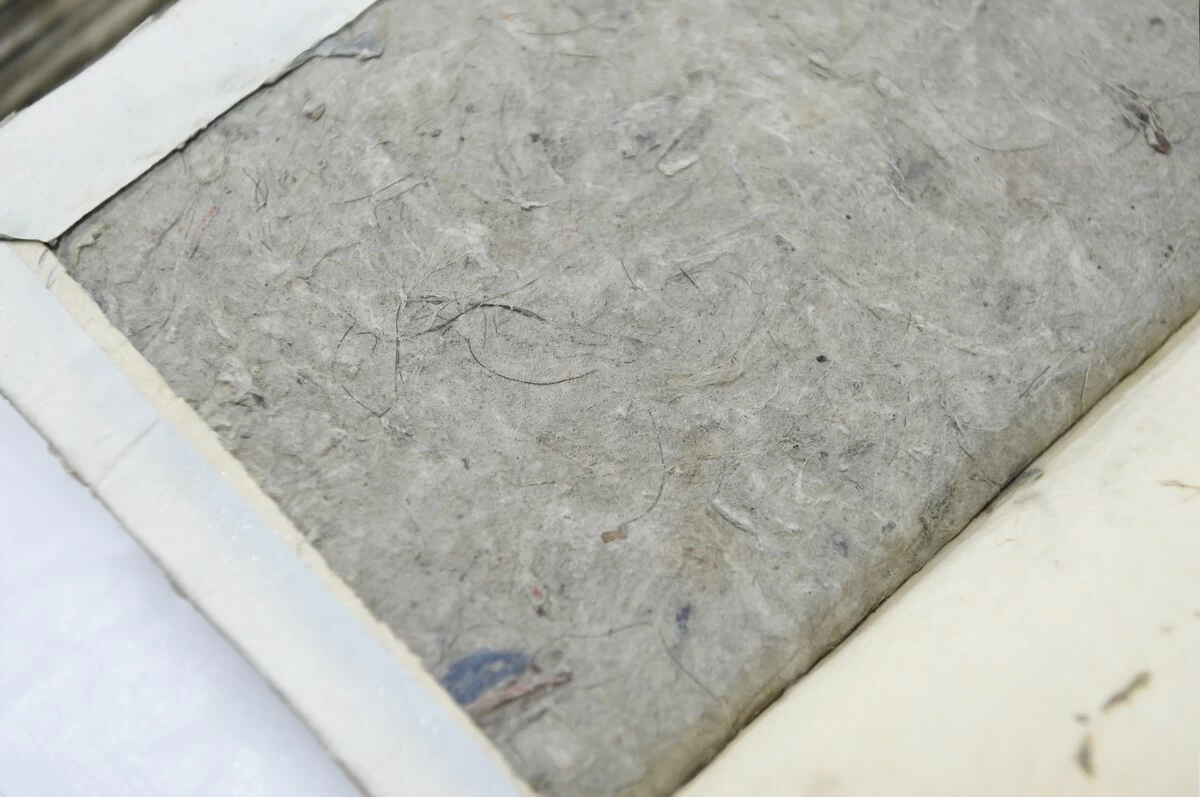
Recycled paper containing hair (Courtesy of Ryukoku University professor Atsushi Maruyama)
TOKYO (Jiji Press) -- Japanese researchers have found that commoners who lived in urban areas of Japan during the Edo and Meiji periods had diets that were richer in minerals than those of people today.
The study by a team of researchers from Ryukoku University, the National Institute of Japanese Literature and other institutions was published in the British journal Scientific Reports on Monday.
The finding was based on an analysis of hair samples taken from historical books from the Edo period (1603-1868) and the Meiji period (1868-1912), when the country underwent modernization.
During the Edo period, waste paper was collected and reused, resulting in the frequent presence of hair in recycled paper used for book covers.
Atsushi Maruyama, professor at Ryukoku University, and Atsushi Iriguchi, professor at the National Institute of Japanese Literature, collected hair samples from about 400 books whose publishers and publication years could be identified, out of roughly 70,000 volumes of Japanese books stored at the university.
Most of the books were published in what is now Tokyo or the western cities of Kyoto and Osaka. They date from the mid-17th century to the late 19th century, and the hair samples are presumed to have belonged to ordinary urban residents of the time.
The team used particle-induced X-ray emission to determine the elemental composition of the hair samples and conducted stable isotope analyses.
It found that concentrations of essential minerals such as chlorine, potassium, calcium, manganese, iron and copper in the hair were higher than those in modern people, while the concentration of zinc, which is abundant in pork, was lower.
Carbon and nitrogen isotope analyses supported the theory that people at the time had a diet reliant on rice and sea fish.
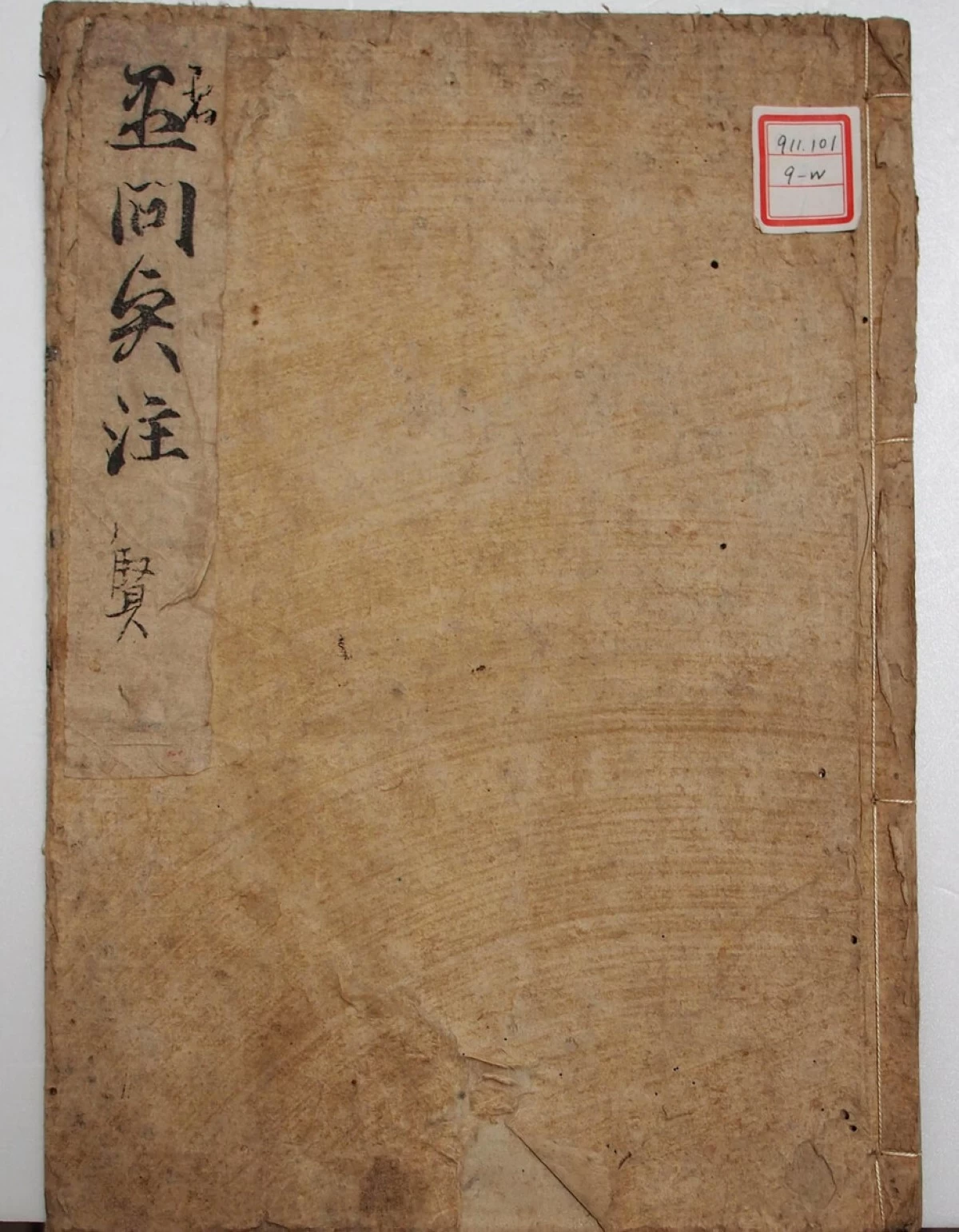
An old Japanese book from which hair samples used in the study were taken (Courtesy of Ryukoku University professor Atsushi Maruyama)
Among the minerals, potassium and silicon, which are abundant in brown rice, declined over time, coinciding with the spread of the practice of eating milled white rice.
Meanwhile, levels of manganese, calcium, iron and copper, which are abundant in sea fish, did not decline. The researchers said the trend may be attributable to increased fish consumption accompanying the development of transportation networks and the spread of fishmeal fertilizer, among other factors.
Maruyama, whose previous research focused on the diets of fish and amphibians, initially tested hair to identify diets as a fun way of helping students understand his research. A colleague learned from Iriguchi that hair samples can be found in old books, and introduced the two researchers to each other.
"Meals in the Edo period are said to have been simple, but they contained more minerals than modern diets," Maruyama said, adding that some of the elements are said to be lacking in Japanese diets. "The findings offer clues about what people should eat," he said.


Related Tags

world news Japan diet
ADVERTISEMENT
.most-popular .layout-ratio{ padding-bottom: 79.13%; } @media (min-width: 768px) and (max-width: 1024px) { .widget-title { font-size: 15px !important; } }

{{ articles_filter_1561_widget.title }}

.most-popular .layout-ratio{ padding-bottom: 79.13%; } @media (min-width: 768px) and (max-width: 1024px) { .widget-title { font-size: 15px !important; } }

{{ static_articles_1562_widget.title }}

.most-popular .layout-ratio{ padding-bottom: 79.13%; } @media (min-width: 768px) and (max-width: 1024px) { .widget-title { font-size: 15px !important; } }

{{ articles_filter_1563_widget.title }}

{{ articles_filter_1564_widget.title }}

.mb-article-details { position: relative; } .mb-article-details .article-body-preview, .mb-article-details .article-body-summary{ font-size: 17px; line-height: 30px; font-family: "Libre Caslon Text", serif; color: #000; } .mb-article-details .article-body-preview iframe , .mb-article-details .article-body-summary iframe{ width: 100%; margin: auto; } .read-more-background { background: linear-gradient(180deg, color(display-p3 1.000 1.000 1.000 / 0) 13.75%, color(display-p3 1.000 1.000 1.000 / 0.8) 30.79%, color(display-p3 1.000 1.000 1.000) 72.5%); position: absolute; height: 200px; width: 100%; bottom: 0; display: flex; justify-content: center; align-items: center; padding: 0; } .read-more-background a{ color: #000; } .read-more-btn { padding: 17px 45px; font-family: Inter; font-weight: 700; font-size: 18px; line-height: 16px; text-align: center; vertical-align: middle; border: 1px solid black; background-color: white; } .hidden { display: none; }
function initializeAllSwipers() { // Get all hidden inputs with cms_article_id document.querySelectorAll('[id^="cms_article_id_"]').forEach(function (input) { const cmsArticleId = input.value; const articleSelector = '#article-' + cmsArticleId + ' .body_images'; const swiperElement = document.querySelector(articleSelector); if (swiperElement && !swiperElement.classList.contains('swiper-initialized')) { new Swiper(articleSelector, { loop: true, pagination: false, navigation: { nextEl: '#article-' + cmsArticleId + ' .swiper-button-next', prevEl: '#article-' + cmsArticleId + ' .swiper-button-prev', }, }); } }); } setTimeout(initializeAllSwipers, 3000); const intersectionObserver = new IntersectionObserver( (entries) => { entries.forEach((entry) => { if (entry.isIntersecting) { const newUrl = entry.target.getAttribute("data-url"); if (newUrl) { history.pushState(null, null, newUrl); let article = entry.target; // Extract metadata const author = article.querySelector('.author-section').textContent.replace('By', '').trim(); const section = article.querySelector('.section-info ').textContent.replace(' ', ' '); const title = article.querySelector('.article-title h1').textContent; // Parse URL for Chartbeat path format const parsedUrl = new URL(newUrl, window.location.origin); const cleanUrl = parsedUrl.host + parsedUrl.pathname; // Update Chartbeat configuration if (typeof window._sf_async_config !== 'undefined') { window._sf_async_config.path = cleanUrl; window._sf_async_config.sections = section; window._sf_async_config.authors = author; } // Track virtual page view with Chartbeat if (typeof pSUPERFLY !== 'undefined' && typeof pSUPERFLY.virtualPage === 'function') { try { pSUPERFLY.virtualPage({ path: cleanUrl, title: title, sections: section, authors: author }); } catch (error) { console.error('ping error', error); } } // Optional: Update document title if (title && title !== document.title) { document.title = title; } } } }); }, { threshold: 0.1 } ); function showArticleBody(button) { const article = button.closest("article"); const summary = article.querySelector(".article-body-summary"); const body = article.querySelector(".article-body-preview"); const readMoreSection = article.querySelector(".read-more-background"); // Hide summary and read-more section summary.style.display = "none"; readMoreSection.style.display = "none"; // Show the full article body body.classList.remove("hidden"); } document.addEventListener("DOMContentLoaded", () => { let loadCount = 0; // Track how many times articles are loaded const offset = [1, 2, 3, 4, 5, 6, 7, 8, 9, 10]; // Offset values const currentUrl = window.location.pathname.substring(1); let isLoading = false; // Prevent multiple calls if (!currentUrl) { console.log("Current URL is invalid."); return; } const sentinel = document.getElementById("load-more-sentinel"); if (!sentinel) { console.log("Sentinel element not found."); return; } function isSentinelVisible() { const rect = sentinel.getBoundingClientRect(); return ( rect.top < window.innerHeight && rect.bottom >= 0 ); } function onScroll() { if (isLoading) return; if (isSentinelVisible()) { if (loadCount >= offset.length) { console.log("Maximum load attempts reached."); window.removeEventListener("scroll", onScroll); return; } isLoading = true; const currentOffset = offset[loadCount]; window.loadMoreItems().then(() => { let article = document.querySelector('#widget_1690 > div:nth-last-of-type(2) article'); intersectionObserver.observe(article) loadCount++; }).catch(error => { console.error("Error loading more items:", error); }).finally(() => { isLoading = false; }); } } window.addEventListener("scroll", onScroll); });

Sign up by email to receive news.