






Manila Bulletin
 Business
Banking & Finance
DOF delays key privatization deals to Q4 to meet revenue target
Business
Banking & Finance
DOF delays key privatization deals to Q4 to meet revenue target
Business
Banking & Finance
DOF delays key privatization deals to Q4 to meet revenue target
DOF delays key privatization deals to Q4 to meet revenue target
By Derco Rosal
Published Aug 18, 2026 06:05 pm
|
Updated Aug 18, 2026 05:52 pm


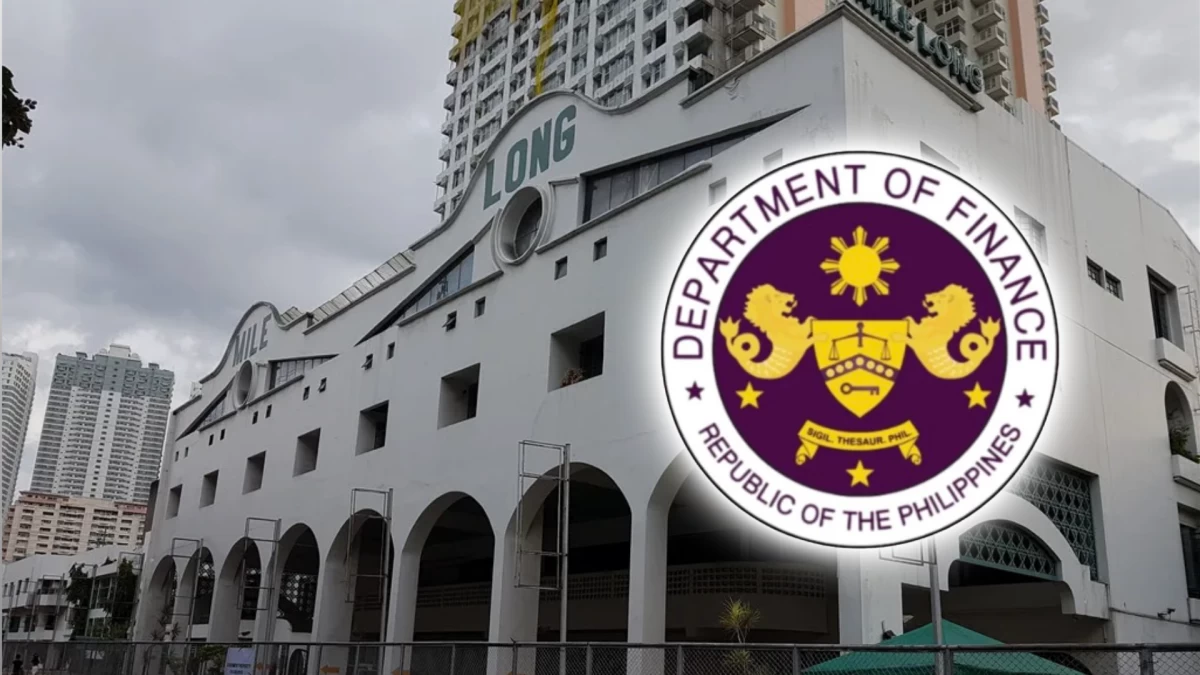
The Marcos administration has shifted the bulk of its government asset sales to the fourth quarter of the year, leaning on last-minute property deals to hit its revised ₱38.1 billion revenue goal, according to the Department of Finance (DOF).
Finance Undersecretary Michael Peter A. Alejandro, who also serves as the DOF’s chief privatization officer, said the government is accelerating the disposition of high-value real estate. Priority assets include the 2.2-hectare Mile Long commercial estate in Makati, a portion of the state-owned Food Terminal Inc. (FTI) complex in Taguig City, and the government’s equity stake in the South Luzon Expressway.
“We’re really getting things rolling for that, so we’re confident that we’ll hit our targets this year,” Alejandro told reporters on the sidelines of an HSBC event on Tuesday, Aug. 18. “Next year we’ll have those power plants. Not directly under me, but we do have a few public-private partnerships in the pipeline.”
Based on zonal values, the government estimates the Mile Long estate at roughly ₱10 billion and the FTI property at about ₱20 billion, representing a combined ₱30 billion in potential privatization receipts for the second half of the year.
Alejandro said prospective buyers are targeting Mile Long because it remains one of the last prime real estate blocks in Makati's central business district.
Interested buyers include property developers such as GT Capital Holdings Inc., Ayala Land Inc., and Sunvar Realty Development, alongside state pension funds like the Social Security System and the Government Service Insurance System. Official appraisals will precede any final bidding.
Per the updated quarterly fiscal program, President Ferdinand Marcos Jr.’s economic managers expect to collect ₱37.6 billion from privatization and grants in the fourth quarter.
Last month, the government completed the ₱1 billion sale of one floor of the Atrium of Makati, turning over the long-dormant estate. That transaction pushed first-half collections to nearly ₱2 billion.
Budget documents show that the 2026 privatization target was slashed from the ₱101 billion initially programmed. However, that reduction could be offset by a massive jump in the 2027 target, which was revised upward to ₱101.5 billion from the previously estimated ₱1.5 billion.
Alejandro confirmed that the big-ticket assets slated for disposal in the second half remain in the pipeline. He noted that the Privatization and Management Office (PMO) is currently conducting appraisals before handing them over to the Privatization Council (PrC) for final rate approval.
Among the deals deferred to 2027 is the 797-megawatt Caliraya-Botocan-Kalayaan (CBK) power plant, which was acquired by the Aboitiz-led Thunder Consortium with a ₱36.27 billion bid.
“That’s why [the privatization haul] is lower this year—it should be included this year,” Alejandro stressed, clarifying that the delay is “only an accounting matter” since the transaction itself is already complete.
“It’s coursed through Power Sector Assets and Liabilities Management Corporation (PSALM). It will be remitted to the national government (NG) next year,” he said.
Additionally, the DOF is eyeing deals for the Agus-Pulangi plant over the coming year. Recent reports indicate the state asset will be rehabilitated under a public-private partnership (PPP) framework, enabling the government to retain ownership.
“We’re exploring PPP, I believe,” Alejandro said, deferring to PSALM for specifics. “I’m not too familiar with what their actual action is now, but I know that’s in the pipeline for next year.”
Proceeds from these sales will be funneled into state coffers as non-tax revenue to help narrow the fiscal deficit. Privatization and grants are projected to account for 45.1 percent of the ₱83.4 billion non-tax haul in the fourth quarter.
Non-tax revenues are projected to reach ₱365.1 billion for the full year, representing 7.6 percent of the updated ₱4.81 trillion total revenue target (down from the ₱4.98 trillion originally projected). Similarly, the 2027 revenue outlook was lowered to ₱5.21 trillion from an earlier estimate of ₱5.37 trillion.
Alejandro added that the government could also generate roughly ₱800 million from disposing of smaller idle assets.
These collections will help fund government operations without introducing new taxes, helping bring the fiscal deficit down from 5.6 percent in 2025 to a targeted 5.4 percent this year.
Finance Secretary Frederick D. Go noted during a legislative budget briefing on Monday, Aug. 17, that the first-half deficit of 5.46 percent is expected to improve further in the second half. Hitting the full-year target would bring the deficit ratio to its narrowest level in four years.
Looking further ahead, privatization revenue projections remain unchanged at ₱975 million for 2028, while the newly introduced projection for 2029 is set at ₱700 million.