






Manila Bulletin
 Philippines
National
AFP notes shift in China's presence in WPS: More coast guard, research vessels in key features
Philippines
National
AFP notes shift in China's presence in WPS: More coast guard, research vessels in key features
Philippines
National
AFP notes shift in China's presence in WPS: More coast guard, research vessels in key features
AFP notes shift in China's presence in WPS: More coast guard, research vessels in key features
Published Aug 18, 2026 02:51 pm


At A Glance
- Armed Forces of the Philippines (AFP) monitoring showed fewer People's Liberation Army - Navy (PLA-N) warships and militia vessels in the West Philippine Sea but more coast guard and research ships compared to 2025.
- From Aug. 11–17, the AFP recorded 23 Chinese vessels in Philippine waters, including 11 at Ayungin Shoal and 10 at Bajo de Masinloc.
- The AFP and Philippine Coast Guard warned of rising Chinese research activity, noting erratic tracks in northern passages and stressing coordination to protect sovereignty.
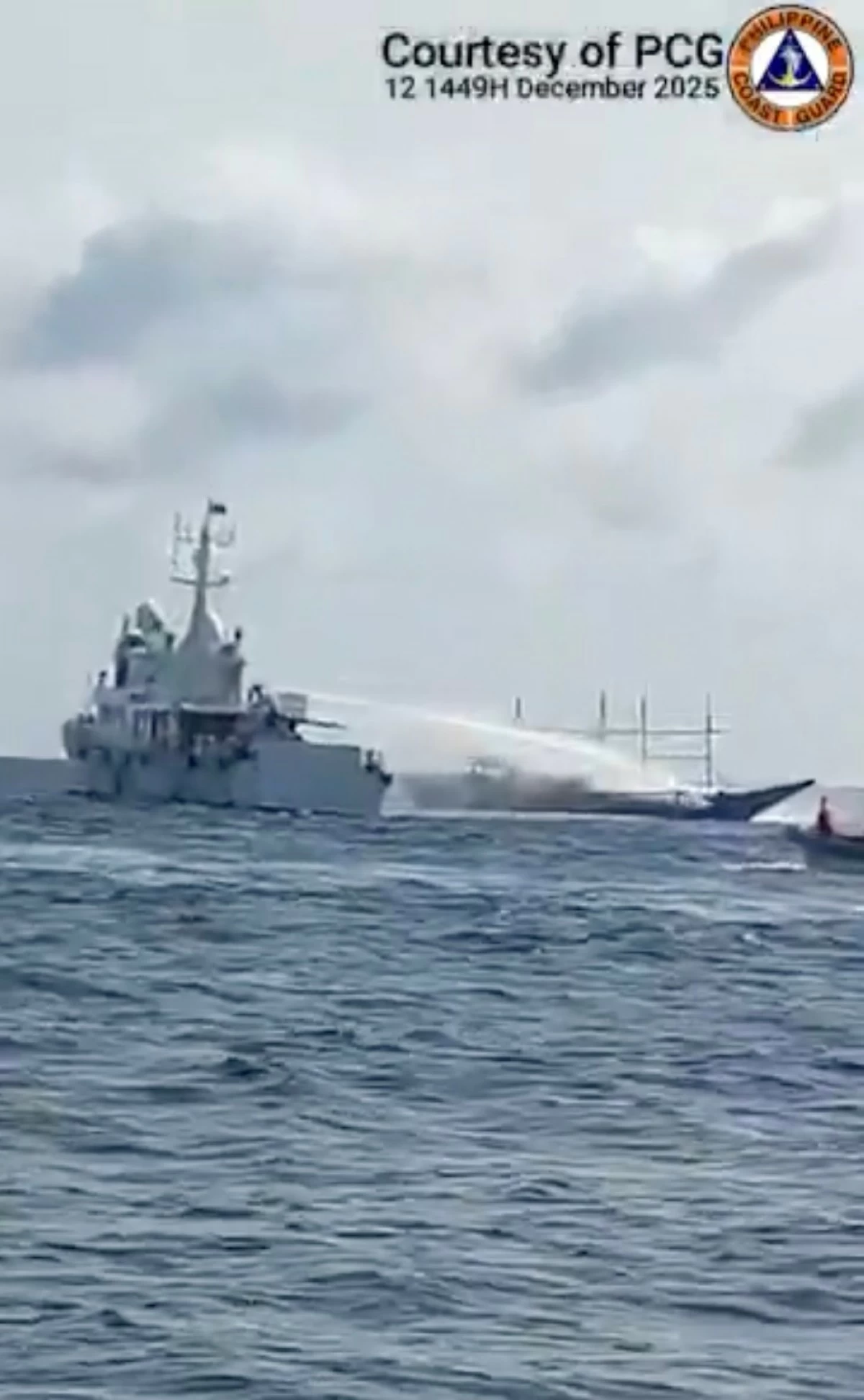
A China Coast Guard vessel fires a water cannon at a much-smaller Filipino fishing boat near Escoda Shoal in the West Philippine Sea on Dec. 12, 2025. Three fishermen were hurt in the incident. (Courtesy of Philippine Coast Guard)
The Armed Forces of the Philippines (AFP) has observed a change in Chinese maritime activity in the West Philippine Sea (WPS), noting fewer warships and militia vessels but more coast guard and research ships in contested waters.
Retired admiral Roy Vincent Trinidad, AFP spokesperson for WPS, said monitoring data from the first semester of 2026 showed a decline in the number of People’s Liberation Army (PLA) Navy warships and maritime militia compared to the same period in 2025.
“There was a noted decrease in the total number of PLA warships monitored this year and last year first semester, from 100 to 78. There was a decrease in the total number of maritime militia vessels from 999 to 850,” he said on Tuesday, Aug. 18.
However, Trinidad pointed out that China Coast Guard (CCG) vessels increased from 68 to 77, while research and survey ships rose from 33 to 44.
“Of those numbers, 16 had erratic tracks that would indicate the conduct of survey and research activities covering the West Philippine Sea, our northern passage, Bashi Channel, Balintang Channel, all the way up to Benham Rise,” he added.
Meanwhile, the weekly monitoring of the AFP showed that from August 11 to 17, there were 23 Chinese vessels in the country’s exclusive economic zone (EEZ): 11 CCG ships at Ayungin Shoal, seven CCG ships and three PLA Navy warships at Bajo de Masinloc, and two CCG vessels near Pag-asa Island.
The AFP said the shift suggests more law enforcement functions being carried out by Chinese forces in the area.
“This indicates that the functions to be performed, we could expect more law enforcement functions for this year,” Trinidad explained.
Philippine Coast Guard (PCG) spokesperson for WPS Rear Adm. Jay Tarriela has also noted similar trends as he revealed that the number of aggressive incidents by Chinese forces against Philippine vessels and Filipino fishermen, such as water cannon attacks, has been fewer compared to previous years.
“The last water cannon incident that we have reported was December of 2025, and the most recent was two weeks ago. If your question is the number of incidents per se, I think there is much more limited number of incidents that we have reported so far compared to the previous years,” Tarriela said.
Still, both the AFP and PCG expressed concern over the rise in research vessels in the country’s exclusive economic zone (EEZ).
“The noted increase in the research vessels up north is one of the factors we are considering giving more attention to,” Trinidad said.
Tarriela added that this development is not unique to the Philippines, saying the increase of Chinese research vessels is also concerning for Vietnam, Malaysia, Indonesia, and even in Taiwan.
“Amid all of this, the information that we get helps the AFP in deploying our ships, our aircraft, in coordinating with the Coast Guard and BFAR, in order to ensure that the integrity of the territory, our sovereignty and sovereign rights, are secured and protected,” Trinidad said.