

ADVERTISEMENT

STAY AT HOME: Alternative class, gov't work arrangements in NCR, 14 provinces continue on Aug. 18 as Habagat triggers red rainfall warning

Published Aug 17, 2026 05:35 pm

At A Glance

  • Government offices in Metro Manila and 14 provinces will implement alternative work arrangements on Aug. 18 amid heavy rains from the southwest monsoon.
  • PAGASA has placed Metro Manila and several areas in Luzon under a red rainfall warning, with serious flooding expected in flood-prone areas.
  • Heavy rainfall is expected to persist through Aug. 20, with some areas forecast to receive up to 200 millimeters of rain.
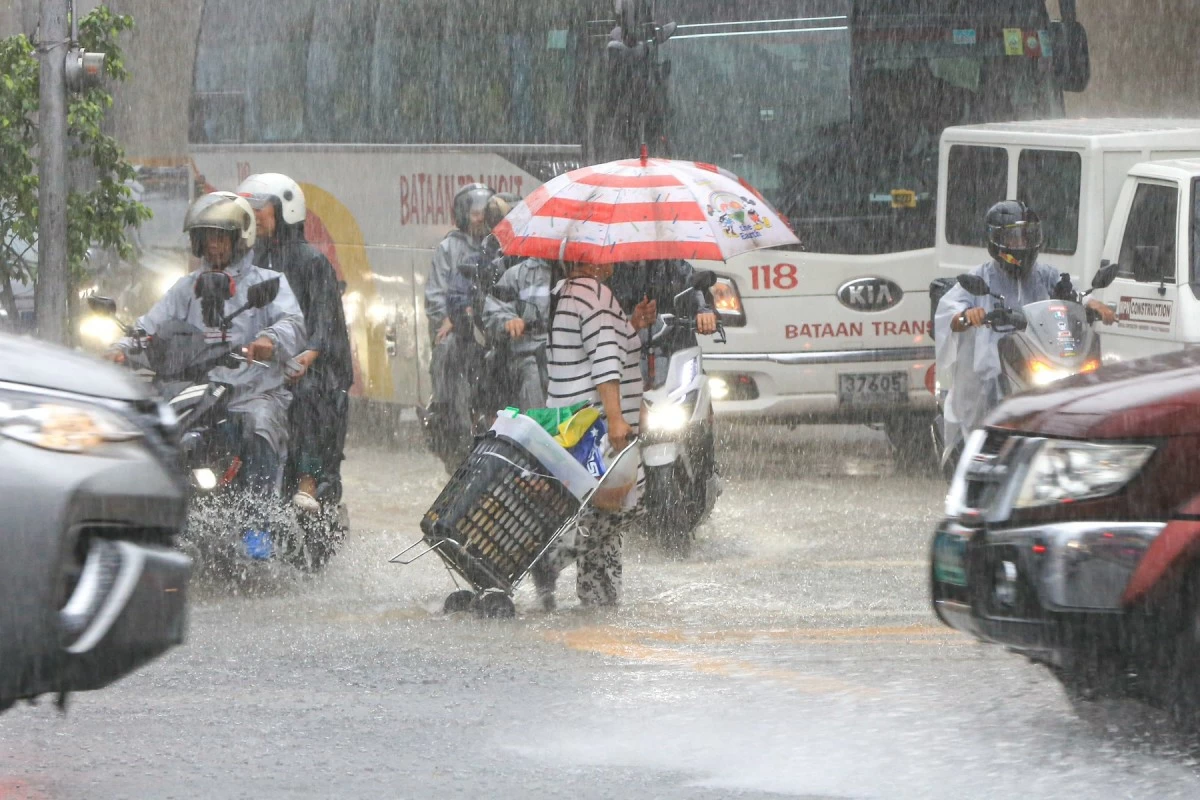
Motorists endure heavy rains and flooding brought by the southwest monsoon, or 'habagat,' as they traverse EDSA-Kamuning in Quezon City on Aug. 17, 2026. (Santi San Juan | MB)

Classes and government offices in the National Capital Region (NCR) and 14 provinces will implement alternative arrangements on Tuesday, Aug. 18, as the southwest monsoon, or Habagat, continues to bring heavy rains and flooding to parts of Luzon.

Based on Memorandum Circular No. 128, issued by the Office of the President on Monday, Aug. 17, said the directive covers Metro Manila, Ilocos Sur, La Union, Pangasinan, Benguet, Zambales, Bataan, Tarlac, Pampanga, Bulacan, Cavite, Batangas, Rizal, Laguna, and Occidental Mindoro.

The directive is upon the recommendation of the National Disaster Risk Reduction and Management Council and amid heavy rainfall warnings from the Philippine Atmospheric, Geophysical and Astronomical Services Administration (PAGASA).

PAGASA’s 5 p.m. Weather Advisory No. 64 said the Habagat could bring 100 to 200 millimeters of rain from Monday through Wednesday in Benguet, La Union, Pangasinan, Zambales, Bataan, and Occidental Mindoro, with numerous flooding incidents likely, particularly in urbanized, low-lying, and riverside areas.

The state weather bureau also forecast 50 to 100 millimeters of rain in Metro Manila, Ilocos Sur, Tarlac, Pampanga, Bulacan, Cavite, Laguna, Batangas, Rizal, and other areas from Monday through Thursday, while warning that rainfall could be higher in mountainous and elevated areas.

PAGASA said the effects of the continuing rains could be aggravated by significant antecedent rainfall, raising the risk of flooding and rain-induced landslides in vulnerable areas.

Earlier Monday, PAGASA raised a red rainfall warning over Metro Manila, Bataan, and portions of Zambales, Pampanga, Bulacan, Rizal, and Cavite, with serious flooding expected in flood-prone areas.

Orange and yellow rainfall warnings were also raised over other portions of Zambales, Pampanga, Bulacan, Cavite, Batangas, Laguna, Rizal, Tarlac, and other nearby areas, with flooding either threatening or possible in vulnerable locations.

PAGASA’s regional forecast showed that Metro Manila could continue to experience occasional rains on Tuesday and Wednesday, with moderate to strong southwesterly winds and moderate to rough coastal conditions.

The state weather bureau was also monitoring a low-pressure area estimated at 1,160 kilometers east of Northern Luzon as of 3 p.m. Monday, although the latest PAGASA advisory identified the southwest monsoon as the weather system responsible for the current heavy rainfall threat.

Government agencies providing basic and health services, disaster preparedness and response, and other vital services have been ordered to continue operations despite the alternative work arrangements.

The circular likewise directed public and private schools in the affected areas to implement alternative learning modes unless their respective local chief executives order otherwise, while the suspension of work or adoption of alternative work arrangements in the private sector remains at the discretion of management.

Related Tags

work from home Habagat online classes ralph recto government work Class suspension
ADVERTISEMENT
.most-popular .layout-ratio{ padding-bottom: 79.13%; } @media (min-width: 768px) and (max-width: 1024px) { .widget-title { font-size: 15px !important; } }

{{ articles_filter_1561_widget.title }}

.most-popular .layout-ratio{ padding-bottom: 79.13%; } @media (min-width: 768px) and (max-width: 1024px) { .widget-title { font-size: 15px !important; } }

{{ static_articles_1562_widget.title }}

.most-popular .layout-ratio{ padding-bottom: 79.13%; } @media (min-width: 768px) and (max-width: 1024px) { .widget-title { font-size: 15px !important; } }

{{ articles_filter_1563_widget.title }}

{{ articles_filter_1564_widget.title }}

.mb-article-details { position: relative; } .mb-article-details .article-body-preview, .mb-article-details .article-body-summary{ font-size: 17px; line-height: 30px; font-family: "Libre Caslon Text", serif; color: #000; } .mb-article-details .article-body-preview iframe , .mb-article-details .article-body-summary iframe{ width: 100%; margin: auto; } .read-more-background { background: linear-gradient(180deg, color(display-p3 1.000 1.000 1.000 / 0) 13.75%, color(display-p3 1.000 1.000 1.000 / 0.8) 30.79%, color(display-p3 1.000 1.000 1.000) 72.5%); position: absolute; height: 200px; width: 100%; bottom: 0; display: flex; justify-content: center; align-items: center; padding: 0; } .read-more-background a{ color: #000; } .read-more-btn { padding: 17px 45px; font-family: Inter; font-weight: 700; font-size: 18px; line-height: 16px; text-align: center; vertical-align: middle; border: 1px solid black; background-color: white; } .hidden { display: none; }
function initializeAllSwipers() { // Get all hidden inputs with cms_article_id document.querySelectorAll('[id^="cms_article_id_"]').forEach(function (input) { const cmsArticleId = input.value; const articleSelector = '#article-' + cmsArticleId + ' .body_images'; const swiperElement = document.querySelector(articleSelector); if (swiperElement && !swiperElement.classList.contains('swiper-initialized')) { new Swiper(articleSelector, { loop: true, pagination: false, navigation: { nextEl: '#article-' + cmsArticleId + ' .swiper-button-next', prevEl: '#article-' + cmsArticleId + ' .swiper-button-prev', }, }); } }); } setTimeout(initializeAllSwipers, 3000); const intersectionObserver = new IntersectionObserver( (entries) => { entries.forEach((entry) => { if (entry.isIntersecting) { const newUrl = entry.target.getAttribute("data-url"); if (newUrl) { history.pushState(null, null, newUrl); let article = entry.target; // Extract metadata const author = article.querySelector('.author-section').textContent.replace('By', '').trim(); const section = article.querySelector('.section-info ').textContent.replace(' ', ' '); const title = article.querySelector('.article-title h1').textContent; // Parse URL for Chartbeat path format const parsedUrl = new URL(newUrl, window.location.origin); const cleanUrl = parsedUrl.host + parsedUrl.pathname; // Update Chartbeat configuration if (typeof window._sf_async_config !== 'undefined') { window._sf_async_config.path = cleanUrl; window._sf_async_config.sections = section; window._sf_async_config.authors = author; } // Track virtual page view with Chartbeat if (typeof pSUPERFLY !== 'undefined' && typeof pSUPERFLY.virtualPage === 'function') { try { pSUPERFLY.virtualPage({ path: cleanUrl, title: title, sections: section, authors: author }); } catch (error) { console.error('ping error', error); } } // Optional: Update document title if (title && title !== document.title) { document.title = title; } } } }); }, { threshold: 0.1 } ); function showArticleBody(button) { const article = button.closest("article"); const summary = article.querySelector(".article-body-summary"); const body = article.querySelector(".article-body-preview"); const readMoreSection = article.querySelector(".read-more-background"); // Hide summary and read-more section summary.style.display = "none"; readMoreSection.style.display = "none"; // Show the full article body body.classList.remove("hidden"); } document.addEventListener("DOMContentLoaded", () => { let loadCount = 0; // Track how many times articles are loaded const offset = [1, 2, 3, 4, 5, 6, 7, 8, 9, 10]; // Offset values const currentUrl = window.location.pathname.substring(1); let isLoading = false; // Prevent multiple calls if (!currentUrl) { console.log("Current URL is invalid."); return; } const sentinel = document.getElementById("load-more-sentinel"); if (!sentinel) { console.log("Sentinel element not found."); return; } function isSentinelVisible() { const rect = sentinel.getBoundingClientRect(); return ( rect.top < window.innerHeight && rect.bottom >= 0 ); } function onScroll() { if (isLoading) return; if (isSentinelVisible()) { if (loadCount >= offset.length) { console.log("Maximum load attempts reached."); window.removeEventListener("scroll", onScroll); return; } isLoading = true; const currentOffset = offset[loadCount]; window.loadMoreItems().then(() => { let article = document.querySelector('#widget_1690 > div:nth-last-of-type(2) article'); intersectionObserver.observe(article) loadCount++; }).catch(error => { console.error("Error loading more items:", error); }).finally(() => { isLoading = false; }); } } window.addEventListener("scroll", onScroll); });

Sign up by email to receive news.