







Remolona signals BSP prepared for further policy tightening
By Derco Rosal
Published Aug 17, 2026 06:00 pm
|
Updated Aug 17, 2026 03:10 pm


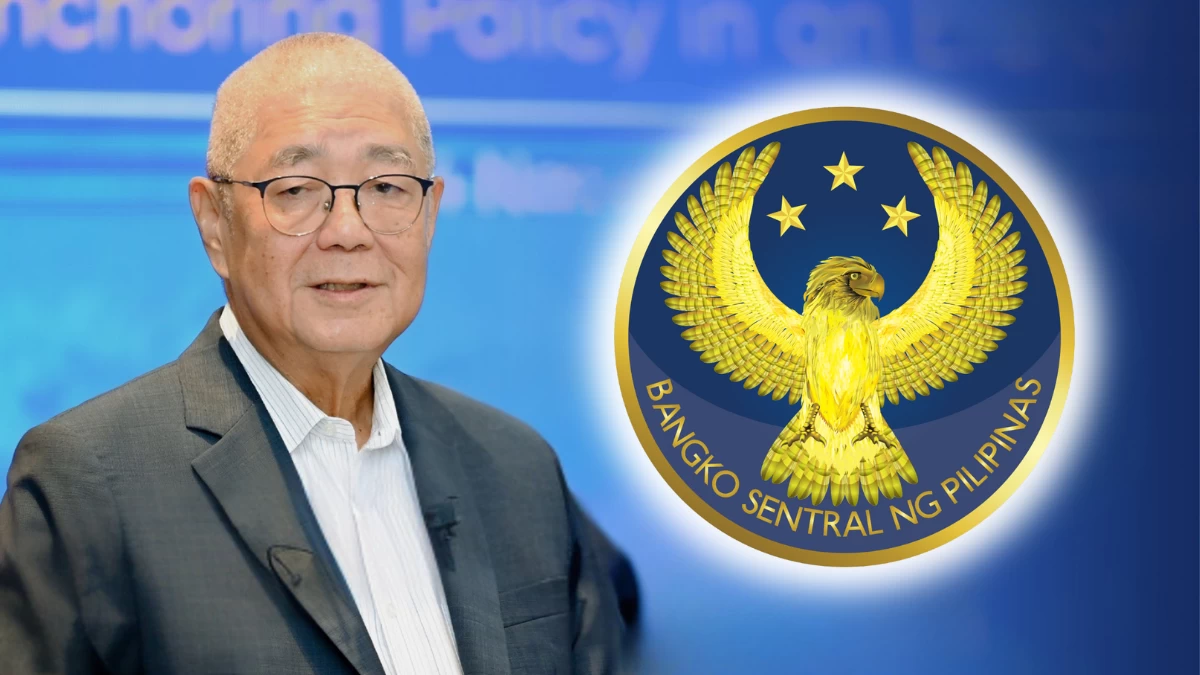
BSP Governor Eli Remolona Jr.
The Bangko Sentral ng Pilipinas (BSP) signaled it remains prepared to adjust monetary policy further as upside risks to inflation accelerate and spillover effects threaten to broaden across the economy.
Speaking at a legislative budget briefing on Monday, Aug. 17, BSP Governor Eli M. Remolona Jr. said that while price pressures are expected to moderate gradually over the medium term, risks remain tilted to the upside.
The warning comes after the central bank executed two consecutive quarter-point rate increases, bringing its benchmark interest rate to 4.75 percent. Prior to the monetary tightening, consumer prices were overheating, peaking at 7.2 percent in April. Driven by offshore developments, headline inflation has since slowed to a three-month low of 6.2 percent in July.
Remolona noted that the Monetary Board’s (MB) recent interest rate hikes were “carefully calibrated moves to help slow down inflation and anchor inflation expectations, while recognizing the temporary weakness in growth.” Gross domestic product (GDP) growth averaged 2.6 percent in the first half of 2026 after plunging to its weakest post-pandemic pace.
“We look at all the evidence and we are prepared to take further steps as necessary to ensure that inflation returns to target,” Remolona said. The Monetary Board will meet next week to decide on its next policy move.
BSP Deputy Governor Zeno Ronald R. Abenoja, who oversees the Monetary and Economics Sector, noted that the inflationary spike earlier this year was largely a spillover from surging global oil prices triggered by war in the Middle East.
Abenoja cautioned that current analysis points to “stronger second-round effects and a wider pass-through of earlier supply shocks to the different components of the consumption pattern.”
Headline inflation is projected to average 6.4 percent in 2026 and 4.5 percent in 2027—both above the government’s 2-to-4 percent target range. However, pressures could eventually ease. “By 2028, it is possible that inflation will be close to the target at around 3.1 percent,” Abenoja added.
Despite these macroeconomic pressures, Remolona emphasized that the financial system remains an anchor of stability. The banking sector stays “well-provisioned and well-capitalized,” with lending supported by ample money supply.
This resilience is bolstered by an adequate external buffer. While gross international reserves stood at $105 billion as of June 2026—covering seven months of imports—more recent data revealed foreign reserves dropped to a 17-month low of $103.4 billion in July.
For budget planning purposes, the BSP is working under assumptions of inflation between 4 and 5 percent and oil prices ranging from $70 to $90 per barrel. Remolona reiterated that the central bank will remain data-dependent and “vigilant” to ensure price stability supports sustainable economic growth.