






Manila Bulletin
 Business
Trade & Industry
Ramon Ang's latest power move triggers ERC review over anti-trust rules
Business
Trade & Industry
Ramon Ang's latest power move triggers ERC review over anti-trust rules
Business
Trade & Industry
Ramon Ang's latest power move triggers ERC review over anti-trust rules
Ramon Ang's latest power move triggers ERC review over anti-trust rules
Published Aug 17, 2026 05:58 am


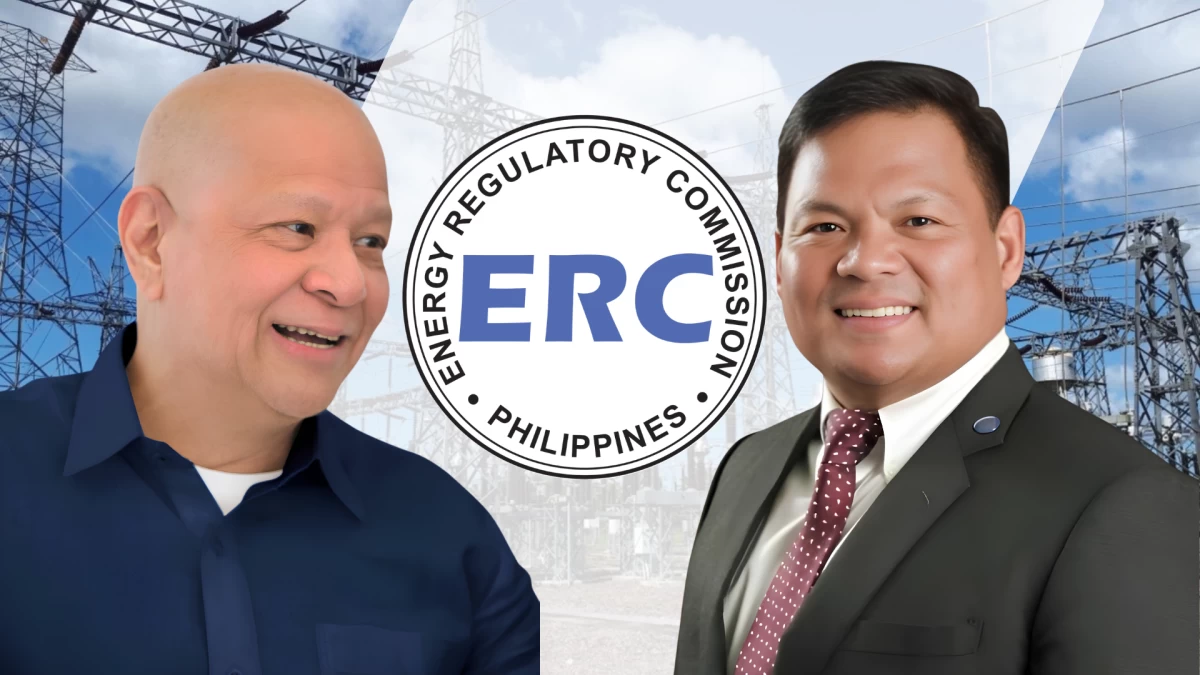
Ramon S. Ang and Francis Saturnino Juan
The Energy Regulatory Commission (ERC) is studying tycoon Ramon Ang’s acquisition of a minority stake in Lopez Inc. to evaluate potential breaches of anti-competitive safeguards and statutory ownership limits in the power sector.
The regulatory review follows Ang’s buy-in to the holding company of the Lopez family empire. ERC Chairperson Francis Saturnino Juan said the agency is assessing whether Ang’s 25.7 percent personal stake establishes an affiliate classification that would trigger statutory market concentration rules.
“I do not know if that will make him an officer of that and at the same time an officer of another, so that they will fall within the definition of affiliate,” Juan told reporters. “If it's just a minority and no control, no board seat, that's what I read. So, I need to study.”
Under the Electric Power Industry Reform Act (EPIRA), an affiliate relationship requires an element of control. Establishing that link is key to determining whether the transaction impacts compliance with market concentration rules, which restrict a single power generation company or affiliated group to 25 percent of national generating capacity and 30 percent within a regional grid. It also activates scrutiny regarding cross-ownership boundaries between generation assets and power distributors.
While formal inquiries have not been initiated, the ERC is monitoring Ang’s broader industry presence, including his existing holdings in Manila Electric Co. (Meralco).
In a seprate interview, Juan acknowledged that findings from the Philippine Institute for Development Studies (PIDS) showed market concentration has built up under current framework caps.
However, Juan cautioned that tightening generation limits via legislative amendments could constrain capital investment and create power supply deficits, given the capital-intensive nature of long-term energy infrastructure projects.
While no power producer has breached capacity ceilings, Juan noted the ERC maintains statutory authority to direct a firm to divest excess capacity if a violation occurs.
Separately, a former energy executive pushed to prohibit main-grid distribution utilities from buying electricity from affiliated generation units, warning that vertical integration enables sister companies to manipulate Competitive Selection Process auctions to the detriment of independent competitors.
Exceptions could remain for off-grid systems with power demand under 1 megawatt to preserve commercial viability until markets mature.
Where affiliate transactions exist, Section 26 of EPIRA mandates that distribution utilities utilizing their grid networks for related ventures apply up to 50 percent of net income from those businesses toward lowering customer distribution charges.
Regulators are also expected to review these cross-ownership revenue streams during upcoming rate reset proceedings to deliver bill discounts to electricity consumers.
How EPIRA market share caps work
Enacted in 2001 to restructure the Philippine power sector, the EPIRA established strict statutory limits on market concentration to prevent monopolies and foster open competition among power generation companies.
Under EPIRA, no single power generation company or affiliated group is permitted to own, operate, or control more than 30 percent of the total installed generating capacity in a single regional grid (Luzon, Visayas, or Mindanao) or more than 25 percent of the total national installed capacity. The ERC recalculates these capacity thresholds annually based on actual dependable operating capacities (Maximum Stable Load) nationwide.
Crucial to EPIRA's enforcement is the definition of an “affiliate.” A company is considered an affiliate if an entity holds direct or indirect operational control, board representation, or significant voting equity in another business.
Once two corporate entities are classified as affiliates, their combined power generation assets are aggregated and evaluated as a single portfolio against the 25 percent national and 30 percent regional caps.
If an integrated portfolio exceeds these caps, the ERC has the power to order the forced divestment of generation assets to restore market balance.