






Manila Bulletin
 Business
Banking & Finance
Philippine bond yields post second-biggest surge in Asia-Pacific since Middle East conflict began
Business
Banking & Finance
Philippine bond yields post second-biggest surge in Asia-Pacific since Middle East conflict began
Business
Banking & Finance
Philippine bond yields post second-biggest surge in Asia-Pacific since Middle East conflict began
Philippine bond yields post second-biggest surge in Asia-Pacific since Middle East conflict began
Published Aug 17, 2026 07:31 pm


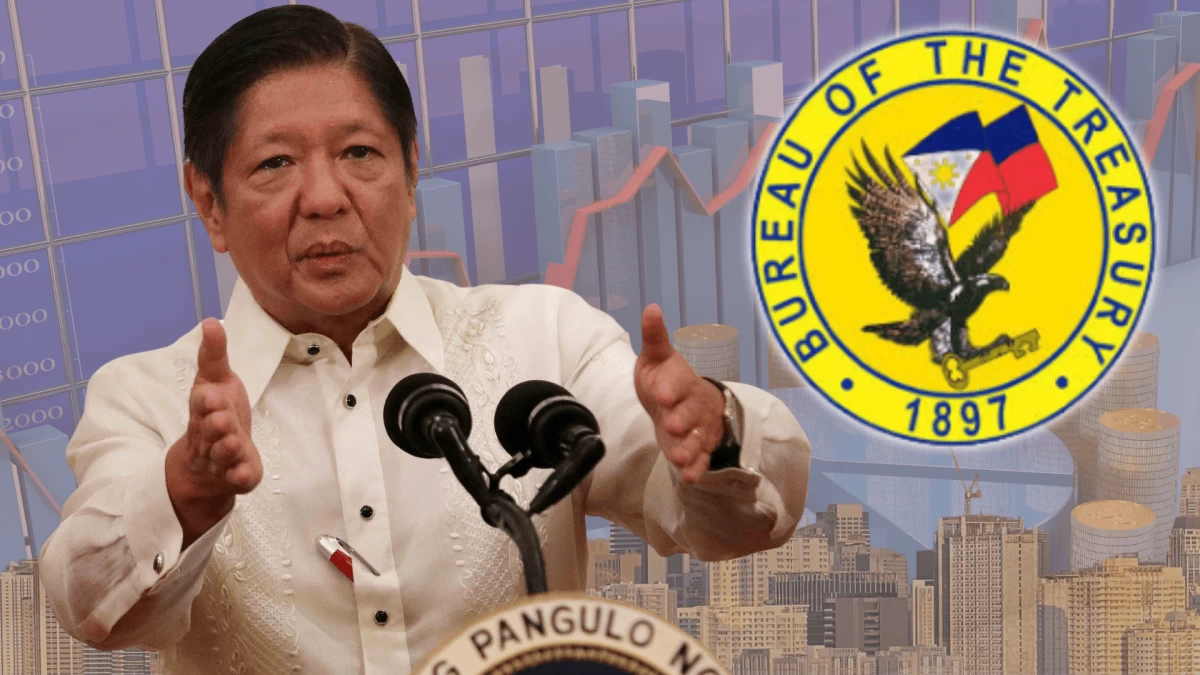
The Philippines recorded the second-largest increase in 10-year government bond yields among selected Asia-Pacific economies since the war in the Middle East began, raising the government’s borrowing costs at a time when the Marcos Jr. administration is relying heavily on domestic debt to finance its spending requirements.
In its Asia-Pacific Quarterly Economic Update published on Monday, Aug. 17, the Bangkok-based United Nations Economic and Social Commission for Asia and the Pacific (UNESCAP) noted that the yield on 10-year Philippine government bonds rose by 133 basis points (bps), from 5.9 percent at end-February to 7.3 percent as of mid-August.
Among the nine economies covered by UNESCAP’s comparison of 10-year government bond yields, only Sri Lanka posted a bigger increase at about 175 bps, from 10.8 percent to 12.5 percent over the same period.
UNESCAP attributed the increase in sovereign borrowing costs across the region to heightened uncertainty and risk aversion following the start of the Middle East conflict last Feb. 28.
Higher global prices of fuel, fertilizer, and transportation have increased production costs and consumer prices, particularly in energy-importing economies, while concerns over inflation expectations, external balances, and heightened risks have contributed to capital outflows, currency depreciation, and higher sovereign bond yields.
The Philippines, a net energy importer, has been particularly vulnerable to these pressures. UNESCAP noted that the Philippine peso depreciated against the United States (US) dollar by six to seven percent between February and July, with imported inflation contributing to the sizeable increase in domestic inflation.
Headline inflation climbed to 6.2 percent in July from 2.4 percent in February, remaining well above the Bangko Sentral ng Pilipinas’ (BSP) two- to four-percent target range.
The Philippines has been under a state of national energy emergency since March under Executive Order (EO) No. 110 as the net energy importer grapples with global supply and price shocks stemming from the prolonged Middle East conflict.
UNESCAP warned that the combination of elevated inflation and borrowing costs could further constrain government finances if the Middle East conflict continues to push up global commodity and transportation costs.
“A further unexpected increase in global commodity and transport costs could trigger policy rate hikes, resulting in even higher government borrowing costs and less room for investing in essential development initiatives,” UNESCAP said.
The warning comes as the Marcos Jr. administration has ramped up borrowing to finance its spending requirements.
The latest Bureau of the Treasury (BTr) data showed that gross borrowings reached ₱1.82 trillion in the first half of 2026, up 14.5 percent from ₱1.59 trillion in the same period last year.
Domestic borrowings accounted for ₱1.28 trillion, or 70.1 percent of the six-month total, while gross foreign borrowings reached ₱544.8 billion.
The government is expected to rely even more heavily on the domestic capital market in the second half after completing its planned offshore commercial borrowing in June. The BTr plans to raise ₱1.12 trillion from domestic sources in the third quarter alone.
UNESCAP said governments with limited fiscal space may need to balance infrastructure investments with recurrent spending and tap blended or concessional financing when infrastructure requirements exceed national fiscal capacity.
Beyond financial pressures from the Middle East conflict, UNESCAP identified three major uncertainties that could weigh on the region’s economic outlook: a prolonged global energy crisis, rising trade protectionism, and increasing reliance on artificial intelligence (AI)-related, capital-intensive industries as engines of growth.
The report cautioned that while AI and high-technology investments can support economic growth, these capital-intensive industries tend to create jobs temporarily during construction but employ fewer workers once facilities become operational. As a result, strong economic growth could coexist with weak job creation and subdued household demand.
UNESCAP nevertheless said digital transformation, including greater use of AI, could raise total factor productivity (TFP), particularly as slower labor force growth makes more efficient use of capital and labor increasingly important to sustaining per capita income growth.
“Digital transformation can help revive productivity growth in the region. Seizing this opportunity requires tailored policies across the foundation, adoption and acceleration stages,” the report said.
For economies with weak digital foundations, UNESCAP recommended improving reliable connectivity, electricity, basic digital skills, and digital government. Economies with adequate infrastructure but low adoption should instead focus on spreading technology across firms and sectors, developing technical and management skills, establishing interoperable systems, and strengthening data governance.
Regional cooperation could also lower the fixed costs of digital transformation through common technical and data standards, pooled procurement, and shared testing facilities. - Danielle T. Bayani