







Moving up, but not leaving anyone behind
Published Aug 17, 2026 12:05 am
|
Updated Aug 16, 2026 03:38 pm


FROM THE MARGINS
I recently had the opportunity to attend online the World Bank’s High-Level Dialogue on Upper Middle-Income Growth and the launch of the Philippines Economic Update, aptly themed “Moving Up, Aiming Higher.” It was an important occasion to reflect on how far our country has come — and, more importantly, on where we need to go from here.
The Philippines’ elevation to upper-middle-income country (UMIC) status is undoubtedly a milestone worth celebrating.
“After nearly four decades as a lower-middle-income country since 1987, this milestone affirms that the economic policies we have pursued over the past four years have been effective,” President Ferdinand Marcos, Jr. stated in news reports about how the country has finally crossed this threshold in the World Bank’s income classification system.
The classification is based on gross national income (GNI) per capita. For 2025, the Philippines recorded GNI per capita of $4,850, above the World Bank’s upper-middle-income threshold of $4,636. The achievement reflects years of economic expansion, job creation, poverty reduction and reforms that have strengthened the country’s resilience.
This is good news. It signals progress and can strengthen investor confidence and our capacity to attract investments that create better jobs. It is also a recognition of the contributions of millions of Filipinos who have helped move our economy forward.
But as we celebrate, we should also understand what the label does — and does not — tell us.
When the average does not tell the whole story
UMIC is a classification of the country, not of every Filipino. GNI per capita is an average. It tells us about the income level of our economy relative to other countries, but it does not tell us how that income is distributed among households.
The Philippines can therefore become an upper-middle-income country while millions of Filipino families continue to struggle with food prices, unstable incomes, inadequate housing, health expenses and the constant threat of falling back into poverty.
The World Bank estimates that nearly 28 percent of Filipinos remain vulnerable or at risk of falling into poverty, while the secure middle class represents only about a quarter of the population.
This distinction is particularly important to me.
For much of my life, I have worked with low-income families and communities. Through microfinance, I have seen that poverty is not simply about having a low income. It is also about limited opportunities, vulnerability to shocks, lack of access to capital and markets, and the absence of a financial cushion when a disaster strikes or a livelihood suddenly disappears.
Making sure everyone moves up
Our next task, therefore, is to make economic progress more inclusive.
First, we need to bring financial services closer to underserved households and small businesses, in accordance with the Bangko Sentral ng Pilipinas’ National Strategy for Financial Inclusion. We should expand access to affordable savings, responsible credit, microinsurance, digital payments and other appropriate financial products. This would ensure inclusive growth and financial resilience for many Filipinos.
Second, we should strengthen the capacity of microfinance institutions, NGOs, cooperatives and other community-based financial institutions to serve more people. With the responsible use of digital technology and data, they can lower transaction costs, reach remote communities, design products suited to the needs of low-income families, and help micro and small enterprises grow. But technology must complement -- not replace — the human relationships and trust that remain essential in serving vulnerable communities.
Third, we must connect financial inclusion with livelihoods and jobs. Access to credit is meaningful only when people have productive opportunities in which to invest. Microfinance should be linked with entrepreneurship training, market access, digital skills, agricultural support and other interventions that help families build sustainable incomes.
Finally, we need stronger social protection and resilience-building mechanisms. Families should not be pushed back into poverty every time a typhoon, illness, economic downturn or sudden increase in living costs occurs. Savings, microinsurance, social protection and disaster-risk financing can provide safety nets for families to recover and continue moving forward.
These are not competing priorities with economic growth. They are essential to making growth sustainable and meaningful. The World Bank itself has emphasized that the Philippines can move toward poverty eradication and a predominantly middle-class society by combining productivity and job-creating reforms with stronger equity and resilience measures.
We should be proud that the Philippines has moved up the income ladder. But our ultimate measure of progress should not be the category assigned to our country. It should be whether a farmer can earn a decent living, whether a small entrepreneur can grow his business, whether a young person can find a good job, and whether a family can withstand the next economic or natural shock without falling back into poverty.
Moving up is an achievement. Making sure everyone can move up with us is the greater challenge.
* * *
“Our priority is to ensure that growth becomes more inclusive, and that its benefits reach all Filipinos.” – Arsenio Balisacan
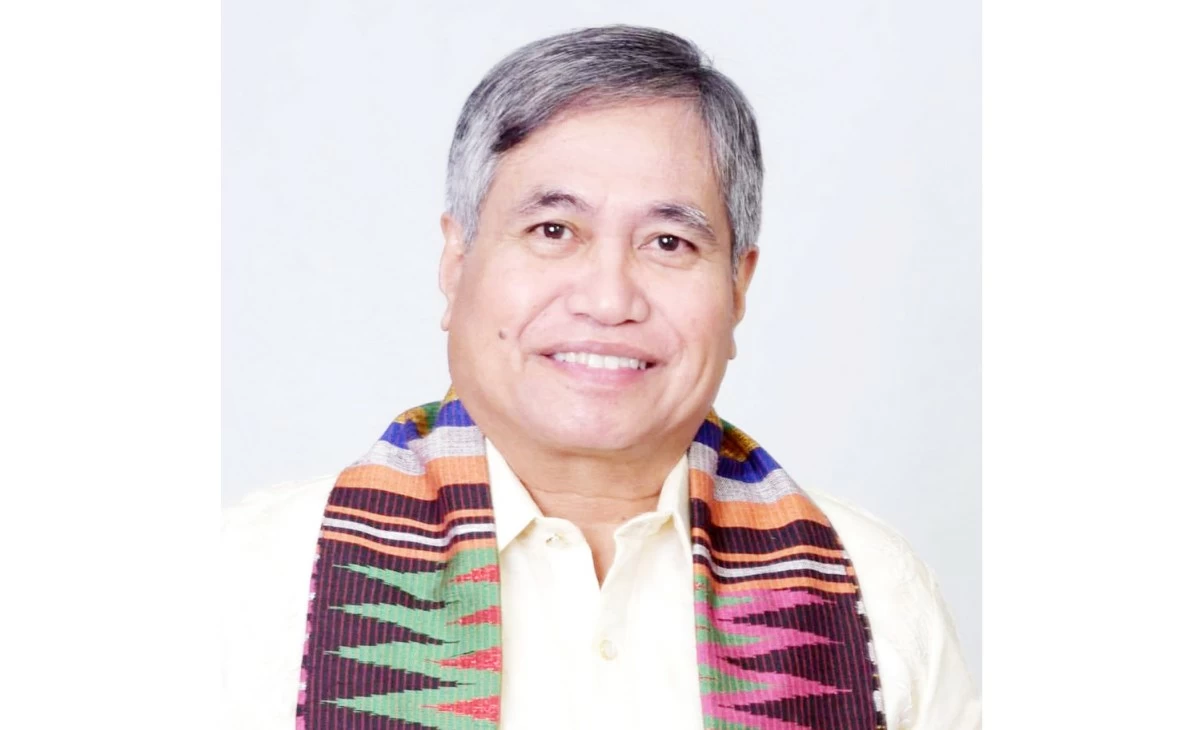
(Dr. Jaime Aristotle B. Alip is a poverty eradication advocate. He is the founder of the Center for Agriculture and Rural Development Mutually-Reinforcing Institutions (CARD MRI), a group of 23 organizations that provide social development services to 8 million economically-disadvantaged Filipinos and insure more than 27 million nationwide.)