ADVERTISEMENT

Revisit Manila Bay reclamation projects before floods worsen

Published Aug 16, 2026 12:05 am  |  Updated Aug 15, 2026 04:59 pm
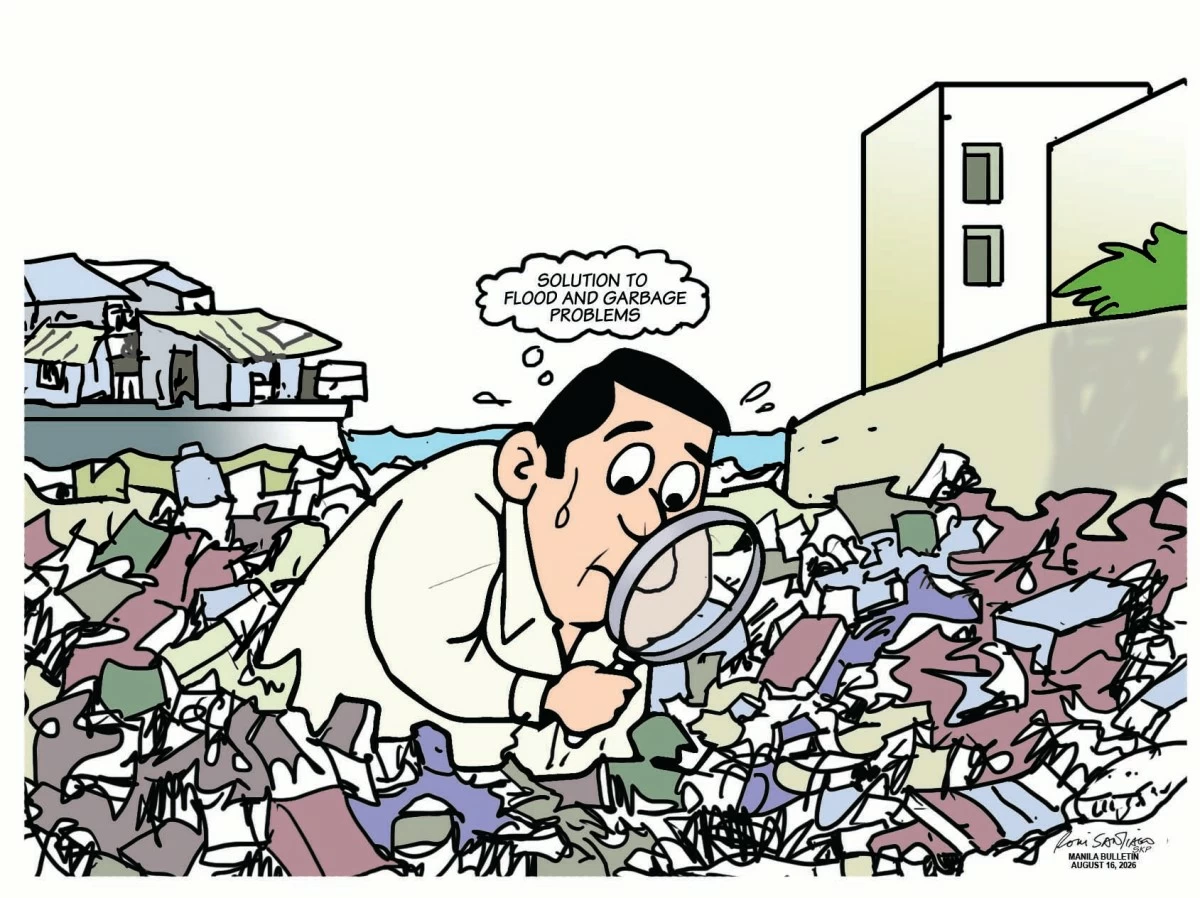
The flooding that has battered Metro Manila and nearby provinces in recent days should prompt the government to look beyond the immediate causes of the disaster. Heavy rains from the enhanced southwest monsoon, compounded by other weather disturbances, undoubtedly overwhelmed communities. Garbage clogging waterways has also aggravated the problem.
The causes, while valid, should not become convenient excuses for avoiding a more fundamental question: Where is the floodwater supposed to go?
Metro Manila’s flood-management strategy cannot be reduced to clearing drains, widening waterways, building pumping stations and constructing flood-control structures. These measures address the movement of water inland. But they do not fully answer the equally important question of where that water will ultimately be discharged.
For decades, Manila Bay has functioned as the region’s natural drain for runoff from rivers, esteros, and drainage systems. Yet reclamation has progressively altered portions of the bay’s physical character, reducing open water and changing the coastline.
This does not mean every reclamation project can automatically be blamed for a particular flood. Nor does the Archimedes principle, by itself, establish a direct cause-and-effect relationship between reclamation and inland flooding. But its fundamental lesson is difficult to ignore: when physical space in water is occupied, displaced water must go somewhere.
In a shallow, semi-enclosed body such as Manila Bay, changing the bay’s geometry can affect water movement, circulation, tidal exchange and drainage. If reclamation reduces available water space or obstructs natural pathways, the displaced water and altered flows may increase pressure on already vulnerable shorelines, river mouths and drainage outlets. Those consequences deserve rigorous, cumulative scientific assessment—not assumptions made after disasters occur.
That is why the Department of Environment and Natural Resources must fast-track its cumulative impact assessment of Manila Bay reclamation projects.
The need is hardly theoretical. The DENR has previously acknowledged the necessity of examining reclamation projects collectively because their combined environmental effects cannot adequately be understood by assessing each undertaking in isolation. The Supreme Court, meanwhile, has required government agencies under its continuing writ of mandamus to clean up, rehabilitate, and preserve Manila Bay.
The Court has also specifically required government agencies to report on ongoing reclamation projects and their environmental impact assessments in connection with Manila Bay.
Government agencies charged with enforcing that continuing mandamus therefore cannot afford complacency. Rehabilitation and protection of Manila Bay must mean more than improving water quality and removing trash. It must also mean protecting the bay’s capacity to perform its broader environmental and hydrological functions.
The proposed garbage master plan and more efficient flood-control projects are necessary and welcome. But they represent only half of the solution.
The other half is the receiving end.
It is not enough to ask how quickly floodwater can be moved away from homes and roads. Policymakers must also answer where millions of cubic meters of water will go once they reach the drainage system.
If Manila Bay is the natural receiving basin, then the government must determine whether reclamation is diminishing that capacity—and, if so, by how much and with what consequences.
Development has its place. Reclamation may generate economic activity, create land, and support urban expansion. But no development should be allowed to externalize its environmental costs onto flood-prone communities.
The government should therefore revisit Manila Bay reclamation projects now, while there is still time to correct the course.
The question is no longer simply how to control the flood, but where to let the floodwater go.

Related Tags

manila bay reclamation flood supreme court continuing mandamus DENR
ADVERTISEMENT
.most-popular .layout-ratio{ padding-bottom: 79.13%; } @media (min-width: 768px) and (max-width: 1024px) { .widget-title { font-size: 15px !important; } }

{{ articles_filter_1561_widget.title }}

.most-popular .layout-ratio{ padding-bottom: 79.13%; } @media (min-width: 768px) and (max-width: 1024px) { .widget-title { font-size: 15px !important; } }

{{ static_articles_1562_widget.title }}

.most-popular .layout-ratio{ padding-bottom: 79.13%; } @media (min-width: 768px) and (max-width: 1024px) { .widget-title { font-size: 15px !important; } }

{{ articles_filter_1563_widget.title }}

{{ articles_filter_1564_widget.title }}

.mb-article-details { position: relative; } .mb-article-details .article-body-preview, .mb-article-details .article-body-summary{ font-size: 17px; line-height: 30px; font-family: "Libre Caslon Text", serif; color: #000; } .mb-article-details .article-body-preview iframe , .mb-article-details .article-body-summary iframe{ width: 100%; margin: auto; } .read-more-background { background: linear-gradient(180deg, color(display-p3 1.000 1.000 1.000 / 0) 13.75%, color(display-p3 1.000 1.000 1.000 / 0.8) 30.79%, color(display-p3 1.000 1.000 1.000) 72.5%); position: absolute; height: 200px; width: 100%; bottom: 0; display: flex; justify-content: center; align-items: center; padding: 0; } .read-more-background a{ color: #000; } .read-more-btn { padding: 17px 45px; font-family: Inter; font-weight: 700; font-size: 18px; line-height: 16px; text-align: center; vertical-align: middle; border: 1px solid black; background-color: white; } .hidden { display: none; }
function initializeAllSwipers() { // Get all hidden inputs with cms_article_id document.querySelectorAll('[id^="cms_article_id_"]').forEach(function (input) { const cmsArticleId = input.value; const articleSelector = '#article-' + cmsArticleId + ' .body_images'; const swiperElement = document.querySelector(articleSelector); if (swiperElement && !swiperElement.classList.contains('swiper-initialized')) { new Swiper(articleSelector, { loop: true, pagination: false, navigation: { nextEl: '#article-' + cmsArticleId + ' .swiper-button-next', prevEl: '#article-' + cmsArticleId + ' .swiper-button-prev', }, }); } }); } setTimeout(initializeAllSwipers, 3000); const intersectionObserver = new IntersectionObserver( (entries) => { entries.forEach((entry) => { if (entry.isIntersecting) { const newUrl = entry.target.getAttribute("data-url"); if (newUrl) { history.pushState(null, null, newUrl); let article = entry.target; // Extract metadata const author = article.querySelector('.author-section').textContent.replace('By', '').trim(); const section = article.querySelector('.section-info ').textContent.replace(' ', ' '); const title = article.querySelector('.article-title h1').textContent; // Parse URL for Chartbeat path format const parsedUrl = new URL(newUrl, window.location.origin); const cleanUrl = parsedUrl.host + parsedUrl.pathname; // Update Chartbeat configuration if (typeof window._sf_async_config !== 'undefined') { window._sf_async_config.path = cleanUrl; window._sf_async_config.sections = section; window._sf_async_config.authors = author; } // Track virtual page view with Chartbeat if (typeof pSUPERFLY !== 'undefined' && typeof pSUPERFLY.virtualPage === 'function') { try { pSUPERFLY.virtualPage({ path: cleanUrl, title: title, sections: section, authors: author }); } catch (error) { console.error('ping error', error); } } // Optional: Update document title if (title && title !== document.title) { document.title = title; } } } }); }, { threshold: 0.1 } ); function showArticleBody(button) { const article = button.closest("article"); const summary = article.querySelector(".article-body-summary"); const body = article.querySelector(".article-body-preview"); const readMoreSection = article.querySelector(".read-more-background"); // Hide summary and read-more section summary.style.display = "none"; readMoreSection.style.display = "none"; // Show the full article body body.classList.remove("hidden"); } document.addEventListener("DOMContentLoaded", () => { let loadCount = 0; // Track how many times articles are loaded const offset = [1, 2, 3, 4, 5, 6, 7, 8, 9, 10]; // Offset values const currentUrl = window.location.pathname.substring(1); let isLoading = false; // Prevent multiple calls if (!currentUrl) { console.log("Current URL is invalid."); return; } const sentinel = document.getElementById("load-more-sentinel"); if (!sentinel) { console.log("Sentinel element not found."); return; } function isSentinelVisible() { const rect = sentinel.getBoundingClientRect(); return ( rect.top < window.innerHeight && rect.bottom >= 0 ); } function onScroll() { if (isLoading) return; if (isSentinelVisible()) { if (loadCount >= offset.length) { console.log("Maximum load attempts reached."); window.removeEventListener("scroll", onScroll); return; } isLoading = true; const currentOffset = offset[loadCount]; window.loadMoreItems().then(() => { let article = document.querySelector('#widget_1690 > div:nth-last-of-type(2) article'); intersectionObserver.observe(article) loadCount++; }).catch(error => { console.error("Error loading more items:", error); }).finally(() => { isLoading = false; }); } } window.addEventListener("scroll", onScroll); });

Sign up by email to receive news.