






Manila Bulletin
 Lifestyle
Arts and Culture
FL Imelda Marcos and the Cultural Center of the Philippines
Lifestyle
Arts and Culture
FL Imelda Marcos and the Cultural Center of the Philippines
Lifestyle
Arts and Culture
FL Imelda Marcos and the Cultural Center of the Philippines
FL Imelda Marcos and the Cultural Center of the Philippines
Through decades of performances, exhibitions, and cultural initiatives, the CCP has remained a witness to the country's changing artistic and political landscape
Published Aug 16, 2026 06:54 pm


President Ferdinand E. Marcos was elected to a second term in November 1969, at a time when student activism was gaining momentum around the world. The Free Speech Movement at the University of California, Berkeley, which had emerged in 1964 in opposition to university policies restricting political activity, soon inspired similar protest movements across many countries.
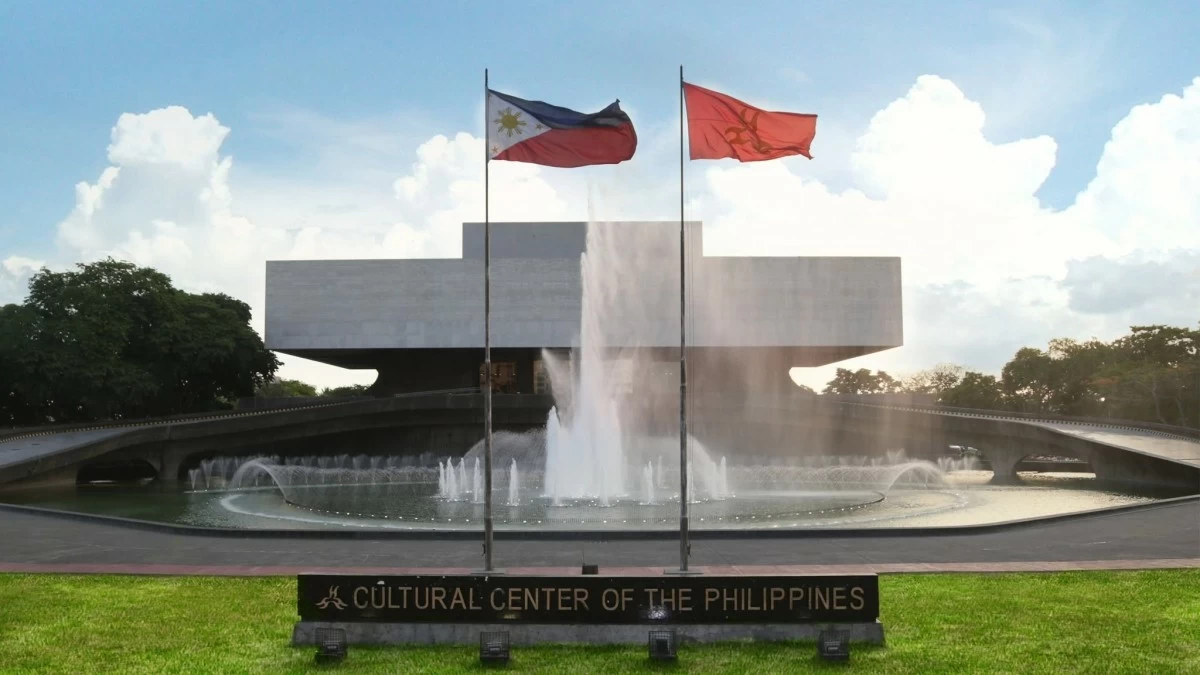
The Cultural Center of the Philippines (Photo: CCP/Facebook)
In the Philippines, students and anti-government political groups found common cause amid rising inflation and worsening economic conditions. In 1970, the so-called First Quarter Storm erupted, with almost daily demonstrations at Congress on Padre Burgos Drive and the US Embassy on Roxas Boulevard.
In February 1971, protesters barricaded the University of the Philippines (UP) Diliman campus. Violence followed. A faculty member opened fire, killing an 18-year-old student demonstrator. The enraged protesters stormed and vandalized the office of UP president Carlos P. Romulo, seized control of the campus, and proclaimed the week-long "Diliman Republic." These events contributed to President Marcos' suspension of the privilege of the Writ of Habeas Corpus and, in September 1972, his declaration of Martial Law.
Throughout this turbulent period, culture and the arts were on the sidelines. First Lady Imelda Romualdez Marcos, however, made the establishment of a national cultural center her foremost priority. The proposal quickly became another target of the growing protests against President Marcos, who was denounced as “Tuta ng Kanô” amid broader condemnations of US imperialism. The planned Cultural Center of the Philippines (CCP) was caught in the crossfire.
Characteristically, Mrs. Marcos pressed ahead. While driving John D. Rockefeller III along Roxas Boulevard, she pointed to the future CCP site, then still underwater, and declared to her skeptical guest: "Mr. Rockefeller, in the first year, the land will rise. In the second, the building will rise. And in the third, the curtain will rise." That is precisely what happened. On Sept. 8, 1969, the CCP Main Building (also known as “Tanghalang Pambansa”) was inaugurated, with California Governor Ronald Reagan and his wife representing US President Richard Nixon.
The spectacle outside—and inside—the building rivaled "dularawan," the inaugural performance. Members of Concerned Artists of the Philippines and the Free the Artist Movement staged noisy demonstrations outside the theater. Some managed to slip into the building and unfurl a large banner from a main lobby balcony proclaiming, "We want a home, not a Fascist tomb." The banner and its bearers were removed only minutes before the Reagans arrived. It was an evening to remember.
At the time, I had no connection with the CCP, being occupied with teaching at UP, overseeing university finances, doing management consulting on weekends at SGV, and raising a growing family. My knowledge of the CCP came almost entirely from newspapers. In fact, I cannot even recall the first time I entered the building.
Over the years, however, the CCP became a familiar presence. There were concerts by Van Cliburn, the New York Philharmonic, and the Philippine Philharmonic Orchestra; ballet performances by Margot Fonteyn and Rudolf Nureyev; opera productions, including those sponsored by the Opera Guild of the Philippines, of which I was a trustee, and, memorably, the premiere of an opera by the teenage prodigy Jeffrey Ching, then all of 16 years old; exhibitions at the third-floor art gallery; and the accomplishments of students of the Philippine High School for the Arts, where my wife helped furnish a student dormitory; events at the Folk Arts Theater and Manila Film Center. The CCP also launched enduring initiatives such as the Thirteen Artists Awards.
One performance in the marble-floored main lobby remains vivid. A Mindanao cultural group presented a number that culminated in the jaw-dropping finale of a baby tossed high into the air. Years later, a gentleman approached to thank me for serving as his son's “ninong” (godfather). Puzzled, I asked him to please remind me when that was. Smiling, he replied that he was the baby's father—and that the tossing was the baptism.
On several occasions, I heard Mrs. Marcos describe her vision of an all-encompassing and self-supporting cultural complex that she called the “Sanctuary of the Filipino Soul.” She envisioned a world-class concert hall, an art museum, a convention center, a hotel for visiting artists and convention delegates, and so on. Over time, many elements of that vision came into being: the Folk Arts Theater, Manila Film Center, Philippine International Convention Center, Philippine Plaza Hotel, Golden Cowrie Restaurant, and Coconut Palace. The Metropolitan Museum of Manila and the vanished Museum of Philippine Art were aspects of this broader cultural vision.
An equally important element of the master plan was financial sustainability. The CCP was expected to generate income through commercial leases on portions of its extensive property, allowing it to support its artistic mission with a dependable revenue stream.
To attract the talent needed to realize these goals, the CCP was exempted from the usual civil service rules and regulations. This flexibility enabled it to recruit outstanding artist-administrators and managers. Among them, in his younger years, was the present CCP trustee Felix S. Duque. Looking back with nostalgia, he recalls: "The CCP then was a family united by the clear objective of serving the arts and the Filipino people."
Comments are cordially invited, addressed to [email protected]