







DPWH budget won't hit ₱1-trillion level anytime soon—DBM
By Derco Rosal
Published Aug 16, 2026 07:00 pm
|
Updated Aug 15, 2026 04:15 pm


At A Glance
- Public construction is poised for a strong rebound in the second half of 2026 after two consecutive quarters of contraction, according to a senior budget official, but reinstating the Department of Public Works and Highways (DPWH) budget to a trillion-peso level remains off the horizon.
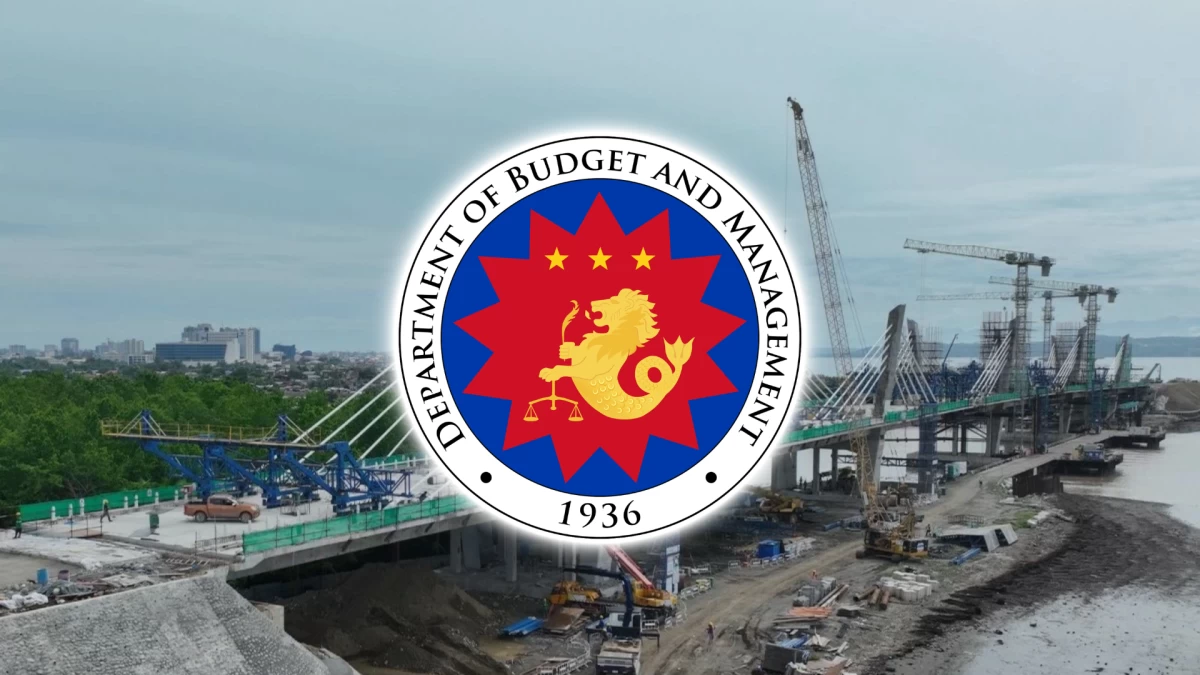
Public construction is poised for a strong rebound in the second half of the year after two consecutive quarters of contraction, according to a senior budget official, but, restoring the Department of Public Works and Highways (DPWH) budget to the trillion-peso mark remains off the horizon.
Department of Budget and Management (DBM) Assistant Secretary Romeo Matthew T. Balanquit told reporters last Friday that raising the DPWH’s budget back above ₱1 trillion by 2028 seems impossible, given the steep jump it would require from the 2027 budget President Ferdinand Marcos Jr. is seeking.
Of the proposed ₱7.2-trillion national budget, the DPWH received the second-largest allocation at ₱644 billion, 16.2 percent of which is earmarked for flood control projects. The agency's current budget was nearly halved to ₱529.6 billion from ₱1.11 trillion in 2025.
Inflating the DPWH’s budget for 2028 would mean jacking up the agency’s funds by more than ₱350 billion from the proposed 2027 level. “It’s quite high,” Balanquit said, adding that a trillion-peso allocation for the agency is not something he sees happening.
A high-profile flood control corruption scandal previously prompted public demands for transparency and an investigation into past spending plans. Among the major reforms in the 2026 budget was the reallocation of ₱255.5 billion—originally intended for flood control—toward social services.
A year after the scandal, the DBM is attempting to get back on track and resume infrastructure fund disbursements. Balanquit justified the initial slowdown, explaining that the government had to tighten spending after "ghost" projects raised serious concerns about the use of public funds.
“We tightened spending for a good reason,” Balanquit said, asserting that the budget anomalies warranted a thorough review before releasing additional funds.
“There were precautionary measures, and we had to reassess and revalidate those existing projects,” Balanquit said. “Now that they have been validated by the DPWH, we cannot leave them unfinished. So we are going back. They can now be completed. That’s why for 2027, we are getting back to business, even on flood control expenditures.”
Infrastructure spending to stage rebound
Even with a cautious outlook on restoring the DPWH budget, the DBM is betting on a solid recovery in public construction.
Balanquit “certainly” believes infrastructure spending will pick up in the second half of the year after a sluggish start in the first half, which still suffered from the lingering effects of governance concerns.
For Balanquit, the sharp contraction seen earlier in the year was an anomaly that is not expected to persist.
Capital outlays fell by ₱202.1 billion to ₱269.4 billion through May, down from ₱471.5 billion during the same five-month period in 2025. Strict governance protocols and stricter validation procedures delayed disbursements across major public works projects.
“Public construction will no longer be down by 30 percent by the third quarter,” Balanquit said, citing a favorable base effect from the previous year’s spending slump at the height of the infrastructure controversy.
He added that recent fund releases, which have yet to fully manifest in economic figures, will anchor the rebound.
Following a massive release of funds in May and June, the DBM issued “another ₱120 billion to the DPWH in July, which has yet to be reflected in spending,” Balanquit said, noting that these funds are expected to accelerate project execution.
“All of that should be disbursed and registered in the economy,” he said.
To hit the upper end of the revised 3.5 to 4.5 percent gross domestic product (GDP) growth target, the economy needs a strong push in the coming months.
According to Balanquit, output expansion needs to reach roughly six percent in the second half of 2026 to hit the 4.5 percent full-year target.
“I’m trying to be ambitious,” he admitted, noting that a six-percent GDP outturn in the latter half of 2026 is “manageable.”
Government estimates suggest that if public construction had simply remained flat in the second quarter rather than contracting, GDP growth could have reached 5.3 percent instead of the post-pandemic low of 2.3 percent.
“So that’s the big impact of public construction,” Balanquit stressed. However, he noted that scaling up the budget of a single agency—such as the DPWH—may no longer be an effective metric for measuring infrastructure success.
Beyond DPWH budget
Fixating on the DPWH budget is not the strategy the government is using to ramp up infrastructure activity.
“It doesn’t mean that if you want to upgrade your infrastructure, you simply have to keep looking at the DPWH budget,” Balanquit said.
Instead, the government is pushing for a shift toward public-private partnerships (PPP) and greater local government participation.
“We are not abandoning infrastructure investment. It’s just a change of modality,” Balanquit explained, noting that the goal is to raise infrastructure spending to five percent of economic output—a target achievable through PPPs.
This strategy is already yielding results. Balanquit reported that the pipeline of PPP projects has swelled to over 500, a dramatic increase from the fewer than 100 projects logged before the implementation of the new PPP Code.
Using PPPs as a complementary mechanism for national development does not lessen the pressure on the DBM to deliver. Balanquit emphasized that the government is actively courting investors: “We are actually the ones trying to coordinate with them. It’s not like we’re just sitting back and waiting for someone to knock on our door.”
Beyond infrastructure, the DBM is maintaining a “cleansing effort” regarding operational expenses to ensure efficient use of the national budget.
Amid regional crises in the Middle East, the agency asked offices to surrender a fifth of their savings from non-essential maintenance and other operating expenses (MOOE), such as travel and training.
“If these are non-essentials, they should not be there,” Balanquit argued, adding that these austerity measures are part of long-term fiscal discipline.
“We really have to scrape the bottom of the barrel, and this exercise is something that we will keep doing, with or without a crisis,” he said.