






Manila Bulletin
 Philippines
National
CHED calls for stronger regional cooperation on AI in higher education
Philippines
National
CHED calls for stronger regional cooperation on AI in higher education
Philippines
National
CHED calls for stronger regional cooperation on AI in higher education
CHED calls for stronger regional cooperation on AI in higher education
Published Aug 16, 2026 12:59 pm
|
Updated Aug 16, 2026 01:02 pm


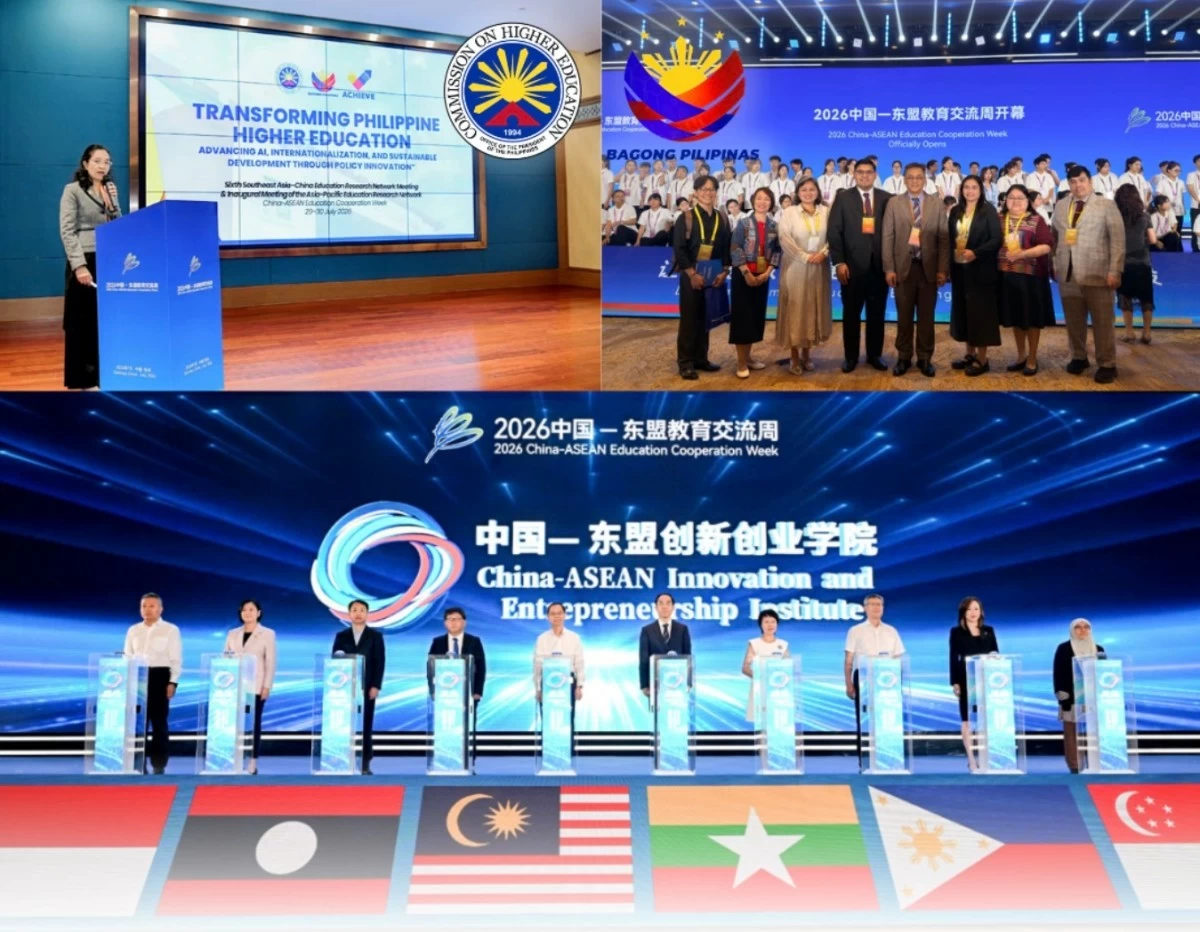
CHED
The Commission on Higher Education (CHED) is pushing stronger regional cooperation to advance the responsible use of artificial intelligence (AI), expand academic partnerships, and promote innovation-driven, future-ready learning across the Asia-Pacific.
CHED Executive Director Atty. Cinderella Filipina Benitez-Jaro made the call during the Sixth China-ASEAN Education Research Network Meeting in Guiyang, China, where she emphasized the role of AI in transforming higher education and preparing graduates for an increasingly digital and interconnected world.
“Artificial intelligence is no longer confined to a single discipline. It is transforming teaching and learning, research, quality assurance, institutional governance, and innovation across higher education. As such, AI must be harnessed responsibly to enhance educational quality, inclusivity, and resilience,” Benitez-Jaro said.
She highlighted CHED’s continuing initiatives to strengthen digital transformation in Philippine higher education through policies and international partnerships that promote innovation, research collaboration, academic mobility, and capacity-building.
Benitez-Jaro also cited the importance of regional platforms such as the China-ASEAN Education Cooperation Week (CAECW) in facilitating policy dialogue, knowledge exchange, and collaborative solutions to shared educational challenges.
These efforts form part of CHED’s ACHIEVE Agenda, the Commission’s seven-point reform framework for higher education, and support President Ferdinand R. Marcos Jr.’s priority of strengthening the country’s human capital by preparing Filipinos with the skills needed for a fast-changing, technology-driven economy.
“As we gather for the CAECW and the Sixth Asia-Pacific Education Research Network, let us reaffirm a shared responsibility to ensure that AI serves humanity, education must remain a force for peace and sustainable development, and our partnerships build a higher education community that is innovative, inclusive, and responsive to the needs of our peoples,” she said.
Meanwhile, Philippine Ambassador Jaime FlorCruz highlighted the long-term value of educational exchanges in strengthening Philippines-China bilateral relations.
“Such educational exchanges greatly contribute to fostering a deeper understanding of the cultures of the Philippines and China and strengthening people-to-people ties that promote a more harmonious diplomatic relations between the two nations,” FlorCruz said.